
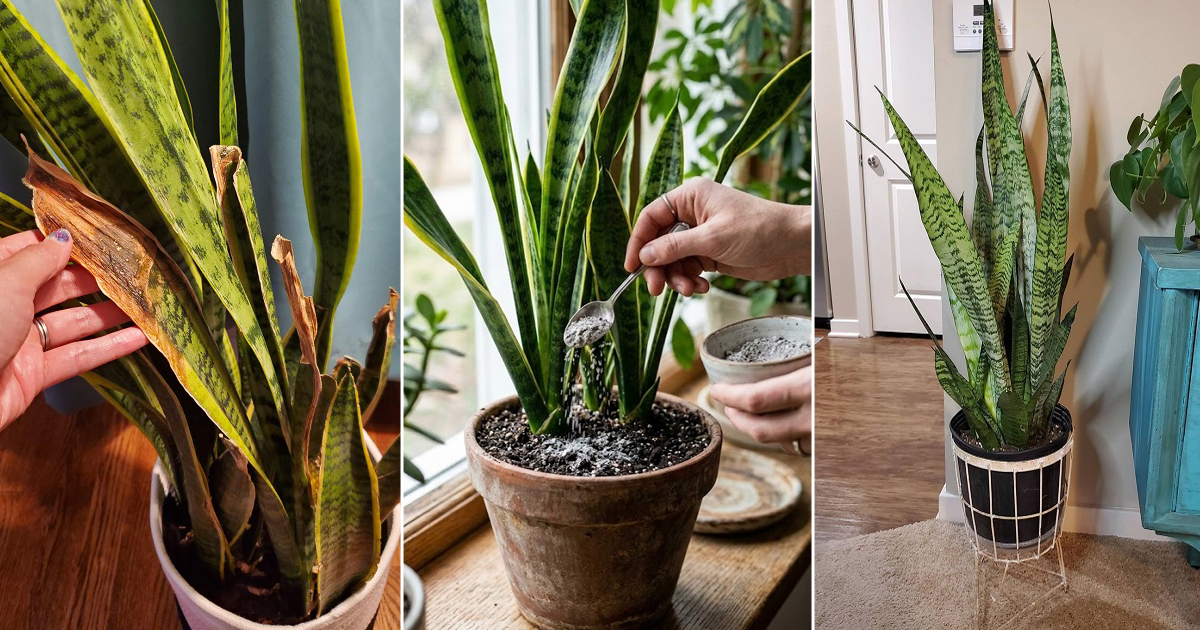
Find out how Adding Ashes to Snake Plant for Best Growth. When to use them safely, and when they may cause harm.
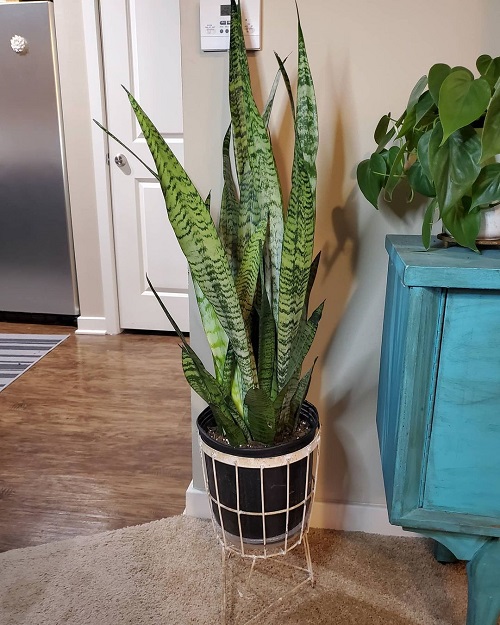
Adding ashes to snake plant soil can help improve growth when used the right way. Wood ash adds useful minerals and can balance soil acidity. However, using too much can harm the plant. Knowing when and how to apply ashes helps your snake plant grow stronger and healthier.
Adding Ashes to Snake Plant for Best Growth
1. What Ashes Contain and Why It Matters
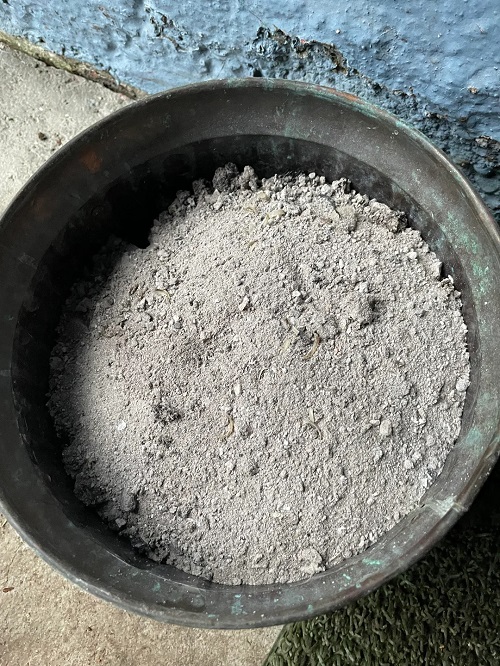
Wood ash contains nutrients that can help plants grow. Calcium is the main nutrient in wood ash and can make up 20% or more of it. Potassium, also called potash, is another important nutrient and can be present up to 5%. Wood ash also contains smaller amounts of magnesium, phosphorus, and sulfur. It may also have tiny amounts of iron, manganese, zinc, boron, and other nutrients plants need.
It can also reduce soil acidity. When wood burns, it creates carbonates. These carbonates react with acidic soil and raise the soil pH. The amount of carbonates depends on the type of wood and how it was burned. In general, wood ash is about half as strong as lime products used to reduce soil acidity. About four cups of wood ash can replace one pound of aglime.
2. How Ashes Improve Snake Plant Soil
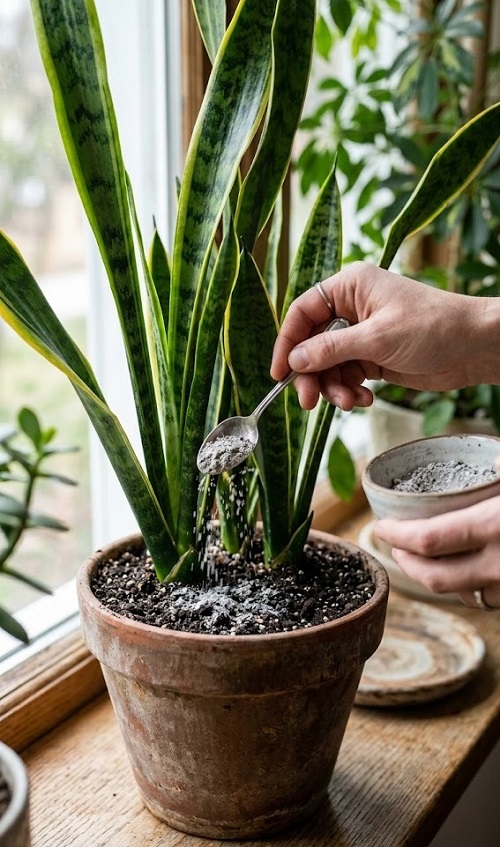
Ashes help loosen compact soil when mixed lightly. Snake plants dislike heavy and soggy soil. Loose soil allows air to reach the roots. Better airflow reduces root stress and rot. Calcium in ashes strengthens root walls. Potassium helps leaf firmness and color. When used correctly, ashes improve drainage and soil structure. This supports healthier root growth and steadier leaf development over time.
3. When Adding Ashes Can Be Harmful
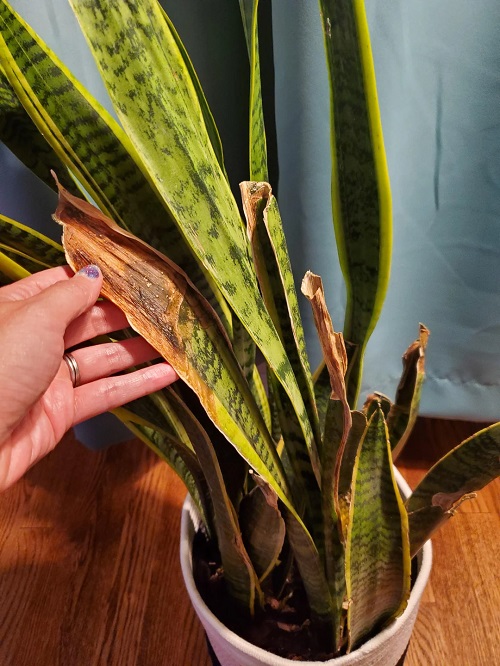
Ashes can damage snake plants if used too often or in large amounts. Too much ash makes the soil overly alkaline. Snake plant roots struggle in high pH soil. This leads to slow growth and pale leaves. Ashes also contain salts. Salt buildup pulls moisture away from roots. This causes dry leaf tips and weak growth. Always test soil condition before adding ashes again.
4. The Right Way to Apply Ashes
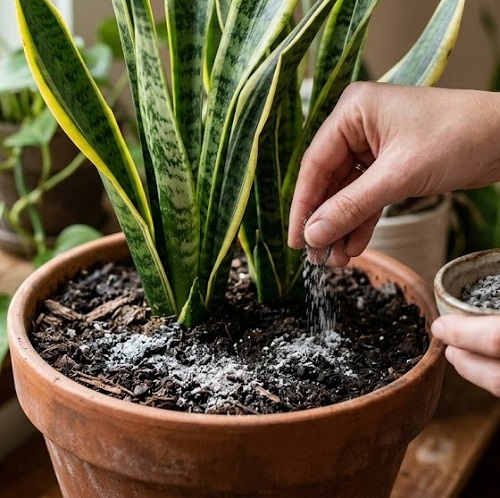
Use only cold, clean wood ashes. Do not use ashes from charcoal, coal, or treated wood. Sprinkle a very thin layer on top of dry soil. Mix it gently into the upper soil. Water lightly afterward. Apply ashes only once every few months. A small amount works better than repeated use. This prevents pH imbalance and salt buildup in the pot.
5. Signs Your Snake Plant Benefits from Ashes
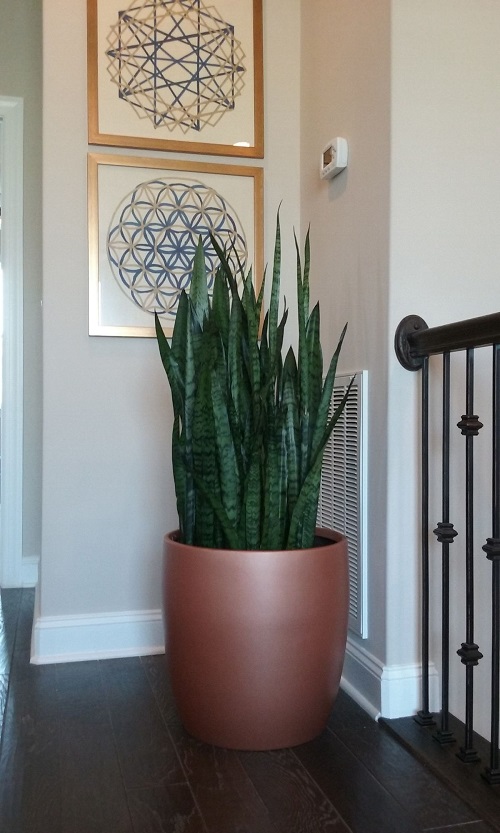
A snake plant that responds well to ashes shows firmer leaves. The leaves stand more upright. New growth looks thicker and healthier. Soil dries evenly and does not stay soggy. Roots grow stronger without rot. If you see steady improvement over several weeks, the amount used was correct. If growth slows or leaves fade, stop using ashes immediately.
6. Ashes Are a Supplement, Not a Solution

Ashes help soil health but cannot meet all plant needs. Snake plants still require balanced nutrients over time. Ashes lack nitrogen, which supports leaf growth. Over-relying on ashes leads to nutrient imbalance. Use ashes only as a soil booster. Combine them with proper watering and occasional feeding. This balanced approach keeps your snake plant growing strong without stressing the roots.
7. What type of wood ash should You use
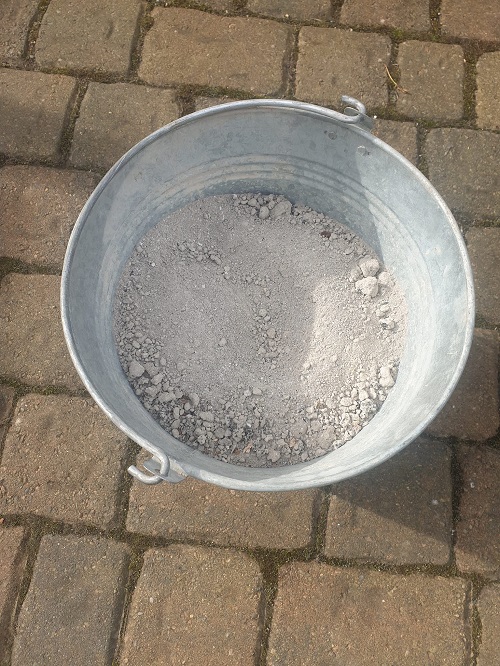
If you choose to use wood ash in your garden, make sure it comes from trees grown in clean, natural areas. Do not use ash from wood grown near factories or polluted land, as it may contain harmful chemicals or heavy metals. Avoid using ash if you do not know where the wood came from. Never use ash from treated wood, plastic, garbage, or waste oil, as these can harm plants and soil.