
Read about Common mistakes that stop orchids from flowering indoors. Understand hidden issues that affect blooms.
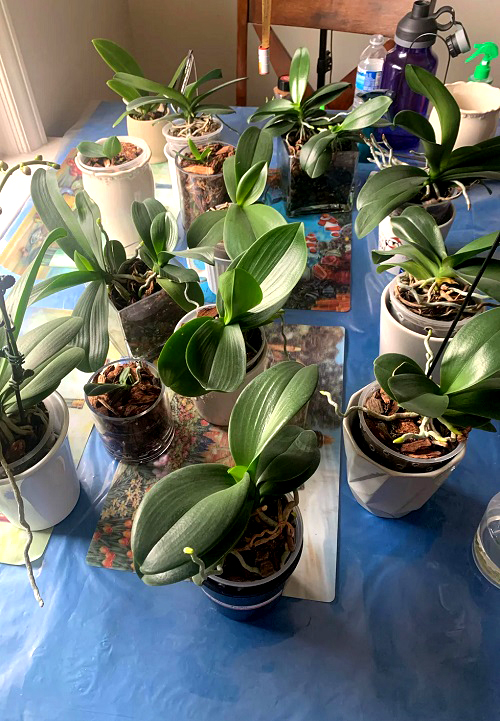
Many orchids look healthy but still refuse to flower indoors. Small, often unnoticed mistakes can quietly block blooms for months. These issues build up over time and confuse the natural cycle of the plant and leave growers waiting and wondering why flowers never appear.
Mistakes That Stop Orchids From Flowering Indoors
1. Watering it wrong
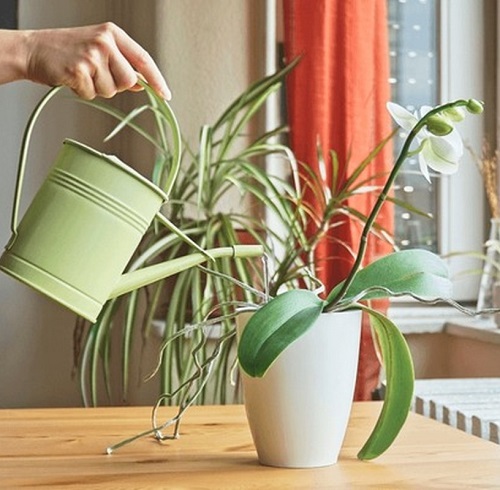
Orchid water care mistake is a main issue. Overwatering leads to root rot because the roots cannot breathe, making the plant weak and unable to bloom. Indoors, orchids dry out more rapidly due to the air circulation of fans, AC, and furnaces. Water only when the potting mix is almost dry, and use pots with proper drainage holes.
2. Pruning the Plant without the Need
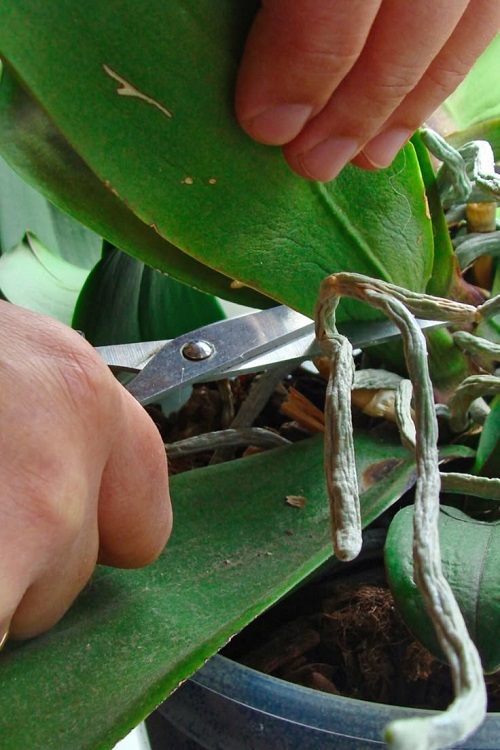
Never bring the sterilized scissors unless your orchid has yellowing leaves or black air roots. Many people see aerial orchid roots and think they need to be pruned, but you don’t need to think so. If you see your orchid with pseudobulbs or canes, it is growing well. So, what needs to be pruned? The only spent flower stem for Phalaenopsis orchids is cut above a healthy node with the sterilized scissors.
3. No Repotting
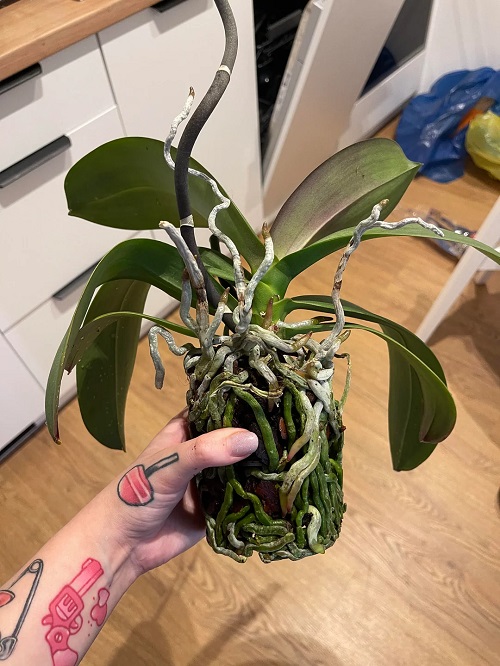
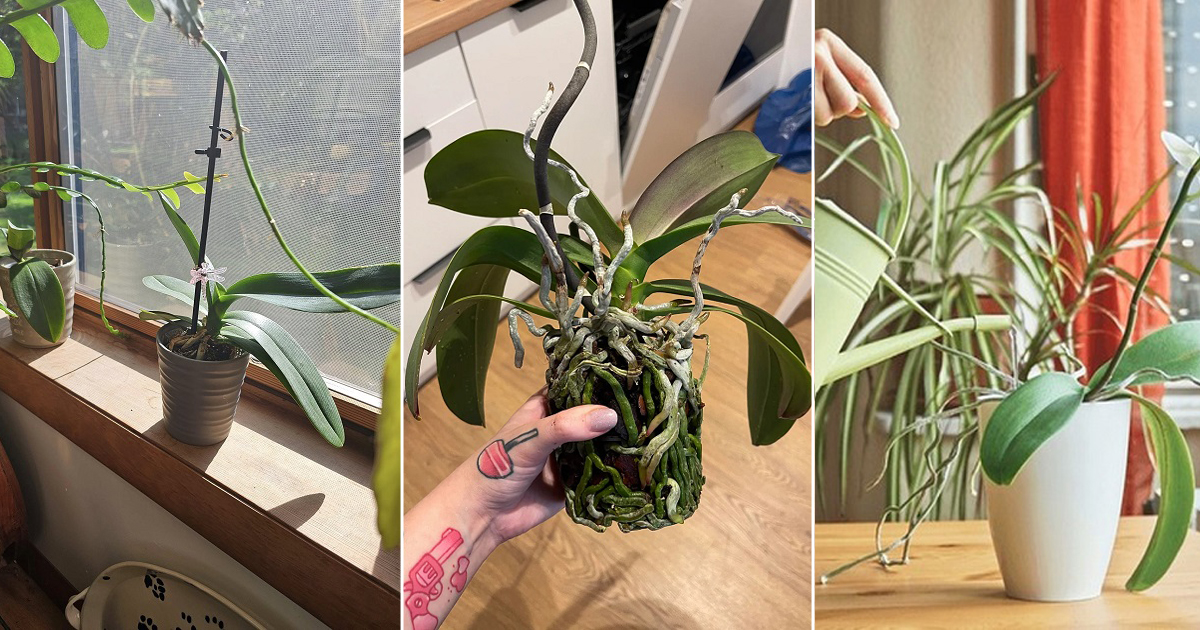
Orchids like to be slightly container-bound. If you have left your orchid in the same plastic cup with sphagnum in which you brought it from the nursery, then it needs to be changed after a few days. The same thing applies to the orchid, which has been in the same container for a year or more. If you see a tangle of roots beginning to stick up from the container, then it needs to be repotted.
4. Bathing in the sun for a long time
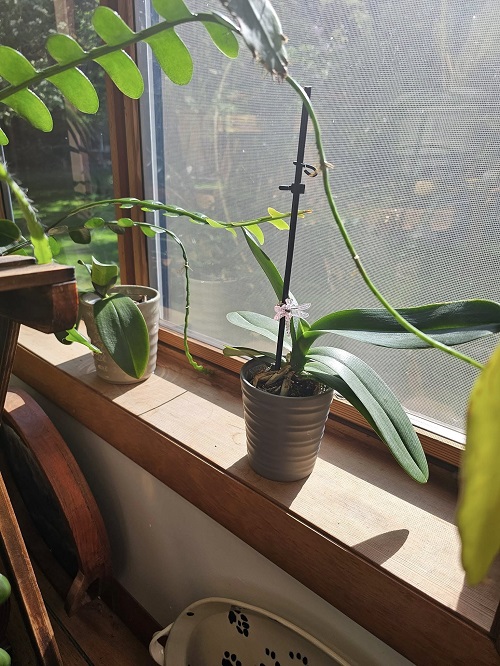
Orchids are not like your regular houseplants; they do not love full sun exposure. They grow in humid, tropical regions in densely canopied forests. If you place your orchid in full sun, the foliage will burn, and the plant will lose water rapidly. Place near an east- or west-facing window so that it gets bright but indirect light. Without enough light, it would survive but wouldn’t bloom. If leaves are very dark green, the plant needs more light.
5. Wrong Container Choice
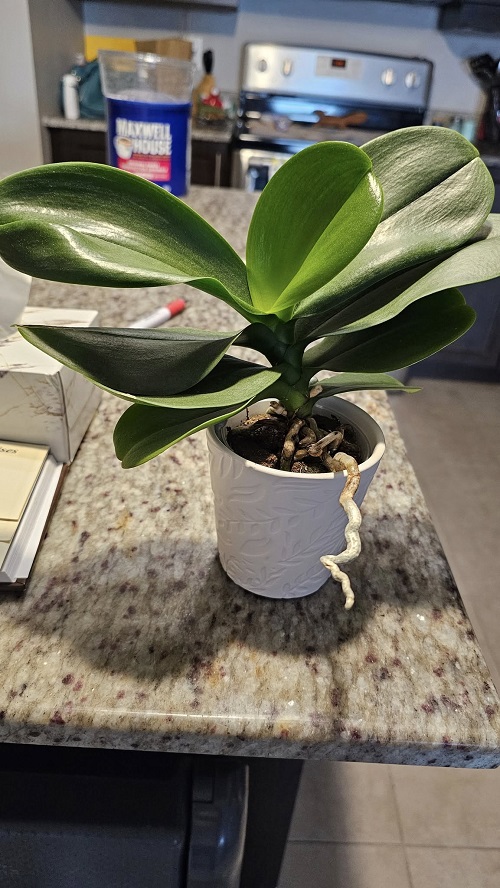
In the wild, epiphytic orchids grow on trees; their roots absorb moisture and nutrients from the air, rain, and surrounding debris. Before repotting, pick up a container that will replicate the orchid’s habitat. Orchid containers are slatted or basket-like, allowing the root system to free range. Pots with multiple air holes drilled into them, both on the bottom and along the sides, will allow good airflow and drainage. Orchid roots don’t need depth, and a wider pot will support the thick, heavy leaves of older orchids better than a tall container.
6. Wrong Planting Medium
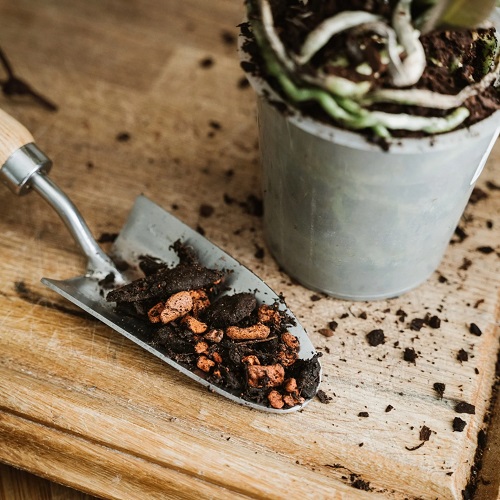
Orchids are the most commonly grown houseplants! They are epiphytes; it means they can be grown on trees without soil or substrates to support their root systems. Orchids should never be grown in standard potting mix; they need their own special mix, Orchid planting mix. A home grower can use a simple blend of 80% fir bark and 20% sphagnum moss. Add cocoa chips or charcoal if needed. Orchid roots need air, and heavy soil suffocates roots and blocks growth.