

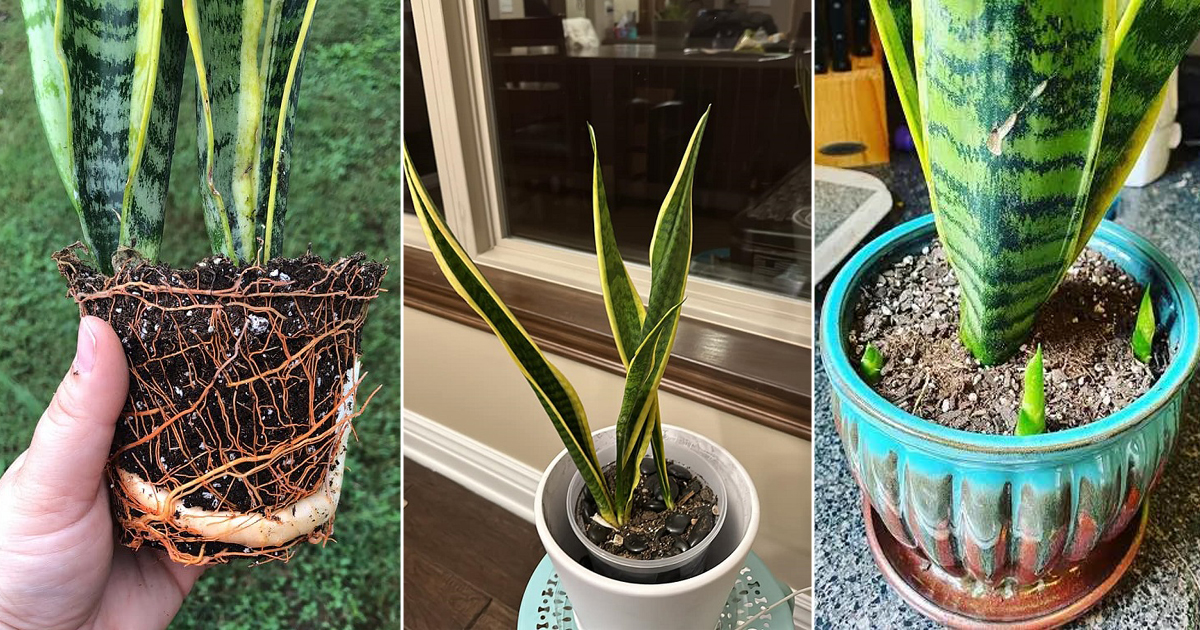
Find out what’s Really Stopping Your Snake Plant From Getting Bushier and what hidden growth issues may be slowing down new shoots.
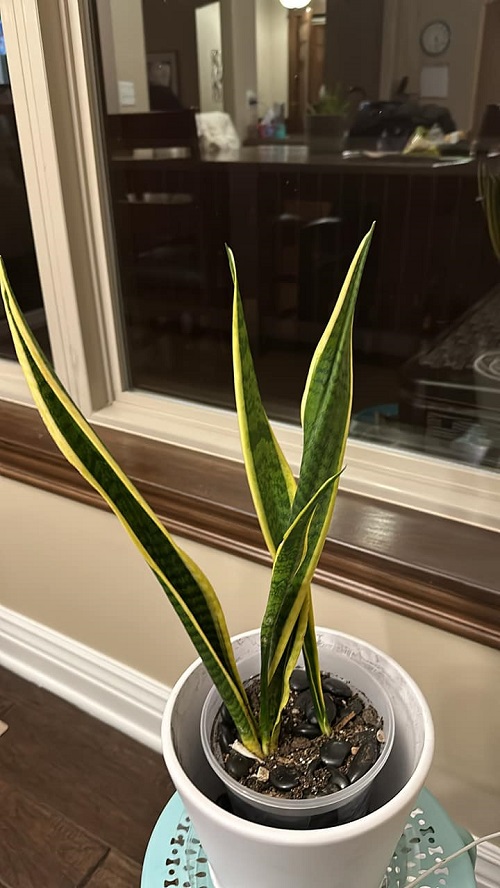
Many snake plants grow upright but do not spread. This happens because the plant focuses on vertical leaf growth instead of side shoots. The main leaf grows from a single point. If conditions push the plant to stretch, it keeps sending energy upward. It does not feel the need to make new pups. This makes the plant look thin even when it is healthy. Here you will find out what’s Really Stopping Your Snake Plant From Getting Bushier.
What’s Really Stopping Your Snake Plant From Getting Bushier
1. Lack of Strong Root Space
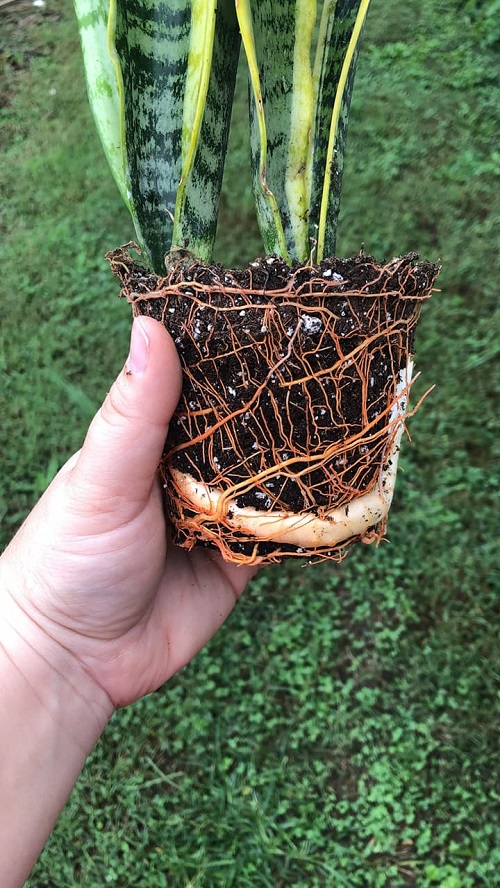
A snake plant needs room to grow new shoots. When the roots feel crowded or damaged, the plant slows down side growth. Tight roots focus on survival instead of spreading. If the pot feels too deep or uneven inside, roots may grow poorly. Weak roots cannot support new pups. This stops the plant from becoming bushy over time.
2. Growth Happens in Bursts, Not Constantly
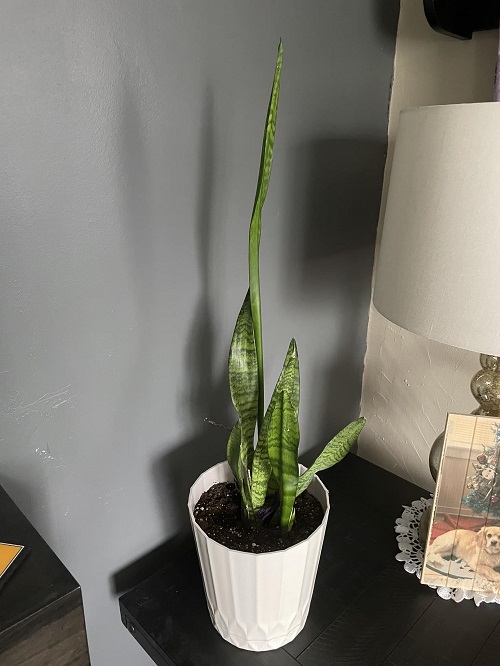
Snake plants do not grow evenly all year. They grow in short bursts. During rest periods, nothing seems to happen. This often worries plant owners. But it is normal. Bushiness appears suddenly after long pauses. The plant stores energy quietly. Then it releases it all at once.
3. Underground Growth Taking Longer Than Expected
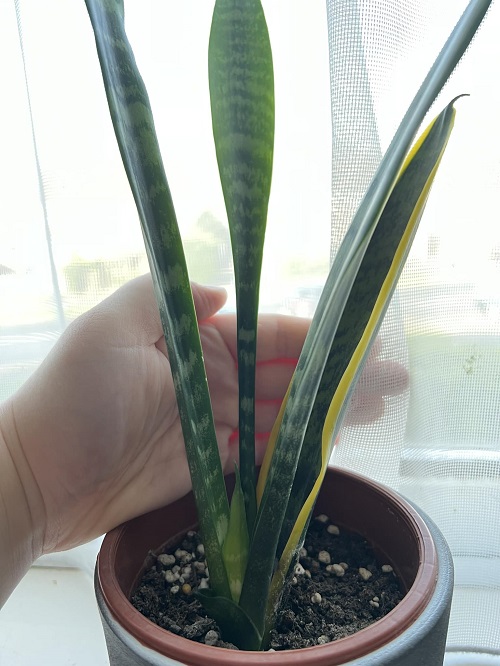
Sometimes growth happens below the soil first. The plant builds rhizomes before sending shoots upward. You may not see changes for months. This hidden work delays visible bushiness. The plant prepares for future growth. Patience matters here. Pulling or disturbing the plant slows this process even more.
4. Old Leaves Blocking New Shoots
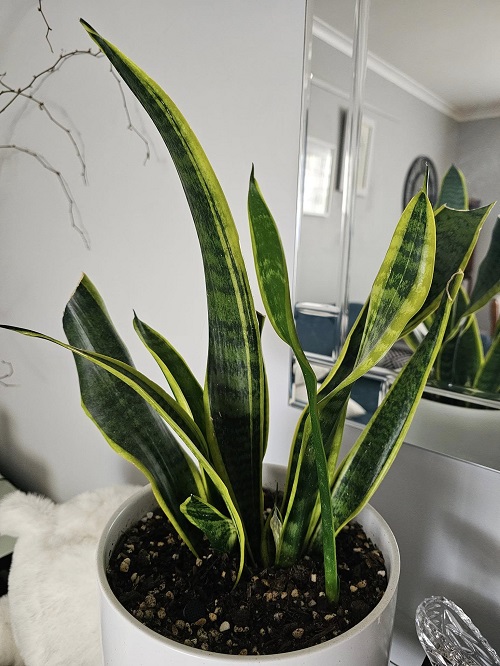
Old thick leaves can block new pups from rising. When leaves crowd the soil surface, pups struggle to push through. This delays visible growth. The plant still produces shoots, but they remain hidden. Over time, this makes the plant look stuck. Space around the base helps pups emerge freely.
5. Stress From Frequent Changes
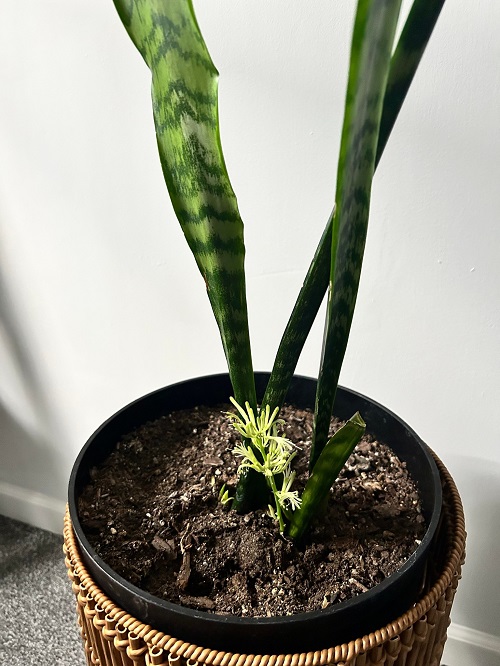
Snake plants dislike frequent movement. Constant changes confuse growth patterns. Each move forces the plant to adjust again. It pauses side growth while it adapts. When this happens often, the plant stays narrow. It grows leaves but delays pups. Stable placement helps the plant feel secure enough to spread.
6. Natural Growth Habit of the Variety
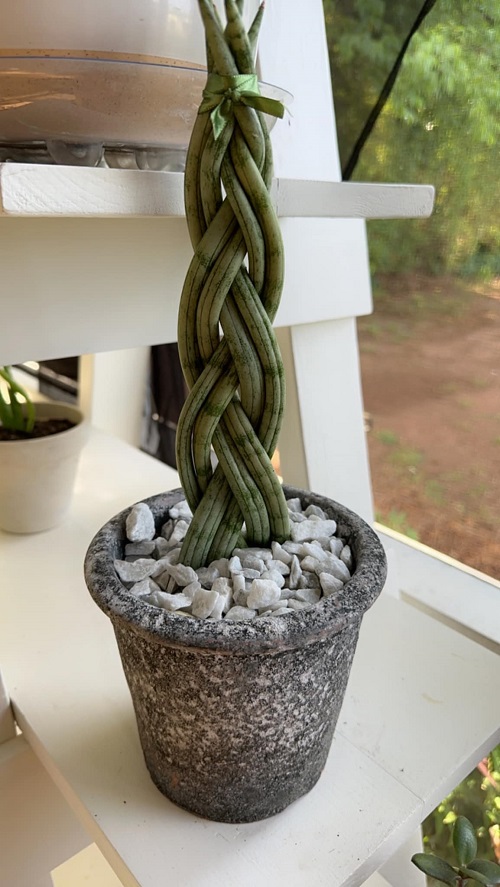
Some snake plant types naturally grow narrow. They produce fewer pups than others. Even with perfect conditions, these varieties stay upright and spaced. This is not a problem. It is how they grow. Expecting a dense look from a slim variety leads to disappointment. Knowing the plant type helps set the right expectation.
7. Energy Going Into Leaf Repair Instead of Growth
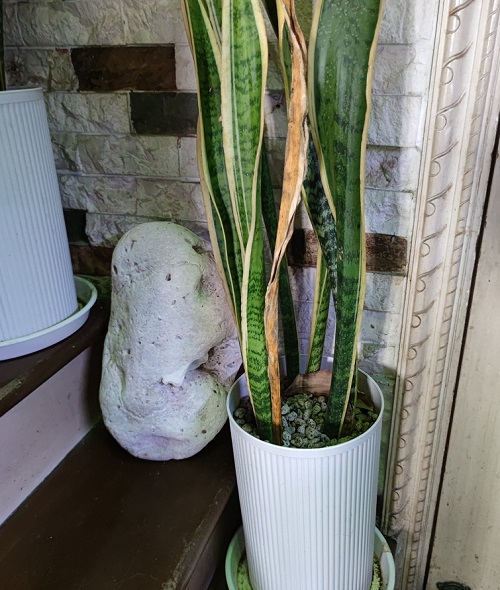
When a snake plant repairs damaged leaves, it uses stored energy. Cracks, bends, or scars force the plant to focus on healing. This reduces energy for new growth. Even small stress can delay pups. The plant chooses to protect existing leaves instead of making new ones. This keeps the plant upright but not full.
8. Too Much Empty Space Between Leaves
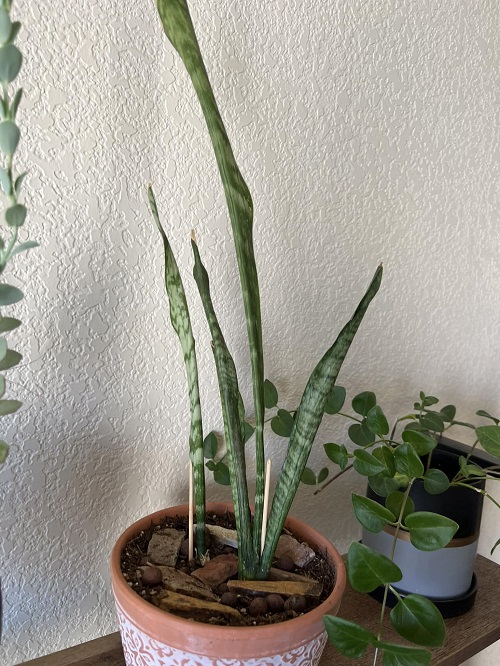
Snake plants grow from underground stems called rhizomes. If these spread too far apart, new shoots appear slowly. This happens when the plant grows unevenly inside the pot. The plant does not cluster tightly. As a result, leaves look spaced out. The plant stays healthy but never looks bushy.
9. Slow Pups Due to Plant Age
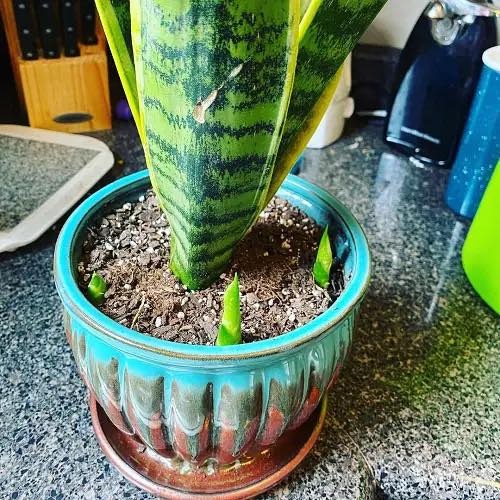
Young snake plants grow slowly at first. They focus on building a strong base. During this stage, they rarely produce side shoots. Older plants push out more pups when they feel stable. If your plant is still young, it may just need time. This is normal and does not mean something is wrong.