
As an Amazon Associate, we earn a small commission from qualifying purchases — at no extra cost to you.
Keep your favorite coleus plants growing through winter! Learn how to save coleus plants for next year with these simple fall tips.
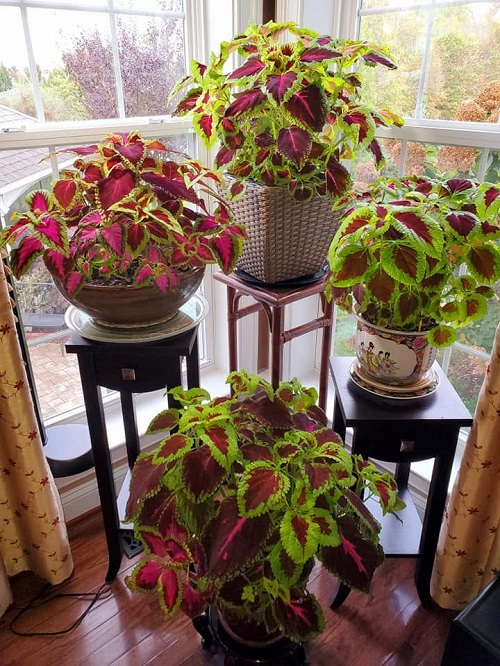
Coleus is one of the most eye-catching plants in my summer garden. Over the past few years, mine have grown into large, bushy plants with leaves in shades of green, purple, brown, and bright pink. Even when other plants begin to fade in early fall, coleus continues to add color to the garden. But as the evenings get colder, it is time to think about how to protect these plants.
Many gardeners grow coleus as an annual in summer pots and garden beds. However, you can keep your plants growing beyond summer by bringing them indoors before the cold weather arrives. Coleus is a tropical perennial, so it can continue growing indoors when you give it enough light and warmth. A sunny windowsill is often a good place to start.
To help your coleus survive winter, you need to prepare it for the move indoors and provide the right care. You can also take cuttings to grow new plants for the next season. Even if you have never kept coleus through winter before, the process is simple. With a little preparation, you can protect your plants and enjoy their colorful leaves until spring.
How to Save Coleus Plants for Next Year – Grow Them Indoors This Fall
Check this complete indoor garden setup and transform your plant corner into a year-round growing station. Give a quick glance at our Amazon Storefront for more such essential needs.
Why Bring Coleus Indoors
Coleus plants love warm weather and cannot tolerate cold temperatures. Do not wait until the first frost to bring them indoors, as cold weather can quickly damage their stems. Start watching nighttime temperatures as fall progresses. When temperatures drop below 50°F (10°C), it is time to move your coleus indoors. If you live in a colder region, you may need to do this now. In warmer areas, you can keep your plants outside a little longer.
Moving your coleus indoors before the cold sets in helps it adjust to the change. You can bring a healthy potted plant inside and grow it as a houseplant through winter. You can also take a few cuttings and root them on a bright windowsill. This gives you extra plants for next year without taking up much space. Take your cuttings while the plant is still healthy and growing well, as they are more likely to root successfully.
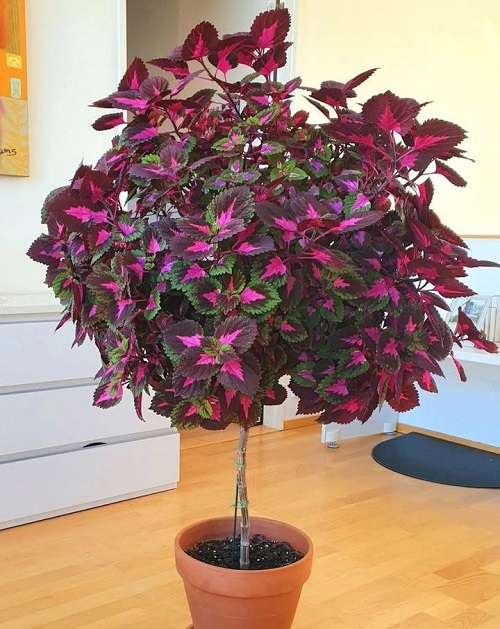
The shape and size of your coleus can help you choose the best spot for it indoors. Large varieties like Kong, Wasabi, Henna, and Saturn look good in tall decorative pots placed near a sunny window. Smaller or trailing varieties, such as Chocolate Covered Cherry and Strawberry Drop, work well in hanging baskets, wall planters, or pots on a windowsill.
Move your coleus indoors in early fall while it is still healthy and growing well. This gives the main plant and any new cuttings time to adjust to indoor light and humidity before winter arrives.
Fall is also a good time to refresh the potting mix, especially if the plant has been growing in the same soil all summer. Choose a light, well-draining potting mix. A cactus and succulent mix can work well, or you can improve regular potting soil by adding perlite. Once your plant is settled in its new pot and spot, follow these tips to keep your coleus healthy indoors.
Moving your coleus inside? Check out these indoor planters with drainage holes for an easier transition from garden to home.
Moving Coleus Indoors
Before bringing your coleus indoors, check it carefully for pests. This helps protect your other houseplants from insects that may be hiding on the plant. Look under the leaves, around the stems, and where the leaves join the stems. Aphids, mealybugs, and spider mites are common pests to watch for.
Wash the foliage gently with water to remove dust and insects. You can also wipe the leaves with a soft cloth and use insecticidal soap according to the product instructions. Neem oil spray is another option, but follow the label directions and test it on a few leaves first to check for damage.
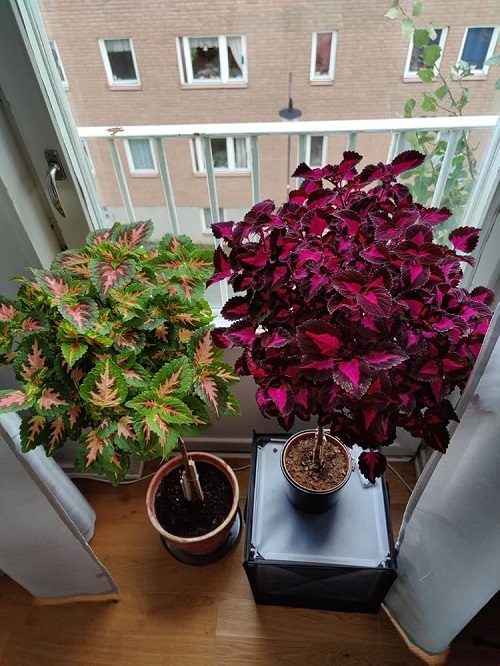
Your coleus also needs time to adjust to indoor conditions. If it has been growing in direct sunlight outside, moving it straight into your home can stress the plant and cause leaf drop. Place the pot in a bright, sheltered spot for a few days before moving it indoors. Then keep it near a bright south- or west-facing window, where it can receive plenty of light.
Check the potting mix before bringing the plant inside. If the soil has become compacted or needs refreshing, replace some of it with fresh potting mix. Avoid adding extra soil over the roots just for insulation, as coleus does not need this step.
Finally, use small pruning shears to remove damaged leaves and long, weak stems.
Treat unwanted hitchhikers before they reach your houseplants with an insecticidal soap made for indoor plants.
Taking Coleus Cuttings in Fall
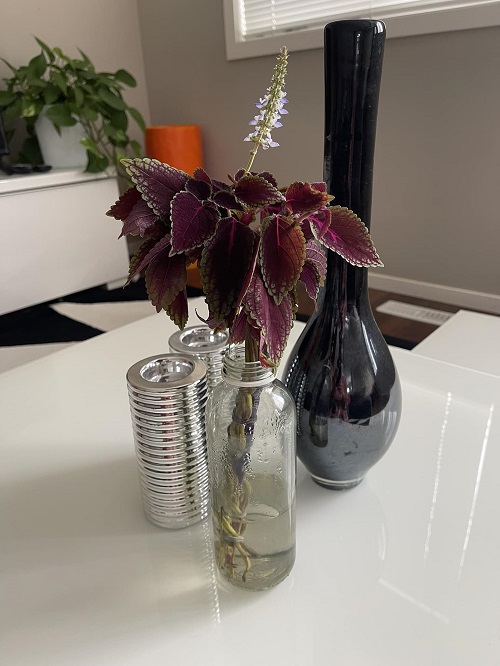
Taking coleus cuttings in late summer is an easy way to grow new plants for next year. The plants are still growing well at this time, so the cuttings can develop roots before winter arrives. Rooting coleus in water is simple, and you can watch the roots grow inside the glass.
Start by using sharp, clean pruning snips. Wipe the blades with rubbing alcohol before cutting. Take 4–6-inch (10–15 cm) cuttings from healthy stems that are not flowering. Remove the lower leaves, leaving three or four leaves at the top. Make sure no leaves sit below the water, as they can rot and make the water dirty.
Place the cuttings in a clean glass jar or vase filled with room-temperature water. Submerge the bare stem nodes where you removed the lower leaves. These are the points where new roots will develop. A narrow-necked jar can help hold the stems upright. Most coleus varieties root easily in water, so you usually do not need rooting hormone.
Keep the jar on a warm windowsill with bright, indirect light. Avoid cold drafts and make sure the leaves do not touch the window glass. A room temperature of 65–75°F (18–24°C) is suitable for rooting. Change the water every two or three days to keep it fresh and reduce the risk of stem rot.
You may see roots forming within 7–10 days, although some cuttings take longer. Once the roots grow to about 1 inch (2.5 cm) long, you can plant the cuttings in small pots filled with well-draining potting mix. With a little care, you will have new coleus plants to grow indoors through winter and move outside again when the weather warms up.
Planning to save several cuttings? A glass propagation station keeps the stems upright while letting you watch the roots develop.
How to Care Coleus Indoors
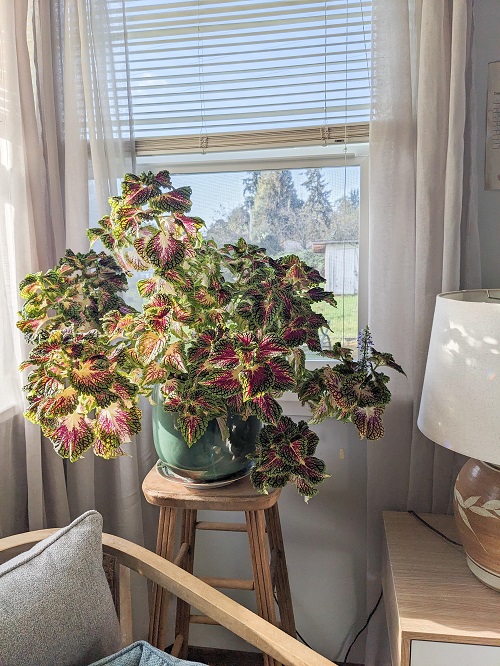
Keeping coleus healthy indoors during winter is easy when you give it the right light, water, and care. Place your plant near a bright window where it gets plenty of indirect sunlight. If your home does not have enough natural light, use a full-spectrum grow light to help keep the leaves colorful.
Be careful not to overwater your coleus during winter. Let the top inch of soil dry before watering again. Use a pot with drainage holes, and empty any water that collects in the saucer. Since growth slows during the colder months, avoid heavy feeding. If your plant is still growing, you can use a diluted houseplant fertilizer according to the label directions.
Regular pruning also helps your coleus grow fuller. Every few weeks, pinch off the growing tips with your fingers or use clean pruning snips. Remove any flower spikes as they appear, as this helps the plant put more energy into its leaves. These simple steps will help your coleus stay bushy and healthy until spring.
A pair of sharp pruning snips makes it easier to remove damaged leaves and trim leggy stems before the plant comes inside.
When can you safely move indoor coleus back outside?
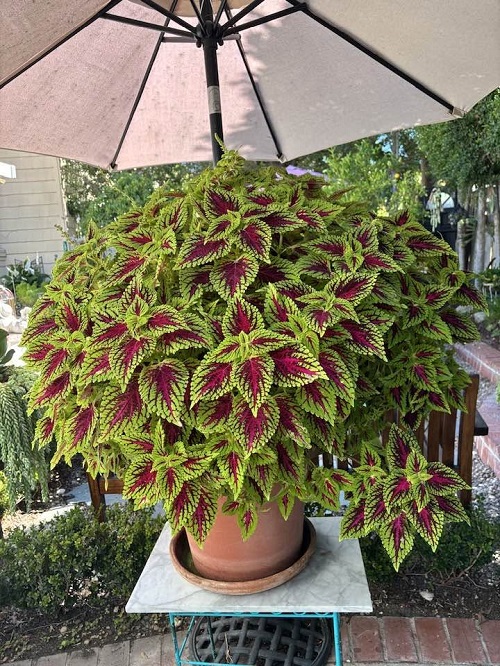
You can move your coleus back outside in spring once the risk of frost has passed and nighttime temperatures stay above 50°F (10°C). Before moving the plants permanently, help them adjust to outdoor conditions over a week. Place them in a sheltered, shady spot during the day and bring them indoors at night. Gradually introduce them to more sunlight to prevent leaf damage.
Want to know more about growing and propagating coleus? Check out Coleus: Rainbow Foliage for Containers and Gardens by Ray Rogers for practical growing advice, propagation tips, and ideas for making the most of these colorful plants.