
As an Amazon Associate, we earn a small commission from qualifying purchases — at no extra cost to you.
Worried why your Chinese money plant is dropping leaves? Learn what causes leaf loss and how to help your plant recover.
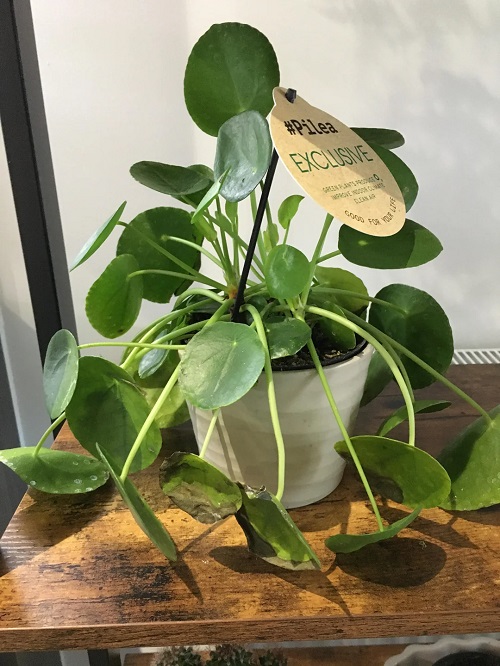
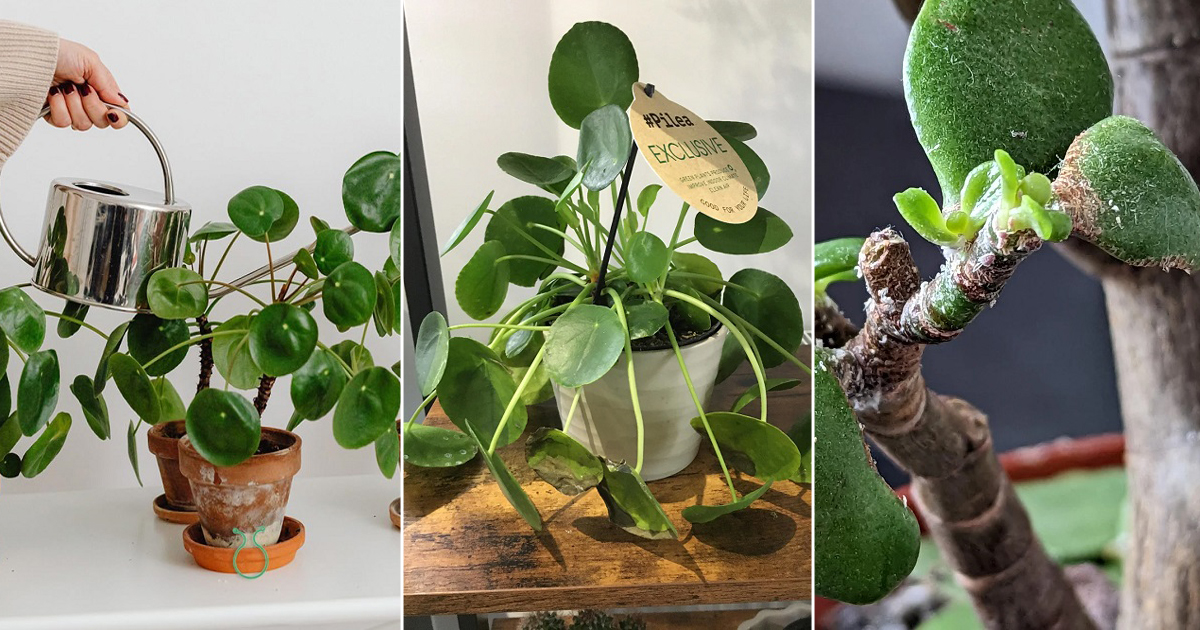
Seeing your Chinese money plant drop leaves can be worrying, especially when it looks healthy otherwise. So, Why Is My Chinese Money Plant Dropping Leaves? A few common problems, such as overwatering, poor light, temperature changes, or pests, could be behind it. Learn what to check and how to help your plant recover.
Why Is My Chinese Money Plant Dropping Leaves?
This post contains affiliate links. As an Amazon Associate, we earn from qualifying purchases, which support our website. You can check out our Amazon storefront here for all kinds of essentials you’ll need.
1. The Soil Is Staying Dry for Too Long
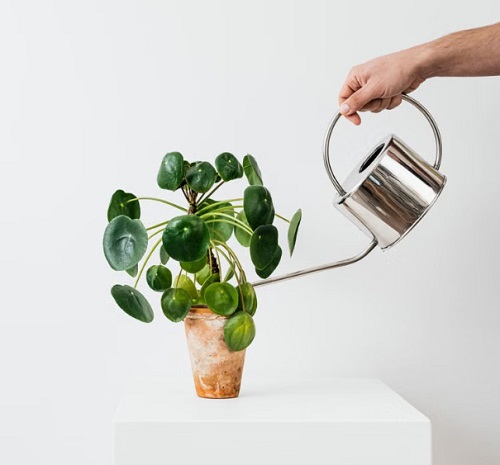
If the soil becomes too dry, your Chinese money plant may start losing leaves. Without enough water, the leaves lose their firmness. They may droop, curl at the edges, or develop dry brown patches before falling off.
Check the soil with your finger. If it feels dry below the surface and the pot feels light, it’s time to water. Add water slowly until the soil is moist throughout and excess water comes out through the drainage holes.
Sometimes, very dry soil does not absorb water easily. If water runs straight through the pot, add it in small amounts and give the soil time to soak it up.
Once you’ve watered the plant, let the pot drain completely. Give the leaves a little time to recover before watering again.
Use a soil moisture meter to check moisture levels below the soil surface and avoid watering your houseplants too often.
2. Sudden Temperature Changes Are Stressing the Plant
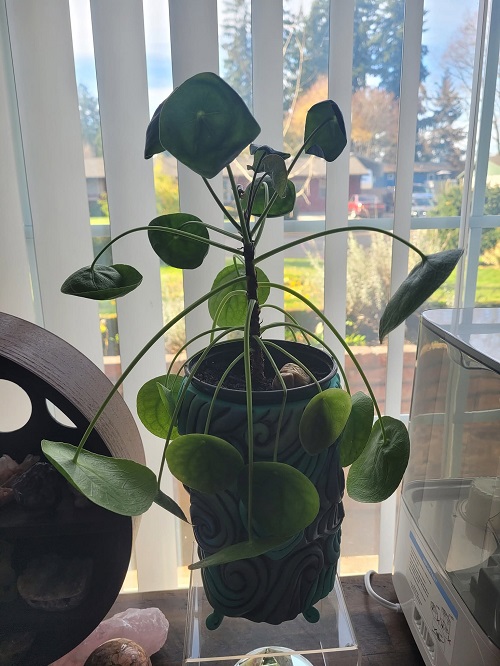
Sometimes, the problem has nothing to do with watering or light. Sudden changes in temperature can stress your Chinese money plant and cause its leaves to fall. Cold air from an open window or hot air from a heater can both affect the plant.
If the leaves started falling soon after you moved the pot, check the temperature around its new spot.
Keep your plant in a room with a steady temperature of around 18–24°C (65–75°F). Move it away from air conditioners, heaters, and doors that open to the outside. During winter, avoid placing the pot right against cold window glass.
Gardening Tip: A windowsill can become much colder at night than the rest of the room. If your plant sits beside a window, check how cold the area feels after sunset. Move the pot a little further into the room if needed.
Once you find a comfortable spot, leave your plant there. Give it time to adjust instead of moving it from place to place.
Keep a digital thermometer and hygrometer nearby to monitor room temperature and humidity levels and create a more comfortable environment for your houseplants.
3. It Isn’t Getting Enough Light
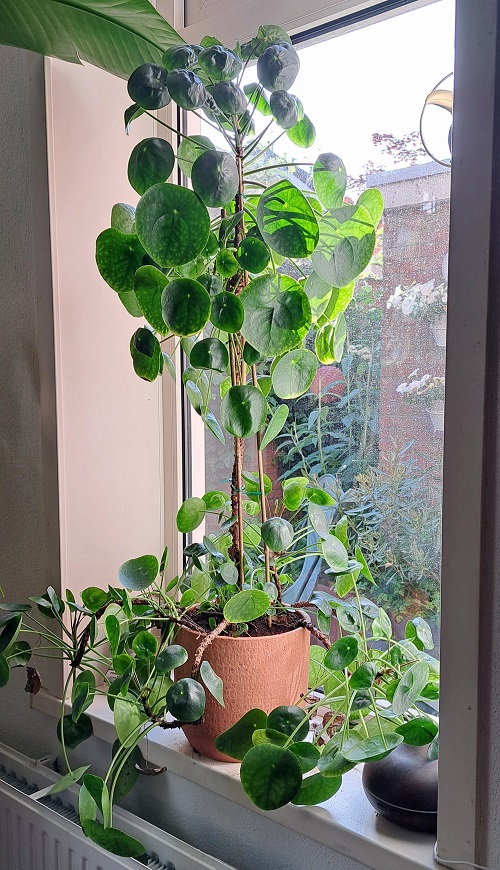
A Chinese money plant kept in a dark corner may start losing its full shape. You may notice the stems growing longer as they reach towards the nearest window. The new leaves may also become smaller, and growth can slow down. Older leaves may eventually turn yellow and fall off.
Low light can also affect how quickly the soil dries. The plant uses less water when it receives less light, so the soil may stay wet for longer. This can increase the risk of root rot.
Move your plant closer to a bright window where it can get plenty of indirect light. An east-facing window is usually a good choice. If you use a south- or west-facing window, keep the plant a little away from the glass or use a sheer curtain to reduce strong sunlight.
Gardening Tip: Turn the pot a quarter turn every week or two. This helps all sides of the plant receive light and keeps it from leaning towards the window.
Use a digital light meter to measure the light levels in different areas of your home and find a suitable spot for each plant.
4. You’re Watering It Too Often
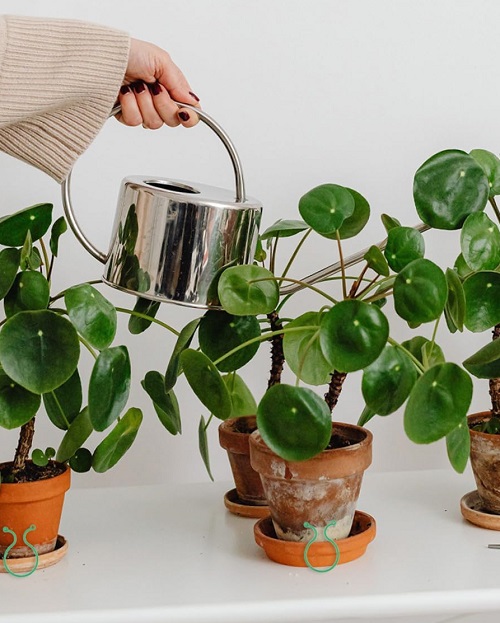
Too much water can cause your Chinese money plant to lose leaves. When the soil stays wet for too long, the roots cannot get enough air and may start to rot. You may notice the leaves turning yellow and drooping, even though the soil is still moist.
Before watering again, check the soil. If it stays wet for several days, the pot feels heavy, or the soil has a sour smell, check the roots and drainage holes.
Healthy roots feel firm, while rotten roots look dark and feel soft and mushy.
If you find rotten roots, cut away the damaged parts with clean scissors. Repot the plant in fresh, loose potting mix. Choose a pot with drainage holes that is only slightly larger than the remaining roots.
Going forward, let the top 1–2 inches of soil dry before watering. Water thoroughly and empty the saucer so the roots do not sit in excess water.
Shop indoor potting mix on Amazon.
5. You’re Mistaking Normal Leaf Shedding for a Problem
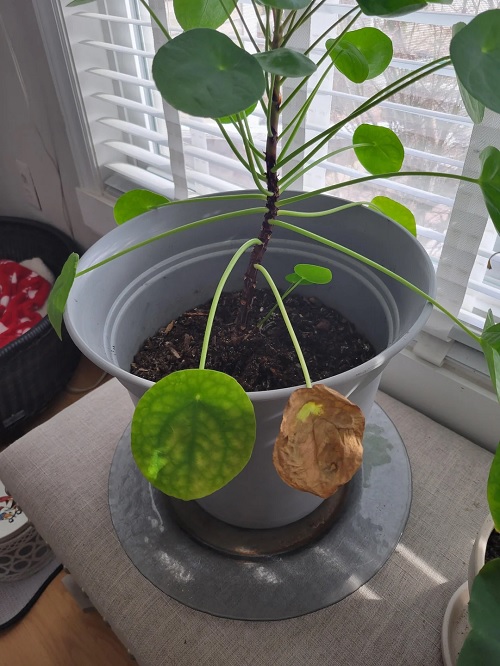
Not every fallen leaf means your Chinese money plant has a problem. If the upper leaves look healthy and new leaves are growing, an occasional lower leaf turning yellow and falling is usually normal.
Remove the dead leaf and continue caring for your plant as usual. You don’t need to add extra fertilizer or water more often just because the lower stem looks bare.
As the plant grows, new leaves appear at the growing tips. They don’t grow back in the same spots as old leaves. So, an older plant may naturally develop a longer, bare stem.
However, if several leaves fall within a few days, young leaves start dropping, or the stem feels soft, check the soil, roots, and growing conditions. The speed of leaf drop and the health of the remaining foliage can help you tell normal shedding from a problem.
Shop Sharp Pruning Shears to Remove Damaged Plant Leaves.
6. Pests Are Damaging the Leaves
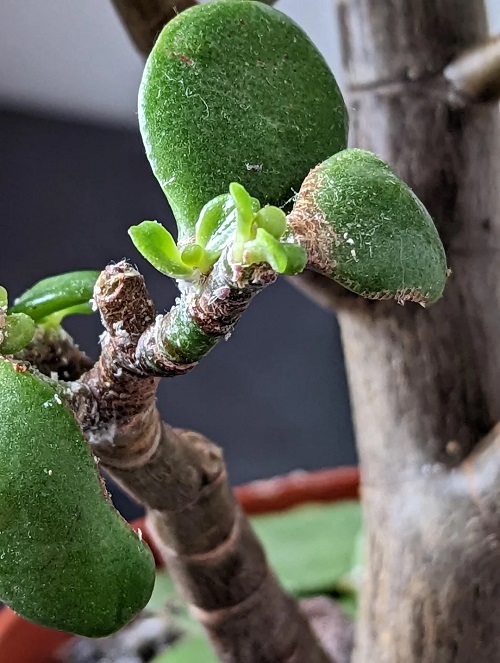
If your Chinese money plant is getting enough light and you are watering it properly, check the leaves for pests.
Spider mites can leave tiny pale spots on the leaves and fine webbing around the stems. Mealybugs look like small white cottony patches near the leaf joints and stems. These pests feed on the plant and can weaken the leaves, causing them to fall.
Check the underside of the leaves and the places where the leaf stalks meet the stem. Pests often hide in these areas.
If you find any, move the plant away from your other houseplants. Wipe off the visible insects with a damp cloth or use a treatment made for houseplants, following the product instructions.
Keep checking the plant over the next few days. Some pests are easy to miss, so inspect nearby plants as well.
Get Insecticidal Soap to treat on Your Houseplants.
Bottom Line: Check Which Leaves Are Falling
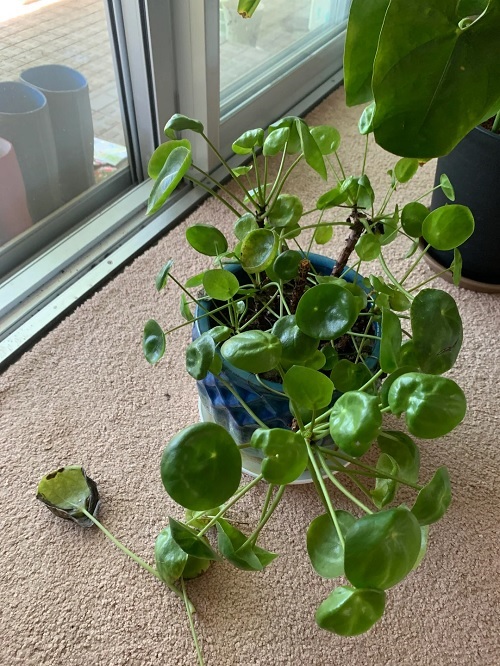
Your plant’s leaves can tell you what may be wrong, so check them before changing your care routine.
Yellow lower leaves and wet soil may mean you are watering too often. Limp leaves and very dry soil can mean the plant needs water. If you see fine webbing or small white, cotton-like patches, check for pests.
If you are still unsure, note when the leaves started falling, when you last watered, and whether the soil was wet or dry. These details can help you find a pattern. Avoid changing several things at once, as this can put more stress on your plant.
Want every houseplant in your home to thrive? This beginner-friendly guide is packed with practical tips you’ll actually use.