
As an Amazon Associate, we earn a small commission from qualifying purchases — at no extra cost to you.
As winter gets closer, check these simple Things Your Snake Plant Needs Before Winter Gets Colder to stay healthy and avoid common problems.
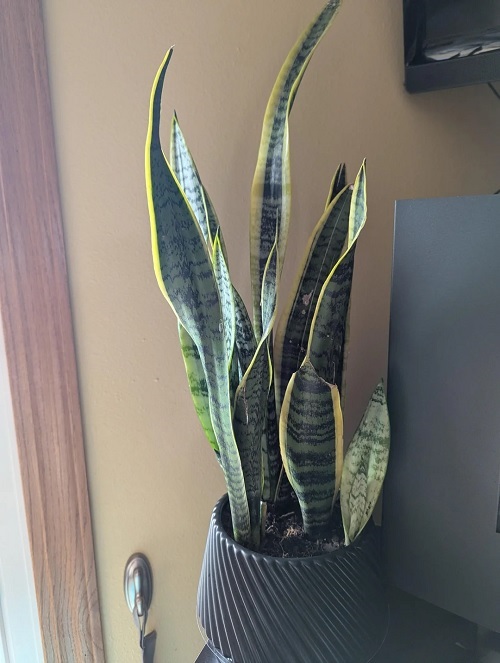
Snake plants can handle neglect, but they need a little extra attention in November. Shorter days, cold windows, and indoor heating mean you need to change your care routine.
For most of the year, snake plants are easy to care for. But winter brings a few challenges. The days become shorter, temperatures drop, and indoor heating dries the air. If you continue watering as often as you did in summer, the soil can stay wet for weeks. This can cause yellow leaves and soft, mushy stems.
Good snake plant care in winter means watering less and paying attention to your plant’s needs. As the days get shorter, growth slows down, and your snake plant uses less water. It does not need fertilizer during this time. Instead, let the soil dry out between waterings, keep the plant in a room with a steady temperature, and move it away from cold windows and drafts.
Take a few minutes to check your plant and go through these five simple steps. Repeat the checks in December, especially on cold and cloudy days. These small changes can help keep your snake plant healthy throughout winter.
Things Your Snake Plant Needs Before Winter Gets Colder
This post contains affiliate links. As an Amazon Associate, we earn from qualifying purchases, which support our website. You can check out our Amazon storefront here for all kinds of essentials you’ll need.
1. Check the Light Levels
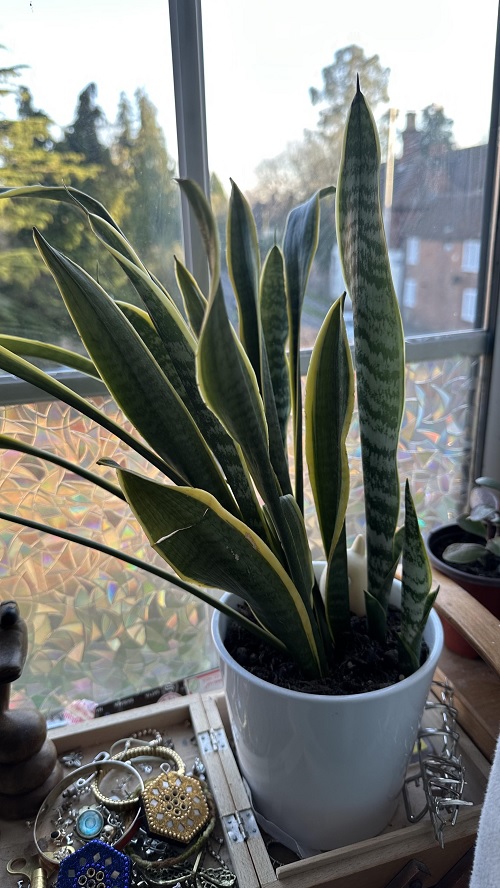
Snake plants can survive in low light, but they do not grow well in dark places. In November, the days become shorter, and the sun sits lower in the sky. A corner that received enough light in June may now be too dark for your plant.
When your snake plant gets less light, its growth slows down. It also uses less water, so the soil takes longer to dry. Move your plant closer to an east- or west-facing window. A spot about 3 feet (1 meter) from the window is a good choice. Do not move it straight from a dark corner into strong sunlight. Sudden exposure to several hours of direct south-facing sunlight can burn the leaves. Make the change slowly so your plant has time to adjust.
Use a digital light meter to measure the light levels in different areas of your home and find a suitable spot for each plant.
2. Check Whether the Soil Is Dry Before Watering
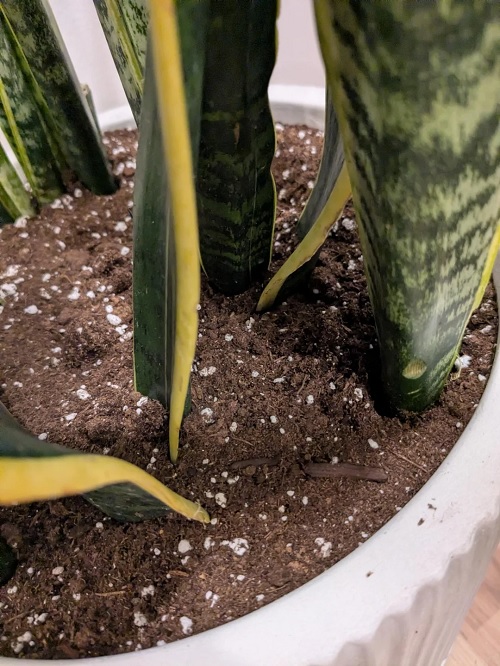
Do not follow a fixed schedule when watering snake plants. A snake plant that needed water every two weeks in July may need water only once a month or less in November. This happens because the plant grows more slowly and uses less water in winter.
Checking the top layer of soil is not enough. Push your finger deep into the soil to check for moisture. You can also use the chopstick trick. Push a wooden skewer to the bottom of the pot and pull it out. If the wood looks dark or has wet soil sticking to it, the mix is still damp. If it comes out clean and dry, the soil may be ready for watering.
You can also use a moisture meter if you find it difficult to check the soil by hand. Water only when the soil has dried out completely. After watering, let all the extra water drain from the pot. If the leaves become soft or start falling over near the soil, the roots may have stayed wet for too long.
Use a soil moisture meter to check moisture levels below the soil surface and avoid watering your houseplants too often.
3. Check for Cold Drafts and Temperature Changes
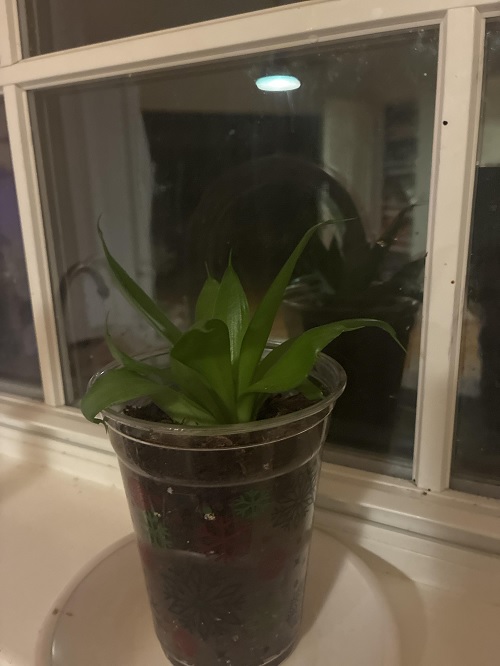
On a cold evening, place your hand near the window where your snake plant sits. If you feel cold air, your plant may also be getting too cold. Cold air can enter through window gaps, doors, or poorly sealed areas. A nearby heating vent can also cause sudden temperature changes.
Snake plants grow well in normal room temperatures of 60–85°F (16–29°C). However, they can suffer if the temperature stays below 50°F (10°C) for long periods. Leaves that touch cold window glass may develop soft, wet-looking patches.
To protect your plant, move the pot a little away from the window at night. Keeping it about 1–2 feet (30–60 cm) from the glass can help protect the leaves from cold temperatures.
Keep a digital thermometer and hygrometer nearby to monitor room temperature and humidity levels and create a more comfortable environment for your houseplants.
4. Check the Leaves for Early Warning Signs
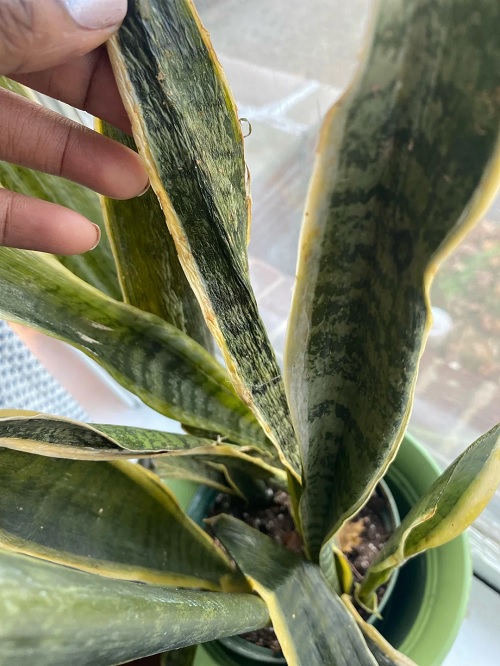
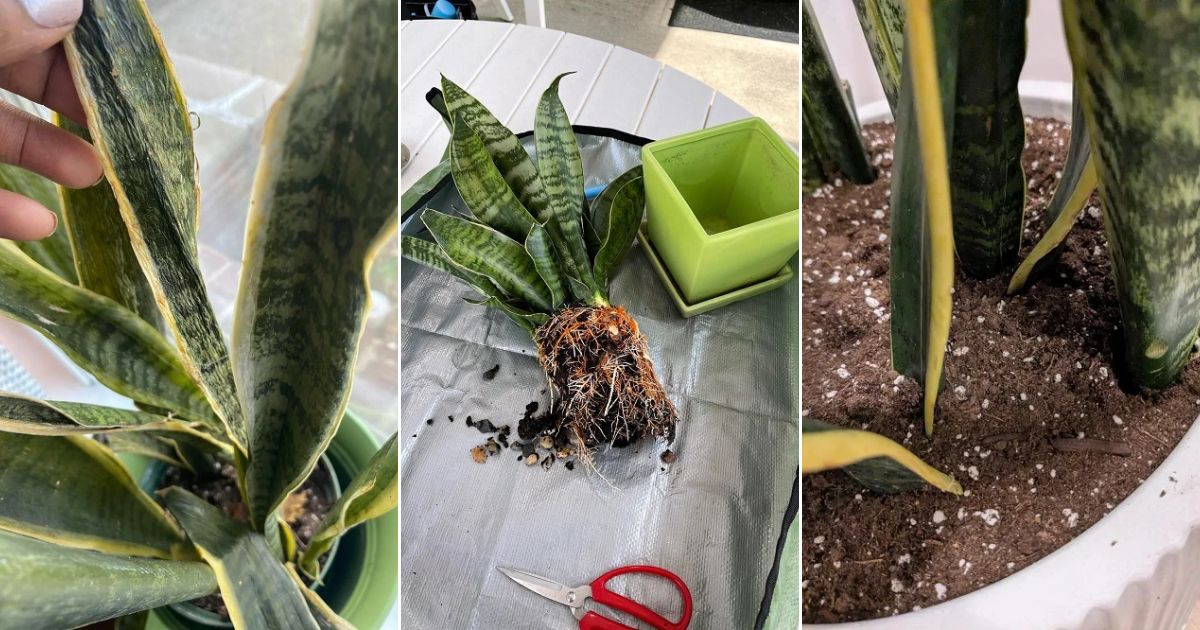
Check each leaf from the tip to the base for signs of common snake plant problems. If the leaves turn yellow near the base and feel soft or mushy, your plant may be getting too much water. This can lead to root rot. Cold damage can also cause similar symptoms.
Wrinkled or curling leaves may mean your plant has gone too long without water. Check the soil before watering to make sure it is dry.
Next, look between the leaves and in the places where they overlap. These areas can hide common houseplant pests. Small white, cotton-like patches may be mealybugs (Planococcus citri). Small tan or brown bumps that stay attached to the leaves may be scale insects (Coccus hesperidum).
To remove a few pests, gently dab them with a cotton swab dipped in rubbing alcohol. Then apply a ready-to-use insecticidal soap according to the label directions.
Get Insecticidal Soap to treat on Your Houseplants.
5. Check That the Pot Drains Properly
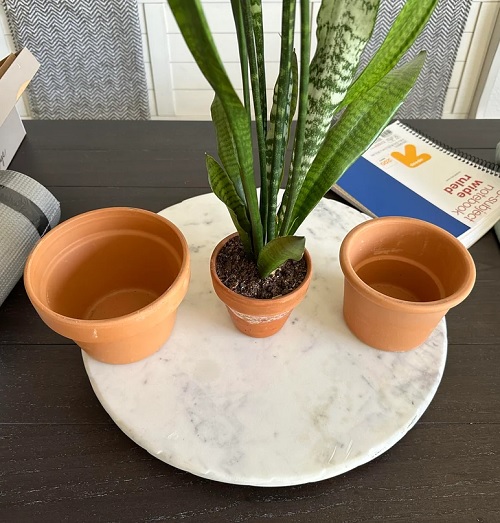
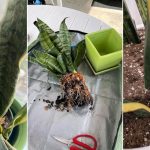
Tilt the pot and check the bottom. Make sure the drainage holes are not blocked by packed soil, small stones, or roots. If you keep your snake plant inside a decorative pot, take it out and check for standing water. The plant may be sitting in water without you noticing.
If the soil stays wet for a week or more after watering, the potting mix may have broken down and started holding too much water.
Winter is not the best time to disturb the roots, so repotting snake plants is usually better in spring. However, if the pot has no proper drainage or the soil stays soggy for too long, repotting now may be necessary. This can help prevent root rot.
When you repot, choose a pot with drainage holes and place a saucer underneath to catch extra water.
Shop indoor potting mix on Amazon.
What Not to Do with Snake Plants in November
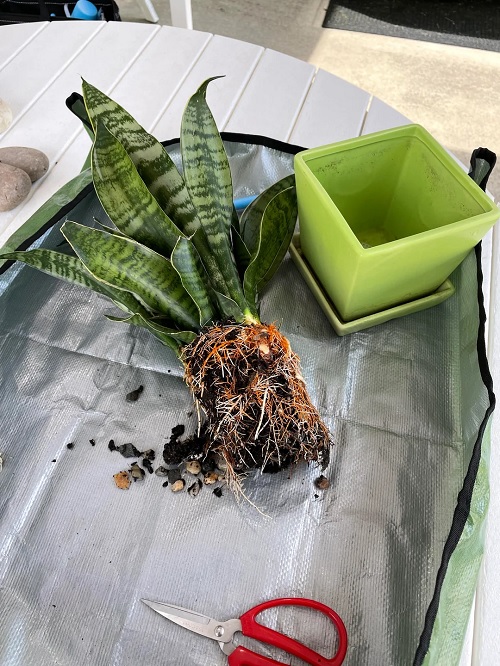
Stop using fertilizer until spring. Your snake plant grows very slowly in winter and does not need extra food. If you add fertilizer when the plant is not growing, salts can build up in the soil and damage the roots.
Avoid repotting your snake plant unless it has a serious drainage problem or the soil stays wet for too long. Fresh soil and a larger pot can encourage new growth when the plant does not get enough light to support it. The roots also take longer to recover in a cool room.
Do not water your snake plant on a fixed schedule just because the indoor air feels dry. Dry air does not mean the soil is dry. Snake plants can handle dry indoor air much better than wet soil.
For the next few months, focus on keeping your plant healthy and stable rather than encouraging new growth.
Want every houseplant in your home to thrive? This beginner-friendly guide is packed with practical tips you’ll actually use.