
As an Amazon Associate, we earn a small commission from qualifying purchases — at no extra cost to you.
Notice dusty leaves or tiny pale spots? Learn How to Spot Spider Mites on Prayer Plants and stop them before they spread.
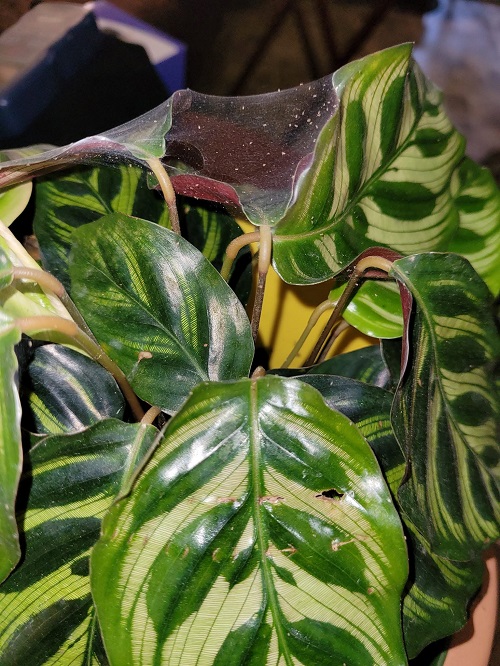
November is a common time for spider mite problems in houseplants. These tiny pests can be hard to notice because the early signs often look like dust on the leaves. Spider mites can attack many indoor plants, but prayer plants are among their common targets. Monstera and Alocasia plants can also be affected. If you notice fading leaves, dusty patches, or tiny spots on your houseplants this month, don’t assume they are dirty. Take a closer look to check for spider mites.
When we start using heaters in fall, the warm and dry air inside our homes creates the perfect conditions for spider mites to multiply. Higher temperatures also help them reproduce faster. In comfortable indoor conditions, a small spider mite population can grow into thousands within just a few weeks. This is why infestations often become more noticeable by mid-November.
Spider mites feed on plant leaves and can cause serious damage if you don’t treat them early. They can also spread quickly from one houseplant to another. The good news is that you can control these pests if you spot them in time. In this guide, we’ll help you identify the early signs of spider mites, understand which houseplants are most at risk, and learn how to treat an infestation before it spreads.
How to Spot Spider Mites on Prayer Plants Before They Spread
This post contains affiliate links. As an Amazon Associate, we earn from qualifying purchases, which support our website. You can check out our Amazon storefront here for all kinds of essentials you’ll need.
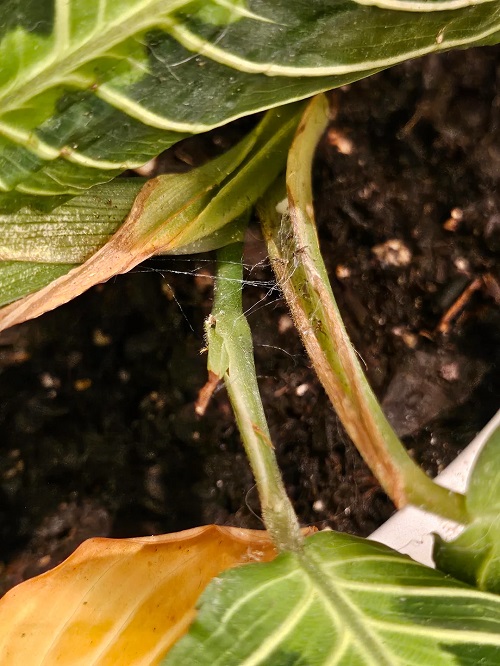
Start by wiping your houseplant’s leaves with a soft, damp cloth to remove any dust. Then check the leaves carefully for these common signs of spider mites:
– Tiny pale spots: Look for small white or pale yellow spots on the leaves. They are easier to see on green foliage.
– Faded leaves: Your houseplant may look dull, faded, or less healthy than usual.
– Moving specks: Check the undersides of the leaves for tiny moving dots. These could be spider mites.
– Fine webbing: Look for thin, silky webs under the leaves, between leaves, and around the stems.
– Yellow or brown leaves: A serious infestation can cause leaves to turn yellow or brown. You may also notice dry, crispy edges and tips.
– Falling leaves: As the damage gets worse, leaves may curl, dry out, shrivel, and fall off the plant.
Diagnosis: Spider Mite Infestation
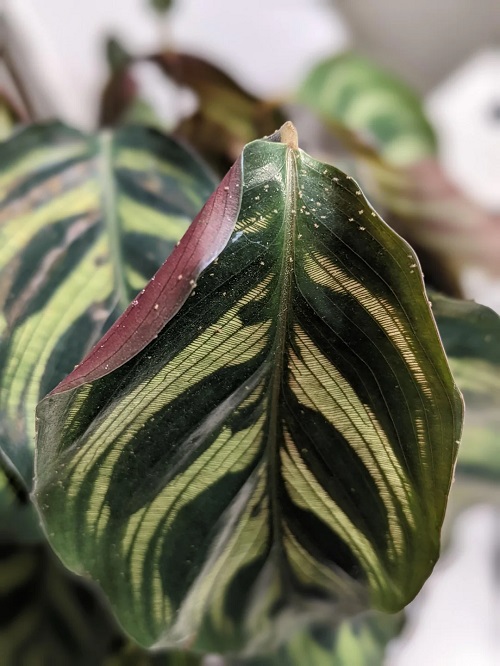
Spider mites are tiny arachnids, just like spiders. They are not true mites and are only about half a millimeter long. These pests usually gather on the undersides of leaves, where they pierce the leaf surface and suck out the plant juices.
Their feeding leaves tiny white or pale yellow spots on the upper surface of the leaves. These spots cannot be wiped away and are one of the clearest signs of a spider mite infestation.
As the spider mite population grows, you may also notice fine, silky webbing on your houseplant. This webbing can look like dust at first, so check your leaves closely before assuming they just need cleaning.
Spider mites prefer houseplants with broad, thin leaves because they can easily pierce them and feed on the plant juices. Prayer plants are among their favorite targets, but they can also attack Monstera, Alocasia, Ficus, Croton, palms, English ivy, and Dracaena.
Get Insecticidal Soap to Treat Spider Mites on Your Houseplants.
Treatment: How to Get Rid of Spider Mites
Acting quickly is the best way to control spider mites on your houseplants. The sooner you treat the problem, the easier it is to get rid of these pests. Even if the infestation is severe, the following steps can help. You may need to repeat the treatment several times to stop spider mites from completing their life cycle and spreading again.
Separate the Affected Plant
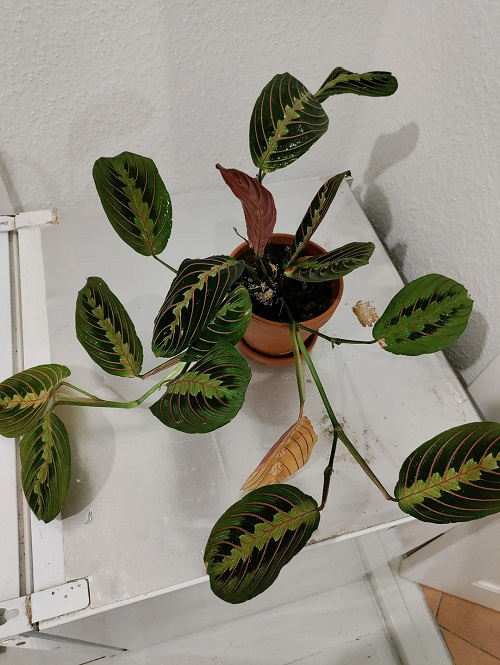
Keep the infested plant away from your other houseplants because spider mites can spread easily from one plant to another. Move it to a separate room without other plants until the infestation is under control. Also, check all your other houseplants carefully for early signs of spider mites so you can treat any new infestation before it spreads.
Shop Sharp Pruning Shears to Remove Damaged Plant Leaves.
Wash Off as Many Mites as Possible
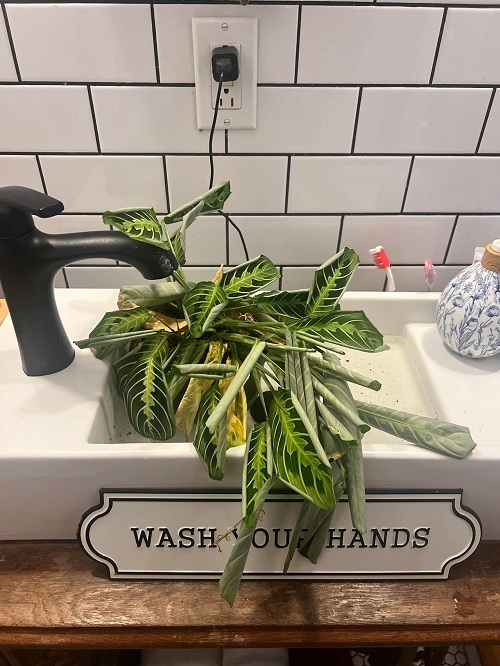
The next step is to remove as many spider mites as possible from your houseplant. Place the plant in a shower or bathtub and rinse it well with water. Use a steady stream of water to wash away the pests, but avoid strong pressure that could damage the leaves or stems.
Pay extra attention to the undersides of the leaves, where spider mites usually hide and feed. Also, rinse any visible webbing. After washing, gently wipe the leaves with a damp cloth to remove any webbing left behind.
This method may not remove all the mites or their eggs, so repeat the process every few days. This will help remove newly hatched mites before they can multiply and spread again.
Use Insecticidal Soap or Neem Oil
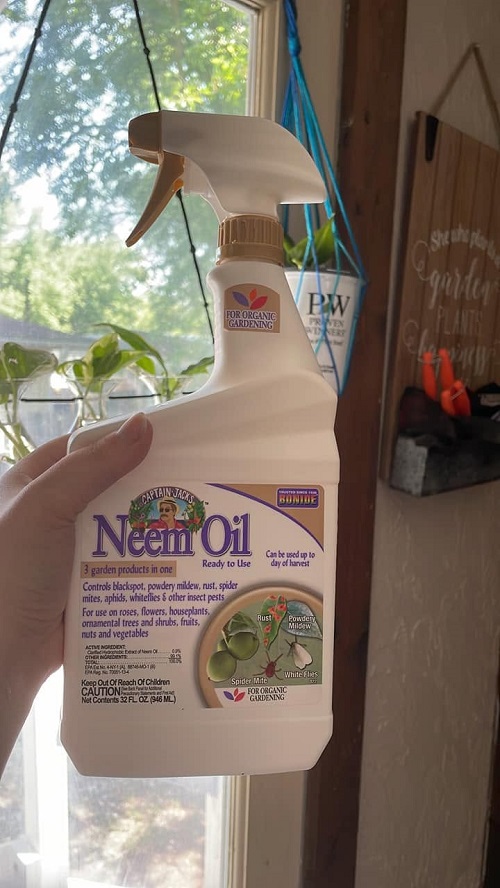
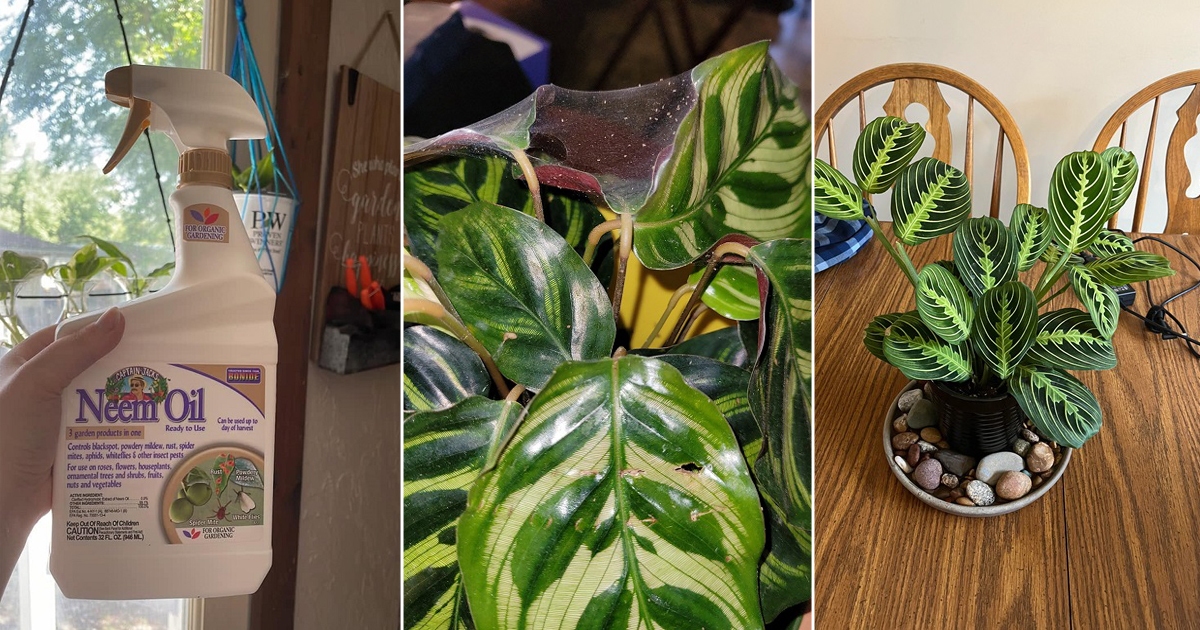
Rinsing your plant with water helps remove many spider mites, but it may not get rid of all of them. To control the remaining pests and stop them from multiplying, use an insecticidal soap or neem oil spray. Both are commonly used to treat pests on houseplants.
Insecticidal soap kills spider mites when it touches them by damaging their outer cell layers. Neem oil helps control these pests by affecting their feeding and reproduction. It also coats and smothers them.
Follow the instructions on the product label before applying either treatment. Spray all parts of the plant, especially the undersides of leaves and the stems, where spider mites often hide. Both treatments work when they come into direct contact with the pests. Repeat the application as directed on the label until the infestation is under control.
Try Neem Oil for Spider Mite Control.
Take Off Badly Damaged Leaves
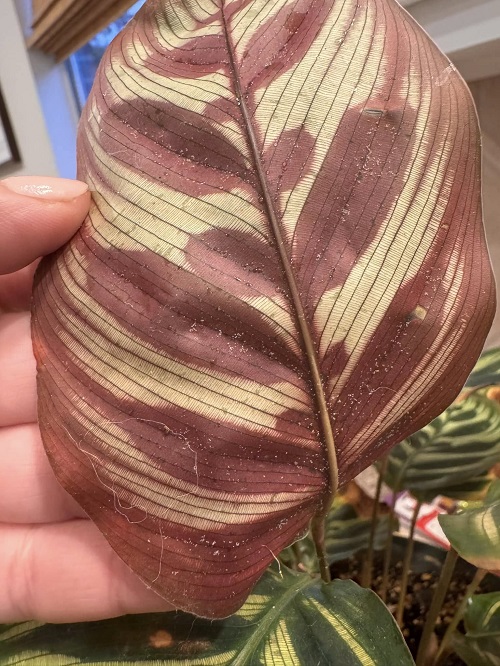
Remove leaves that are badly damaged by spider mites. These include leaves covered with many tiny spots, mostly yellow leaves, or leaves with brown, dry, and crispy areas. Use clean, sharp pruning shears to cut them off and throw them in the garbage. Do not add them to your compost.
You can leave leaves that are still mostly green. Even if they have some damage, their healthy parts can still absorb sunlight and make food for the plant. This will help your houseplant recover.
Prevent Further Spider Mite Infestations
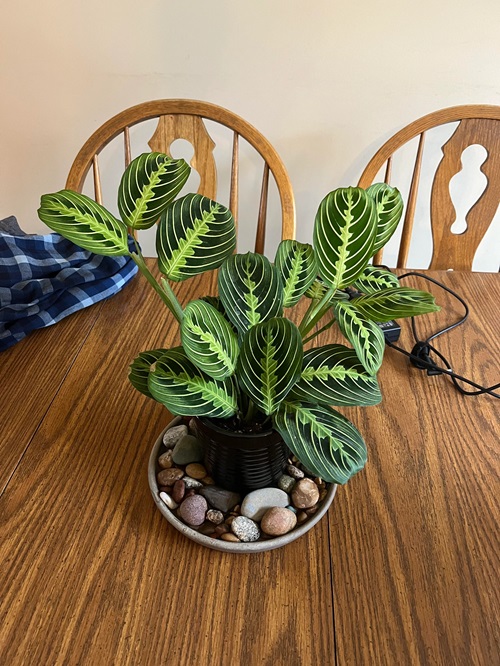
Good houseplant care during fall can help keep spider mites away. Follow these simple steps to protect your plants:
– Increase humidity: Prayer plants and other tropical houseplants grow well in humid conditions. Spider mites prefer dry air, so increasing humidity can help discourage them. You can make a DIY pebble tray to add some moisture around your plants.
– Keep plants away from hot air: Spider mites multiply faster in warm, dry conditions. Keep your houseplants away from heating vents, radiators, and other sources of hot air.
– Water your plants properly: Both overwatering and underwatering can stress your plants and make them more likely to develop pest problems. Water when needed and avoid keeping the soil too wet or too dry. A simple soil moisture meter can help you check when your plant needs water.
– Keep leaves clean: Wipe your houseplant leaves regularly with a soft, damp cloth to remove dust and keep them clean.
– Check your plants regularly: Inspect all your houseplants for early signs of spider mites, especially plants that are more likely to attract them. During fall, check your prayer plants every time you water them. Finding the pests early makes them much easier to control before they spread.
Get Your Copy of The Complete Houseplant Survival Manual.