
As an Amazon Associate, we earn a small commission from qualifying purchases — at no extra cost to you.
Prepare your peace lily for colder days with simple care tips that protect its glossy leaves, support roots, and encourage spring blooms.
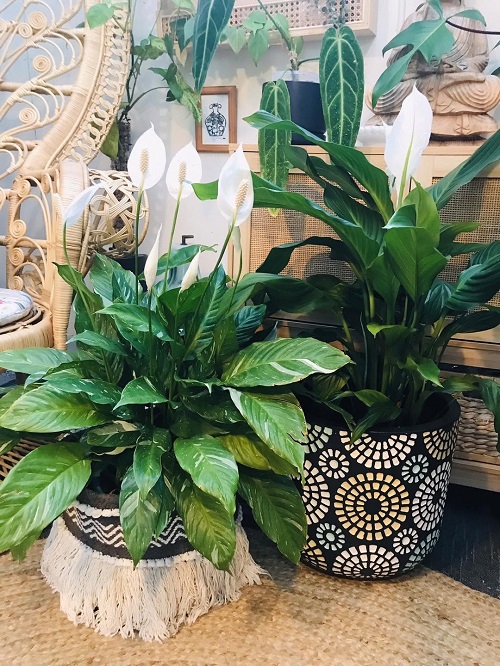
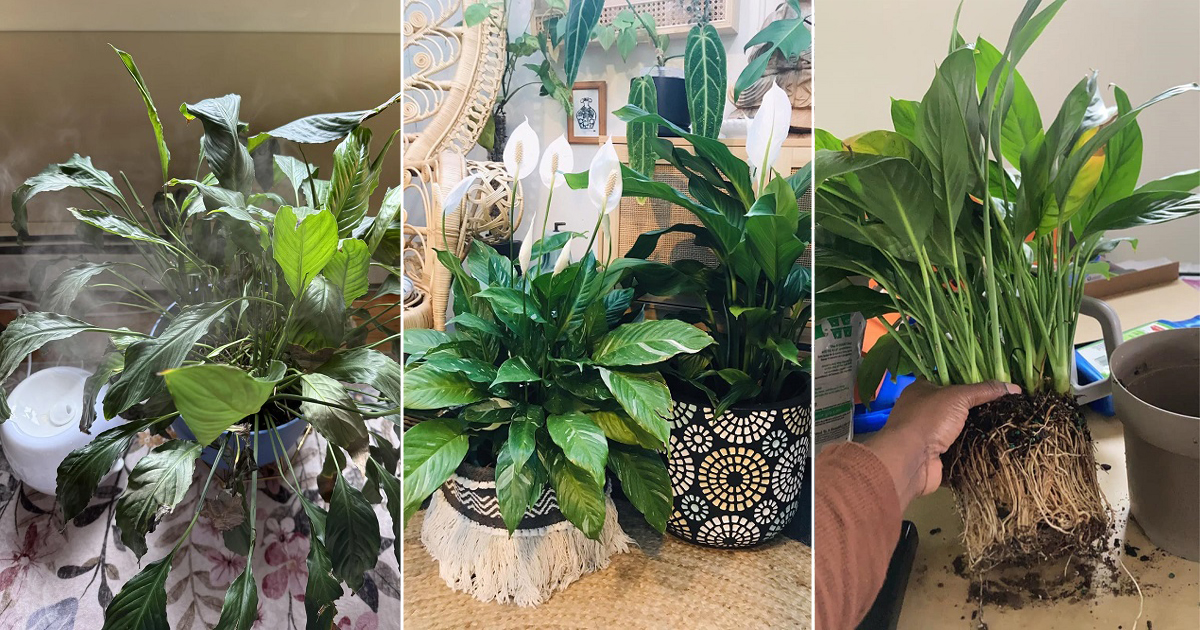
Your peace lily (Spathiphyllum) may have grown well through early fall with its usual watering routine. But things can change when winter arrives. You may notice drooping lower leaves, dull-looking foliage, or dry brown tips. This can happen even if you haven’t moved the plant or changed how you care for it. The reason often lies in the changes happening inside your home.
Peace lilies are fairly hardy, but they still react to changes in their surroundings. winter brings shorter days, less sunlight, and more indoor heating. These changes can affect how your plant grows and how much water it needs. Good peace lily care during winter means adjusting your routine to match these conditions. You may need to water less often, protect the plant from cold drafts, and stop a few tasks that were useful during summer. A few simple changes can help keep the leaves healthy and the roots in good condition. They can also help your peace lily prepare for fresh growth and white flowers when spring arrives. Here are some ways to care for your peace lily as winter begins and indoor heating comes on.
Winter-Proof Your Peace Lily
This post contains affiliate links. As an Amazon Associate, we earn from qualifying purchases, which support our website. You can check out our Amazon storefront here for all kinds of essentials you’ll need.
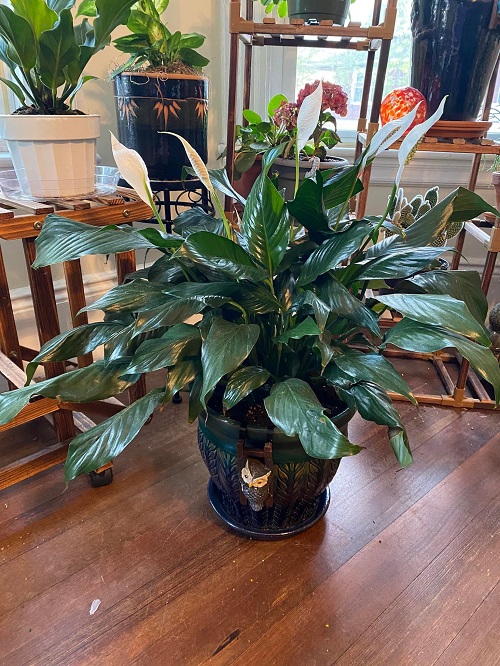
Winter can make indoor conditions difficult for tropical plants like peace lilies. We close doors and windows, turn on the heating, and try to keep our homes warm. But these changes can affect your plant. Indoor heating can make the air very dry, while cold windows and drafts can expose the leaves to chilly temperatures. Your peace lily needs warmth during winter, but it also needs enough humidity, suitable light, and well-drained soil.
Pay attention to changes in the leaves, especially during winter. Finding problems early can help prevent further damage. If your peace lily suddenly droops and all the leaves look limp, check the soil before watering. If the soil is completely dry, water the plant thoroughly. The leaves should start to recover within a few hours. However, if the soil feels wet and heavy, the roots may be getting too much water. They cannot get enough air in soggy soil, so hold off on watering until the soil begins to dry.
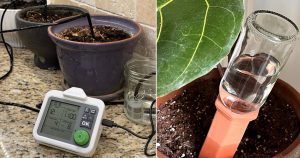
Brown, dry leaf tips often mean the air is too dry, the soil moisture keeps changing, or minerals from tap water have built up in the soil. It is normal for an older lower leaf to turn yellow and die. However, if several leaves turn yellow, your plant may not be getting enough light or the soil may be staying too wet. A long-probe soil moisture meter can help you check how wet the soil is near the roots. I like the XLUX Long Probe Soil Moisture Meter because it gives quick readings. It helps you spot excess moisture before the roots develop rot.
You may not see many flowers during winter, and that is normal. Peace lilies usually bloom less during this time. However, if your plant rarely produces flowers, it may need a brighter place. Keep in mind that young plants, especially those under one year old, may not be ready to bloom yet. Once you know what signs to look for, you can make a few simple changes to keep your peace lily healthy through winter.
Things Your Peace Lily Needs Before Winter Sets In
1. Increase Humidity and Keep Your Plant Away from Heaters
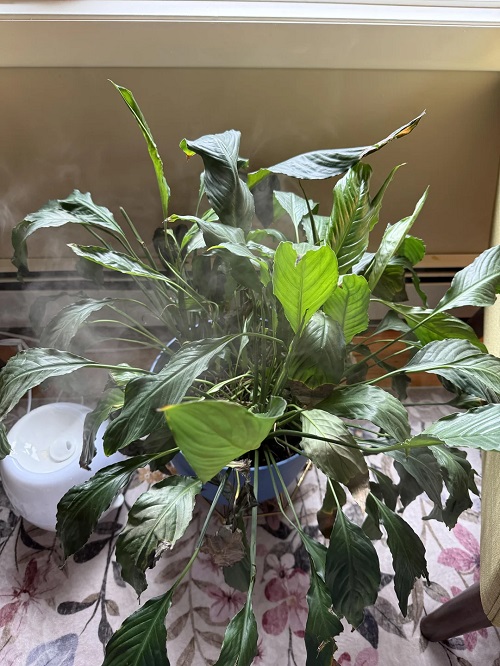
Indoor heating can cause two problems for peace lilies. It makes the air dry and creates areas with uneven temperatures. Peace lilies grow best when the relative humidity stays between 50% and 60%. But once you turn on the heating, indoor humidity can drop below 20%. Dry air pulls moisture from the leaves, leaving brown, crispy edges and dry tips.
Keep your peace lily away from heating vents, radiators, space heaters, and wood stoves. Hot air blowing directly onto the leaves can damage them. Also, protect the plant from cold air coming through exterior doors and windows. Try to keep the room temperature between 65°F and 80°F (18–27°C).
Misting the leaves is not a good way to increase humidity. The extra moisture disappears quickly and can leave water on the leaves, which may encourage fungal spots. Instead, place the pot on a wide tray filled with pebbles and water. Keep the bottom of the pot above the water level. You can also group several houseplants together or place a small room humidifier nearby.
A small digital thermometer and humidity meter can help you check the room conditions. It lets you monitor temperature and humidity so you can spot areas that become too cold or too dry when the heating is on.
A digital thermometer and humidity meter can make it easier to monitor the conditions around your peace lily. You can check the room’s humidity and temperature at a glance and make adjustments when the air becomes too dry.
2. Dial Back Watering to Prevent Root Rot
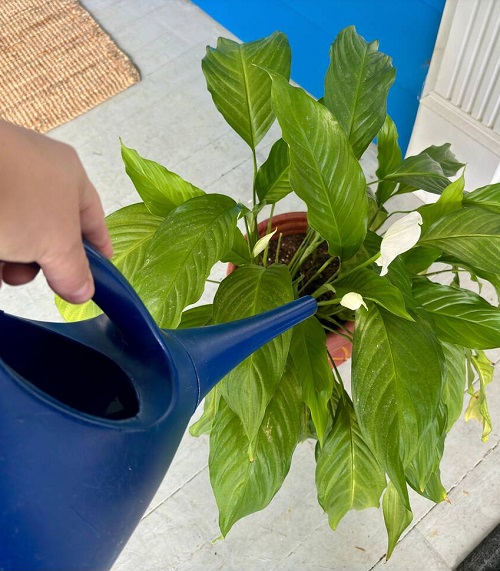
One of the biggest mistakes you can make in winter is following the same watering schedule you used during summer. As the days get shorter and sunlight becomes weaker, your peace lily starts growing more slowly. It uses less water, so the soil takes longer to dry out. A potting mix that dried in five days during July may stay wet for two or three weeks in November. If you keep watering as often as before, the roots can sit in wet soil for too long. This leaves them without enough air and can lead to Pythium root rot.
The fix is simple. Push your finger about 2 inches (5 cm) into the potting mix. Water only when the soil feels dry at that depth. When you water your peace lily, soak the soil with room-temperature water until the excess drains through the bottom holes. Empty the saucer after watering so the roots do not sit in collected water. Never leave your peace lily standing in cold, stagnant water. If the leaves suddenly droop, check the soil before adding more water. The plant may be suffering from too much moisture rather than a lack of it.
Checking soil moisture by hand can sometimes be difficult, especially when you have a large pot. A long-probe soil moisture meter helps you check moisture deeper in the potting mix before watering. Soil Moisture Meter for monitoring moisture around the root zone and avoiding unnecessary watering.
3. Move Your Peace Lily to a Brighter Spot
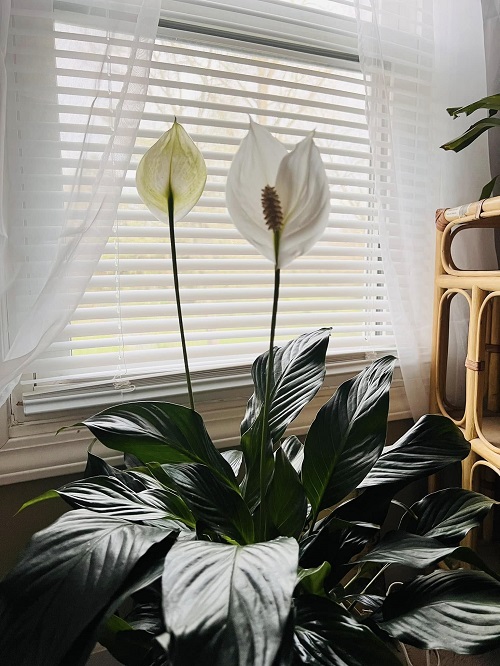
Peace lilies are often known as low-light houseplants, but there is a difference between surviving in low light and growing well. Your plant may have managed in a shaded corner during summer, but winter brings shorter days and weaker sunlight. This can make dark corners even darker. Without enough light, your peace lily cannot make the energy it needs to stay healthy. You may notice faded leaves, drooping stems, and fewer flowers.
Check where your peace lily sits and see how much natural light it receives around noon. If the spot looks too dark, move the plant closer to an east- or north-facing window. These locations can provide several hours of bright, indirect light during winter. Keep the leaves about 3 to 4 inches (8–10 cm) away from the window glass. Cold glass can chill the leaves when outdoor temperatures drop.
If you keep your plant near a south- or west-facing window, use a sheer curtain to soften the afternoon sunlight. Strong direct sunlight can still burn the leaves, even in winter. If your room does not get enough natural light, you can use an artificial light instead. An LED grow light bulb that fits a regular lamp can provide extra light and help your peace lily stay healthy during the darker months.
If your home does not receive enough natural light, consider adding an LED grow light to your indoor plant setup.
4. Stop Fertilizing and Avoid Repotting

During late fall and winter, your peace lily does not need much fertilizer. Shorter days and weaker sunlight slow down its growth. The plant produces fewer new leaves and roots, so it cannot use as much fertilizer as it does during spring and summer. If you keep adding liquid fertilizer, mineral salts can build up in the potting soil. Too much salt can damage the roots and cause brown leaf tips. Stop feeding your plant during winter and wait until new growth starts in spring, usually around late March.
It is also better to delay repotting until spring. You may notice a few roots growing through the drainage holes, but there is no need to rush. Peace lilies can grow well in slightly crowded pots. They also recover more easily when the days become warmer and brighter. Moving a slow-growing plant into a larger pot during winter can cause extra stress.
However, there is one exception. If your peace lily has severe root rot, you may need to repot it right away. Remove the plant carefully from its pot and wash away the old soil. Use clean, sharp shears to cut off any brown, soft, or mushy roots. Then plant it in fresh, well-draining potting mix.
If you need to remove damaged roots, use a pair of sharp, clean pruning shears. They make it easier to cut away soft or rotten roots without unnecessarily disturbing the healthy ones.
5. Clean the Leaves and Check for Pests
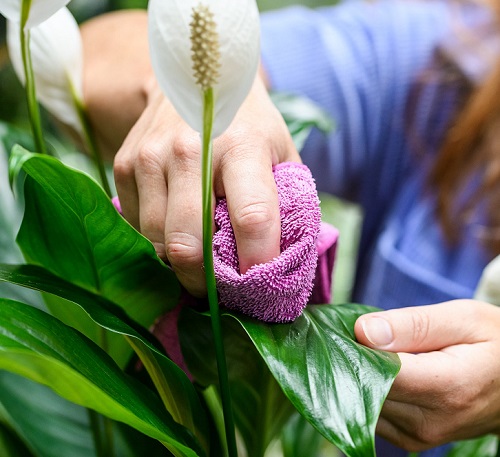
Peace lily leaves can collect dust, pet hair, and grease over time. During winter, this layer of dust can block some of the already limited sunlight from reaching the leaves. This makes it harder for your plant to produce the energy it needs to stay healthy. Cleaning the leaves is a simple way to help them absorb more light.
Support each leaf with one hand and gently wipe both sides with a soft cloth dampened with room-temperature water. Take your time so you do not tear or damage the leaves.
While cleaning, check the undersides of the leaves and the places where the stems meet. These areas can hide pests. Dry indoor air from winter heating can also make pest problems worse.
Look for small white cotton-like patches, which may be mealybugs. Flat, brown bumps on the leaves or stems could be scale insects. If you notice tiny pale spots or fine webs, your plant may have spider mites. These pests often become a problem in warm, dry rooms.
If you find mealybugs, use a cotton swab dipped in rubbing alcohol to remove them carefully. You can also treat the undersides of the leaves with insecticidal soap or neem oil. Check your plant regularly so you can deal with pests before they spread.
If you notice pests on your peace lily, a neem oil spray formulated for houseplants can be useful. Apply it according to the product instructions and test it.
The Bottom Line
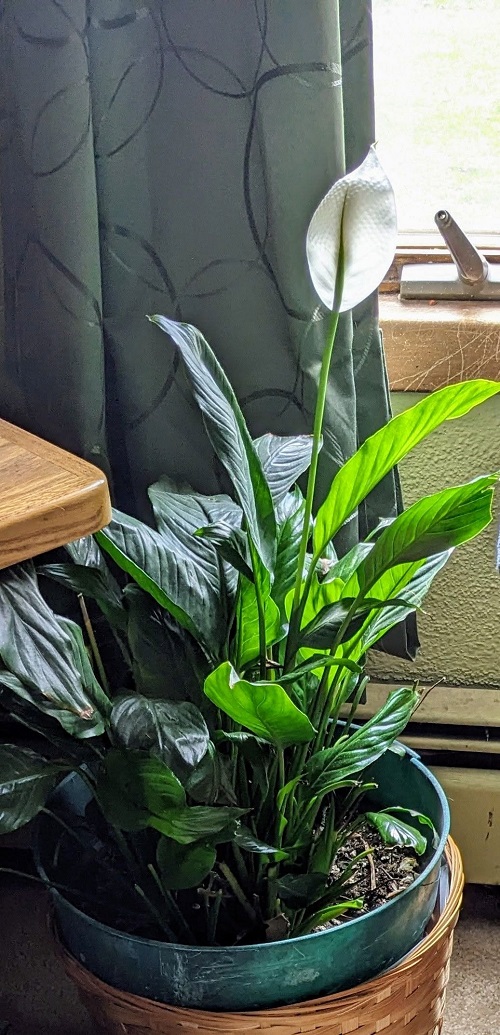
A little extra care in winter can help your peace lily stay healthy through winter. Water it less often, move it to a brighter spot with indirect light, keep the air around it humid, and avoid disturbing the roots. These simple changes can help the leaves stay green and healthy.
If you make these changes in winter, your peace lily should get through winter without much trouble. It may grow more slowly, but that is normal. Wait until spring to start fertilizing or repotting. When the days become longer and warmer, your plant will begin growing again. With proper care, you can look forward to fresh green leaves and beautiful white flowers in the months ahead.
If you want to grow healthy houseplants beyond the winter season, having a reliable care guide can be helpful. The Complete Houseplant Survival Manual by Barbara Pleasant offers practical information on choosing, growing, and maintaining indoor plants. It’s a useful resource for anyone looking to improve their houseplant care routine.