
As an Amazon Associate, we earn a small commission from qualifying purchases — at no extra cost to you.
Why Is My Chinese Money Plant Drooping? Find the common causes, spot the signs, and learn simple ways to help your plant look healthy again.
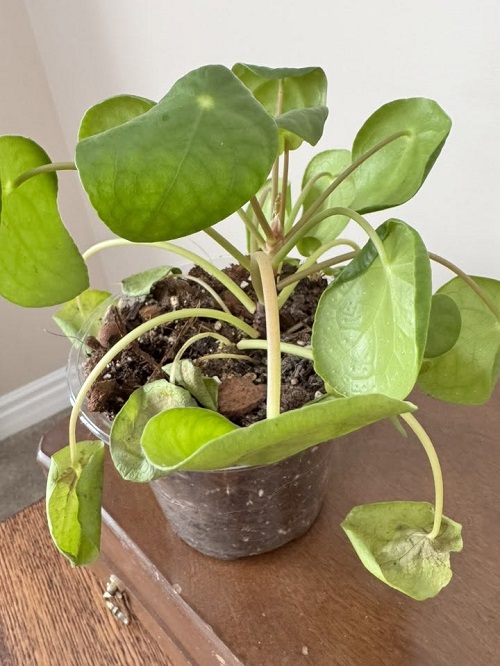
You may notice it when you walk past your plant one morning. The leaves that normally sit out from the stems are suddenly hanging down. Sometimes the whole plant looks limp. Other times, only a few leaves droop.
Before you water it, stop for a minute.
Drooping does not always mean your Chinese Money Plant needs water. In fact, adding more water to an already wet plant can make things much worse.
Your first job is to work out what changed. Think about the last time you watered it. Check the soil. Look at where the plant is sitting. These small details usually tell you more than the drooping leaves alone.
Why Is My Chinese Money Plant Drooping?
Want to build the perfect indoor plant setup? Check out this indoor gardening system that serious plant lovers swear by. You can also check our Amazon Storefront for all such gardening needs
Start by Feeling the Soil
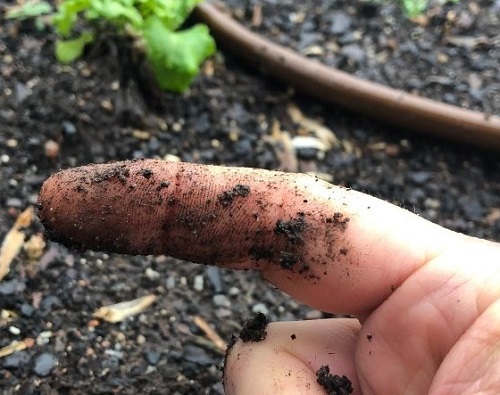
This is the first thing you should do.
Stick your finger into the potting mix. Go down a couple of inches rather than checking only the surface.
If the soil feels dry, your plant may be thirsty. This can happen quite quickly if you keep the plant near a bright window or your home has been warmer than usual.
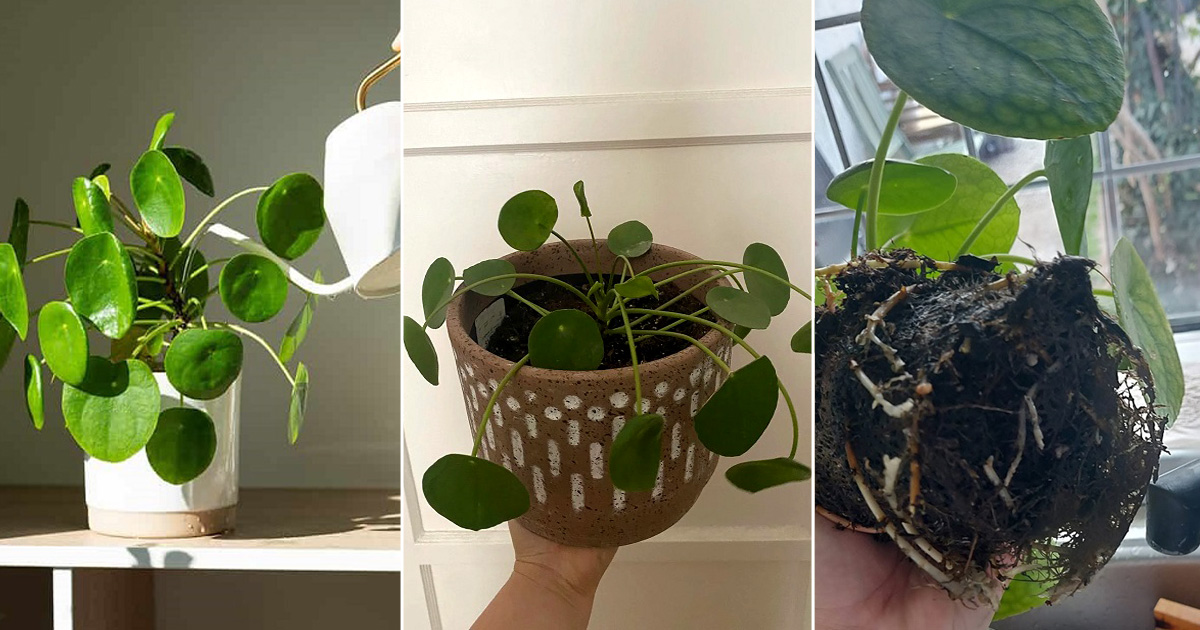
In that case, water it properly. Do not give it two tablespoons of water and call it done. Pour slowly until water comes out through the drainage holes. Let the pot drain afterward. Now leave it alone. You may not see the leaves perk up immediately. Give the roots some time to take in the water.
Use this watering can for all your gardening activities.
What If the Soil Is Already Wet?
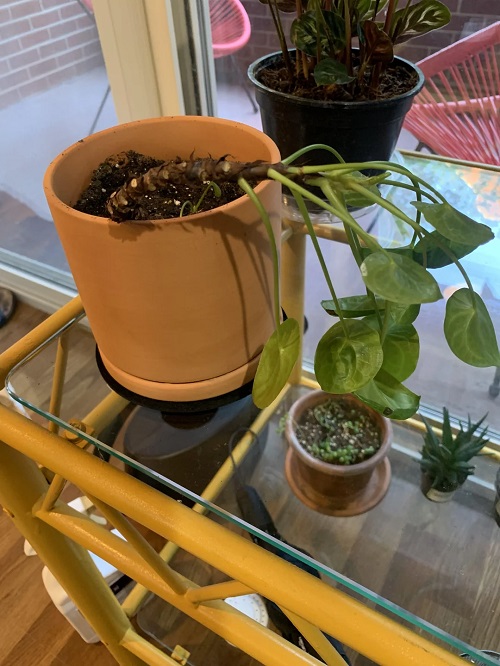
This is where you need to be careful.
You can have a drooping Chinese Money Plant sitting in soaking-wet soil. It looks thirsty, but the problem is actually happening around the roots.
Roots need oxygen. When you keep the potting mix saturated, there is very little air left around them. Over time, the roots can become damaged.
So if you put your finger into the soil and find that it is still wet from several days ago, do not water again. Let it dry out. You should also think about why it is staying wet for so long. Maybe the pot is too large. Perhaps the soil is very dense. Or the container does not drain properly.
Use these planters with a proper drainage system to keep your plants healthy and growing.
Your Pot Could Be Causing the Problem
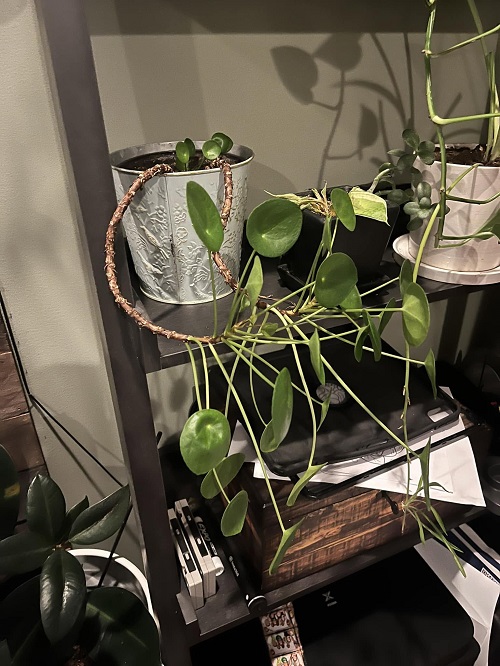
Take a look underneath the pot.
Are there drainage holes? If there are none, you have found something worth fixing. Water needs a way out. Otherwise, it collects around the roots.
Even if your pot has drainage holes, check the saucer underneath. If water is sitting there after you water, empty it. This is easy to overlook when you use a decorative cover pot. You may not even realize that the inner pot is standing in leftover water.
Checking the bottom of a container solves a surprising number of houseplant problems.
When repotting, use these pebbles in the soil for proper moisture retention and drainage.
You May Be Watering Too Often
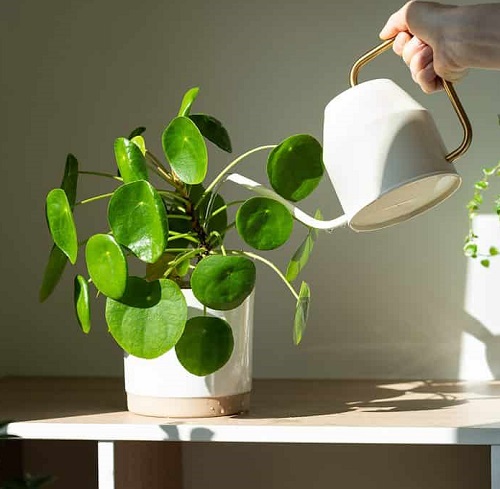
If you water because the plant looks droopy, you can get caught in a frustrating cycle.
The leaves droop. You add water. The roots struggle because the soil stays wet.
You repeat the schedule; the leaves droop again. You water again.
That is how a small watering problem can turn into root rot. Instead of using a fixed watering day, check the soil. Your plant does not know that it is supposed to be watered every Sunday. It responds to the conditions around it.
A plant sitting in bright light may dry much faster than one sitting in a darker room.
Use this moisture meter to keep track of the soil and have your plants growing happy and healthy.
Look at Where You Have Placed It
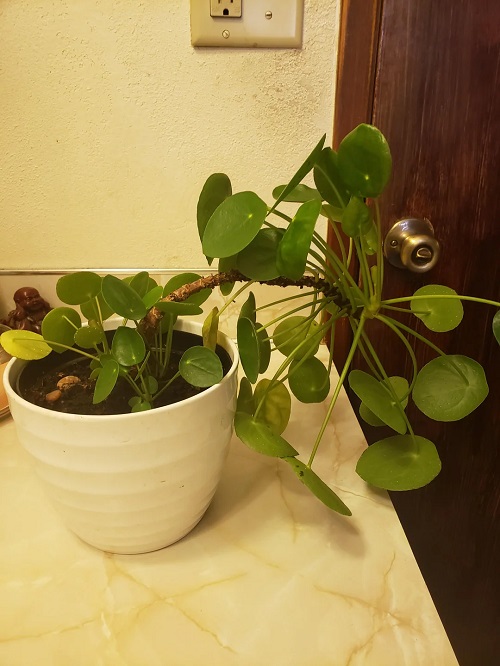
Now step back and look at the plant’s location.
Does it get enough light? Chinese Money Plants like bright, indirect light. If yours is sitting in a dark corner, the stems can become weaker over time. You may notice that the plant leans toward the window or that the leaves do not hold themselves as well as they used to.
You do not need to put it directly in harsh sunlight. Try moving it closer to a bright window where it gets plenty of natural light without being blasted by strong afternoon sun.
If you have kept it in low light for a long time, make the change gradually. A sudden jump from a dim corner to intense sun can leave the leaves with scorched patches.
Make sure to install these foldable grow lights so your plant gets the environment it needs.
A Cold Draft Can Make Your Plant Sulk
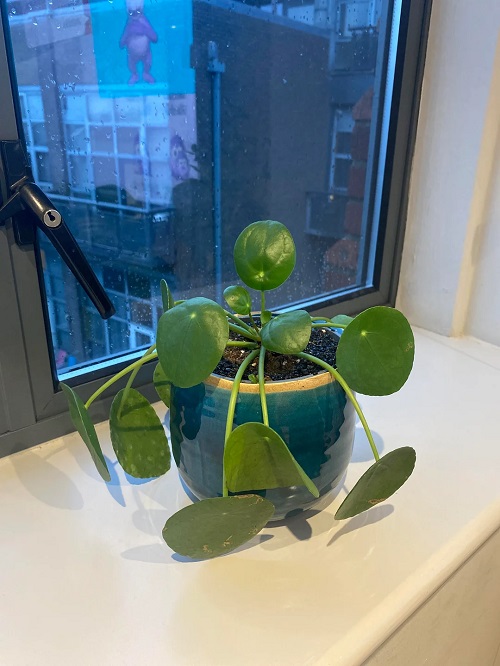
Think about what is around the plant.
Is it beside an air conditioner? Near a heater? Close to a door that opens to the outside several times a day? Your Chinese Money Plant may be getting hit by temperature changes without you realizing it.
You might feel comfortable in the room because you only spend a few minutes there. Your plant stays in that spot all day and night. Move it away from direct drafts. A stable room is usually better than a spot where the temperature keeps changing.
Do Not Ignore Dry Indoor Air
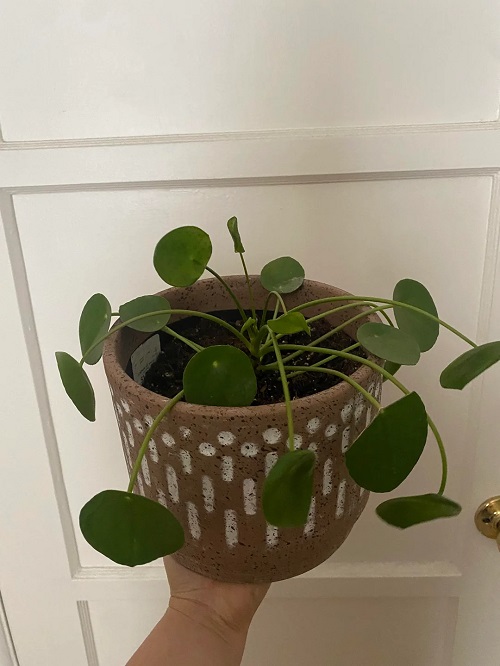
Very dry air can also leave your plant looking less than happy.
You may notice crispy leaf edges along with the drooping. The soil may also dry out faster than you are used to. If your home is particularly dry, a humidifier can help. Grouping a few houseplants together can also raise the humidity around them slightly.
You do not need to mist the leaves constantly. If the roots are dry, spraying the leaves will not solve the problem. And if the soil is already soaking wet, misting will not help either.
Deal with the actual cause instead.
Did You Just Move or Repot the Plant?
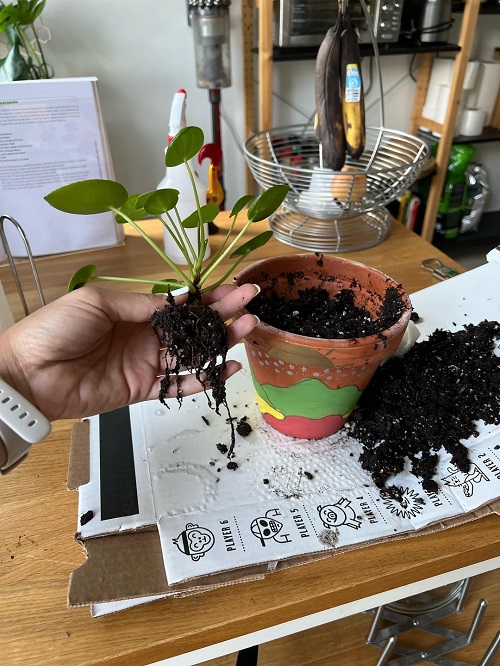
Think back to the last few weeks. Did you repot your Chinese Money Plant? Move it to another room? Put it in a different window?
Plants sometimes need a little time after a change. Repotting is especially stressful because you disturb the roots. Even if you are careful, some roots can be disturbed during the process.
If the plant started drooping shortly after repotting, do not immediately repot it again. Give it a quiet spot with good indirect light and keep an eye on the soil. Too much attention can create another problem.
The Pot Might Be Too Big
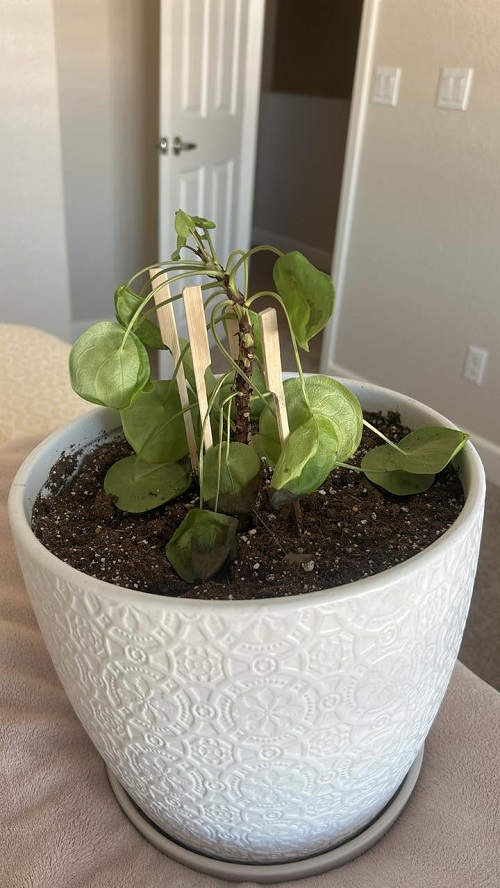
If you recently moved the plant into a much larger pot, take this into account when you water. A bigger pot contains more soil. Your Chinese Money Plant may have a relatively small root system, so it cannot use all that moisture quickly.
The result is soil that stays wet for a long time. You do not need to put a small plant into a huge container to give its roots room. A pot that is only moderately larger than the root ball is often easier to manage.
If your plant used to dry out within a reasonable time and now stays wet for more than a week, the new pot may be part of the reason.
Check out these self-watering pots that you can use for your plants.
Check the Potting Mix
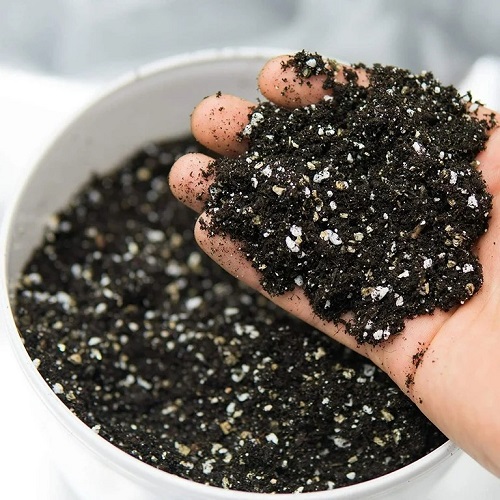
Some potting mixes simply hold too much water. If your soil becomes heavy and sticky whenever you water, It would be better to consider changing it. Chinese Money Plants do better in a loose mix that lets excess water move away from the roots.
A good houseplant potting mix can work well. Adding some perlite or pumice can improve drainage and keep the mix from becoming too compact.
You are not trying to make the soil dry immediately after watering. You just want it to drain well enough that the roots are not sitting in a soggy mess.
Make your soil healthier with this potting mix and watch your plants’ rapid growth.
Drooping Can Come From Root Damage
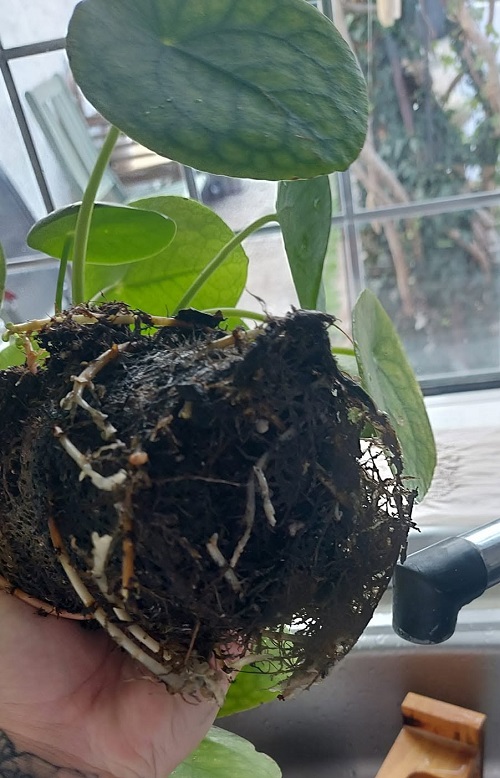
Sometimes you can do everything right from this point onward and the plant still looks bad. That is when I would check the roots.
Gently slide the plant out of its pot. You do not need to pull on the stems.
Have a look at the roots. Firm roots are what you want. If they are dark, mushy, or falling apart when you touch them, you may have root rot. This is often the result of soil staying wet for too long.
Remove the rotten parts with clean scissors. Put the remaining healthy roots into fresh, well-draining soil. Then be careful with watering. A plant with damaged roots does not need to sit in wet soil while it is trying to recover.
Pay Attention to the Leaves
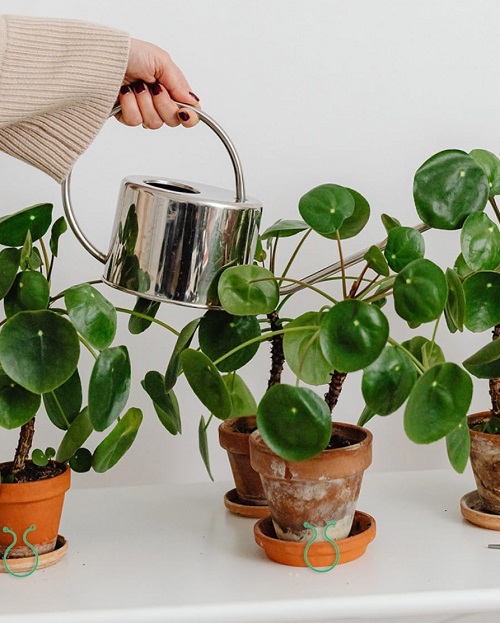
Your plant can give you clues if you know what to look for. Suppose the leaves are limp and the soil is very dry. Water is the first thing you have to investigate.
Now imagine the same drooping leaves sitting above wet, heavy soil. Look at the roots and drainage instead. Yellow leaves can also appear when you keep the soil too wet.
Brown and crispy edges can point to dry soil, very dry air, or roots that are struggling to take up water. If the plant looks stretched and leans strongly toward one side, poor light may be involved. None of these signs should be considered on their own. Look at the whole plant.
Use these sharp pruning scissors for all the cutting and gardening.
Do Not Keep Moving It Around
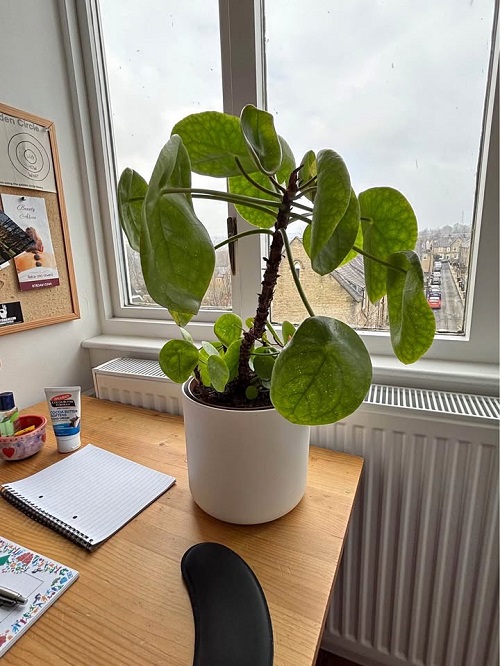
Once you make a change, give it a chance to work.
This is easier said than done when your plant looks worse every time you walk past it. You might water it in the morning, move it near the window that afternoon, add fertilizer the next day, and then start thinking about repotting it by the weekend.
Try not to do that. Pick the most likely problem and correct it.
If the soil is dry, water it. In case if it is staying wet, stop watering and improve the drainage. If the plant is sitting in a dark spot, give it more suitable light. Then watch what happens.
Fertilizer Is Not the Answer to Drooping
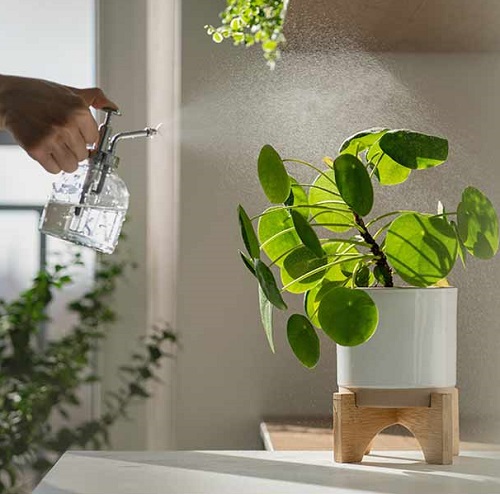
Do not reach for fertilizer just because the plant looks weak.
Fertilizer helps provide nutrients. It does not fix rotten roots, dry soil, poor drainage, or a lack of light.
If your plant is already stressed, adding extra fertilizer can cause more problems, especially if the soil is dry or the roots are damaged. Get the basic conditions right first. Once the plant starts producing healthy new growth, you can return to a normal feeding routine during its active growing period.
Use this mix of nutrients that your plant might be lacking.
What If Only One or Two Leaves Are Drooping?
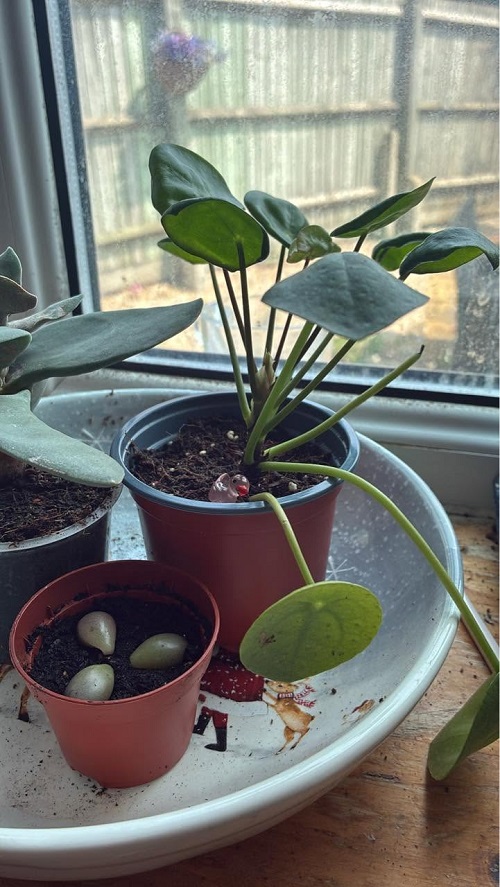
Do not panic over one leaf.
Older leaves sometimes become less firm as they age. A leaf can also droop because of minor damage or because its stem has been bent.
Look at the rest of the plant. If most of the leaves look healthy and the plant is producing new growth, you probably do not have a major problem. It is when several leaves start drooping at once that Start looking more closely at watering, light, temperature, and the roots.
Give Your Plant Some Time
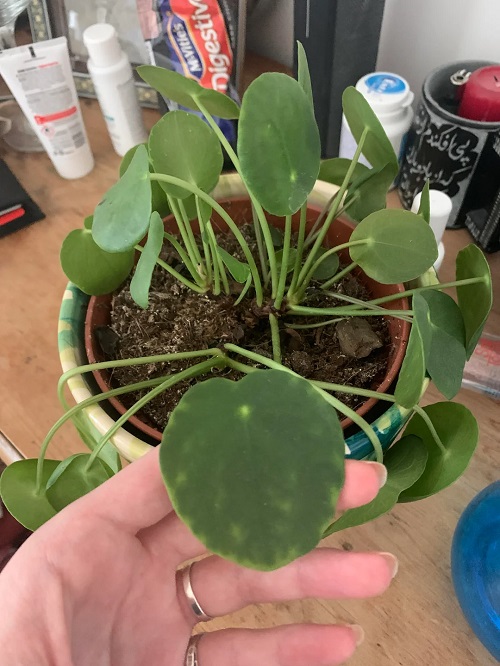
Once you fix the cause, you may still see a few droopy leaves. That does not mean your changes have failed.
If the plant became dehydrated, the leaves may take some time to recover. If the roots suffered from excess water, they need even longer to get back to normal.
Do not judge the plant every few hours. Look for gradual improvement. New growth is especially encouraging. If the new leaves look firm and healthy, you are heading in the right direction even if some older leaves never look perfect again.
How You Can Stop the Problem From Returning
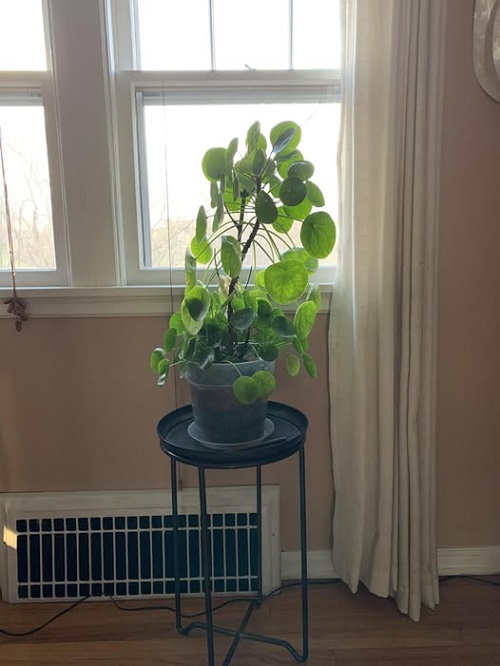
You do not need a complicated care routine.
Give your Chinese Money Plant a bright spot with indirect light. Use a pot that drains freely. Before you water, feel the soil rather than relying on a schedule.
Keep the plant away from strong drafts and watch how quickly the soil dries in different seasons. Most of all, pay attention to what your particular plant is telling you.
A watering routine that works for someone else’s Chinese Money Plant may not work for yours. Your pot, soil, window, room temperature, and humidity all make a difference.
Get your hands on this gardening kit that is fit for all your needs and your plant’s needs.