
As an Amazon Associate, we earn a small commission from qualifying purchases — at no extra cost to you.
Can Tea Bags Make Your Spider Plant Grow Faster? Try This Simple Trick and have healthy, bushier houseplant in your home.
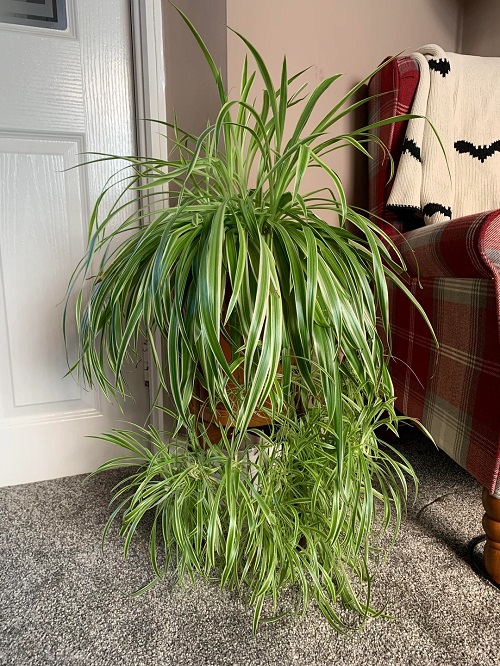
If your spider plant has stopped growing or just looks a little tired, you may be tempted to try whatever you have at home. Used tea bags are one of those simple tricks you may have heard about.
But before you start burying tea bags in your plant pot, there are a few things you should know. Tea leaves can add some organic material to the soil, but they are not a magic fertilizer. Used properly, they may support the soil. Used carelessly, they can cause problems.
Here is how you can use Tea Bags for Spider Plant Growth without overdoing it.
Can Tea Bags Make Your Spider Plant Grow Faster?
Get this gardening tool set for lush growth with minimal effort. Also, check our Amazon storefront for more garden supplies.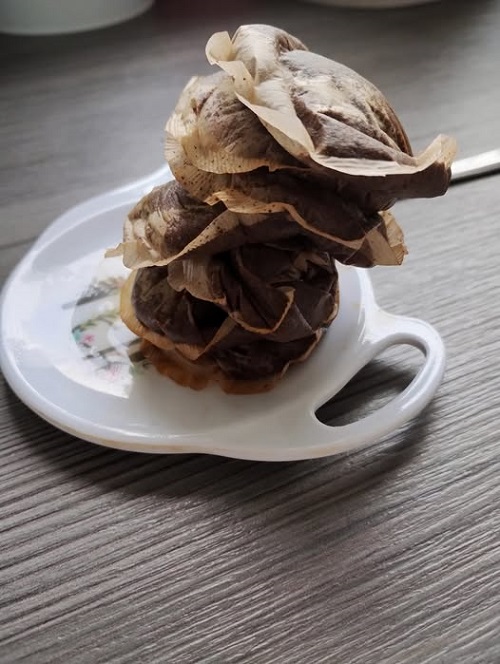
Yes, used tea leaves can be useful in small amounts.
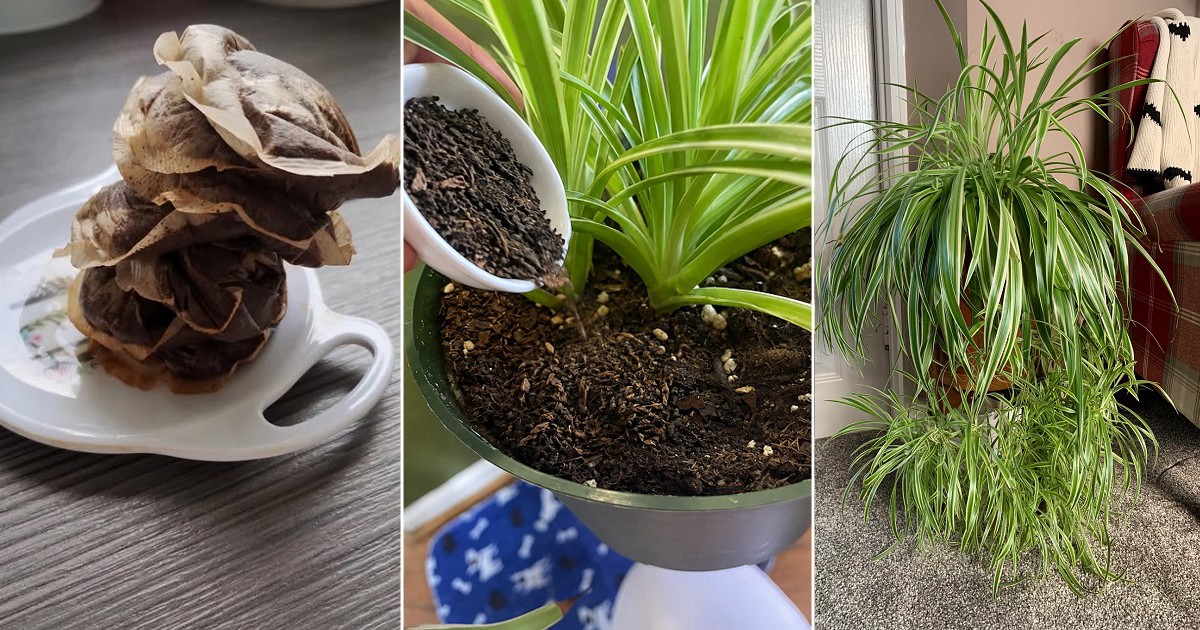
After you brew tea, some organic material and small amounts of nutrients remain in the leaves. As the leaves break down, they add organic matter to the soil. This can support the overall condition of the potting mix.
That does not mean tea leaves will suddenly make your spider plant produce dozens of new leaves. Your plant still needs enough light, water, air around its roots, and proper nutrition.
Think of used tea leaves as a small soil amendment rather than a fertilizer.
Here is a potting mix that will help your plants.
Use the Tea Leaves, Not the Whole Tea Bag
This is an important part of the process.
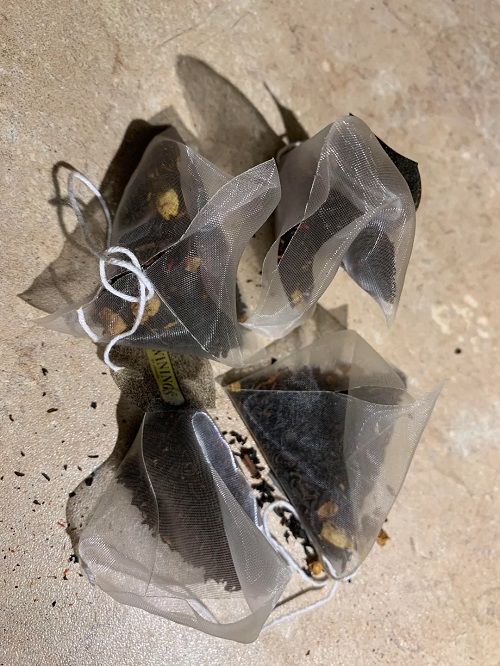
Do not simply bury a used tea bag in your spider plant’s pot. Some commercial tea bags contain synthetic fibers or plastic materials that do not break down like natural paper.
Instead, open the bag and remove the used tea leaves. Check the bag material before deciding whether it belongs in your compost or trash.
You also don’t need much tea. A small amount is enough for a houseplant pot.
Let the Tea Leaves Cool First
Never add hot tea or freshly heated material to your plant.
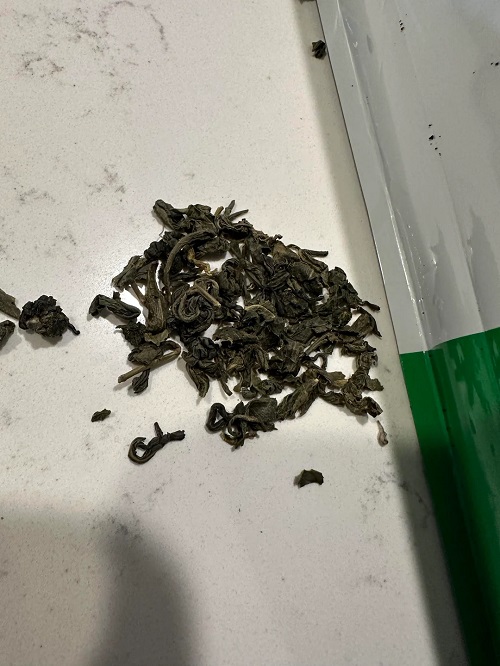
After brewing your tea, remove the leaves and let them cool completely. If they are very wet, allow some of the excess moisture to drain away.
You want damp tea leaves, not a soggy pile sitting on top of the soil.
This matters because spider plants don’t enjoy constantly wet conditions around their roots.
How to Add Tea Leaves to Your Spider Plant
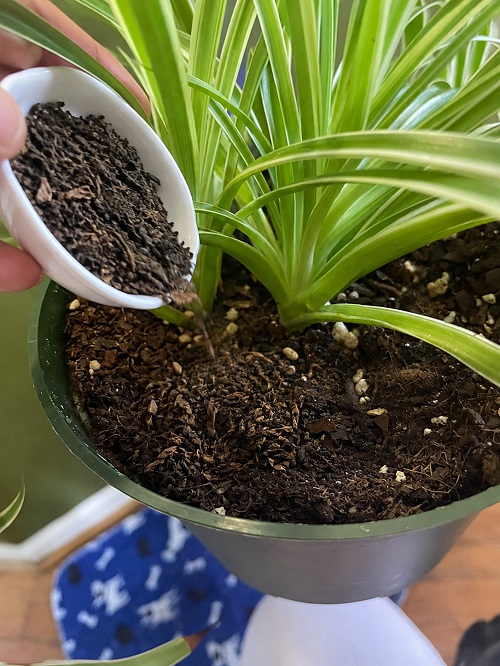
Start with a small amount. Sprinkle the used tea leaves lightly over the surface of the potting mix.
Do not make a thick layer.
Use your fingers or a small hand tool to gently mix the leaves into the top layer of soil. You only need to work them in slightly. There is no reason to disturb the deeper roots.
After adding them, continue your normal watering routine.
You do not need to repeat this every few days. Adding too much organic material to a small indoor pot can create more problems than benefits.
Don’t Use Sweetened or Flavored Tea
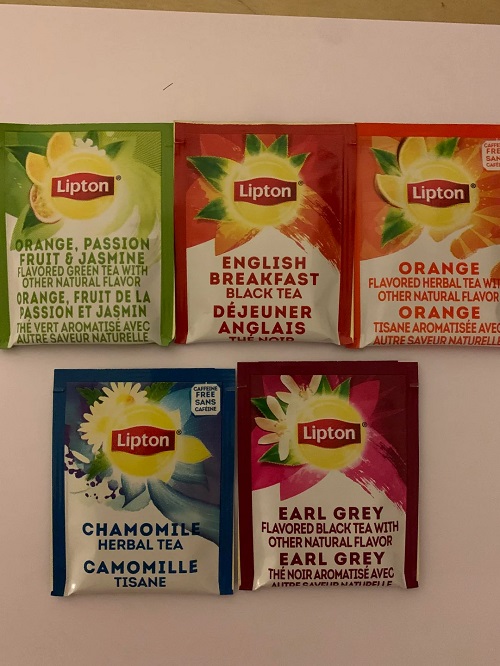
Plain used tea leaves are the better choice.
Avoid adding tea that contains sugar, milk, cream, syrups, or other ingredients to your plant’s soil. These can attract insects and encourage unwanted microbial growth.
Herbal blends also deserve a little caution because they can contain several different ingredients. If you want to try this method, stick with plain brewed tea leaves and use them sparingly.
What Tea Leaves Actually Do
It is easy to think of tea leaves as a natural fertilizer, but that is not quite right.
The nutrient content of used tea is relatively low. Once you brew your tea, much of the soluble material has already gone into your cup.
What remains can still contribute organic matter as it decomposes. That can be useful in soil, but it is not enough to meet all of your spider plant’s nutritional needs.
So if your plant is pale, growing very slowly, or producing small leaves, don’t assume it simply needs tea leaves. Look at the whole growing setup first.
Give Your Spider Plant Enough Light
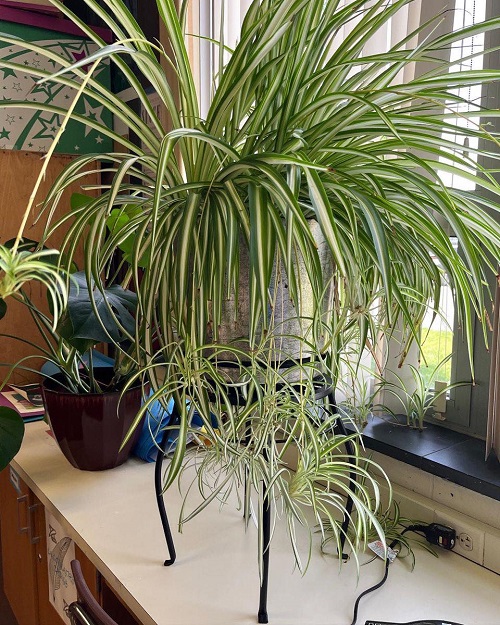
Before trying any soil trick, check where your plant is sitting.
Spider plants grow well in bright, indirect light. A spot near a bright window is usually better than a dark corner. Direct, harsh afternoon sunlight can scorch the leaves, especially when it hits them through glass.
If your plant has very little light, adding tea leaves will not solve the problem.
Move it closer to a suitable window and give it some time to adjust. You should see healthier growth when the basic conditions are right.
Give Your Plant a Bright-Growth Boost with these Full-spectrum grow light.
Be Careful With Watering
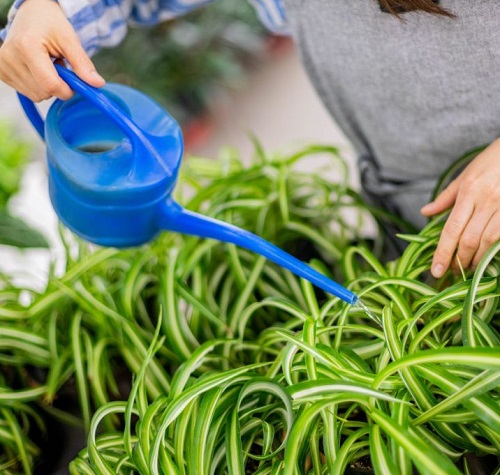
Spider plants are fairly forgiving, but they don’t like sitting in constantly wet soil.
Check the potting mix with your finger before watering. If the upper layer still feels damp, give it more time.
When you do water, water thoroughly and allow the excess to drain from the bottom of the pot. Don’t leave the container sitting in a saucer full of water.
This becomes even more important when you add organic material such as tea leaves. You don’t want the surface of the soil staying wet all the time.
A soil moisture meter can make it easier to check the moisture level before watering.
Keep the Soil Airy
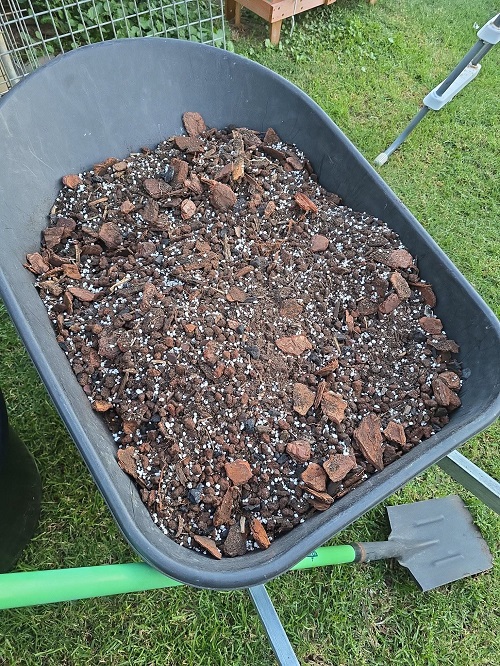
Good drainage is one of the easiest ways to keep a spider plant happy.
Use a loose houseplant potting mix that allows water to pass through without becoming heavy and compacted. Your container should also have drainage holes.
If the soil has become hard and dense, adding a handful of tea leaves won’t fix the problem. Repotting into fresh, well-draining mix may be a much better solution.
Don’t Replace Fertilizer With Tea Leaves
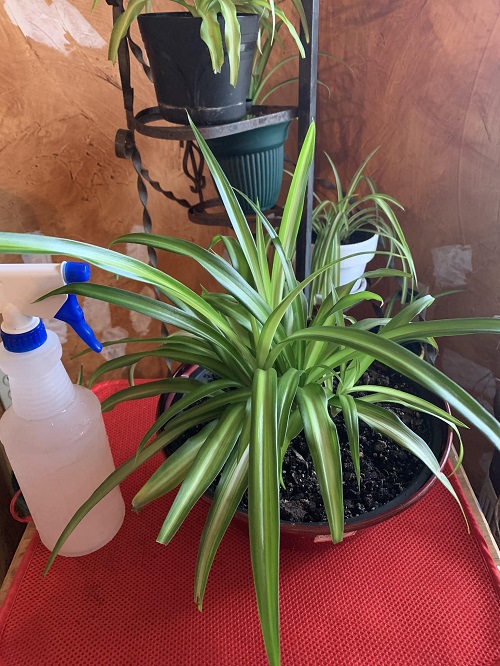
This is probably the biggest thing to remember.
Your spider plant still needs proper nutrients. A balanced houseplant fertilizer can provide nutrients in amounts that used tea leaves simply cannot.
During active growth, follow the instructions on your chosen fertilizer rather than guessing how much your plant needs.
You can use a small amount of used tea leaves alongside normal care, but don’t depend on them as your plant’s main source of food.
Watch for Mold and Fungus Gnats
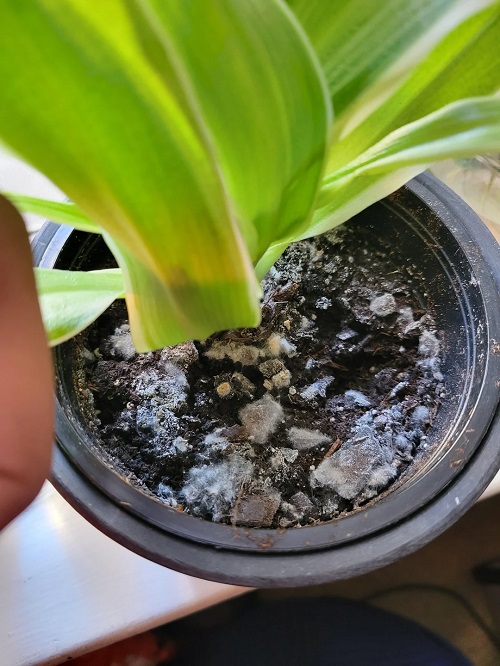
Adding too much organic material to an indoor pot can create a damp surface that attracts fungus gnats or develops mold.
If you notice a fuzzy layer growing on the soil, stop adding tea leaves and let the surface dry properly. Remove visible mold and check whether you are watering too often.
Tiny flying insects around the pot are another sign that the soil may be staying too wet.
You don’t need to panic if this happens. Simply remove excess organic material, improve airflow, and adjust your watering routine.
Keep Fungus Gnats Away From Your Houseplants with these yellow sticky traps.
How Often Should You Use Tea Leaves?
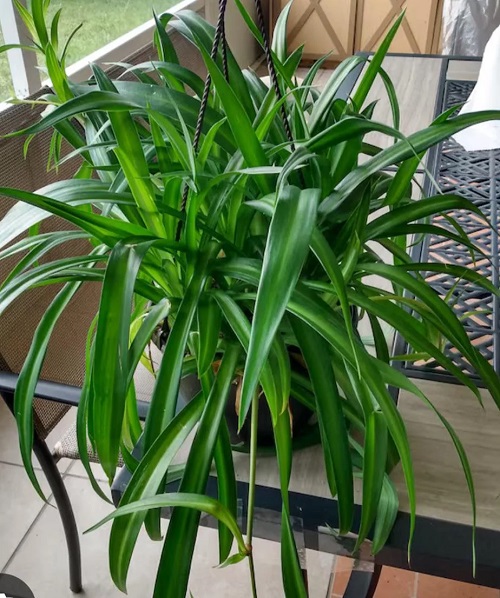
You don’t need to make this a regular weekly routine.
If you want to try the method, use a small amount occasionally and watch how your soil responds. Indoor pots have limited space, so even natural materials can build up when you keep adding them.
If your plant is already growing well, there is no reason to keep adding more just because you think it might grow faster.
Sometimes leaving a healthy plant alone is the better choice.
The Simple Way to Think About It
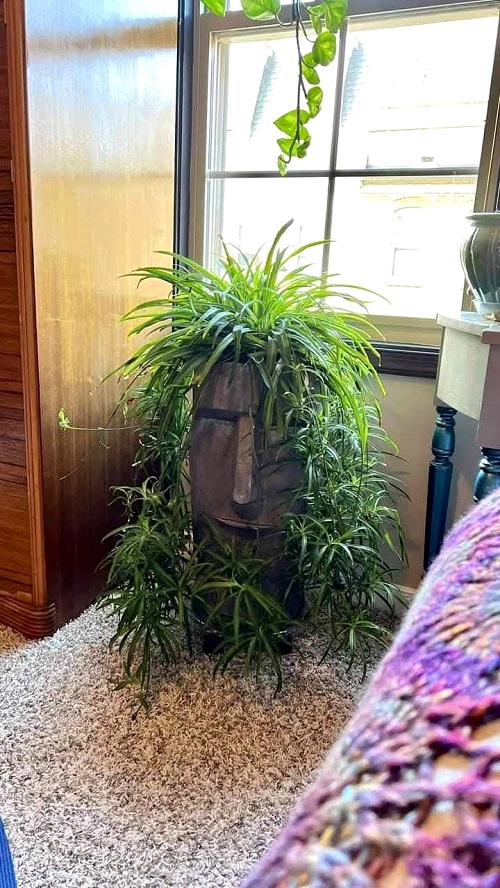
Used tea leaves can be a useful little addition to your spider plant’s soil, but they are not a secret growth formula.
Start with healthy basics. Give your plant bright indirect light, use well-draining soil, water when needed, and feed it properly during active growth. If you want to experiment, add a small amount of plain used tea leaves to the soil and see how your plant responds.
That is the safest way to approach Tea Bags for Spider Plant Growth. You are supporting the soil rather than expecting a kitchen leftover to do all the work.
And if your spider plant is already producing healthy green leaves and plenty of baby plants, keep doing what works. You don’t need a complicated trick to keep a happy spider plant growing.
Discover Better Ways to Care for Your Houseplants by following The Complete Houseplant Survival Manual.