
As an Amazon Associate, we earn a small commission from qualifying purchases — at no extra cost to you.
Is your Chinese Money Plant not producing babies? Find out why pups aren’t appearing and learn simple ways to encourage healthy new growth.
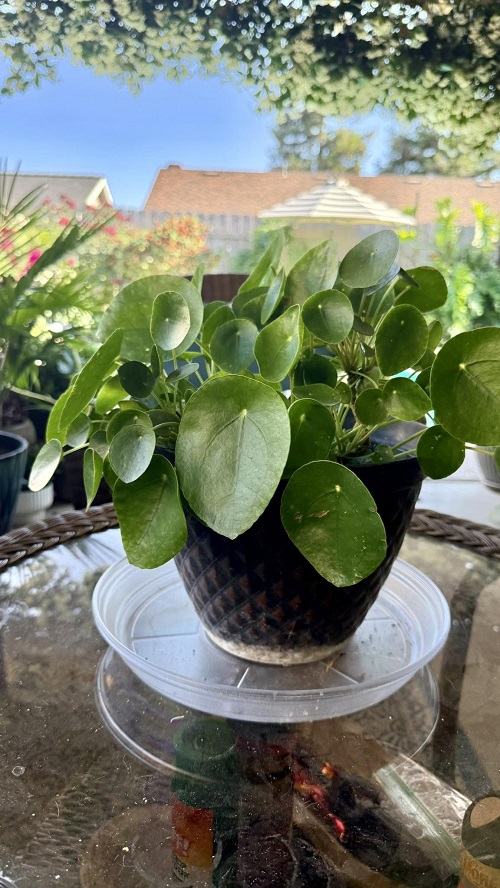
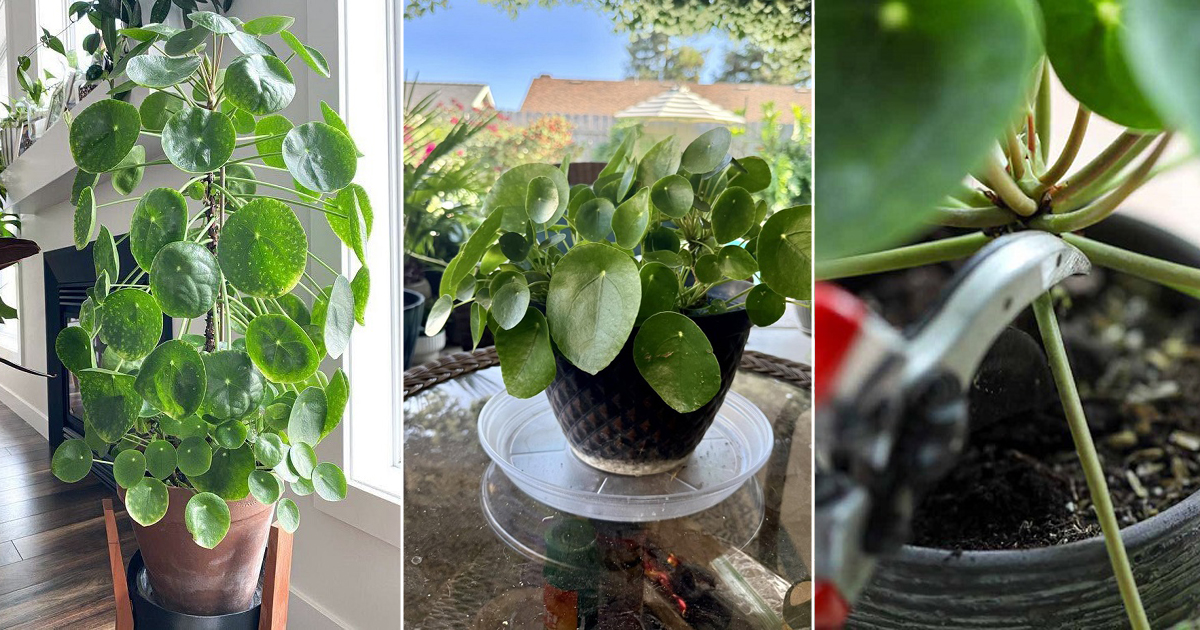
Chinese Money Plants are known for producing little plants around the base. So when yours keeps growing leaves but never gives you a single baby, it can be a little frustrating. The good news is that a healthy Pilea peperomioides doesn’t necessarily produce pups all the time. Several things affect when and how often they appear. The plant’s age, light, growing conditions, and even the time of year can all make a difference. If your Chinese Money Plant Not Producing Babies, look at its overall growing conditions first. Once you figure out what is holding it back, you can make a few simple changes to encourage new growth.
Chinese Money Plant Not Producing Babies
Get this gardening tool set for lush growth with minimal effort. Also, check our Amazon storefront for more garden supplies.
1. Your Chinese Money Plant May Not Be Mature Enough
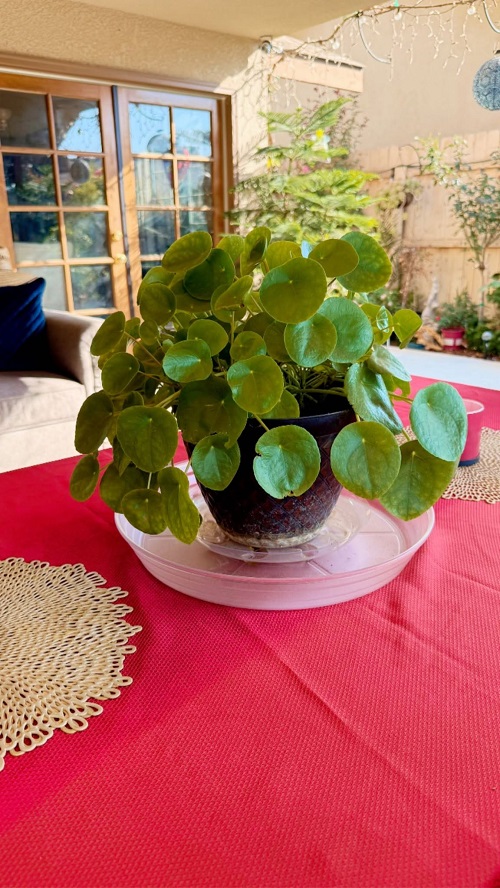
Young plants often need time before they start producing offsets.
If you recently bought a small Chinese Money Plant or grew yours from a cutting, don’t worry if it hasn’t produced pups yet. The plant may simply be putting its energy into establishing roots and growing a stronger main stem.
Give it time to settle in and grow. A healthy plant with plenty of new leaves is usually a good sign, even if there are no babies around the base yet.
2. It May Not Be Getting Enough Light
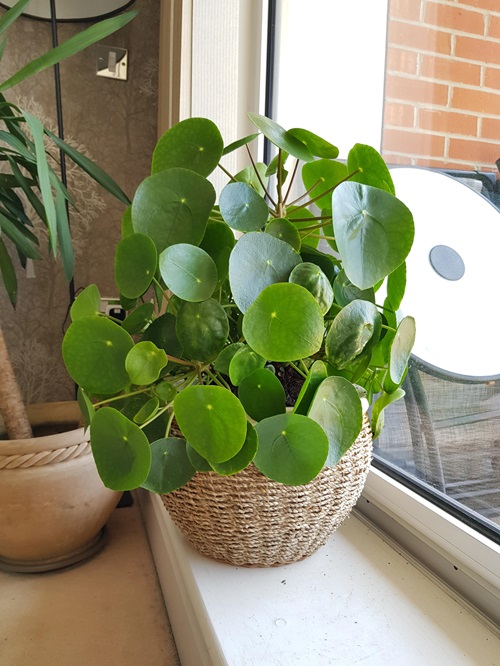
Light has a big effect on how well your Chinese Money Plant grows.
A plant kept in a dim corner may stay alive but grow slowly and produce fewer new shoots. You may also notice that the stem becomes long and the leaves spread farther apart as the plant reaches toward a light source.
Place your Pilea somewhere with bright, indirect light. A spot near a bright window works well, but avoid harsh direct afternoon sunlight that can scorch the leaves.
If your plant has been growing tall and sparse as well as failing to produce pups, light is one of the first things I’d check.
Give your Pilea a more consistent light source. Check the SANSI grow-light options on Amazon.
3. Check Your Watering
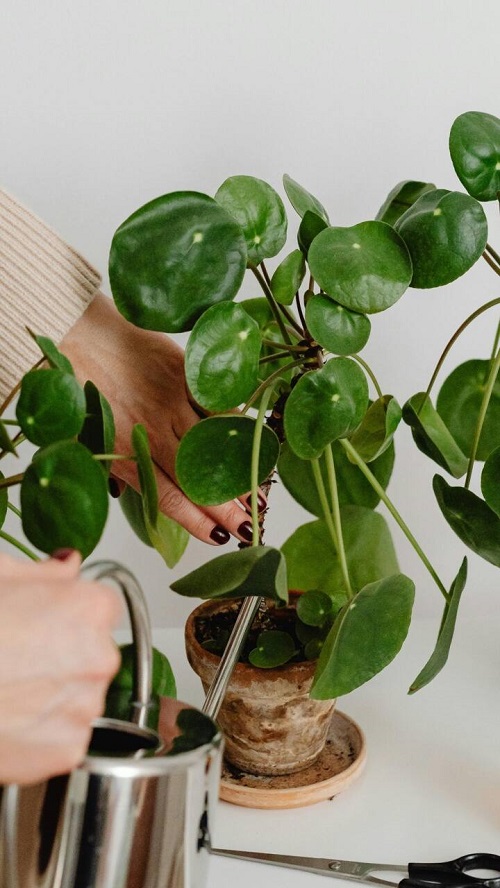
Neither constantly wet soil nor extremely dry soil gives a plant ideal growing conditions.
Water your Chinese Money Plant when the upper portion of the soil has dried out rather than following a strict calendar. When you water, soak the soil thoroughly and let the excess drain away.
Don’t leave the pot sitting in water. Poor drainage can keep the roots wet for too long and eventually lead to root problems.
On the other hand, letting the plant go completely dry for long periods can slow its growth. If the plant is already struggling, inconsistent watering won’t help it produce new shoots.
Check the popular XLUX moisture meter to avoid watering too often. Grab it before it goes out of stock.
4. The Soil May Need Attention
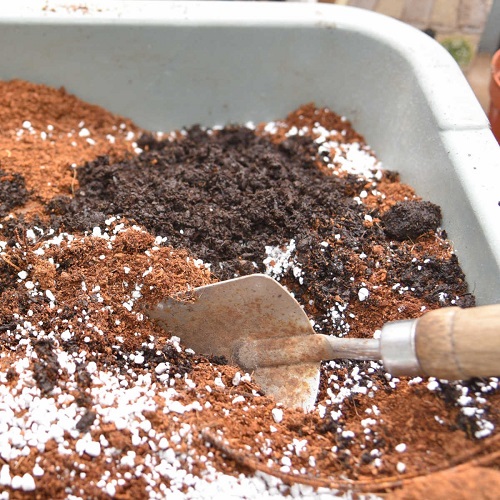
A Chinese Money Plant grows best when its roots have access to both moisture and air.
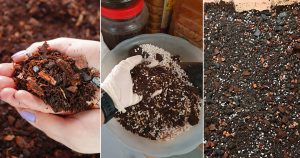
If your potting mix has become dense or stays wet for a long time after watering, it may be time to repot. A loose, well-draining houseplant mix is a better choice than heavy soil that holds water around the roots.
You don’t need an elaborate soil recipe. A good-quality indoor potting mix amended with materials such as perlite can provide the drainage and airflow the roots need.
If the existing soil still drains well and the plant is growing normally, there is no reason to repot simply because it isn’t producing pups.
5. Your Plant May Need More Nutrients
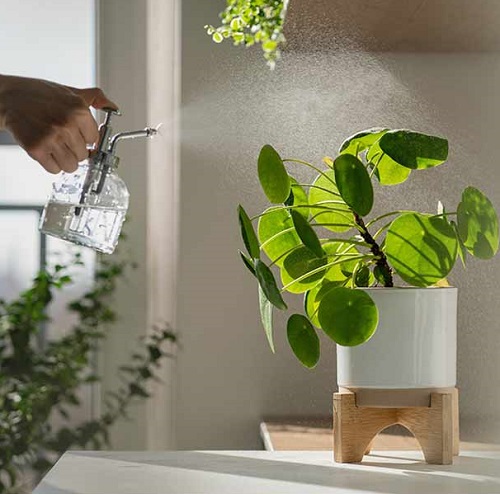
A plant can’t keep producing new growth without access to nutrients.
If your Chinese Money Plant has been growing in the same potting mix for a long time, the available nutrients may have become depleted. Slow growth, pale new leaves, and a general lack of vigor can be signs that the plant needs feeding.
During active growth, use a balanced houseplant fertilizer according to the label directions. Avoid adding extra fertilizer in the hope of forcing babies to appear. Too much can damage the roots and create another problem.
Healthy, steady growth is the goal.
Give your Pilea the nutrients it needs for steady new growth.
6. It Could Simply Be the Season
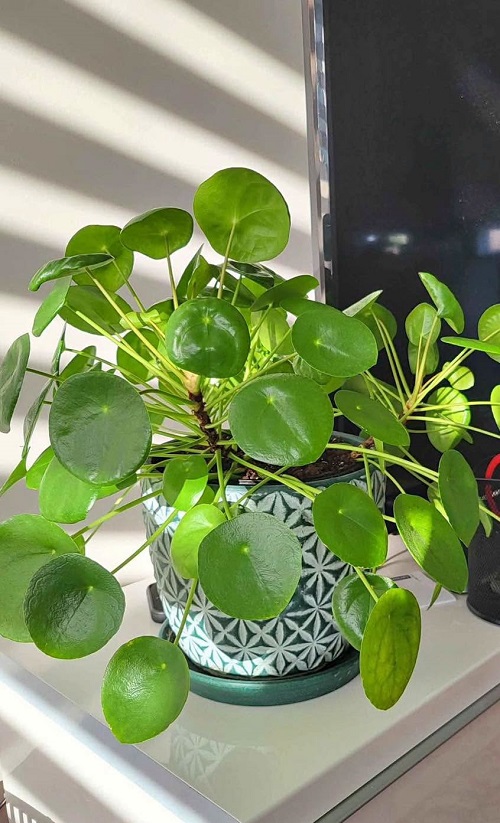
Chinese Money Plants don’t grow at exactly the same rate throughout the year.
Growth often slows when light levels drop or conditions become less favorable. If your plant produces pups during one part of the year and seems to stop during another, that isn’t necessarily a sign that something is wrong.
Give it good light, appropriate watering, and reasonable temperatures, then allow it time to respond.
Sometimes the best thing you can do is stop trying to force new growth and let the plant follow its natural growing cycle.
7. Check the Roots and Pot
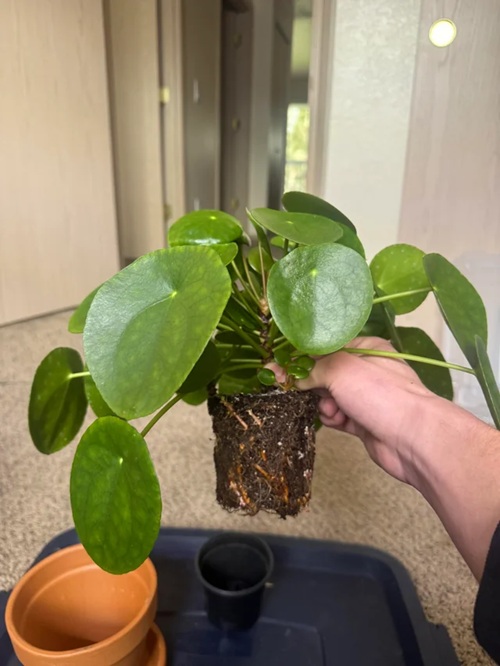
A pot that is too large can hold more moisture around the roots than the plant needs. A severely root-bound plant, on the other hand, may have very little room left for healthy root growth.
When you repot, choose a container only slightly larger than the current root ball and make sure it has drainage holes.
You can also take a quick look at the roots if you are already repotting. Healthy roots should not be mushy, foul-smelling, or badly damaged.
If you find signs of root rot, deal with that problem first. A plant struggling with damaged roots is unlikely to put much energy into producing pups.
Give your Pilea’s roots room to breathe. Choose a pot with drainage holes to help excess water escape and reduce the risk of soil staying soggy.
How to Encourage More Babies on a Chinese Money Plant
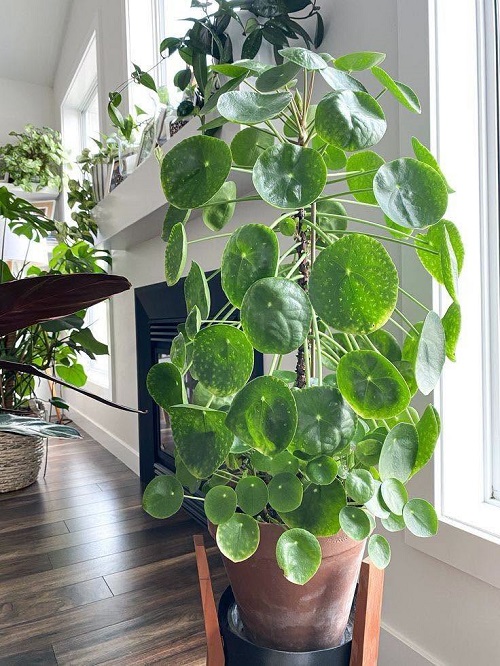
You can’t force a Chinese Money Plant to produce pups on demand, but you can give it conditions that support healthy growth.
Start with bright, indirect light. Keep the watering consistent without keeping the soil constantly soggy. Use a loose, well-draining potting mix and feed lightly during active growth if the plant needs it.
It’s also worth avoiding unnecessary stress. Don’t keep moving the pot from one location to another, repot repeatedly, or heavily prune a plant that is already struggling.
Give it a stable environment and watch the new growth. If the plant is healthy and actively growing, you may eventually notice a tiny shoot appearing near the base.
Check out well-draining indoor potting mixes on Amazon for a healthier root environment.
What If Your Chinese Money Plant Is Tall but Has No Babies?
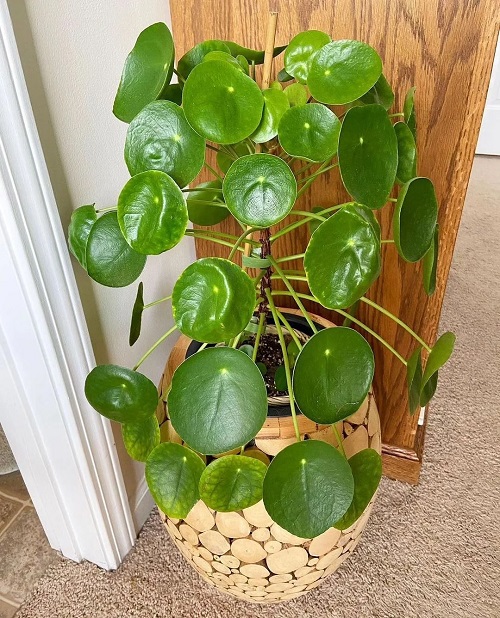
A tall, sparse Pilea doesn’t necessarily mean it will never produce pups. Lack of light can cause stretched growth, so move the plant to a brighter location with plenty of indirect light.
If the plant has become very leggy, pruning the main stem can also help improve its shape. This won’t guarantee new pups, but it can encourage fuller growth and give existing shoots a chance to develop.
If your plant is both tall and bare, you can also read Why Your Chinese Money Plant Grow Tall But Not Full for a closer look at the causes of leggy growth and how to correct them.
Don’t Confuse New Leaves With Babies
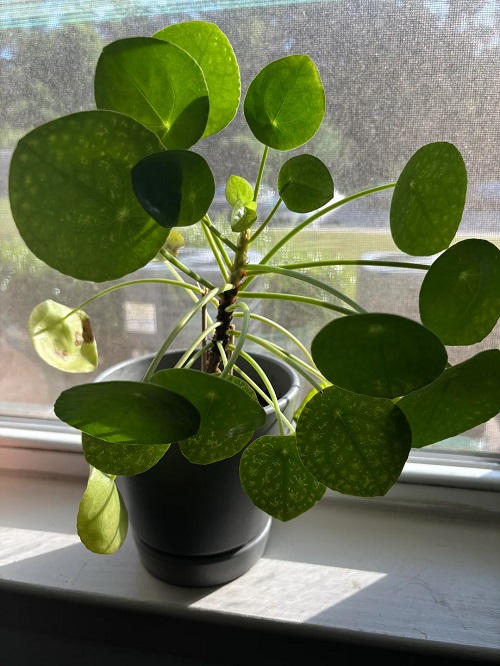
Sometimes what looks like a possible pup is simply a new leaf emerging from the main stem.
Chinese Money Plant babies develop as separate shoots from the plant’s base or surrounding root area. As they grow, you’ll see their own small stems and leaves rather than one new leaf attached directly to the main stem.
Wait until a new shoot has developed enough to identify it before trying to separate it.
Should You Cut the Main Plant to Make It Produce Babies?
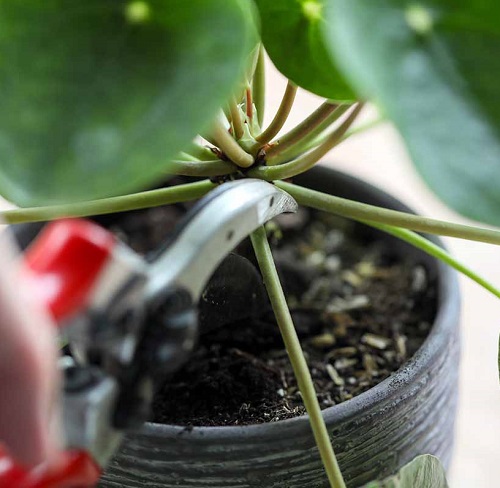
You may see advice suggesting that cutting or pruning the main stem will automatically make a Chinese Money Plant produce pups.
Pruning can change the way a plant branches, but it isn’t a guaranteed method for producing babies. If your main plant is healthy and attractive, there is usually no need to cut it simply because you want more offsets.
Focus first on light, watering, roots, and nutrition. Those basics have a much bigger role in keeping the plant healthy.
Add to cart a clean pair of precision pruning snips rather than grabbing household scissors.
When Should You Separate Chinese Money Plant Babies?
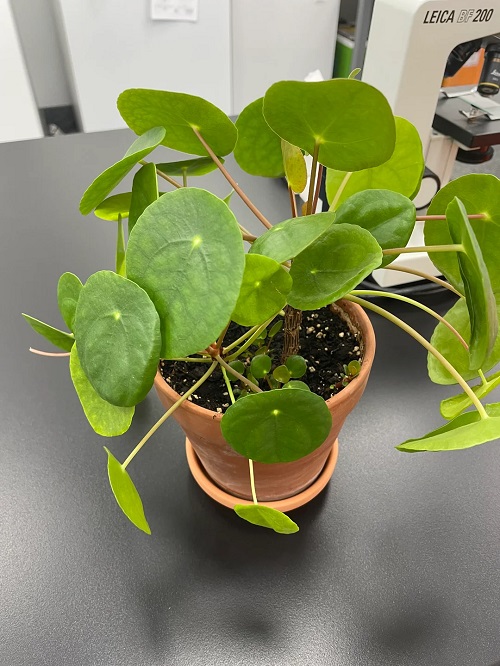
Once your Pilea finally produces pups, you don’t have to remove them straight away.
Let the baby grow until it has developed a reasonable size and its own roots. A tiny shoot is much easier to damage during separation.
When the pup is established, you can carefully remove it and pot it separately. If you aren’t interested in propagating, you can also leave the babies around the mother plant. A few offsets can make the pot look fuller and more mature.
Give It Time
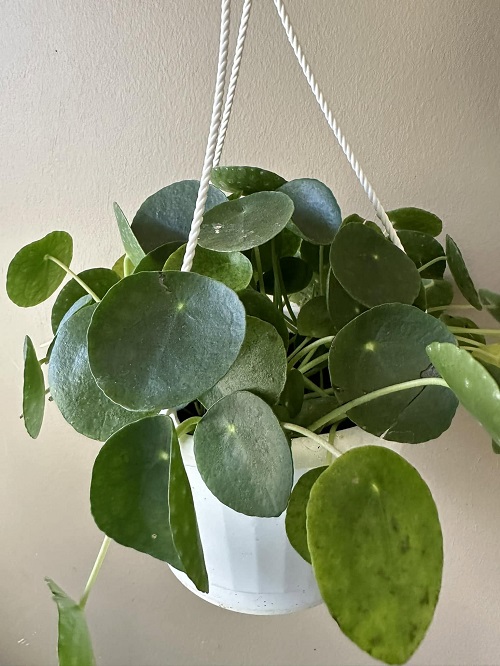
Age can make a noticeable difference. A young Chinese Money Plant may spend its early growth developing roots, stems, and leaves before it starts producing offsets. Once the plant is well established, it has a better chance of putting out pups.
This is why buying a larger, established Pilea can sometimes give you babies sooner than starting with a very small plant. Still, maturity alone isn’t enough. A mature plant sitting in poor light or struggling with watering problems may not produce pups either.
If your plant is healthy but hasn’t produced any babies yet, give it time. Focus on steady growth rather than trying to force an immediate result.
.A good houseplant guide can help you troubleshoot light, watering, soil, feeding and other common problems across your indoor plant collection.