
As an Amazon Associate, we earn a small commission from qualifying purchases — at no extra cost to you.
Do Spider Plant Flowers Turn Into Spiderettes? Here’s What Actually Happens after blooming and how baby plants turn in Chlorophytum comosum.
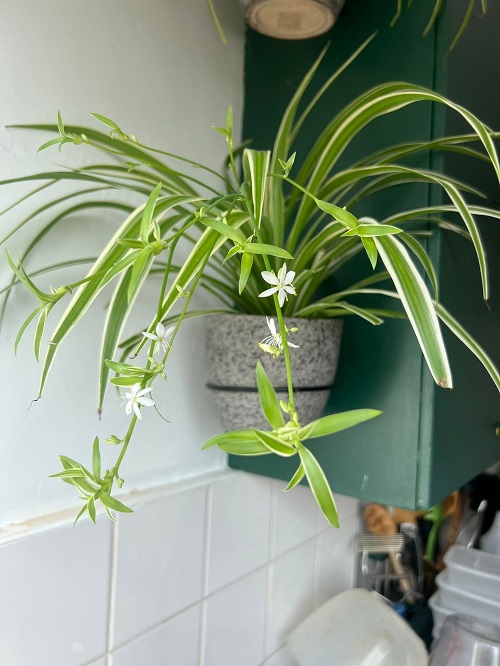
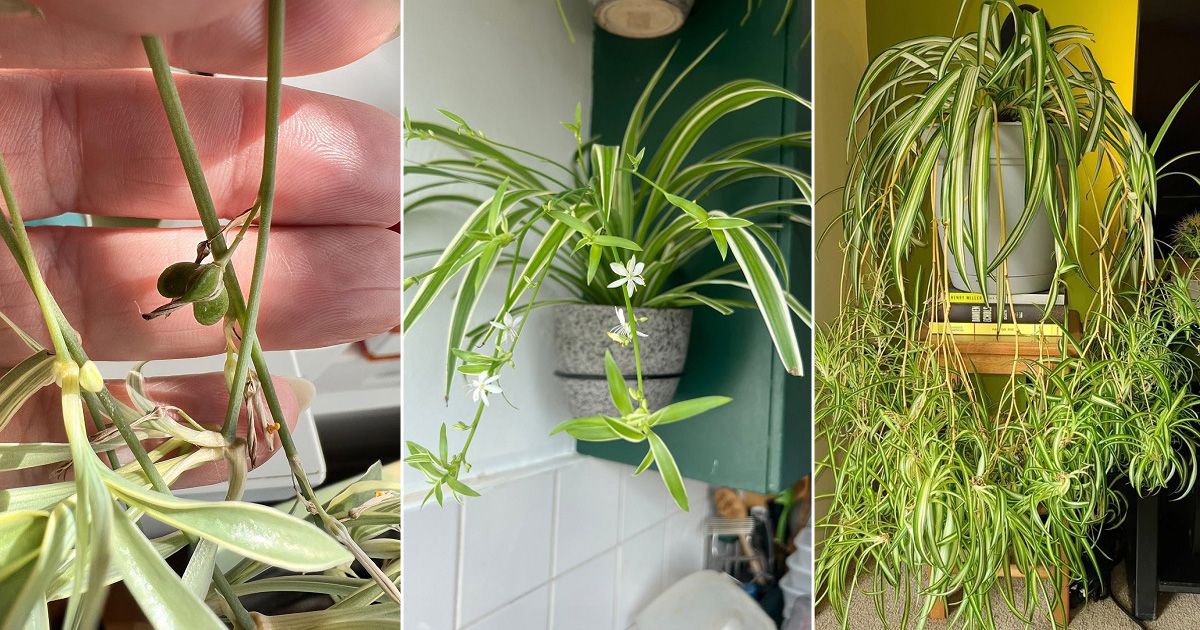
Have you ever looked closely at a spider plant when it’s flowering? You might see a long stem coming out from the middle of the plant with a few tiny white flowers on it. The flowers eventually disappear, and then, sometime later, you notice little spiderettes hanging from the stem.
That can make it look as if the flowers have turned into baby plants. It’s an easy conclusion to come to, especially if this is the first time you’ve seen a spider plant go through the process.
But that’s not quite what is happening. Read in detail and clear this confusion about Do Spider Plant Flowers Turn Into Spiderettes? Here’s What Actually Happens
Why Is My Spider Plant Flowering?
Get a complete indoor plant-care kit and keep the essential tools together for watering, pruning, potting, and everyday plant care. Also, you can get all the necessary items for gardening at our Amazon Storefront.
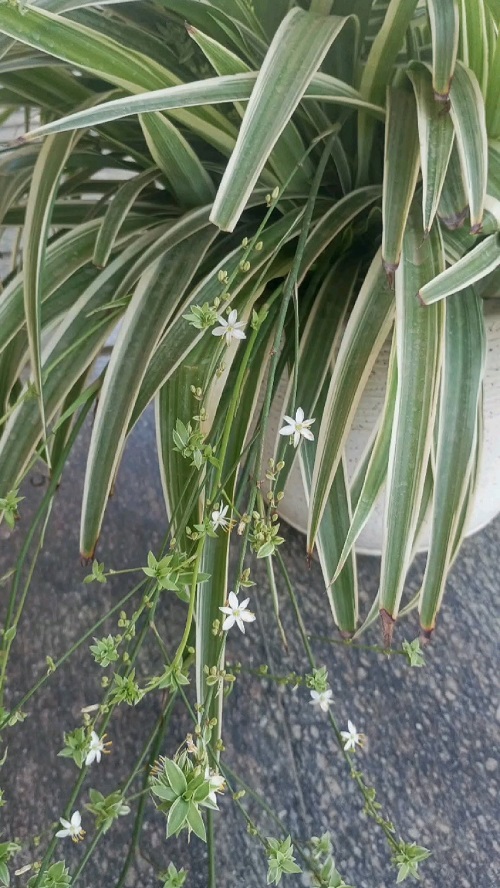
If your spider plant has started flowering, there’s usually no reason to worry. It’s generally a sign that the plant is mature enough to reproduce.
You may notice flowering more often on an older, well-established plant. Spider plants also tend to flower when they’re growing in bright, indirect light and when their roots have filled the pot to some extent.
The flowers are nothing dramatic. They’re small, white, and easy to overlook. If you aren’t paying attention, you might not even realize your plant is flowering.
They usually appear along those long stems that extend out from the plant.
And those same stems are where you may eventually see spiderettes.
That’s where the confusion starts.
Here is a long-sprouted watering can that you can add to your gardening kit.
What Happens After the Flowers?
A spider plant has more than one way of making new plants.
The flowers are part of the plant’s sexual reproduction. If they’re pollinated, they can produce seeds.
Spiderettes are different.
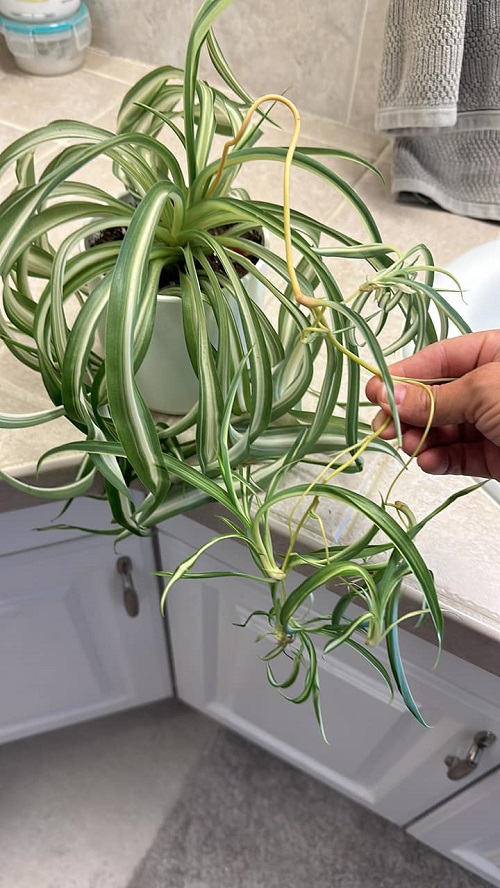
They’re little clones of the mother plant. Instead of beginning as a seed, they develop directly from the mature plant on the long stems.
So when you see flowers and later see babies, you’re looking at two different things happening as the plant reproduces.
Mature spider plants can reproduce through seeds as well as clones, and spiderettes may develop after flowering.
That explains why the two can seem connected even though one isn’t turning into the other.
Do Spider Plant Flowers Turn Into Spiderettes?
No, not literally.
The flower doesn’t fade and then become a tiny spider plant.
If a flower is pollinated, it can produce seeds. Those seeds can eventually grow into new plants.
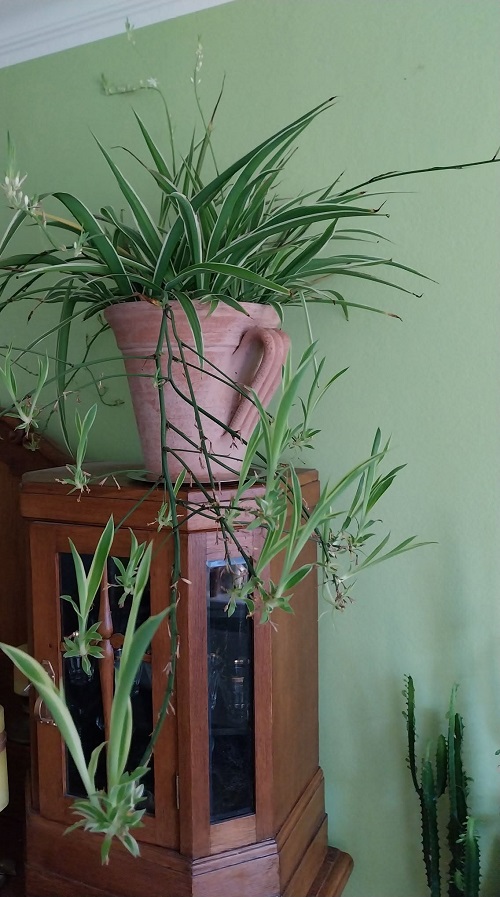
A spiderette starts differently. It’s already a tiny plant when you first notice it. It develops on the stem and gradually grows leaves and roots until it can survive on its own.
The tricky part is that you might not notice the spiderette right away.
You see the flowers first because they’re there for a short time. Later, you look at the plant again and notice a little green plant hanging from the stem.
It feels like you’re watching one thing turn into another.
You’re not. The timing just makes it look that way.
Use this Indoor Plant Food to boost the growth of your spider plant.
Spiderettes Are Basically Little Copies of the Mother Plant
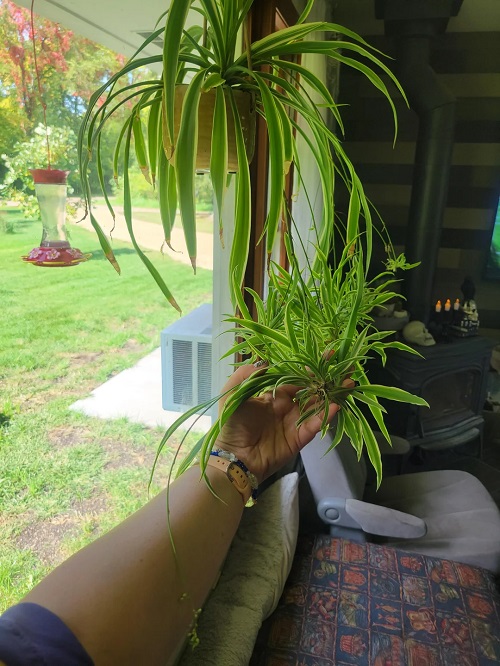
This is what makes spider plants so easy to propagate.
The mother plant can produce little plants without waiting for seeds to form and germinate.
A spiderette starts as a small cluster of leaves. As it grows, tiny roots begin to develop underneath. Eventually, it can be separated from the mother plant and grown in its own pot.
It’s basically a ready-made new spider plant.
That’s quite different from growing one from seed.
So you can think of it this way: the flowers give the plant the option of producing seeds, while the spiderettes let it make clones of itself.
You don’t have to choose between the two. A mature plant can do both.
What Does a New Spiderette Look Like?
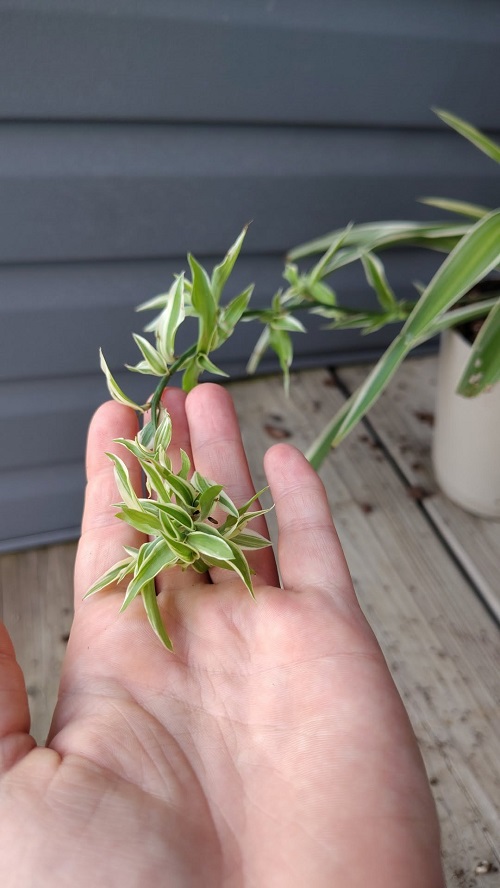
The first sign may be so small that you almost miss it.
You might see a few tiny leaves dangling from the end of the stem. At this stage, it doesn’t look much like the full-grown spider plant sitting in the pot.
Give it some time. The little plant gets larger, more leaves appear, and roots eventually start forming underneath it.
Once you see roots, you have a much better idea of what to do with it.
There’s no need to cut it away immediately, though.
Don’t rush it. Leaving the spiderette attached gives it more time to grow while it’s still connected to the mother plant.
For better gardening, you can use these seeding trays for growing little sprouts.
Do You Need to Cut Off Spiderettes?
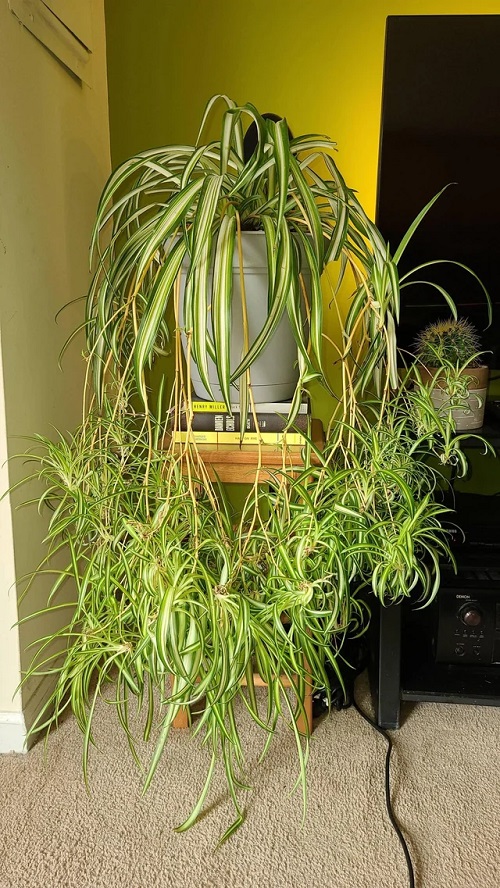
Not at all.
If you like the way spider plants naturally spill over the sides of their pots, leave them alone. Several spiderettes hanging from the stems can make the plant look full and healthy.
If your goal is to make more plants, that’s when you can start thinking about propagation.
A rooted spiderette can be placed in a small pot of soil while it’s still attached to the mother plant. Once it has settled in and started growing, you can cut the stem between the two plants.
That way, the baby gets a little time to establish itself before it has to manage on its own.
You can also root spiderettes in water if you prefer. Both methods can work.
Spider Plant Flowered, but Where Are the Babies?
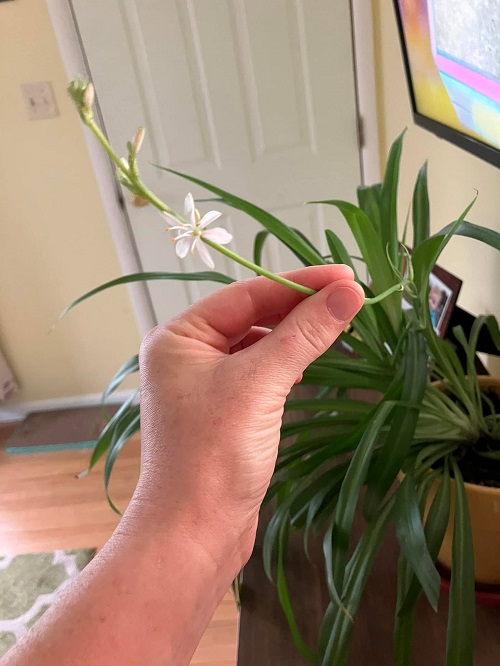
Don’t panic if nothing happens right away.
A spider plant doesn’t necessarily produce a spiderette for every flower, and you won’t always see babies immediately after flowering.
Take a look along the entire stem instead of concentrating on the spot where the flower was. The plantlets can appear farther along the stem.
The age of the plant matters, too. A young spider plant may flower less often and may not produce as many spiderettes as a mature plant. Growing conditions can also affect what the plant does.
So if your plant has flowered and you’re still waiting for babies, there’s no need to assume something is wrong. Sometimes you just have to give it a little time.
Can Spider Plant Flowers Produce Seeds?
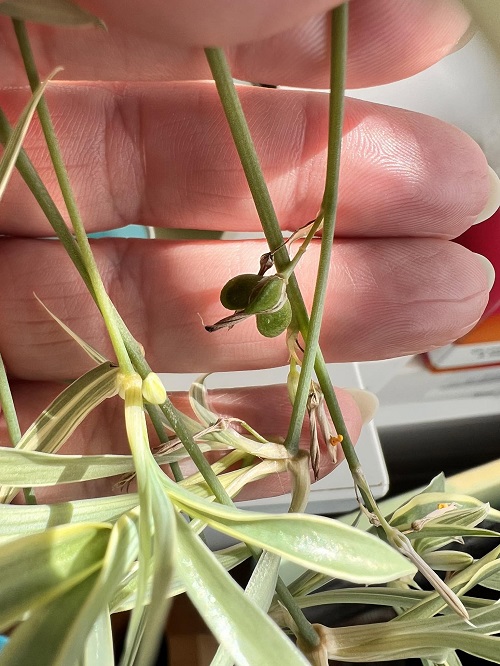
Yes, they can.
When a flower is pollinated, it can develop into a seed pod. The seeds can then be collected and used to grow new spider plants. It’s a perfectly natural way for the plant to reproduce. It’s just not usually the method people use at home.
Growing from seed takes longer, while a spiderette already has leaves and is beginning to form roots. If your plant is producing healthy babies, propagation is generally much easier.
Why Does It Look Like the Flower Became the Baby?
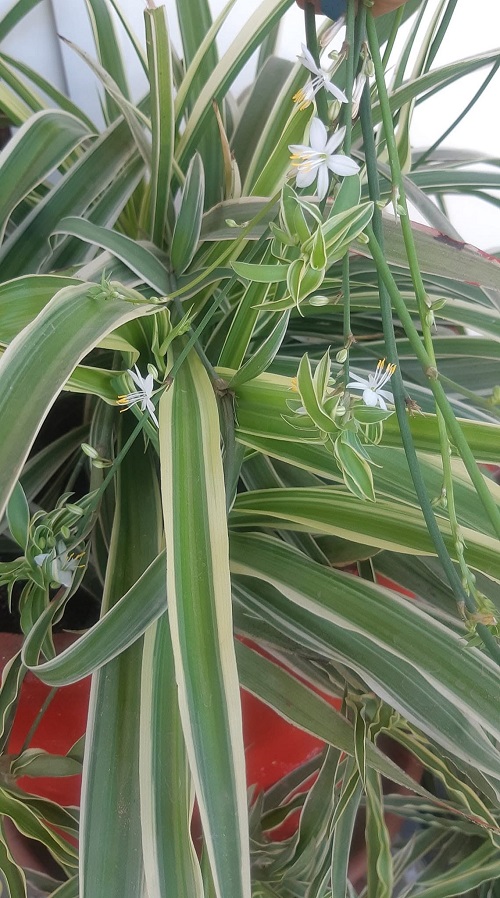
Mostly because of what you see and when you see it.
The flowers show up first. Then they fade away.
A little later, there are tiny plants hanging from the stem. Put those three things together and it isn’t hard to see why people think the flower became the spiderette.
But the flower has already done its own job. If it was pollinated, it may produce seeds. The spiderette is developing separately as a clone of the mother plant. They’re both part of the plant’s reproductive cycle, but they aren’t two stages of the same structure.
What Should You Do When Your Spider Plant Flowers?
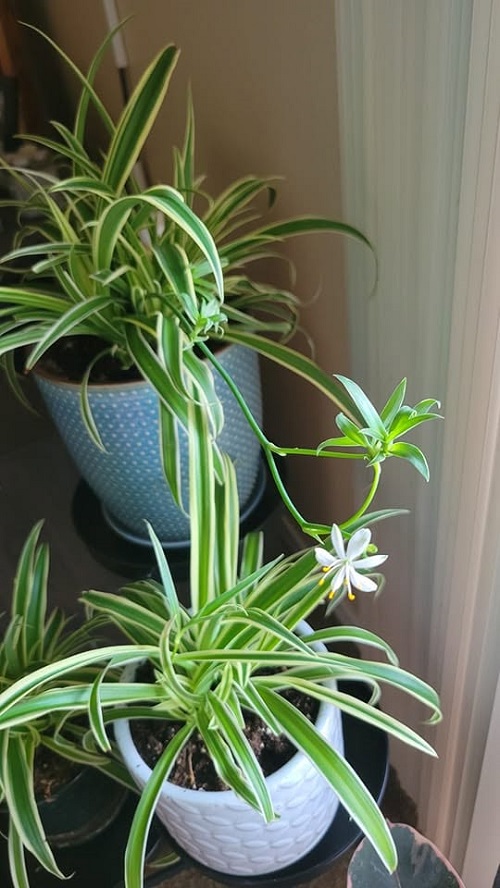
Honestly, you can leave it alone. There’s no need to cut off a healthy flowering stem simply because the flowers have finished.
Keep the plant in bright, indirect light and continue its usual care. If spiderettes appear, you can leave them attached or propagate them once they’ve developed roots.
Do not rush to repot a spider plant just because it has started flowering. Mature spider plants often flower when their roots have filled the pot somewhat.
If the plant is otherwise healthy, let it be.
Watch the stem for a while. You may get a better view of the whole process than you expected.
So, What Really Happens?
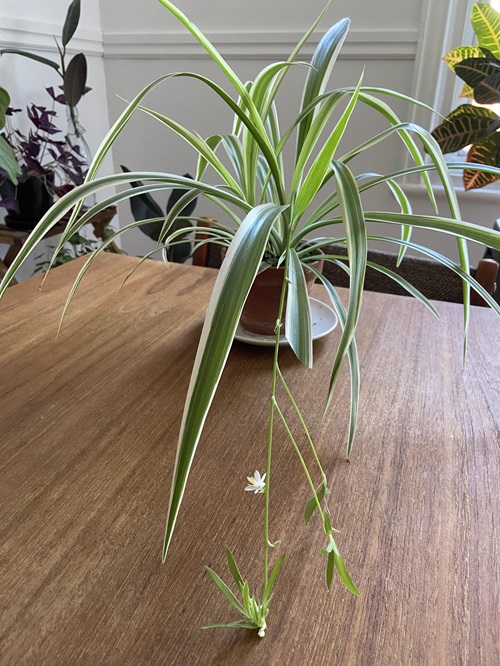
A spider plant flower does not turn into a spiderette.
The flower is involved in producing seeds when pollination occurs. A spiderette is a small clone produced by the mother plant.
The reason it seems like one turns into the other is simply that flowering and spiderette production can happen around the same time, often on those long stems coming from the plant.
So the next time your spider plant flowers, don’t be surprised if you later find tiny plants hanging from the stems. They didn’t come from the flowers. Your spider plant is simply using another way to make more of itself.
Pot your spiderretts in these small nursery pots to give them space for growth.