
As an Amazon Associate, we earn a small commission from qualifying purchases — at no extra cost to you.
Which corner of your home has been sitting empty? Try these Houseplant Display Ideas For Small Spaces and turn them into unforgettable spots.
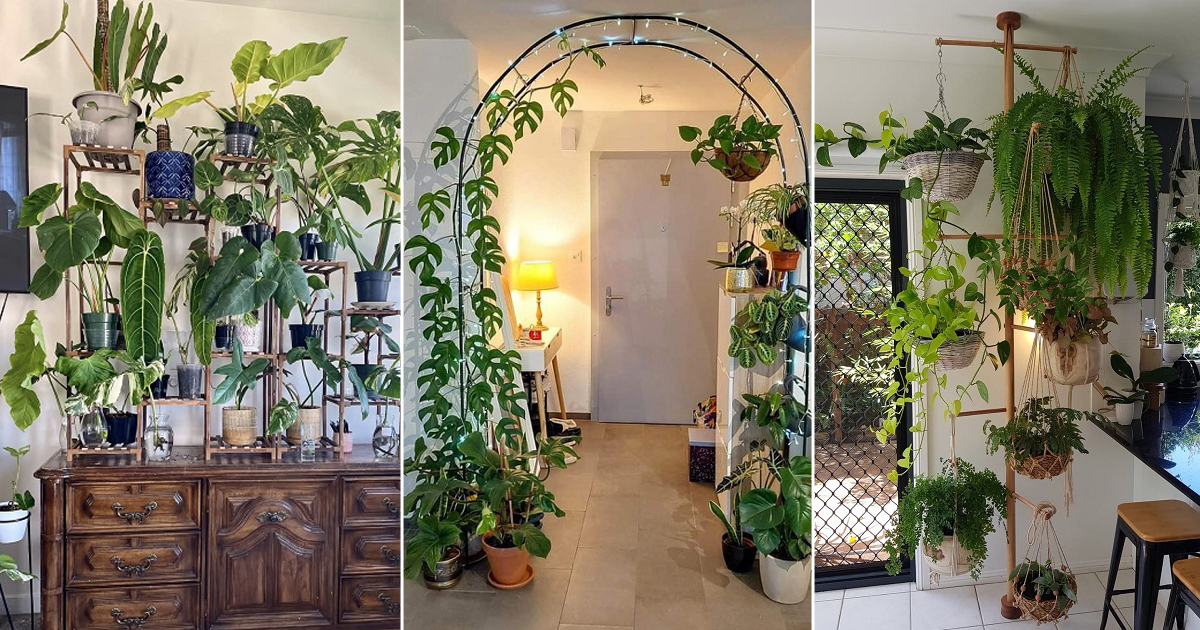
Make the most of every area with these Houseplant Display Ideas for Small Spaces. Small rooms do not mean you need to give up your indoor garden. Vertical stands, wall space, unused stairs, window areas, and furniture will all become useful spots for potted plants. You will also find creative options for water propagation, orchids, trailing plants, and hanging planters. Some setups work beside the bed, while others fit neatly into kitchens, living rooms, and narrow corners. These plant display ideas suit your apartments, compact bedrooms, studio homes, and other places with limited floor space. Pick a setup that matches your room, arrange your favorite plants, and create a green display without taking over your living area.
Houseplant Display Ideas For Small Spaces
Turn one of your empty corners into a complete indoor garden with this plant stand, which adds multiple display levels. Also, check our Amazon Storefront for more such essential needs.
1. Greenhouse Corner Stand
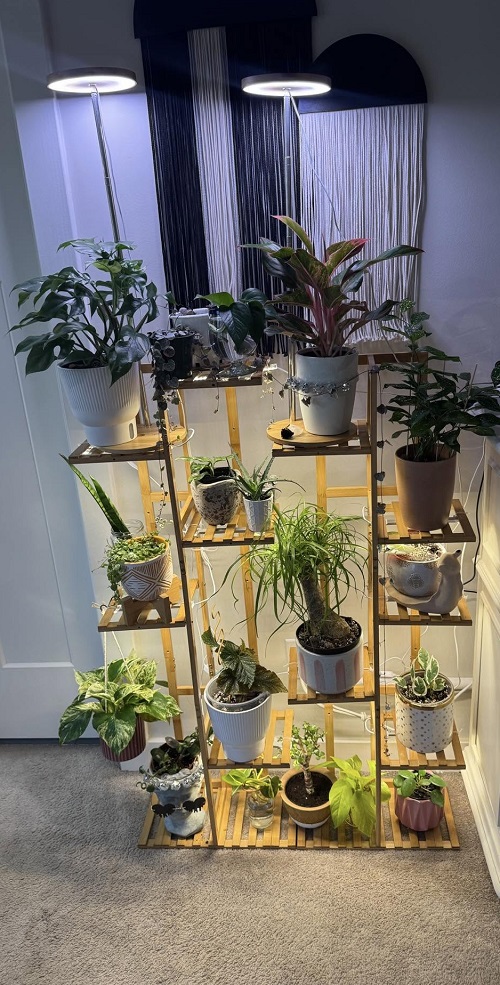
A wooden stand with grow lights will create a compact plant station for your home with limited natural light. Several decorative pots will sit across different levels, keeping the collection together instead of spreading it around your room. The lights will give the display a warm indoor garden feel while supporting plants placed away from bright windows. Use the lower shelves for smaller pots and keep taller plants toward the top for a layered look.
Give your collection a tall, lighted home with this space-saving plant stand.
2. Tiered Plant Gallery
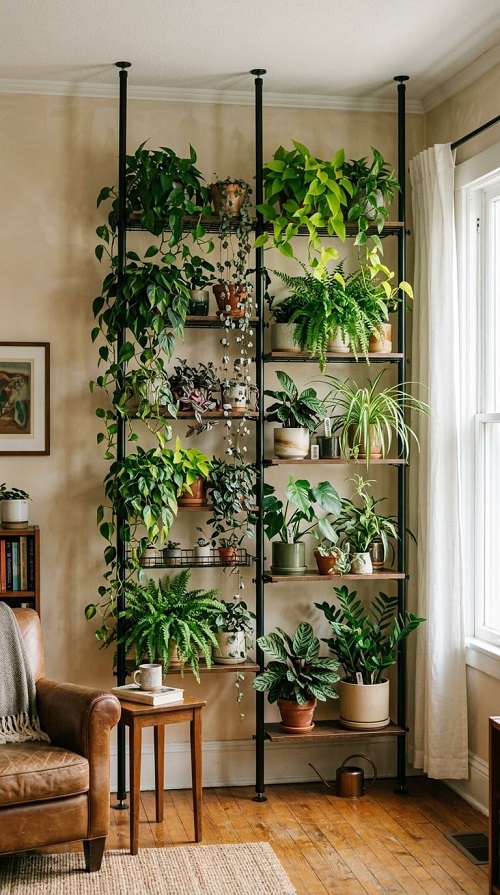
Turn a narrow stand into a little green gallery with plants arranged from top to bottom. The raised levels will let each pot remain visible without needing a wide table or large floor area. Mix plants with different leaf shapes to make the display more eye-catching. A few trailing stems will hang over the edges and soften the straight lines of the stand.
This 5-tier setup gives every plant its own display level while adding a useful grow light.
3. Cabinet Top Conservatory
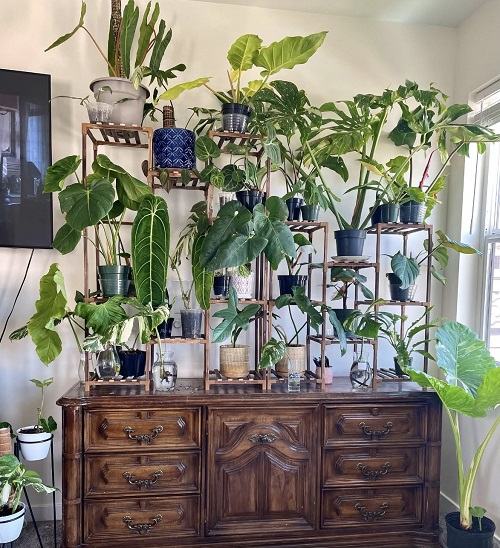
The top of your cabinet will become a useful plant stand in your compact room. Place several small pots together on it and leave enough room around them for watering and plant care. This setup works nicely for your plants that stay fairly small and do not need much floor space, but you can also display large-leaved plants. Why leave that cabinet top empty when it can hold a mini indoor garden?
4. Layered Hanging Plant Wall
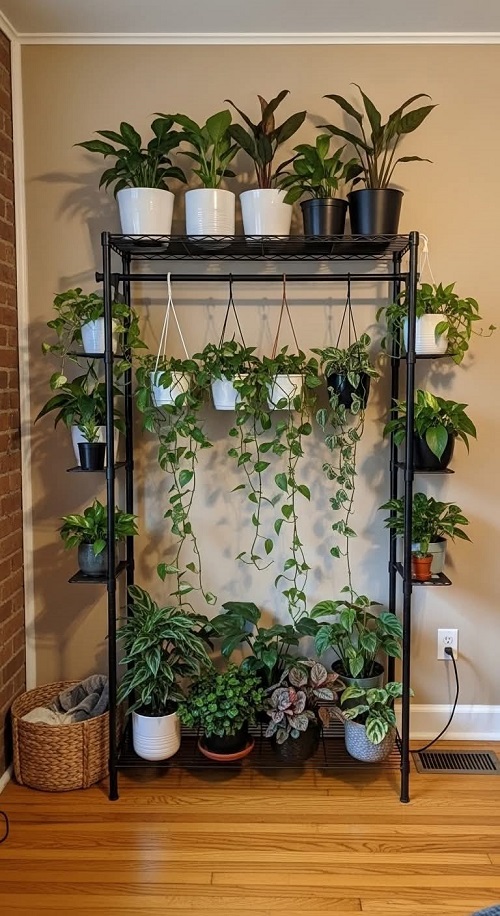
Mix your hanging pots with shelves to build a display that uses vertical space. Place your smaller plants on the shelves and let longer vines hang freely from above. Your different heights of plant give the arrangement a fuller appearance without requiring a large footprint. Keep your hanging pieces secure and leave clear space beneath them.
5. Hanging Pot Tower
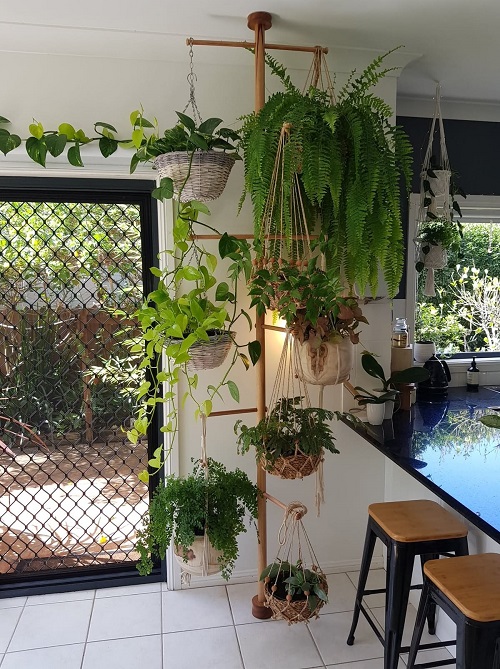
A tall plant stand paired with your hanging pots gives you several growing levels in one compact area. The upright shape works especially well beside your window, sofa, or an empty wall. Your hanging planters will hold all the trailing varieties. It feels like a small vertical garden tucked into one corner.
6. Rolling Plant Station
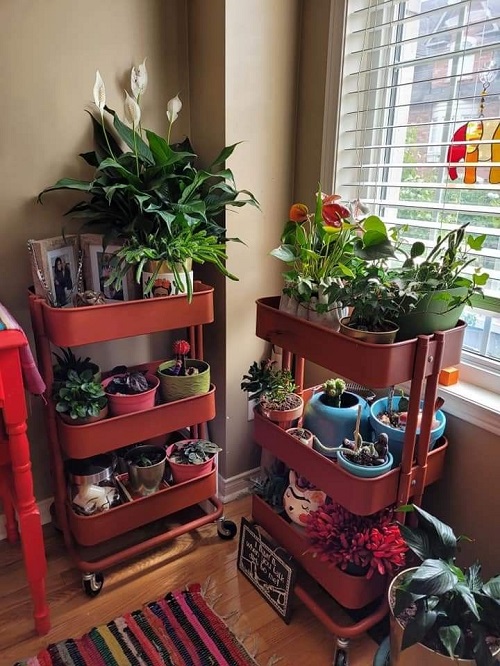
Plants on wheels are handy for your small homes where furniture and pots often need to move around. A wheeled stand lets you shift the collection toward a brighter spot or make room when cleaning. Group your plants with similar care needs together so the whole station stays easy to manage.
7. Greenery-Filled Bookshelf
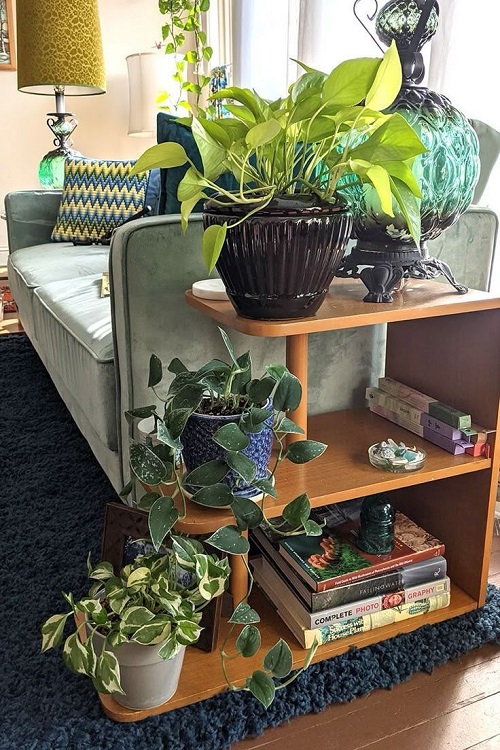
Your bookshelf will hold much more than your books. Place your compact pots between your favorite books or use the side shelves for trailing plants that will spill downward. Keep the heavier containers on sturdy lower levels for better balance. The mix of foliage and books will give your ordinary shelf a relaxed indoor garden feel.
8. Stairway Plant Steps
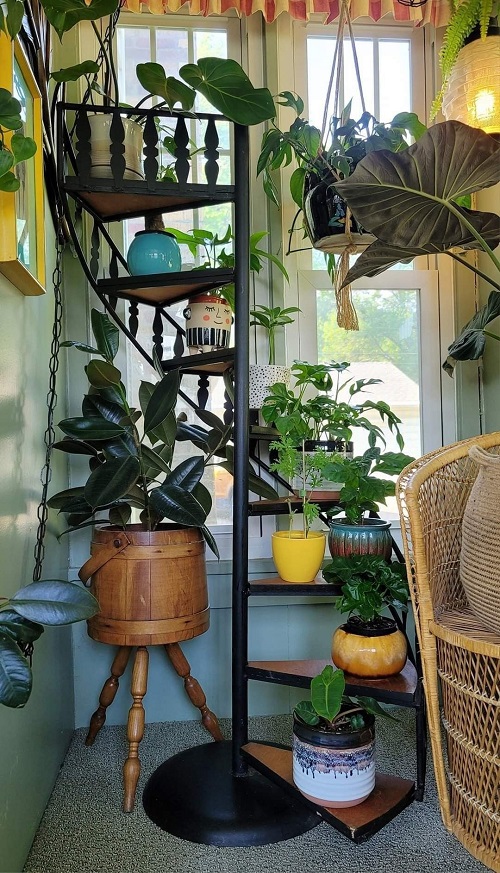
Unused stairs will provide several small platforms for displaying plants in your home. Place your pots along the wider edges or on suitable steps. Choose your smaller containers for narrow areas and taller plants for spots with more clearance. Do you have a quiet stair corner that will hold a few leafy companions for you?
9. Bedside Green Stand
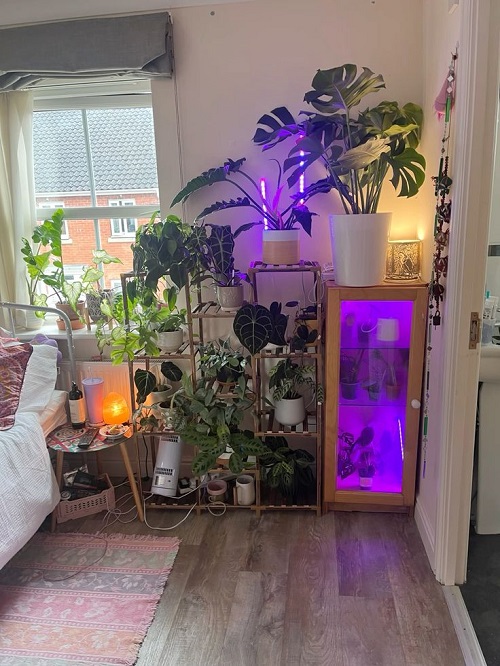
A wooden stand beside your bed will hold your vast collection. Choose plants that suit the available light and keep the arrangement low enough to leave the bedside area practical. A mix of different pot heights will make the stand look more balanced. It is a simple way to wake up beside greenery without filling your whole bedroom with pots.
10. Macrame Hanging Stand
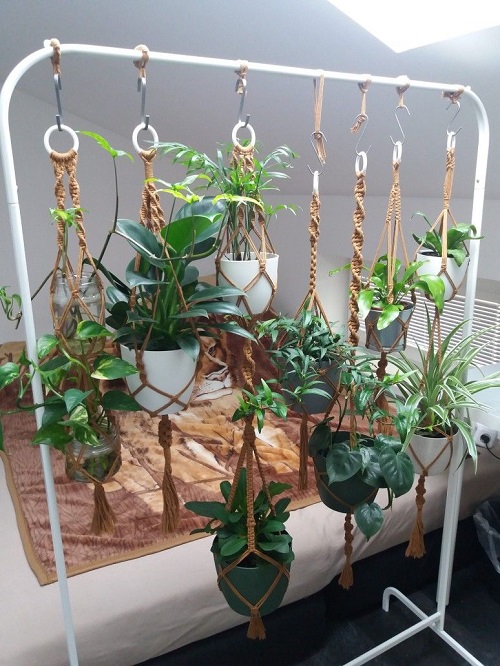
Macrame planters hung on a stand bring plants upward while keeping the floor area open. The woven holders will create different heights, making even a small collection look varied. Trailing plants will work particularly well here because their stems will fall naturally around the structure. Keep those hanging pots light enough for the supports and secure every hanger firmly.
Hang your plants in this simple macrame holder and free up your precious space.
11. Monster Arch Display
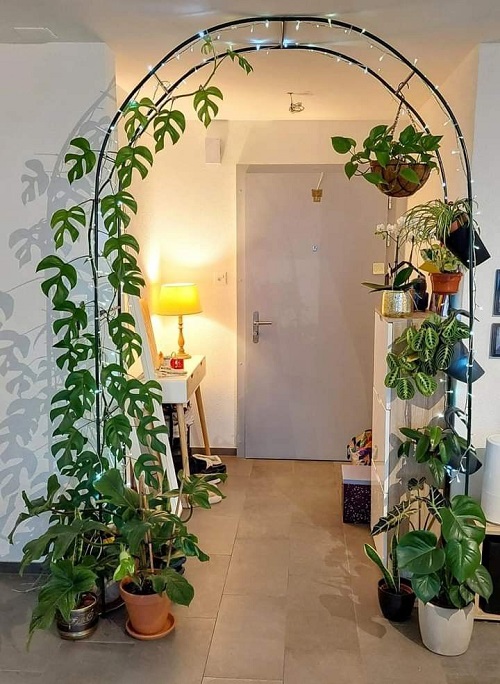
Give your large Monstera plant a dedicated vertical structure by training it around an arch. The plant will grow upward instead of spreading across the floor. The large leaves will become the main feature, while the arch gives the plant a clear shape.
Get adjustable full-spectrum light and give your indoor display the lighting support it needs.
12. Cabinet Garden
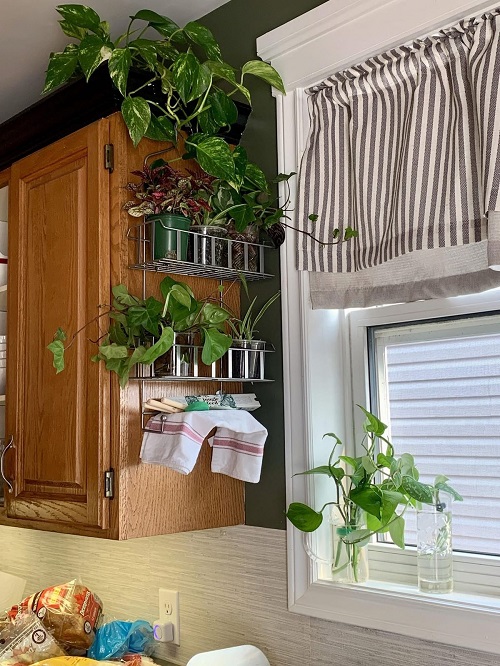
Using the rack attached to your cabinet will provide several levels for a neat plant arrangement. The top surface is suitable for your taller pots or hanging plants, and the open sections are for your smaller foliage plants. Keep enough space between containers so leaves do not become tangled together.
13. Kitchen Shelf Greens
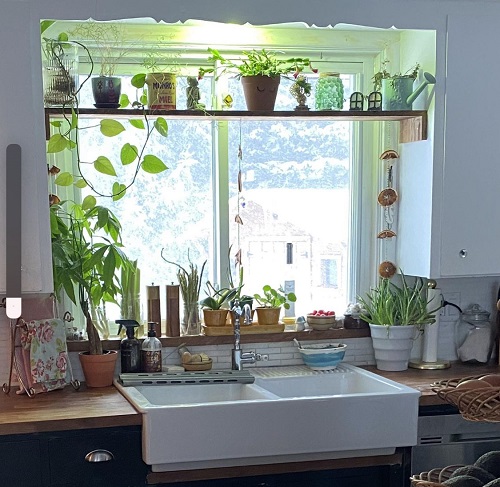
Bring a little greenery into your kitchen by placing suitable houseplants on your open shelf. Small leafy plants, herbs, or water-grown cuttings will fit nicely into your unused jars and compact containers. Keep your plants away from hot cooking areas, splashing water, and spots that become greasy.
14. Orchid Log Perch
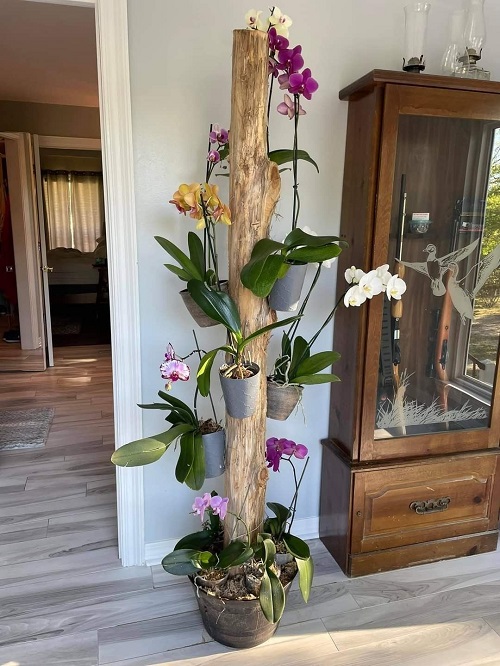
A rustic log stand will create a natural-looking platform for your orchids. Place your pots at different heights so the flowers remain easy to see. The textured wood will pair nicely with the delicate stems and blooms of your orchids. Keep that stand stable and position it somewhere with suitable light for your plants.
Keep this houseplant guide nearby for practical help with 160+ indoor plants.
15. Water propagation shelf
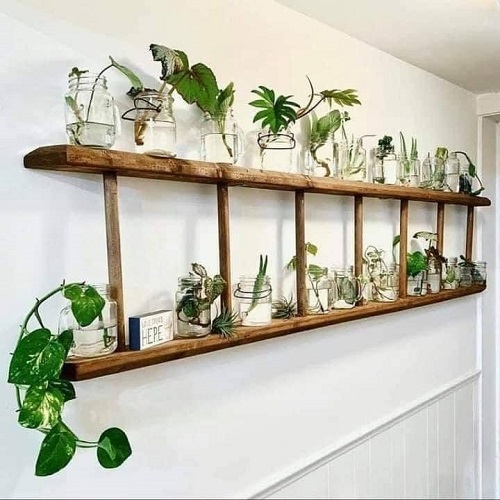
A long shelf will hold your glass jars filled with water and plant cuttings for a simple propagation display. The clear containers let you see the roots developing beneath the water, making it both useful and interesting. Keep your jars neatly spaced so each cutting has enough room for growth.
Turn your cuttings into living décor! These clear propagation bulbs will let you watch new roots grow right on your shelf.
16. Woven Basket Hanging Garden
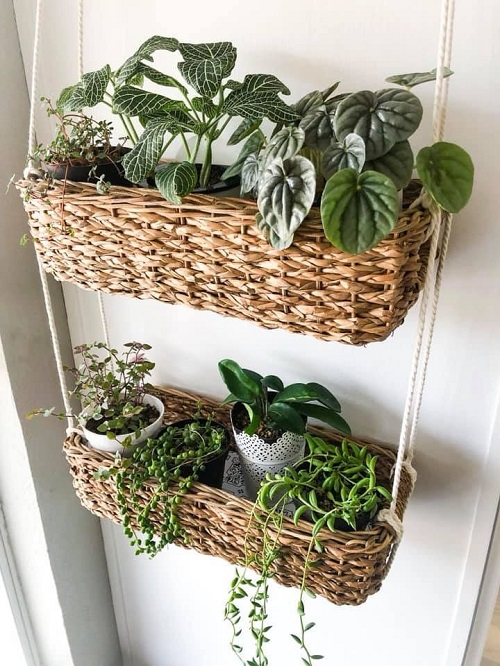
Woven hanging baskets will make use of your overhead space. Several baskets, when placed at staggered heights, will create a relaxed vertical arrangement. Your trailing plants will spill from their sides and bring movement to the display.
Create a hanging plant wall in minutes for a vertical display.
17. Tabletop Plant Cluster
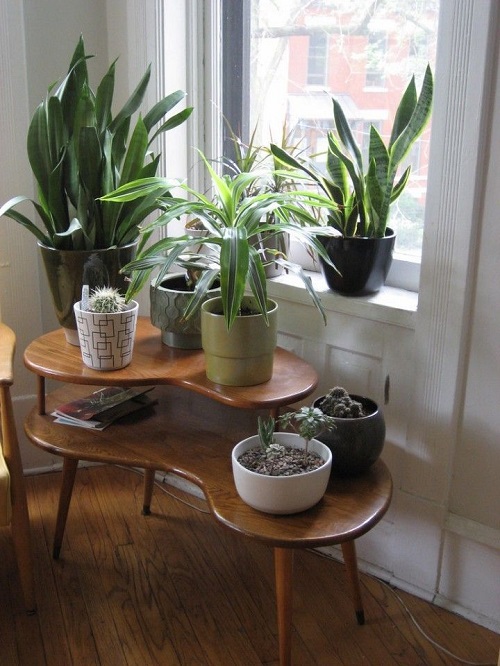
Your table will become a small plant island when several of your pots are grouped thoughtfully. Combine your plants with different heights so the arrangement has a natural flow instead of looking flat. Your small foliage plants will sit toward the front while taller stems rise behind them.
18. Ladder Shelf Garden
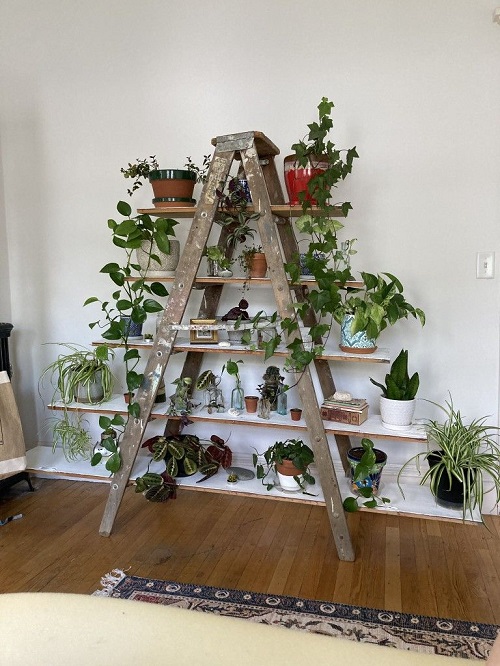
Your ladder shelf will give you several planting levels. Place your compact plants on the smaller upper shelves and larger containers toward the bottom for stability. Trailing varieties will hang over its edge and connect the different levels visually. It will look nice around your room’s tight corners, where a wide plant stand will feel too bulky.
Get this guide which will be handy when choosing and caring for your indoor plants.