
As an Amazon Associate, we earn a small commission from qualifying purchases — at no extra cost to you.
Peace Lily Leaves Turning Black and Brown? Find out what’s causing the problem and learn simple ways to help your plant look healthy again.
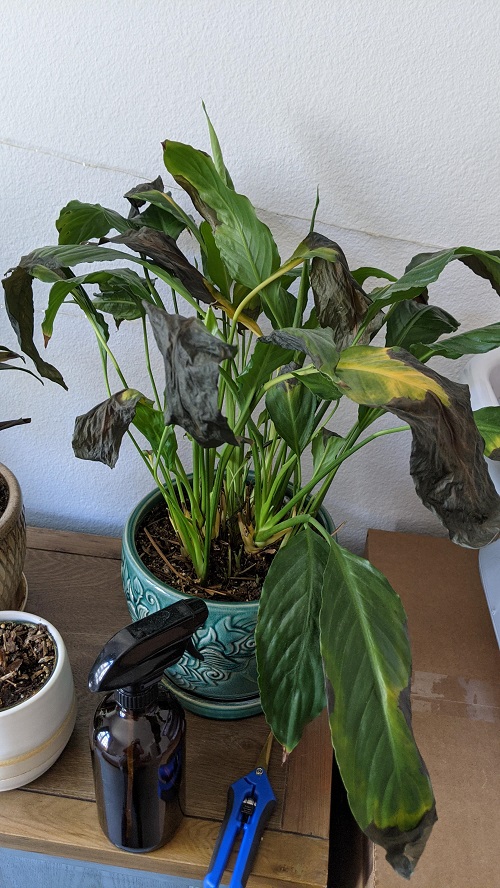
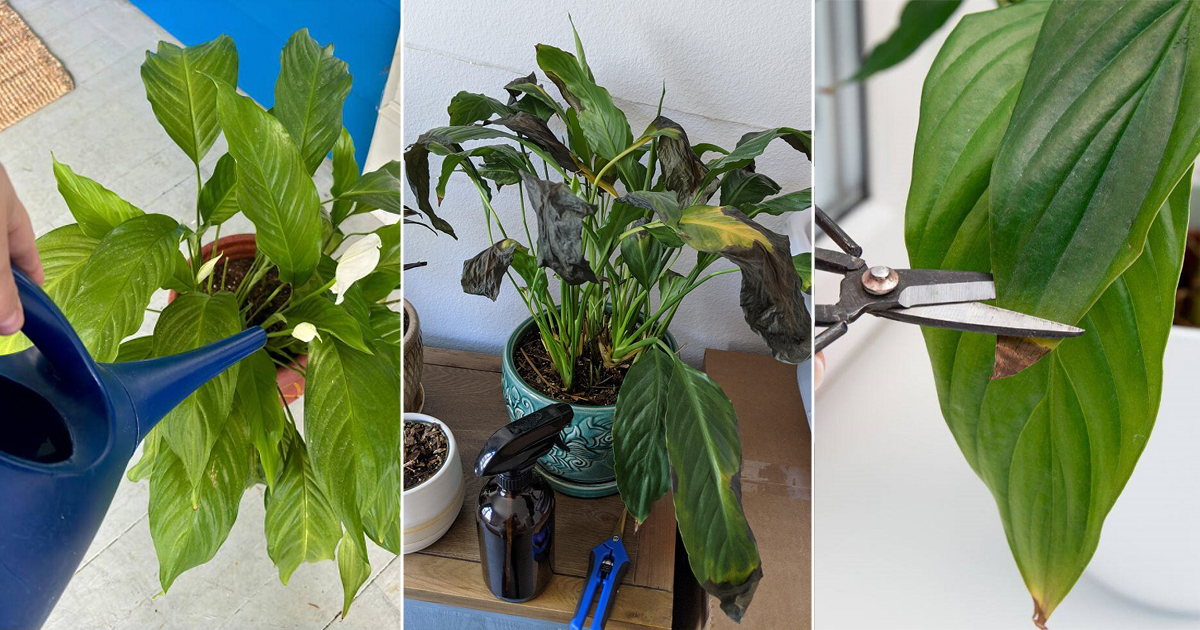
A peace lily can go from looking fresh and healthy to having brown or black leaves surprisingly quickly. Sometimes the reason is simple, like watering too often. Other times, the plant may be reacting to cold air, poor drainage, or a problem with its roots.
Before you cut off every damaged leaf, take a closer look at what is happening. The pattern of the damage can tell you quite a bit about what your plant needs.
Here are some common reasons your Peace Lily Leaves Turning Black and Brown and what you can do about it.
Peace Lily Leaves Turning Black and Brown: What’s Going Wrong?
Want to build the perfect indoor plant setup? Check out this indoor gardening system that serious plant lovers swear by. You can also check our Amazon Storefront for all such gardening needs.
1. You May Be Watering Too Often
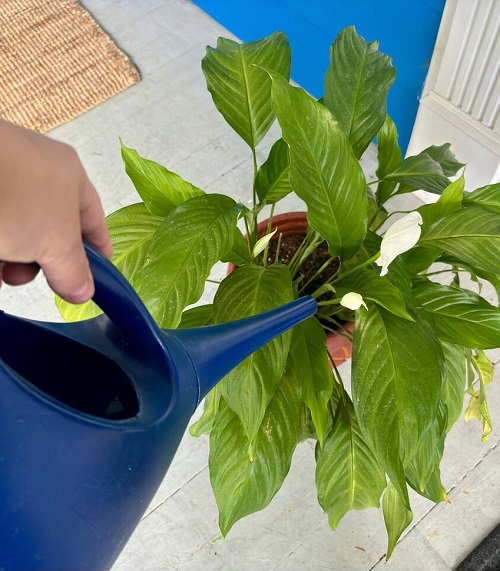
Peace lilies like moist soil, so it is easy to assume that more water will keep them happy. It doesn’t quite work that way.
If you keep watering while the soil is already wet, the roots don’t get enough air. They can become stressed and, in worse cases, start to rot. The leaves may then develop brown or black areas, become soft, or start looking generally unhealthy.
Don’t water just because it has been a few days. Stick your finger into the soil first. If the top inch or two still feels damp, wait a little longer.
When the soil has dried enough, water thoroughly until some water runs from the drainage holes. Then empty the saucer rather than letting the pot sit in water.
Keep the soil in check with this moisture meter.
2. The Soil May Be Holding Too Much Water
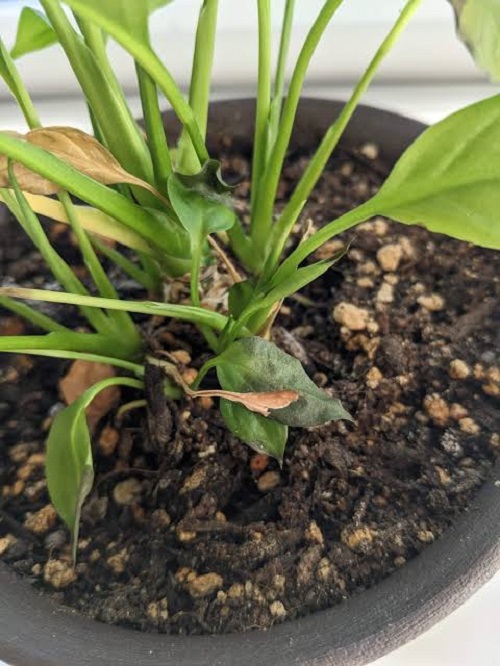
Sometimes the problem isn’t how often you water. It’s the pot or soil.
A peace lily planted in heavy, compacted soil can stay wet for much longer than you’d expect. A container without drainage holes makes things even worse because excess water has nowhere to escape.
Check the bottom of the pot. You should see drainage holes, and they shouldn’t be blocked.
If the soil feels wet all the time and has a heavy, soggy texture, consider repotting the plant. Choose a container with drainage and use a loose potting mix that doesn’t stay saturated after watering.
If you take the plant out and find dark, mushy roots, trim away the damaged parts with clean scissors and give the plant fresh soil.
Use this sharp pair of scissors for all the trimming in your outdoor or indoor garden.
3. Cold Air Can Damage the Leaves
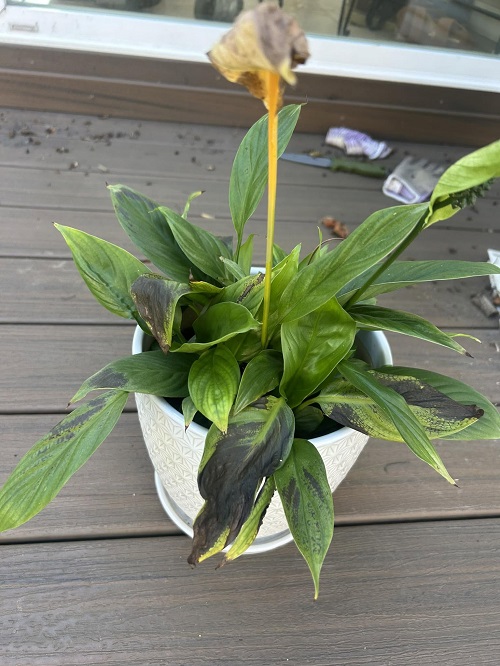
Peace lilies come from warm, tropical environments, so they aren’t fans of sudden temperature changes.
Think about where yours is sitting. Is it beside a window that gets cold at night? Is it directly under an air conditioner? Maybe it’s near a door where cold air comes in every time someone opens it.
A few chilly nights can be enough to cause damage, particularly if the plant was already stressed. The affected areas may turn dark and eventually become black.
Move the peace lily somewhere warmer with a fairly steady temperature. Don’t place it right next to a heater, either. A comfortable spot away from drafts is a much better choice.
4. Look Closely at Black Spots
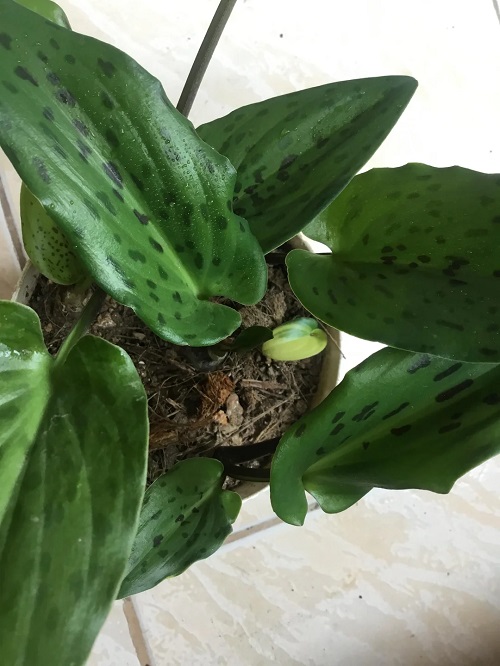
Not every dark mark means the same thing.
If you notice individual spots spreading across several leaves, have a closer look. Fungal or bacterial leaf problems can cause dark patches, especially when the foliage stays wet for long periods.
Constantly damp leaves, poor air circulation, and wet soil can create conditions where these problems become more likely.
Remove badly affected leaves and clean your scissors afterward. Try to keep water off the foliage when watering, and give the plant enough room around it for air to move freely.
If the problem continues to spread despite better watering and airflow, the plant may need a closer inspection for disease.
This organic neem oil can be used to effectively kill the pests on your plants.
5. One Brown Leaf Doesn’t Always Mean Trouble
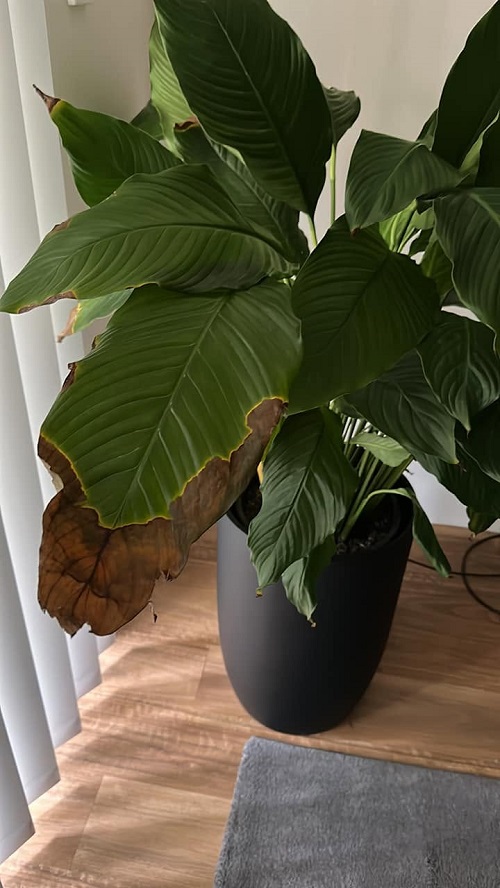
Take a close look at the leaf before you start changing your plant’s care. If it’s an older leaf sitting lower down, and the newer leaves still look fine, the plant may simply be getting rid of it.
Older leaves don’t stay perfect forever. They slowly lose their green color, dry out, and eventually die. That’s normal. You can snip the leaf off once most of it has dried.
What you don’t want to see is the same thing happening to several leaves at once. If new leaves are also developing brown or black areas, check the soil and roots first. That’s usually a sign that something in the plant’s growing conditions needs attention.
6. The Plant May Need More Room
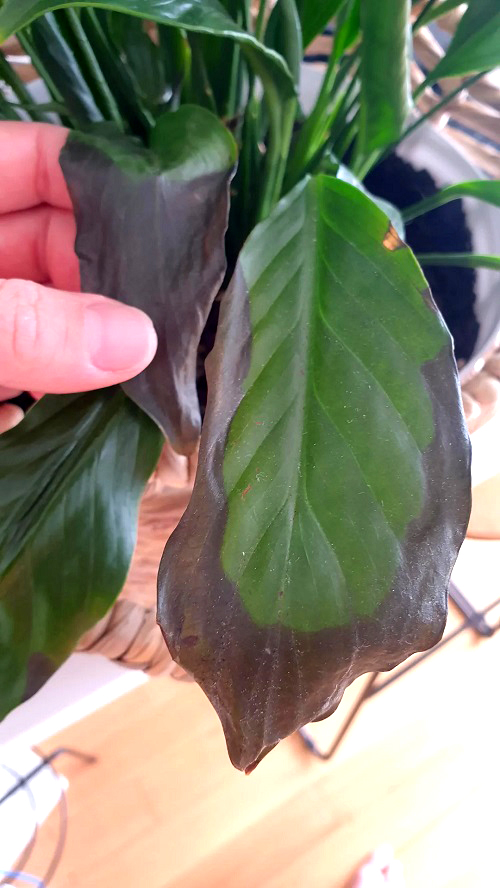
A peace lily can stay in the same pot for quite a while, but it won’t stay small forever. Once the roots fill most of the container, the plant can start struggling.
Have a look underneath the pot. Are roots pushing through the drainage holes? When you slide the plant out, do you see a tight mass of roots wrapped around the outside of the soil?
If so, repotting may help.
Don’t jump from a small pot into a huge one. A container just one size larger is usually enough. A very large pot holds more unused soil, which can stay wet around the roots after watering.
Fresh potting mix can also help if the old soil has become compacted or drains poorly.
Here is a beautiful ceramic pot that can be your plant’s new home.
7. What to Do With the Damaged Leaves
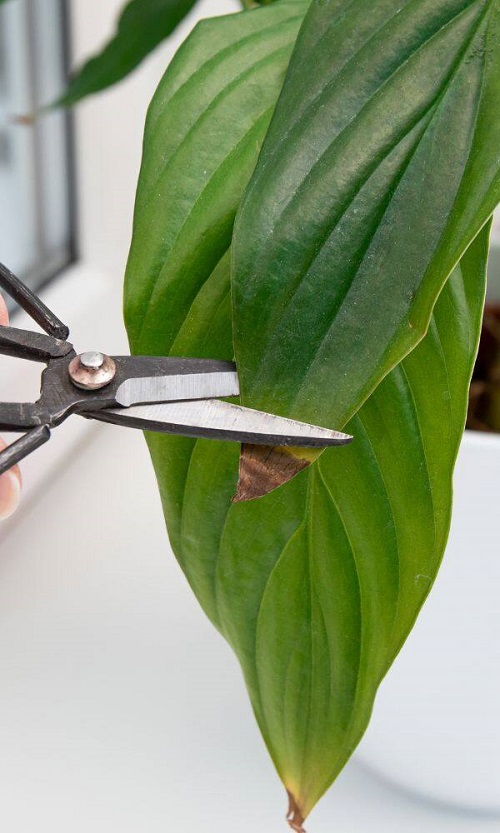
Once a leaf has turned completely black or brown, it won’t turn green again. Removing it won’t cure the underlying problem, but it does tidy up the plant and allows you to keep an eye on new growth.
Use clean scissors and cut the damaged leaf near its base. If only the tips or edges are brown, you can trim those parts instead of removing the whole leaf.
Then deal with the reason behind the damage. Check the soil before watering, make sure the pot drains properly, and look for cold drafts or other changes around the plant.
Don’t worry if the peace lily looks a little bare after pruning. If the roots are healthy and the growing conditions improve, new leaves can eventually fill it out again.
Insert thesemesh drainage mats in the pots to never have a blockage problem again.
8. Give the Plant a Chance to Recover
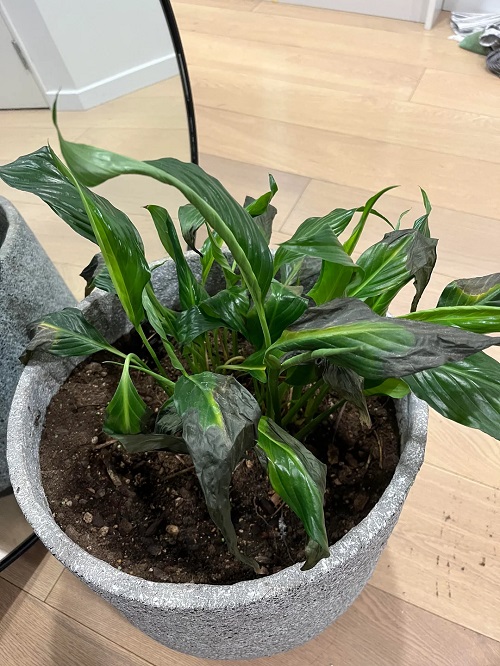
A few damaged leaves don’t necessarily mean your peace lily is dying. What matters more is whether the problem keeps spreading.
Start with the basics. Feel the soil before watering. Check that the pot drains. Keep the plant away from cold drafts and watch the newer leaves as they develop.
If the new growth looks healthy, you’re probably moving in the right direction. If new leaves continue turning black or brown, that’s your signal to take a closer look at the roots and growing conditions instead of simply adding more water.
Become the best at gardening with The New Plant Parent book to help you at every step.