
As an Amazon Associate, we earn a small commission from qualifying purchases — at no extra cost to you.
You can grow these Rare succulents indoors without any stress. Find easy plants, simple care ideas, and bring something unique to your space.
Succulents You can Actually Grow Indoors are a great choice for any home. They need little care and fit well in small spaces. Many unique types grow well inside with proper light and watering. You can enjoy their different shapes and colors while keeping your indoor garden simple and easy to manage.
Rare Succulents You can Actually Grow Indoors
1. Crassula ‘Estagnol’
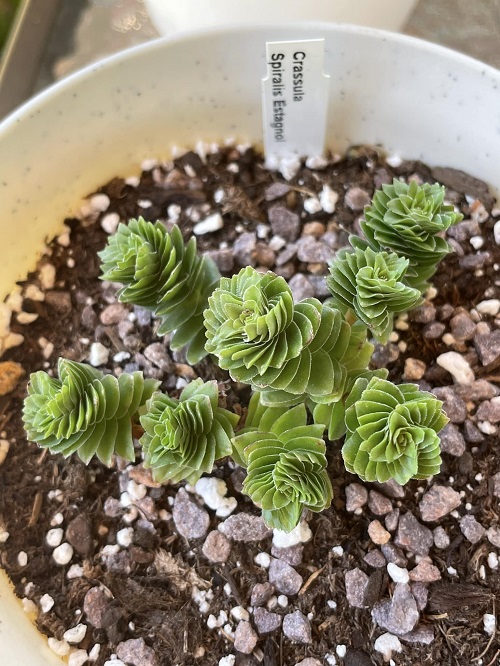
The spiral leaves of the Crassula ‘Estagnol’ make it a very eye-catching succulent. It grows slowly, but over time the stems branch out into several tips. It can also produce small white flowers. Even though it looks different, this plant is related to the common jade plant.
2. Ice Plant (Corpuscularia lehmannii)
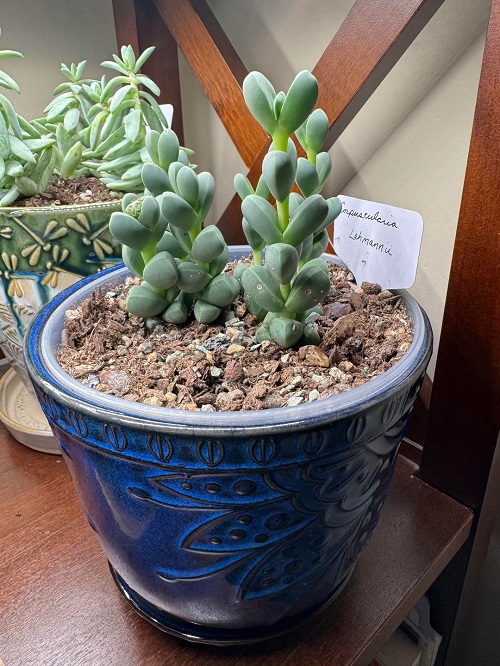
Be ready for people to ask, “What is that?” or “Is it real?” when you keep Ice Plant (Corpuscularia lehmannii) at home. In summer, its thick, fleshy leaves are covered by bright yellow, daisy-like flowers, which make it even more eye-catching.
Even though it is called Ice Plant, it does not like cold weather. It is not frost-tolerant. This plant comes from South Africa and prefers warm temperatures. It grows best indoors where the conditions stay warm and stable.
3. Tiger’s Jaw (Faucaria tigrina)
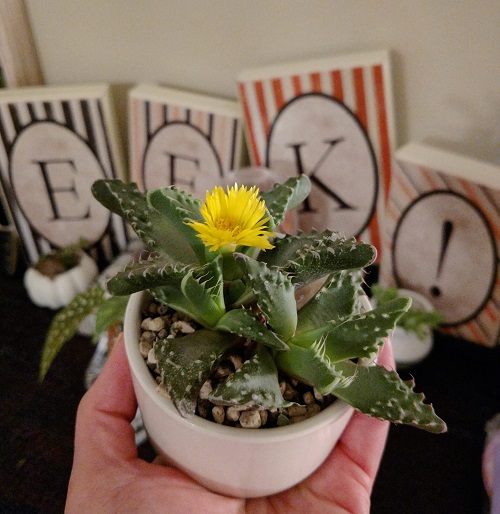
Tiger’s Jaw (Faucaria tigrina) may look fierce, but it is easy to grow. Give it plenty of sunlight and use a potting mix that drains well. With the right care, it grows without much trouble.
The plant has thick, wide leaves that grow in pairs and form a small rosette. Each pair looks like an open jaw, with edges that have small tooth-like spikes. In bright light, it produces yellow flowers in autumn. It blooms heavily, and the flowers can cover most of the plant.
4. Baby Toes (Fenestraria rhopalophylla)
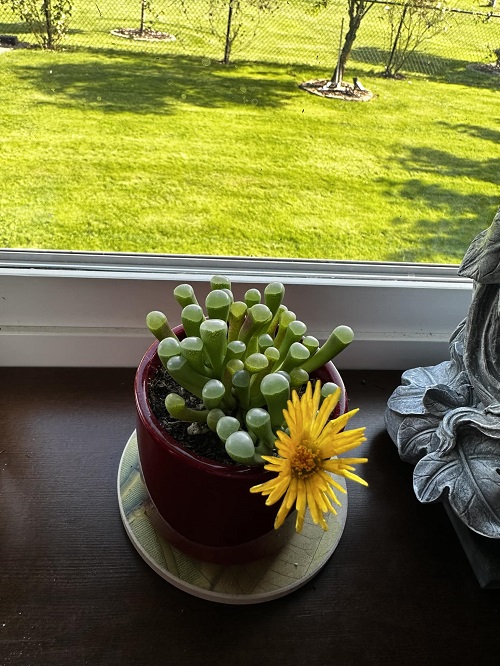
Place Baby Toes (Fenestraria rhopalophylla) in a sunny window and it will bloom regularly. The tips of the leaves are clear and let sunlight pass through. The leaves become wrinkled when the plant needs water. The small “toes” also move slightly and turn toward the light during the day.
This rare succulent needs plenty of sunlight all year. It prefers warm temperatures and sandy soil that drains well. Water lightly to keep the soil just a little moist. Do not overwater, as it can damage the plant.
5. Living Stones
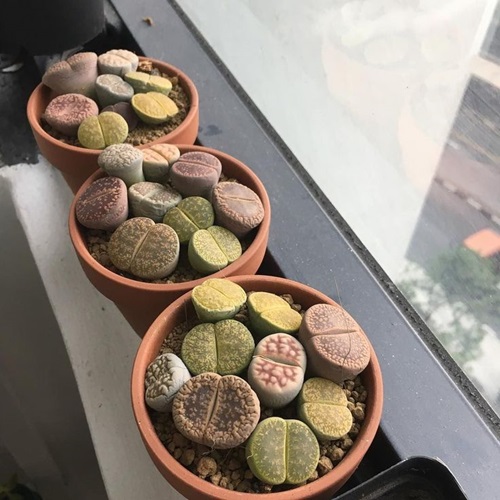
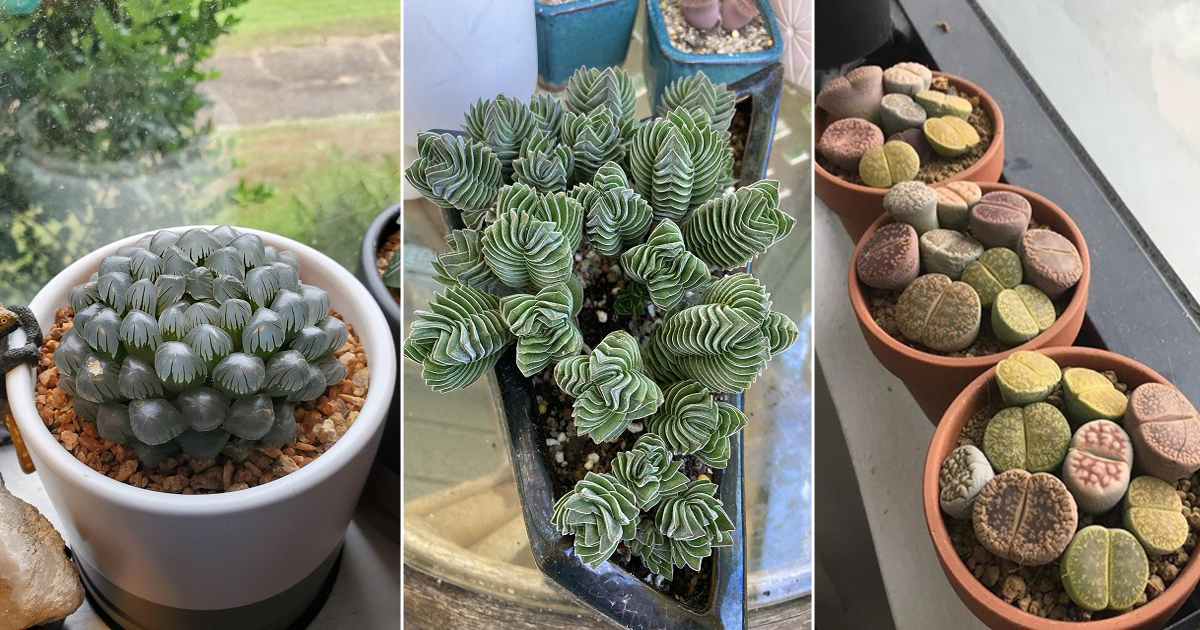
Living Stones are called this because they look like small rocks in their natural habitat. Lithops species are very interesting and attract many plant lovers. There are many types of these South African succulents, with different colors, textures, and patterns. Some look so unusual that you have to see them to believe. Lithops aucampiae blooms in autumn.
Lithops grow well indoors in a sunny window. Use a fast-draining potting mix, like a cactus mix. Water carefully and avoid getting water on the leaves, as this can cause rot.
6. Kalanchoe tomentosa
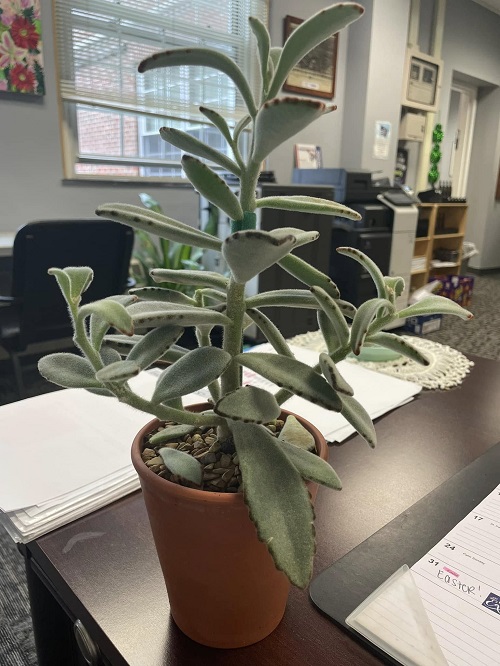
Kalanchoe tomentosa is a unique succulent and a great plant to have at home. It is also called Panda Plant. You can add it to a succulent dish garden to make it look more interesting, or grow it on its own. Its thick, soft, fuzzy leaves look like panda paws or cat ears, which makes it fun and different.
This plant grows slowly and is easy to care for. It does well even if you do not pay much attention to it. Place it in bright but indirect light. Use sandy soil that drains well. It looks good all year and can easily become one of your favorite houseplants.
7. Sea Urchin or Sand Dollar Cactus
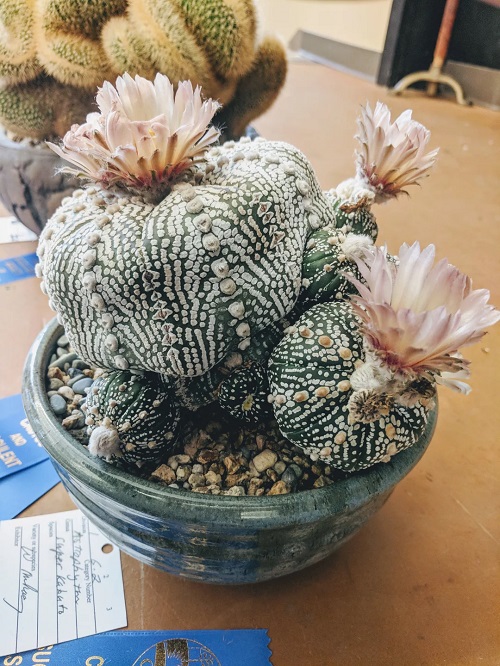
Sea Urchin or Sand Dollar Cactus (Astrophytum asterias) is a real cactus, even though it does not look like a typical one.
The small white fuzzy dots on each section are called areoles, but this plant has no spines. It has a round shape with eight flat ribs. Some plants have many white specks, while others have very few. In summer, it produces a yellow flower with a red center, and the flower can last for a long time.
This cactus comes from Mexico and prefers warm temperatures and indirect sunlight. Keep it on the dry side. It stores water in its body, and its small roots can rot easily if overwatered.
8. Echeveria ‘Black Prince’
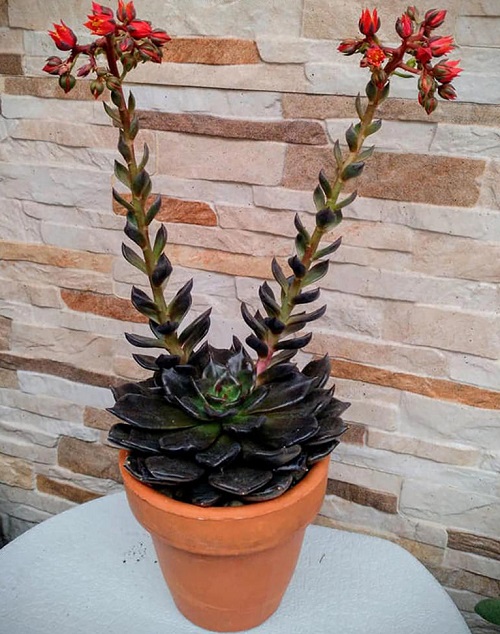
Echeveria ‘Black Prince’ forms a tight rosette with dark, deep-colored leaves. The color becomes stronger in bright light. Place it near a window with good light exposure. Without enough light, the plant may stretch and lose its shape. Water only when the soil is dry. Avoid letting water sit in the rosette, as it can cause rot.
9. Haworthia Cooperi
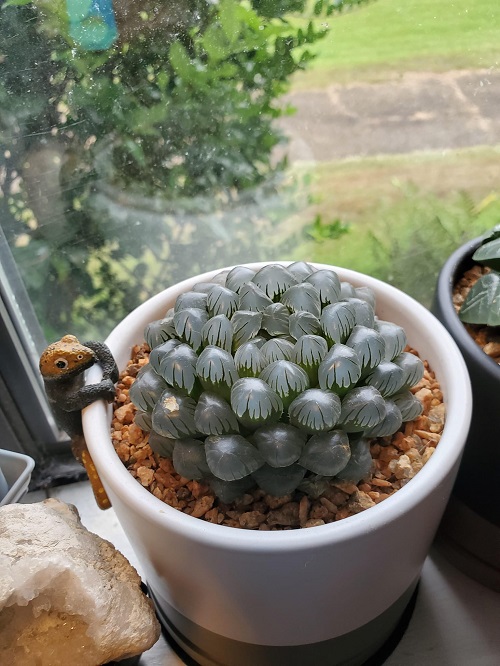
Haworthia Cooperi has soft, rounded leaves with clear tips. These tips help the plant absorb light even in lower light conditions. It grows well indoors and fits small spaces. Place it in bright, indirect light for steady growth. Water moderately and let the soil dry between watering. It is a slow grower but stays healthy with simple care.
10. Crassula ‘Buddha’s Temple’
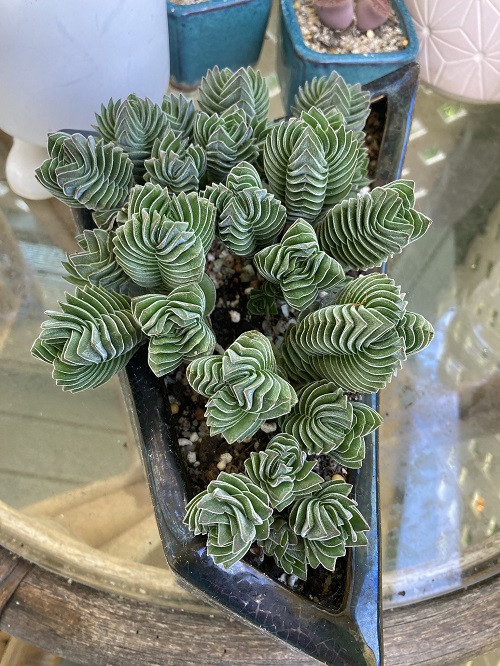
Crassula ‘Buddha’s Temple’ has stacked leaves that form a tall, square column. The shape looks structured and clean. It grows slowly and does not need much space. Keep it in bright light to maintain its form. Use well-draining soil and avoid overwatering. Too much moisture can cause the base to soften. This plant prefers warm and dry indoor conditions.