
As an Amazon Associate, we earn a small commission from qualifying purchases — at no extra cost to you.
Struggling with your cactus? Try these Secrets to Keep Bunny Ear Cactus Healthy Indoors for better growth and fewer problems.
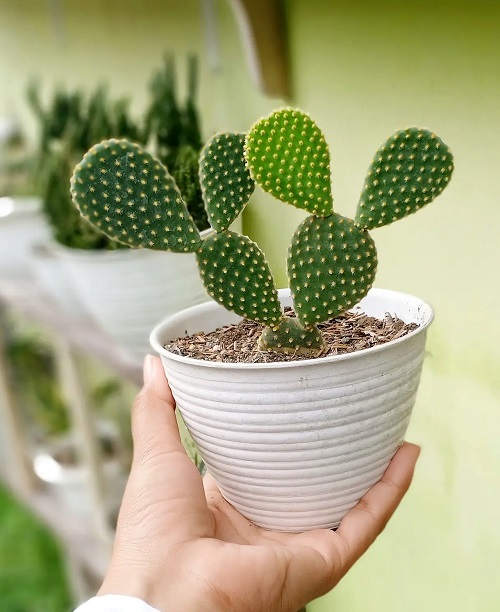
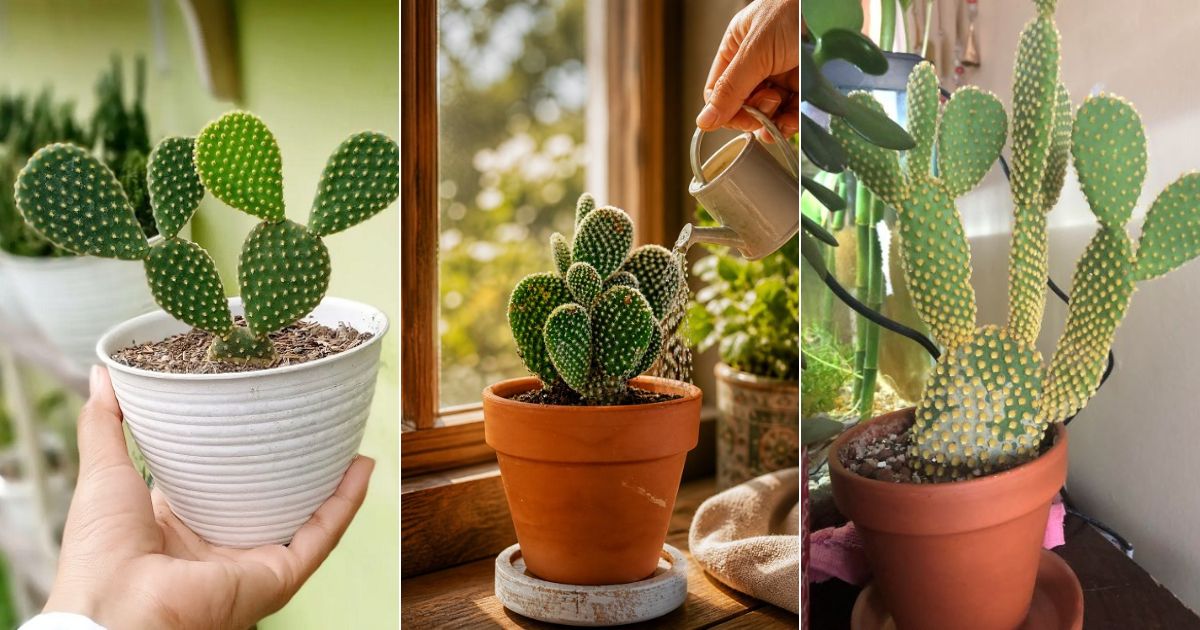
If you want an easy plant that does not need much care, a cactus is a great choice. The bunny ears cactus is a fun type with thick, flat pads that look like rabbit ears. It belongs to the cactus family, and it can store water in its pads. This means you do not have to water it often, which is perfect if you sometimes forget.
This plant comes from the dry areas of northern Mexico and parts of Arizona. It grows slowly, just like most cacti. People also call it angel’s wings or polka dot cactus. When grown outdoors, it can become about 2 to 3 feet tall and 4 to 5 feet wide over many years. You can also grow it in a pot and keep it indoors when it gets cold. Inside the house, it usually stays small and can sit on a table for a long time. It also does not bloom often indoors.
Even though it looks soft and cute, this cactus is very prickly. The tiny dots on its pads are called glochids, and they are actually small, sharp spines. They can easily stick into your skin and cause irritation. So, always wear thick gloves when touching this plant. It is also better to keep it away from small children and curious pets.
Secrets to Keep Bunny Ear Cactus Healthy Indoors
1. Choose the Right Spot with Bright Light
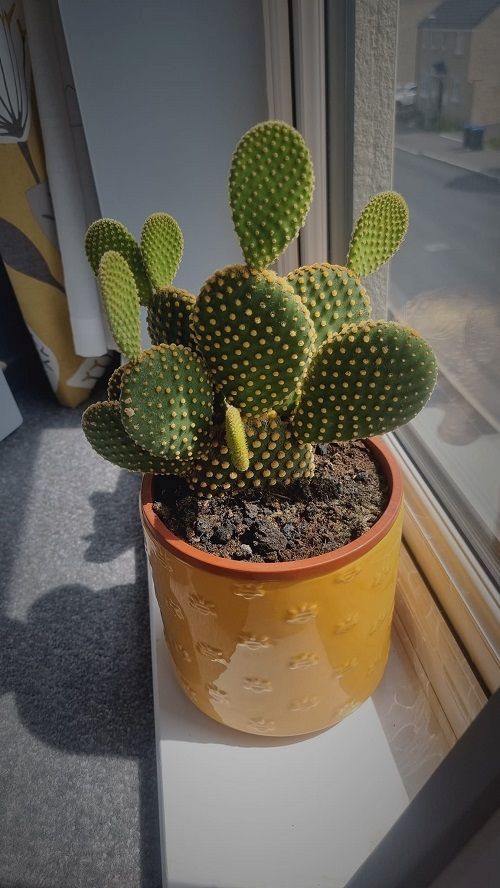
The bunny ear cactus needs strong, direct sunlight to stay healthy. When you grow it indoors, place it in the brightest spot in your home. It should get about six to eight hours of direct sunlight every day. A south-facing or west-facing window is usually the best place. If your home does not get enough sunlight, you can use a grow light to help.
If you grow it outdoors, make sure you plant it in a spot that is not shaded. It needs full sun to grow well.
2. Use Well-Draining Soil
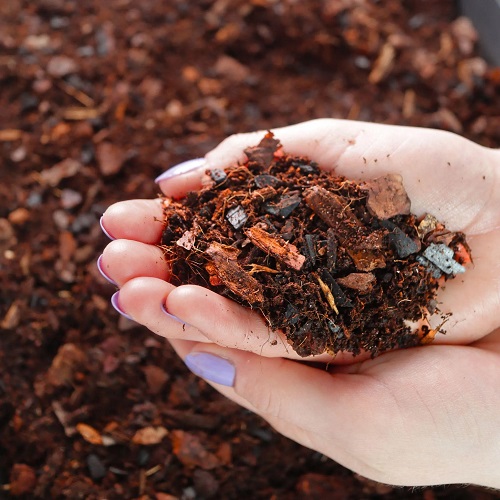
The bunny ear cactus grows best in dry, sandy soil that drains water quickly. You can use a ready-made cactus or succulent potting mix, which is easy to find at plant shops or garden centers. You can also make your own mix at home by combining equal parts of regular potting soil, coarse sand, and perlite.
3. Water Only When Needed
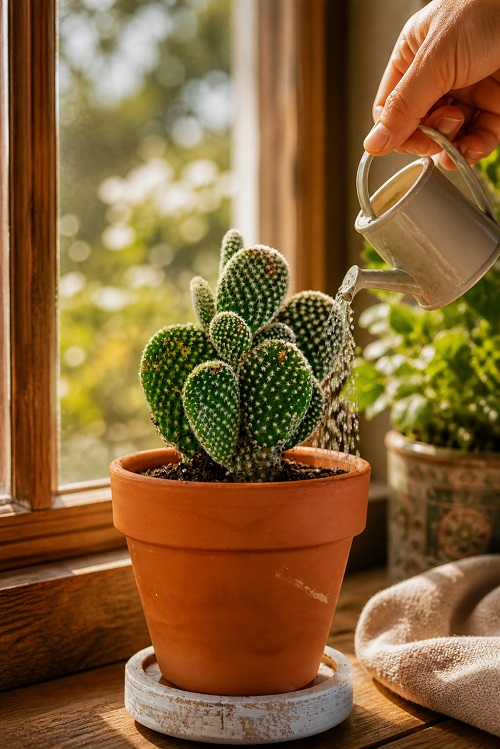
This cactus comes from the desert and can live without water for a long time. It does not need frequent watering. In fact, too much water can harm it and cause root rot. Always let the soil dry out completely before watering again. If you are unsure, it is better to wait a little longer. In the desert, cacti can go for weeks or even months without water.
4. Keep It in Warm Conditions
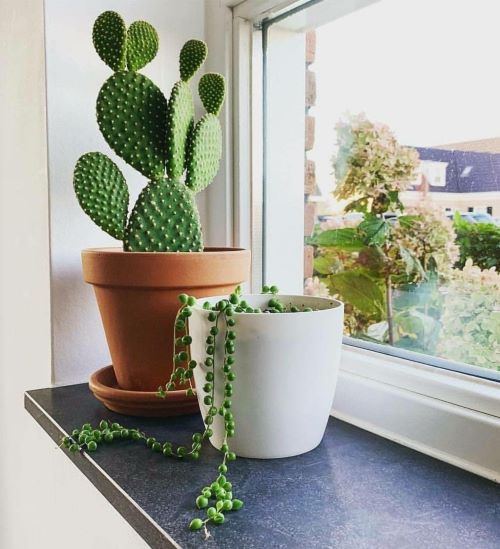
The bunny ear cactus likes warm and dry weather. It grows best in temperatures above 70°F and can handle summer heat up to 100°F. You can grow it outdoors all year in USDA zones 9 to 11.
It cannot handle frost or too much humidity.
5. Feed Lightly During Growth Season
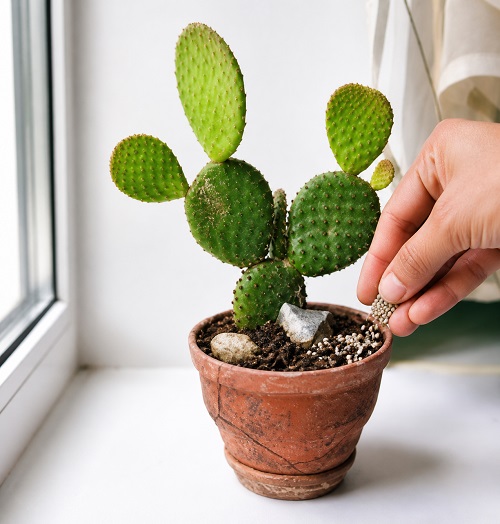
This cactus can grow well even in poor soil and does not need regular feeding. However, giving it a cactus or succulent fertilizer once a year in early spring can help it grow better during its active season.
6. Repot Only When Necessary
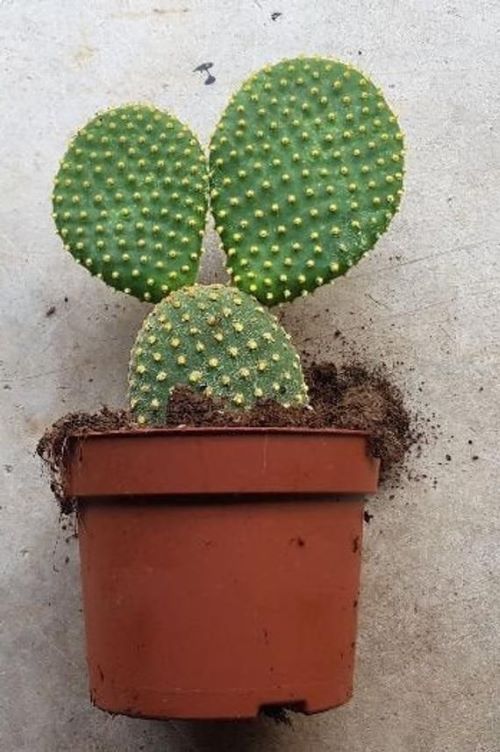
Repot the bunny ears cactus every two to three years. To do this safely, wear thick gardening gloves or use tongs so you don’t touch the sharp bristles.
Hold the cactus with gloves or tongs and gently loosen it from the old pot. Shake off as much old soil from the roots as you can. Then place the cactus in a new pot, add fresh soil around the roots, and press it down gently to keep it in place.
7. Watch for Common Problems
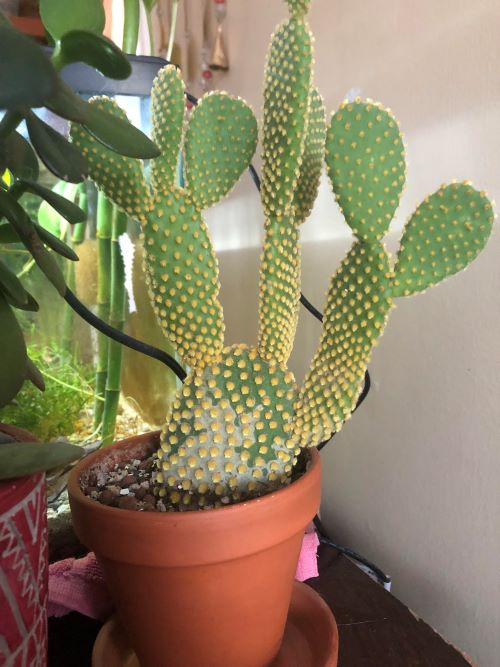
The bunny ear cactus can sometimes get pests like mealybugs or scale, but it is usually pest-free. You can treat these pests by applying rubbing alcohol to the affected areas using a cotton swab or Q-tip.
The most common problem is root rot, which happens بسبب too much watering or extra moisture. Signs of root rot include brown, soft stems and roots. Sadly, once this starts, it is hard to save the plant. Remove the healthy pads quickly and grow new plants from them.
8. Handle with Care
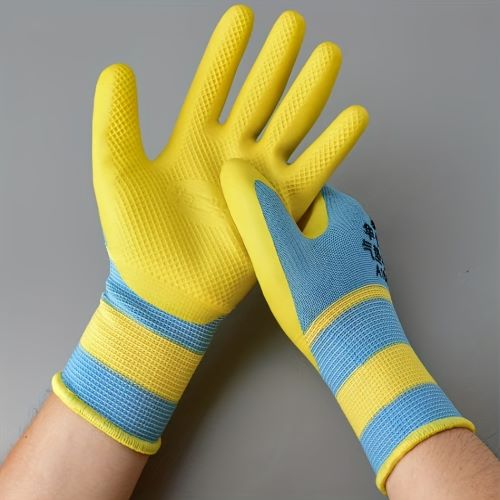
The small dots on the cactus pads are not soft. They are tiny sharp spines that can stick into your skin. Always wear thick gloves when handling the plant. Be careful while moving or repotting it. Keep it away from children and pets, as the spines can cause irritation and discomfort.