
As an Amazon Associate, we earn a small commission from qualifying purchases — at no extra cost to you.
Bring a little green indoors with Trailing Plants You Can Grow in Water Jars. See which easy vines root well and trail beautifully from glass jars.
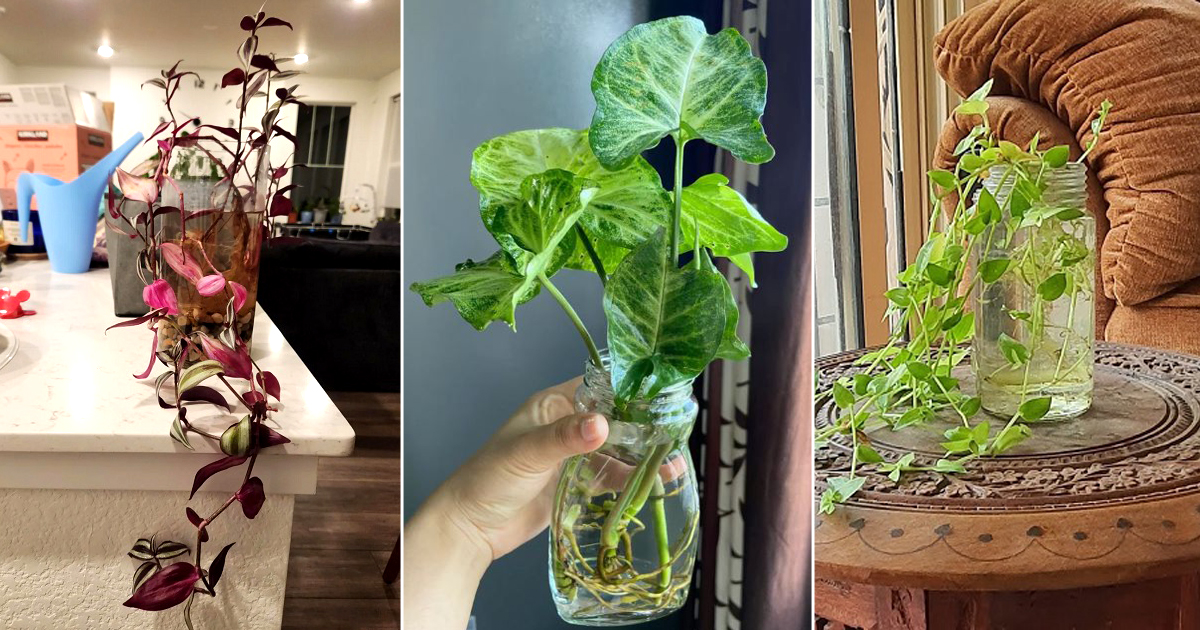
Some plants seem almost made for a glass jar. Their stems hang over the edge, the leaves fill out as they grow, and you can watch the roots developing right in front of you. It is also a handy way to keep a few cuttings going without finding space for another pot.
If you want to try growing trailing plants in water, these are some good ones to start with.
Trailing Plants You Can Grow in Water Jars
Get a complete indoor plant-care kit and keep the essential tools together for watering, pruning, potting and everyday plant care. Also, you can get all the necessary items for gardening at our Amazon Storefront.
1. Satin Pothos
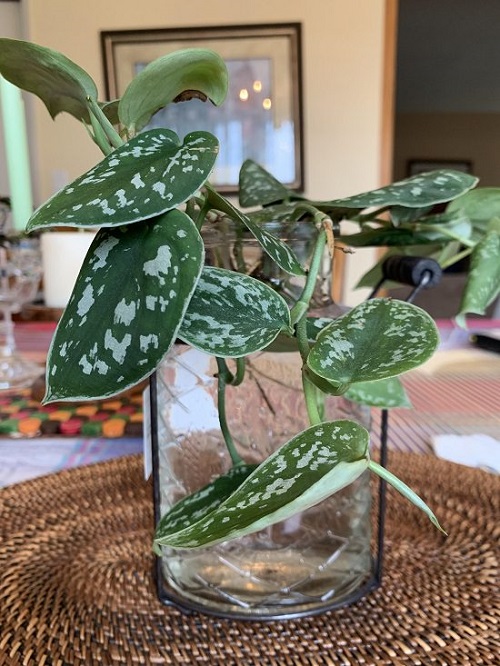
Satin pothos has a slightly more unusual look than the typical pothos. Its dark green leaves are covered with silvery patches, which look especially pretty against a clear glass jar.
Take a healthy stem cutting and make sure it has at least one node. That node is the part you want sitting in the water. Keep the leaves above the surface, then put the jar somewhere with good natural light. As the roots develop, the stem will gradually start hanging over the side.
Use a glass planter with a drainage hole to plant your satin pothos.
2. Heartleaf Philodendron
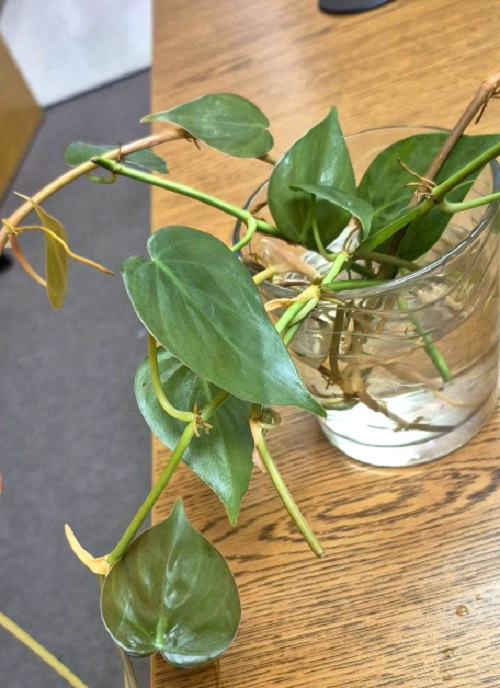
Heartleaf philodendron is a classic trailing plant for a reason. The leaves are attractive even when the cutting is small, and the stems become longer and more relaxed as the plant grows.
A healthy cutting usually doesn’t need much encouragement to root. Place a node in water and leave the foliage above it. Once the roots have developed, you can keep the cutting in the jar or move it into soil if you decide you want a fuller plant.
3. Inch Plant
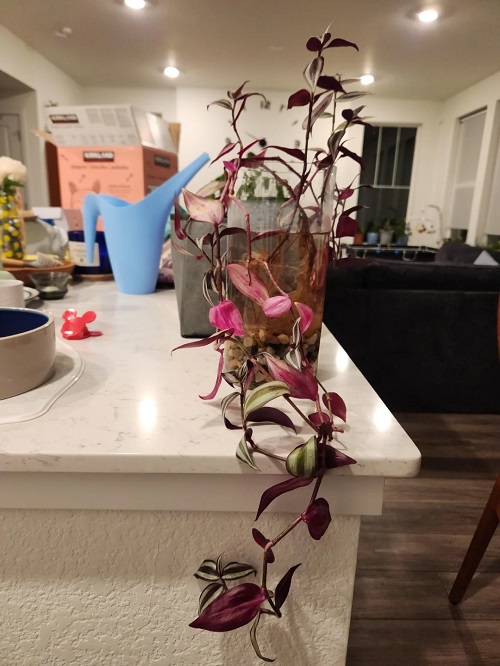
Inch plant is a good pick when you want a little more color. Depending on the variety, its trailing stems can have green, silver, purple, or striped foliage.
The stems root readily from cuttings, so you can start with just a small piece from an established plant. Put the lower part of the stem in water and give the jar a bright spot. It won’t take long to see new roots forming.
Here is a grow light that will boost the growth of your plants.
4. Arrowhead Vine
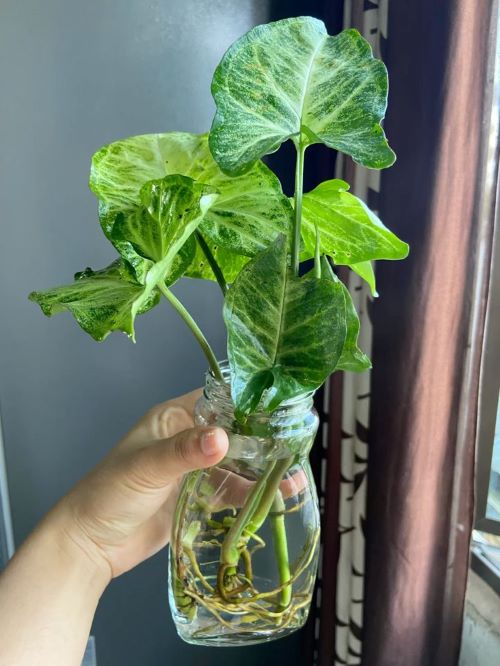
Arrowhead vine gets its name from the shape of its young leaves. As the plant grows, its stems can become much longer and start trailing, making it a nice choice for a jar on a shelf or windowsill.
A stem cutting with a node can be rooted in water without much trouble. Remove any leaves that would end up underwater and leave the cutting alone while the roots get established. Once it starts producing new growth, you’ll have a much better idea of how quickly your particular plant wants to grow.
Use these gardening pruning scissors for smooth cuttings.
5. Purple Heart
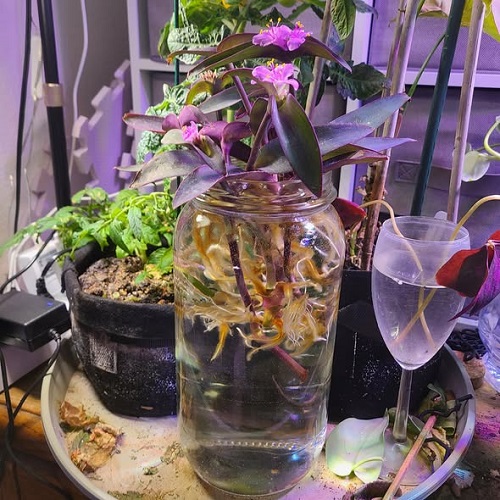
Purple Heart brings a completely different look to a water-grown display. Its deep purple leaves and stems stand out against a plain glass jar, especially when the plant gets enough light to maintain its color.
Choose a healthy section of stem and place the nodes in water. Keep the leaves out of the jar and give the cutting a bright location. Before long, you should see roots forming along the submerged section.
6. Golden Pothos
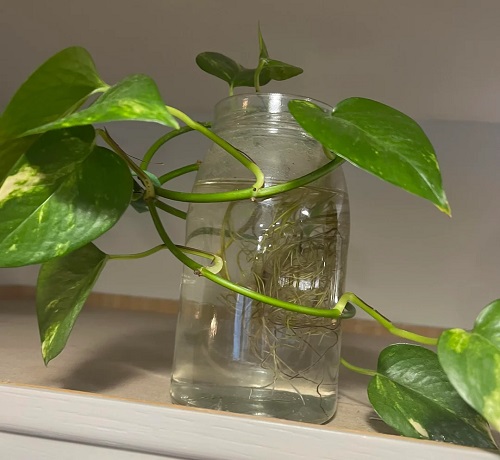
Golden pothos is probably one of the easiest choices on this list. It roots so readily from cuttings that you can turn a small piece of an existing plant into a new water-grown display.
The yellow-green leaves also make the jar look lively without needing much else. Let the vines grow naturally over the edge, or trim them when they get too long and use those pieces to start another cutting.
7. English Ivy
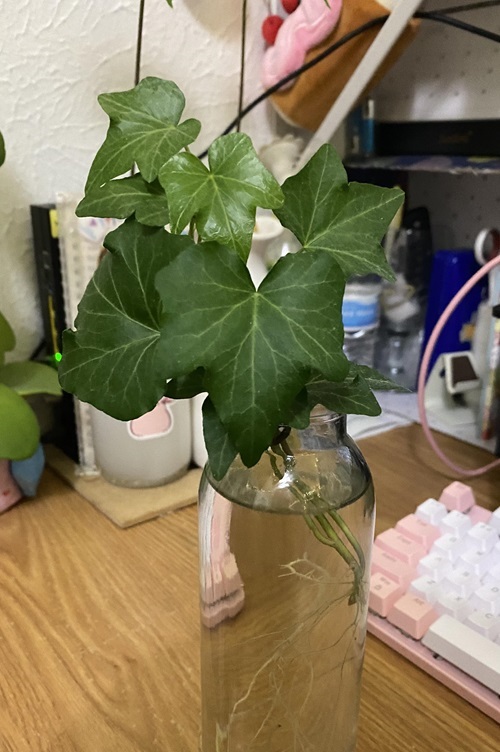
English ivy has a different character from pothos and philodendrons. Its smaller, lobed leaves give the trailing stems a lighter, more delicate appearance.
You can start it from a healthy stem cutting placed in water. Choose a section with a few leaves and at least one node, then remove the lower leaves before putting it in the jar. Keep it in a spot with good light and give the roots some time to develop.
8. Philodendron ‘Brasil’
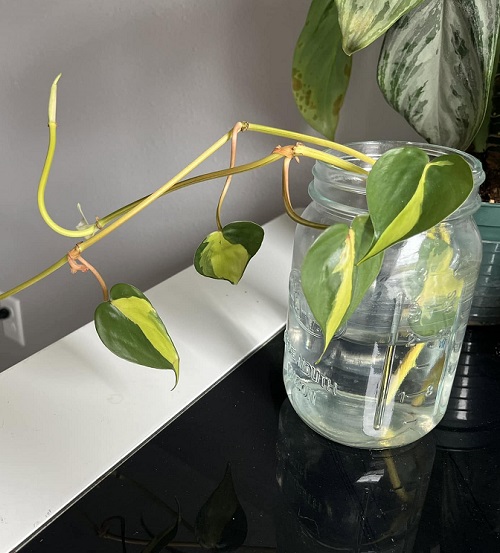
Philodendron ‘Brasil’ is hard to miss because of the yellow-green streak that runs through its leaves. When the stems start trailing from a glass jar, those colorful leaves make a simple plant display look much more interesting.
A cutting with one or more nodes is all you need to get started. Keep the submerged part of the stem free of leaves and place the jar somewhere bright. Once the roots are established, you can let the vines continue growing or take fresh cuttings to make the plant bushier.
9. Turtle Vine
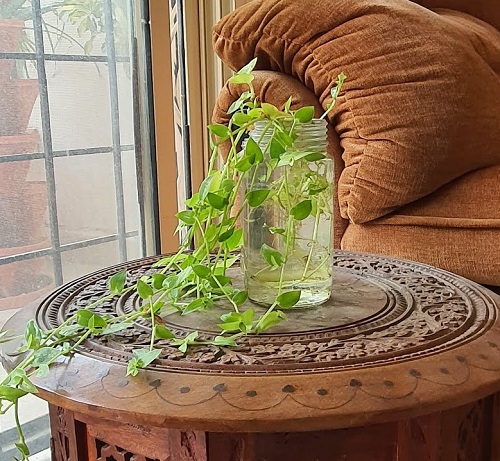
Turtle vine has small, rounded leaves packed along thin stems. It has a softer, more compact appearance than plants with large heart-shaped leaves, so it works well in smaller jars.
Take a healthy cutting and place the lower nodes in water. It is fun to watch this one because the roots can become quite noticeable through a clear container. Once the stems get longer, they naturally fall over the sides instead of staying upright.
10. String of Hearts
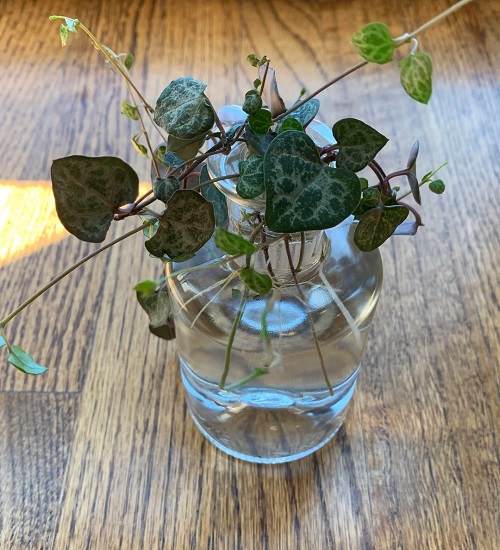
String of hearts has tiny heart-shaped leaves arranged along thin, wiry stems. The vines can become surprisingly long, so even a small cutting can eventually make an eye-catching display.
When rooting it in water, pay attention to what you actually submerge. The part that needs to produce roots should be in the water, while the leaves should stay dry. Give the cutting plenty of light and don’t keep the entire vine sitting in water.
A Few Things to Keep in Mind
Growing these plants in water is simple, but there is a difference between rooting a cutting in water and keeping a mature plant there permanently. Some plants adapt better than others, and growth can be slower when they don’t have access to the nutrients found in potting soil.
For a water jar, start with a healthy cutting and a clean container. Keep the foliage above the water and watch the roots rather than following a strict watering schedule. If the water becomes cloudy or starts looking dirty, replace it.
A clear jar also gives you a useful advantage: you can actually see what is happening below the surface. New white roots, branching roots, or a cutting that simply isn’t doing much all tell you something about how the plant is settling in.
Get a copy of the Plantopedia to become the best plant parent.