
As an Amazon Associate, we earn a small commission from qualifying purchases — at no extra cost to you.
Explore the Ultimate Guide for Different Types of Moss Poles and find the right support to help your climbing houseplants grow upward.
If you love vining houseplants, you might enjoy growing a philodendron, pothos, Monstera, or Scindapsus treubii. These plants look good trailing from shelves, but you may not always have enough space to let their vines hang down.
A moss pole gives you another way to grow them. You can train the vines to climb upward and create a fuller display. You can use a straight pole or choose a bendable one to guide the plant into different shapes.
Climbing supports can also help plants that naturally grow upward. However, not every pole is strong or durable enough to do the job. Some bend under the plant’s weight, while others tip over because their stakes do not reach far enough into the pot. Poor-quality supports may also break down after a short time.
Choosing a suitable pole from the start can save you the trouble of replacing it later. In this guide, you will find plant supports worth considering for your climbing houseplants.
Ultimate Guide for Different Types of Moss Poles
Many houseplants are epiphytes, which means they grow on other plants in their natural habitat. Some also develop aerial roots that help them attach to nearby surfaces.
You may grow vining plants in hanging baskets and let their stems trail down. However, giving them a support allows you to train them to climb, which is closer to how some of these plants grow in nature. It can also help the leaves get better access to light and improve airflow around the plant.
With so many plant supports available, choosing one can feel confusing. To make things easier, here are some options to consider for your climbing houseplants.
See this complete indoor garden setup and turn your plant corner into a year-round growing station. Give a quick view at our Amazon Storefront for more such essential needs.
1. Sphagnum Moss Pole for Aerial Root Growth
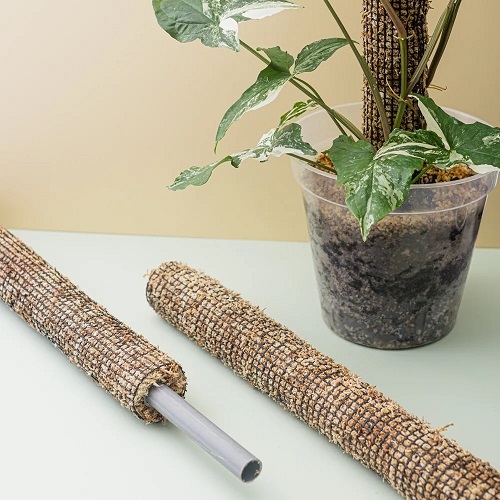
If you want your Monstera’s aerial roots to grow into the support, choose a pole filled with sphagnum moss. This is the option to consider when you want the pole to do more than hold the stem upright.
The moss needs to stay appropriately moist for roots to grow into it. When the material dries out completely, aerial roots may continue growing along the outside instead. You will need to check the pole regularly, especially in a warm room.
I would choose this type for a Monstera that is actively climbing and producing new growth, provided you are willing to maintain the moss. Look for a pole that holds the filling securely and allows roots to reach it without having to force them through a tightly packed surface.
Give your Monstera a place to root and climb. Shop a sphagnum moss pole with a sturdy core and moisture-retaining moss to support healthy aerial-root growth.
2. Extendable Moss Pole for a Monstera That Keeps Growing
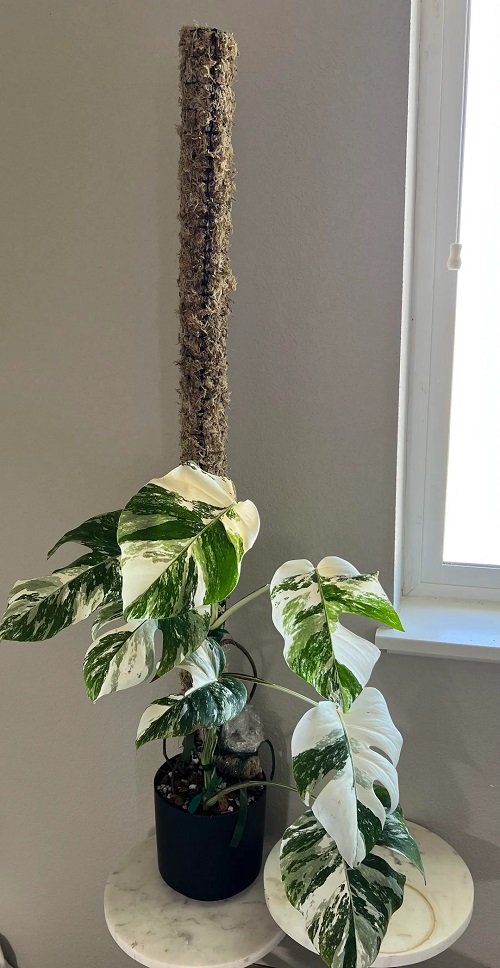
A fixed-height pole can become a problem when your Monstera grows quickly. Once the main stem reaches the top, you may have to replace the support or attach another pole to it.
An extendable model lets you add sections as the plant grows. Some designs use coco coir on the outside, while others have plastic shells that hold sphagnum moss or another growing medium. Check the construction before buying because not every modular pole works in the same way.
Pay attention to the connections between sections. They should fit firmly without wobbling. A tall Monstera puts more pressure on the support, especially when several large leaves grow toward one side.
This is a good option if you expect your plant to become tall and want to avoid disturbing its roots every time it outgrows the pole.
Planning to grow a giant Monstera? Choose an extendable moss pole so you can add height as the plant grows instead of replacing the entire support.
3. Coco Coir Pole for Everyday Support
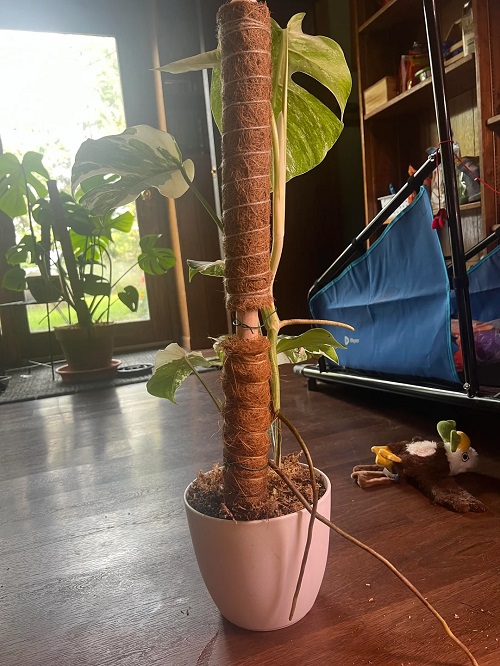
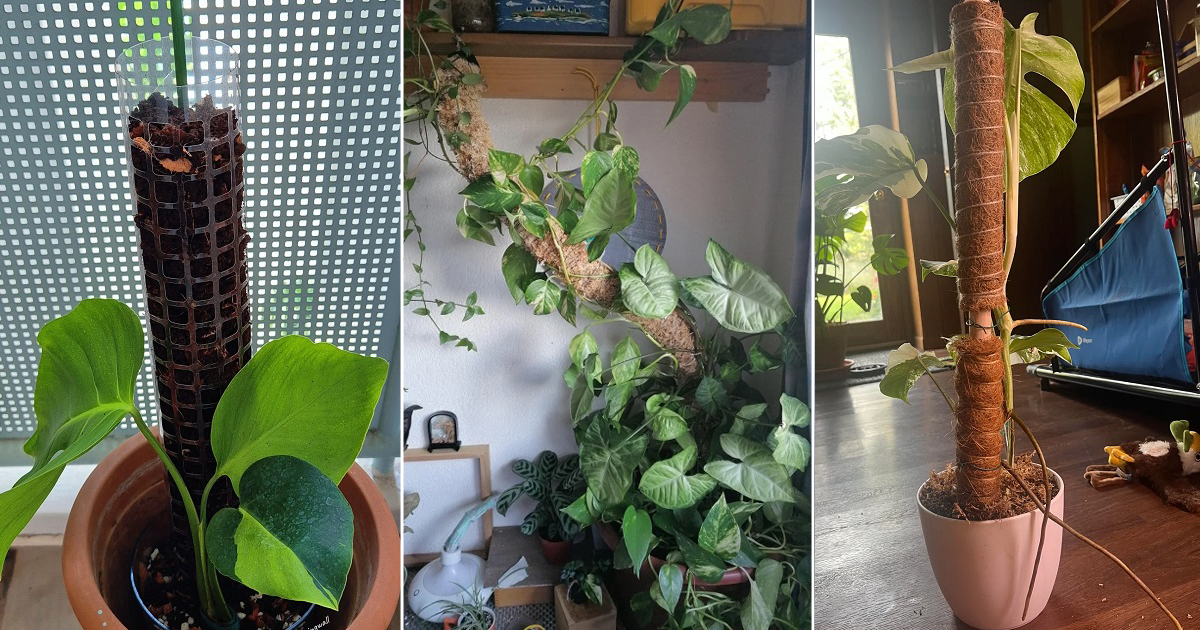
A coco coir pole is a practical choice if you mainly want to stop your Monstera from falling sideways. It has a rough surface that the stem and aerial roots can grip, depending on how the pole is made and how the plant grows.
The main advantage is that you do not have to manage a column of sphagnum moss. Coir can hold some moisture, but it generally does not provide the same rooting environment as a well-maintained sphagnum pole.
Check how firmly the fibers are wrapped around the core. Loose coir can shed and come apart with time. For a large plant, pay particular attention to the thickness of the central support rather than choosing a pole based on its outer covering.
If you prefer a straightforward setup with little maintenance, this is a sensible option.
Shop Coco Coir Plant Poles on Amazon for a simple way to train climbing houseplants upward.
4. Refillable Plastic Pole for a More Controlled Setup
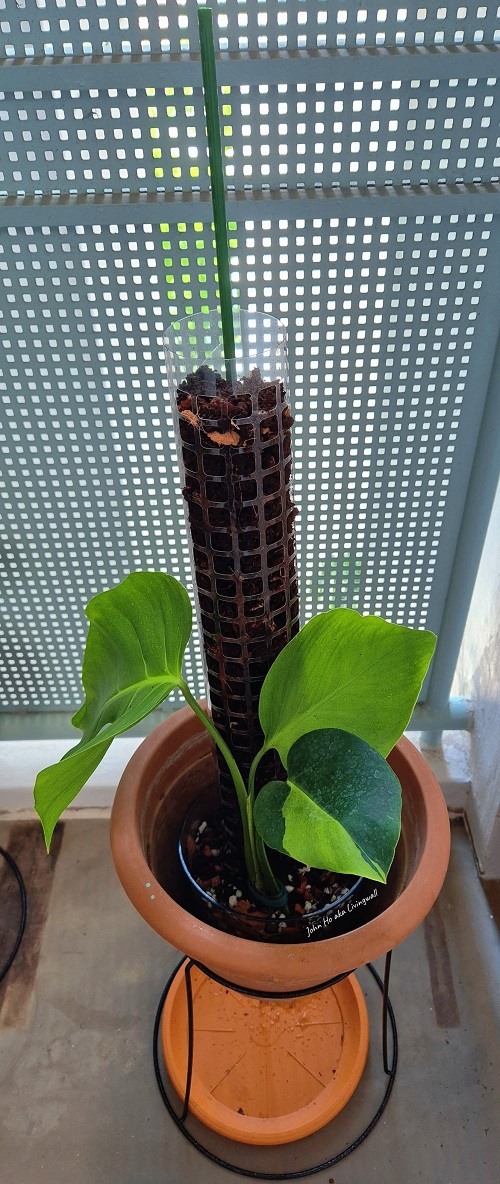
Some plastic moss poles have openings or removable fronts that let you add moss inside. This arrangement makes it easier to keep the filling contained and add more material when needed.
The design can also help you guide aerial roots toward the growing medium. However, you still need to check how much moisture the moss holds. A plastic shell does not mean the filling will stay moist indefinitely.
Before buying one, look at the size of the openings, the strength of the plastic, and whether you can extend the pole. A narrow design may work for a young plant but become awkward when the stem and aerial roots thicken.
You can consider this style if you want a structured support that you can open, refill, and extend rather than a pole covered in loose fibers.
Make moss pole maintenance easier. Choose a refillable design with sturdy plastic panels, accessible openings, and secure connections.
5. A Rigid Wooden Support for a Heavy Monstera
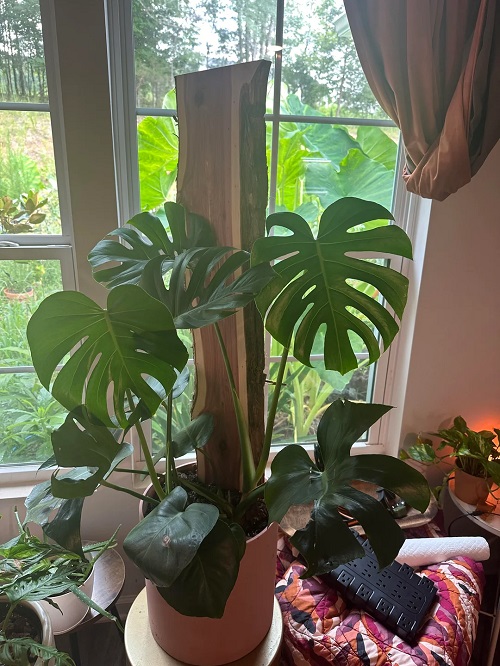
You do not always need actual moss. If your Monstera has a thick stem and heavy leaves, a sturdy wooden plank or stake may be a better choice than a lightweight decorative pole.
Wood does not provide a moist rooting medium, but it can give the plant a firm surface to climb against. A rough, untreated surface may also help aerial roots grip.
This is worth considering if you do not want to check the moisture of a pole and your main concern is keeping the plant upright. Make sure the support is firmly anchored and can carry the plant’s weight.
For heavy Monsteras, stability matters more than appearance. Look for a thick wooden support that can be anchored deeply into the pot.
6. Coconut Fiber
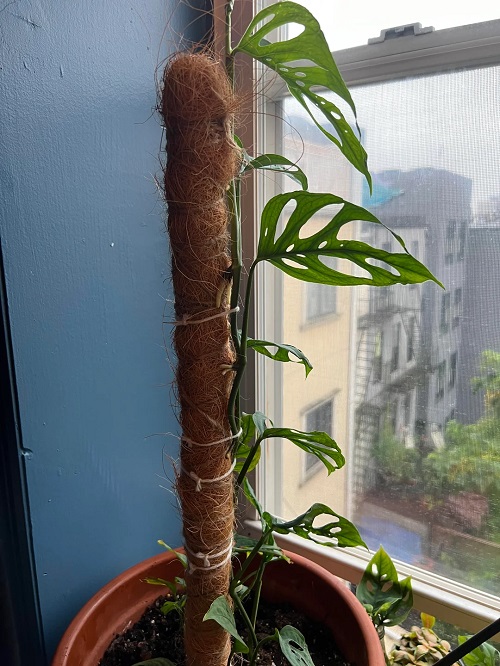
Coconut fiber poles are made by wrapping coir around a sturdy stick or central support. The rough surface gives your climbing plants something to grip as they grow. You can use them for pothos, philodendrons, and Monstera. They are a good choice if you want to guide your plant upward without having to keep a moss-filled pole moist.
Want a natural-looking support without moss maintenance? A coconut fiber pole gives climbing plants a textured surface to grip while keeping the setup simple.
7. Mossy Stakes
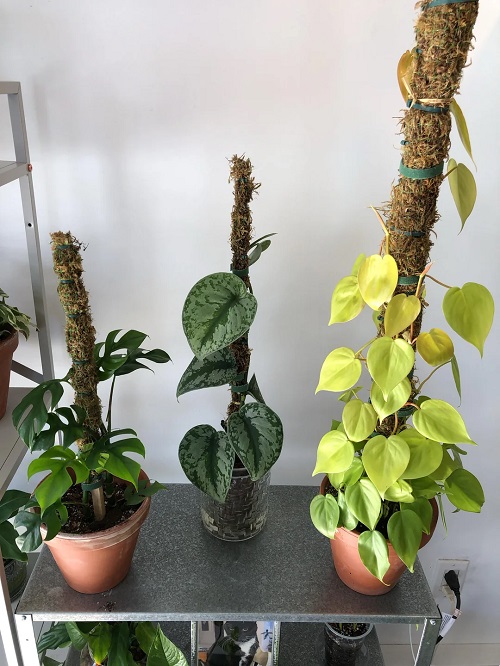
Mossy stakes have a layer of moss wrapped around a central support. You can secure your plant’s stem to the stake and guide its aerial roots toward the moss. If you keep the moss lightly moist, the roots may grow into it and help anchor the plant. Check the material before buying, as some products use coconut fiber instead of real moss.
Keep your climbing plant supported as it grows. Choose a moss-covered stake that’s sturdy enough for the plant and easy to keep lightly moist.
8. Bendable Moss Pole
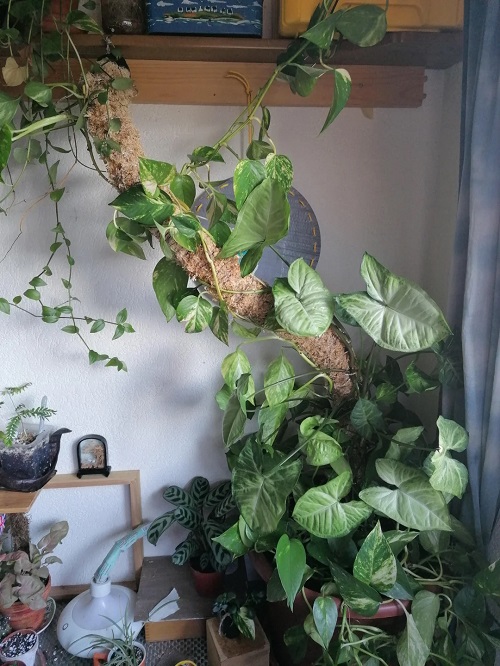
A bendable moss pole lets you change the direction of your plant’s growth. You can gently curve it to suit your space or create a different shape as the vines grow.
It works well for smaller climbing plants and lighter stems. Before choosing one for a large Monstera, check that its inner support is strong enough to hold the plant without bending under its weight.
Create a climbing shape that fits your room. Choose a flexible pole that can be gently curved without losing its stability.
9. Stackable Poles
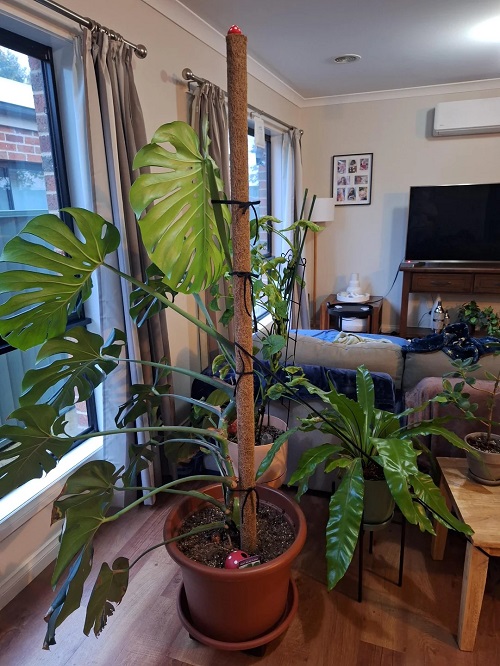
Stackable poles come in sections that you can connect as your plant grows taller. Instead of replacing a short pole, you simply add another section to extend the support. This makes them useful for fast-growing Monsteras, philodendrons, and pothos. Check that the sections fit firmly together, especially if your plant has thick stems and heavy leaves.
Shop Stackable Moss Poles on Amazon and add height without replacing the entire support.
10. Coco Moss Totem Pole
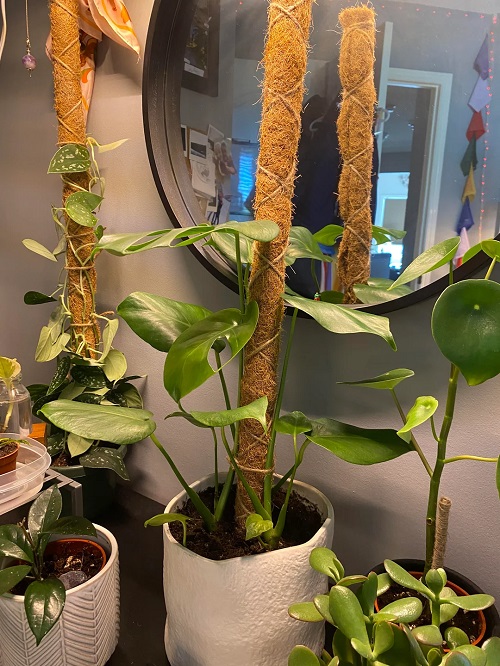
A coco moss totem pole combines a climbing support with a surface made from coconut fiber or a mix of coir and moss. Its rough texture helps your plant grip the support as it grows. Some designs hold moisture better than others, so check the material before deciding how to care for it.
Turn a spreading vine into a vertical plant. Choose a sturdy coco moss totem that gives the stem plenty of surface area to climb.
This type is useful when you want to train a climbing plant to grow vertically without letting its vines spread across shelves or furniture.
A good moss pole is only one part of growing healthy climbing plants. Pick up a complete houseplant care book on Amazon for practical guidance on Monstera, pothos, philodendrons, and many other indoor plants.