
As an Amazon Associate, we earn a small commission from qualifying purchases — at no extra cost to you.
Find out Why Are My Black Rubber Plant Leaves Turning Brown with valid causes and solutions to help your plant grow healthy again.
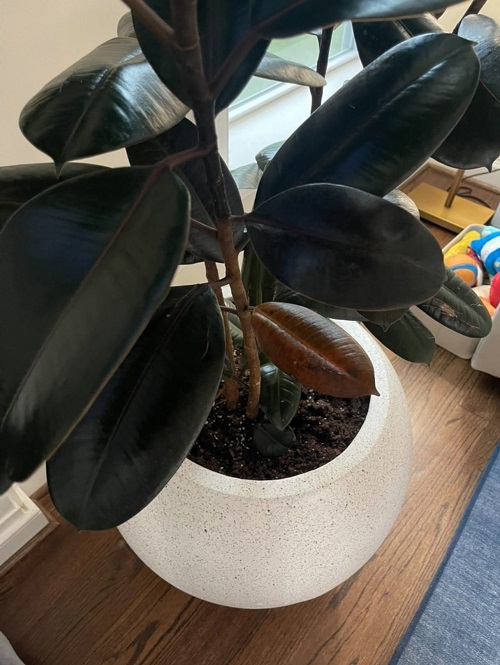
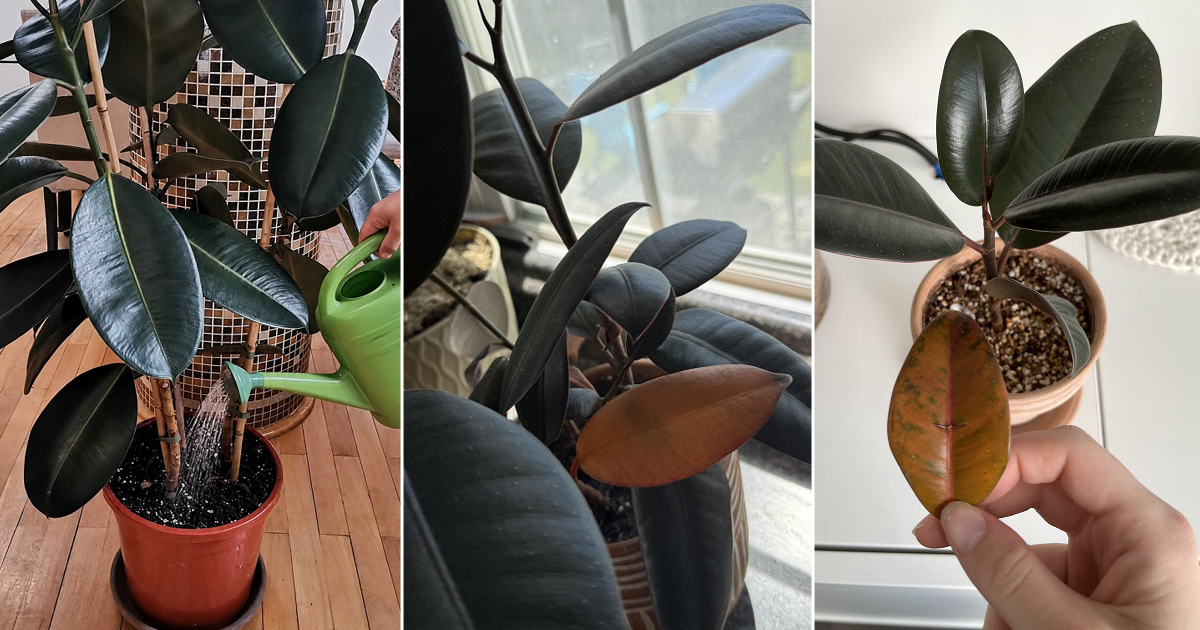
Black rubber plants are loved for their deep, glossy leaves. Healthy foliage looks almost black in bright light and gives the plant its bold appearance. So, when those leaves begin turning brown, it is easy to think something is seriously wrong. In most cases, brown leaves are the plant’s way of reacting to stress. The cause could be watering, lighting, dry air, or even a crowded root system. The pattern of the brown spots often gives you a clue. Brown tips usually point to one issue, while large patches or crispy edges suggest another.
Before you remove damaged leaves, take a few minutes to look at the growing conditions. Once you find the real cause, it becomes much easier to stop the problem and keep new leaves healthy.
Why Are My Black Rubber Plant Leaves Turning Brown? Causes and Solutions
Love indoor greenery all year? Grow beautiful herbs and plants effortlessly with this best-selling indoor garden. For more such supplies, check out our Amazon storefront.
1. Start by Looking at the Pattern
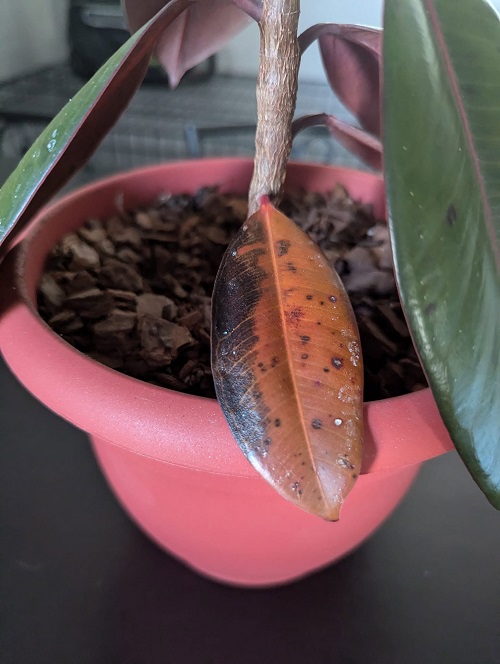
Not every brown leaf means the same thing.
A leaf with dry, brown tips often points to low humidity or inconsistent watering. Large brown patches may appear after too much direct sunlight. If the entire leaf turns brown and drops, the roots could be under stress.
Check the newest leaves first. If fresh growth looks healthy, the problem is often small and easy to fix. If even the new leaves are developing brown spots, the plant is still under stress, and something in its care routine needs attention.
Here is a set of small essential gardening tools every young gardener must have.
2. Dry Soil Leaves the Plant Thirsty
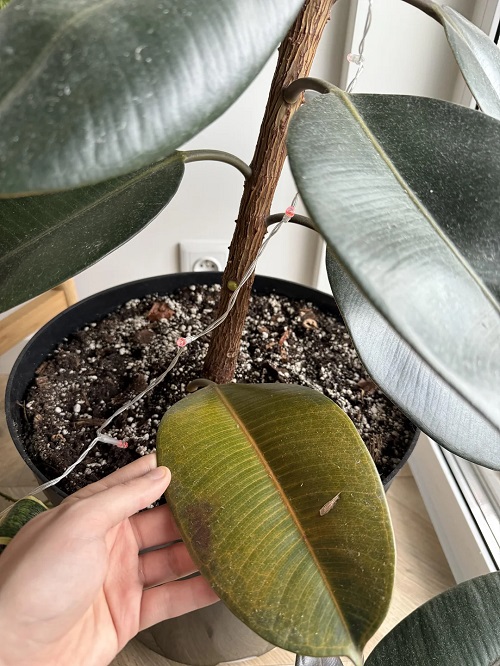
Black rubber plants do not like staying dry for long. Their thick leaves store some moisture, but they cannot make up for soil that stays dry week after week.
One of the first signs is brown, crispy edges. Older leaves usually show the damage before the younger ones. Instead of watering on a schedule, check the soil. Push your finger about 2 inches into the pot. If that layer feels dry, it is time to water.
Water deeply until excess water drains out. Then empty the saucer. A quick splash on the surface rarely reaches the deeper roots where the plant needs moisture most.
Get your hands on this gardening tool to make digging easier.
3. Too Much Water Can Cause the Same Problem
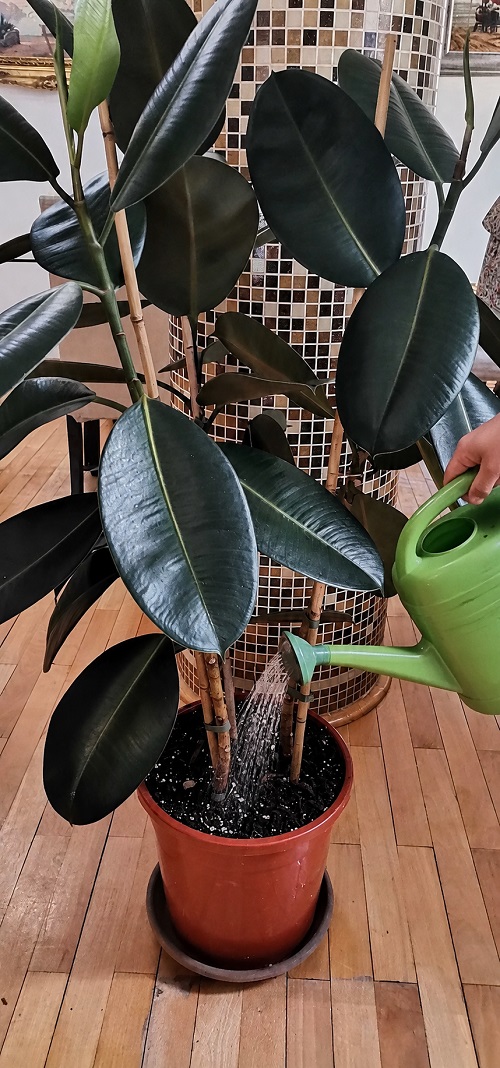
This surprises many plant owners.
People often expect overwatered leaves to stay soft and yellow. While that can happen, brown leaves are also common because damaged roots stop supplying water to the rest of the plant.
If the soil feels wet several days after watering, the roots are probably sitting in too much moisture. You might also notice a sour smell or leaves falling earlier than usual.
Let the top part of the soil dry before watering again. If the pot has poor drainage, change the soil and move the plant into a container with drainage holes. Healthy roots need both water and air.
Get this gallon of water to water your plants
4. Bright Light Is Good, Harsh Sun Is Not
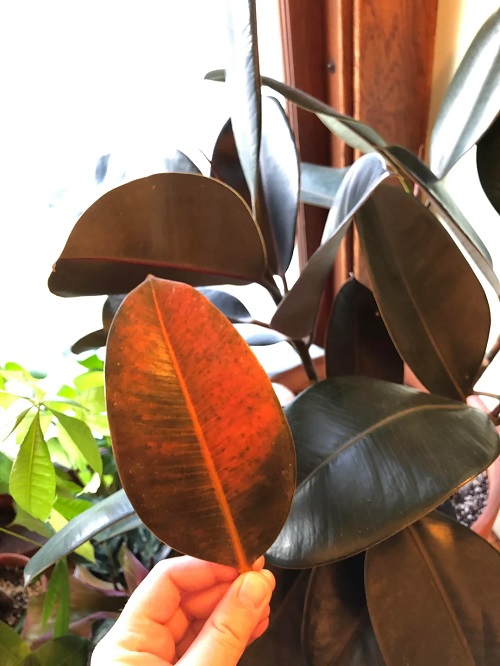
Black rubber plants enjoy bright rooms, but direct afternoon sun is another story.
Leaves exposed to intense sunlight can develop dry brown patches. They often look scorched and feel papery. The damage usually appears on the side facing the window. Moving the plant just a few feet back often solves the problem. A sheer curtain also helps if the window receives strong afternoon sun.
Morning sunlight is usually much gentler and causes fewer problems.
Here are some hanging pots for all your plants.
5. Low Light Creates Long-Term Stress
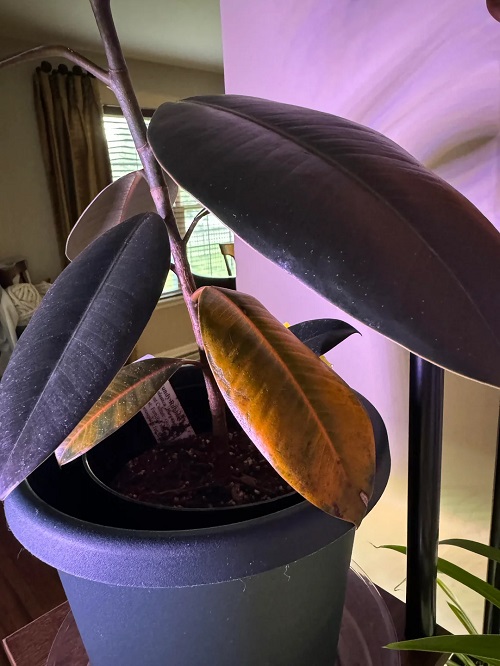
A black rubber plant can survive in moderate light, but it will not thrive in a dark corner. Growth slows down. The soil stays wet longer. Eventually, watering mistakes become more likely because the plant is using less moisture.
Brown leaves may not appear right away, but poor lighting weakens the plant over time.
Choose a spot with bright, indirect light for most of the day. You should also rotate the pot every few weeks so all sides receive equal light.
Get yourself a pair of long-sleeved gardening gloves for all your activities.
6. Dry Indoor Air Can Brown the Leaf Edges
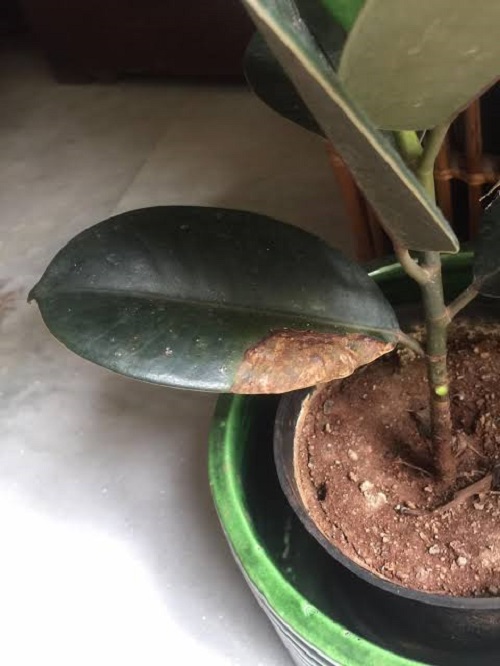
This problem shows up most often during winter.
Heating systems remove moisture from indoor air, and the leaves begin drying around the edges. Air conditioners can have the same effect during summer.
The rest of the leaf usually stays green, which makes this problem easier to recognize.
A humidifier works well if your home is very dry. Even placing several houseplants close together can slightly raise humidity around them. Small changes like these often prevent further browning.
Give your plants the care they deserve with this high-quality humidifier.
7. Too Much Fertilizer Burns the Roots
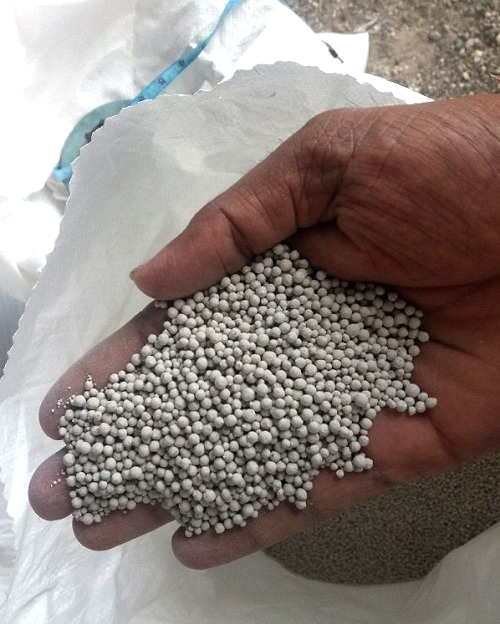
Fertilizer helps plants grow, but only in the right amount.
Feeding too often leaves salts in the potting mix. Over time, these salts build up around the roots and make it harder for the plant to absorb water. Brown tips are often one of the first warning signs.
If you see a white crust on top of the soil, flush the pot with clean water. Let plenty of water run through the container to wash away excess fertilizer. During spring and summer, feeding once a month with a balanced fertilizer is usually enough.
Let your plants have this balanced fertilizer for healthy growth.
8. Water Quality Sometimes Plays a Role
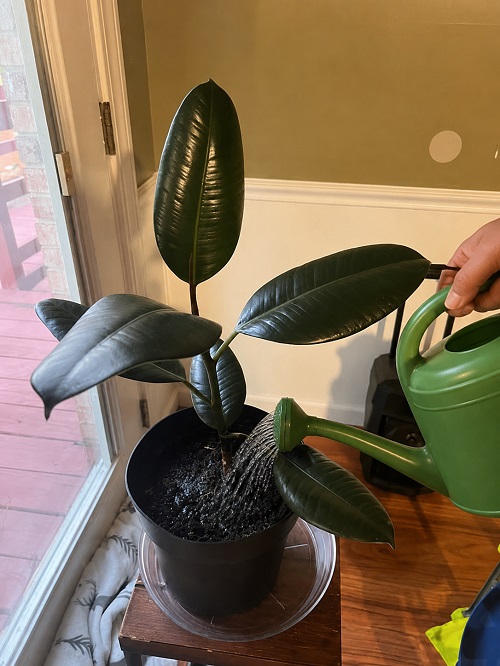
In some homes, the water itself creates problems. Hard water contains minerals that slowly collect in the soil. Some municipal water supplies also contain chemicals that sensitive plants do not appreciate.
This type of damage develops slowly. The brown tips appear little by little instead of all at once.
If everything else seems right, try watering with filtered water or collected rainwater for a few weeks. Many gardeners notice healthier new growth after making this simple change.
Start with a potting mix with all the nutrients that your plant needs.
9. Temperature Changes Can Shock the Plant
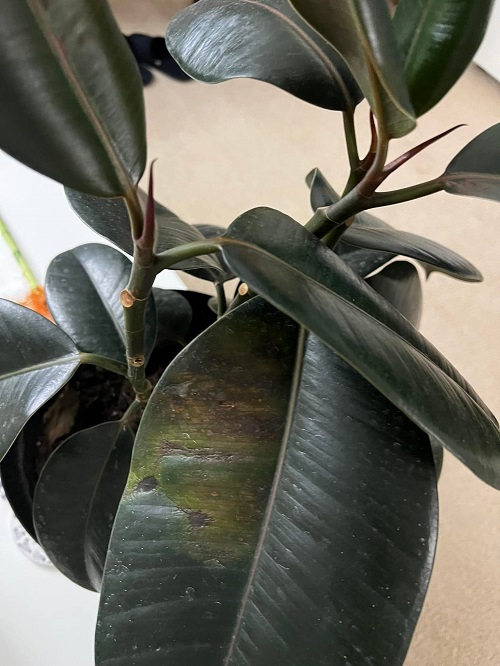
Rubber plants prefer stable indoor temperatures.
Cold drafts from open windows, air conditioners, or exterior doors can stress the leaves. Hot air blowing from a heating vent causes similar damage.
Sometimes the brown spots appear only on the side facing the draft. Keep your plant where temperatures stay between 65°F and 80°F (18°C to 27°C). Consistent conditions help the plant recover much faster.
Look at this hanging basket that can decorate your living room.
10. Check the Roots Every Couple of Years
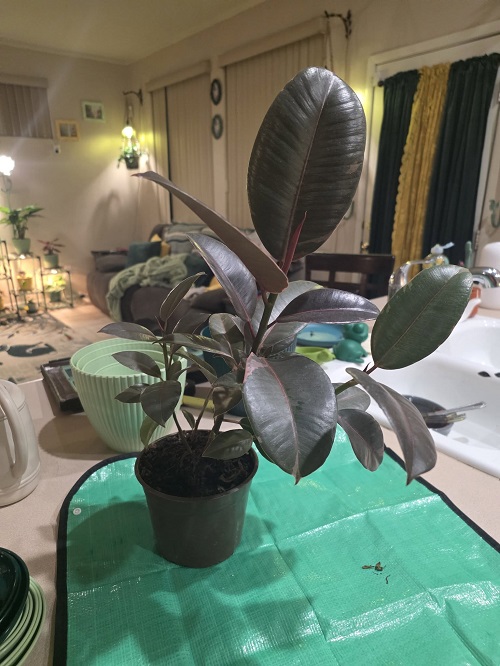
A healthy black rubber plant eventually fills its pot with roots.
Once that happens, watering becomes more difficult because the soil dries out much faster. The roots also have less room to absorb nutrients. If roots are growing through the drainage holes or circling inside the pot, it is probably time to repot.
Move the plant into a container that is only one size larger. A pot that is too large holds extra moisture and increases the risk of root rot.
Are your plants stuck in small pots? Here is a bigger pot that gives them a space to grow.
11. Tiny Pests Can Leave Big Problems
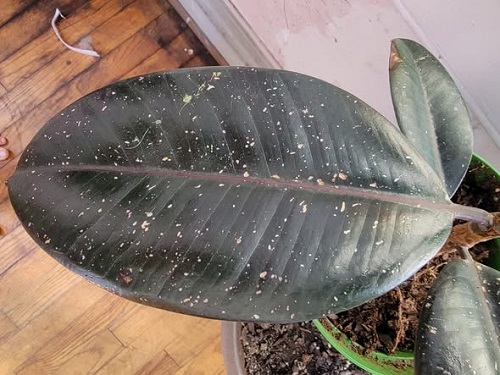
Spider mites, scale insects, and mealybugs are small enough to escape notice at first. They feed by sucking sap from the leaves. The damaged areas slowly become brown or dry.
Turn the leaves over and inspect them closely. Spider mites leave fine webbing. Scale insects look like tiny bumps attached to the stems. Mealybugs appear as white, cotton-like clusters.
Most light infestations can be controlled by wiping the leaves clean and treating the plant with neem oil or insecticidal soap.
Try cleaning your plants with this 100% original neem oil.
12. Sometimes Old Leaves Simply Wear Out
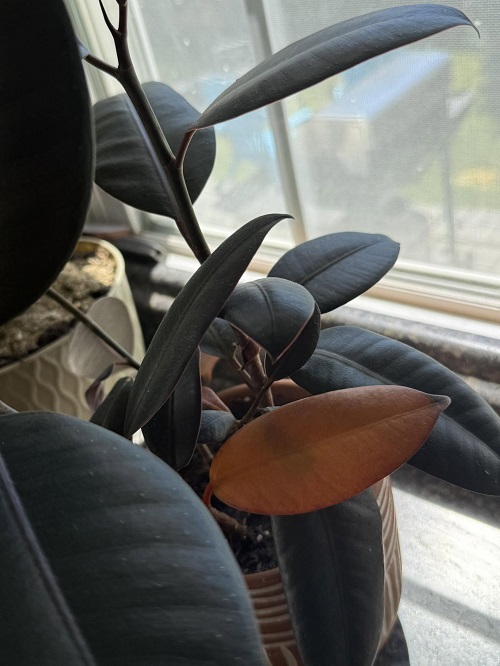
Not every brown leaf needs a solution.
Older leaves age naturally and fall as the plant grows taller. This usually happens near the bottom of the stem while new leaves continue developing at the top. If only one or two old leaves turn brown over several months, there is little reason to worry.
Remove them with clean pruning shears, and let the plant focus its energy on fresh growth.
Try using these electric pruning shears on your pots for a cleaner cut.
13. Keeping Brown Leaves Away
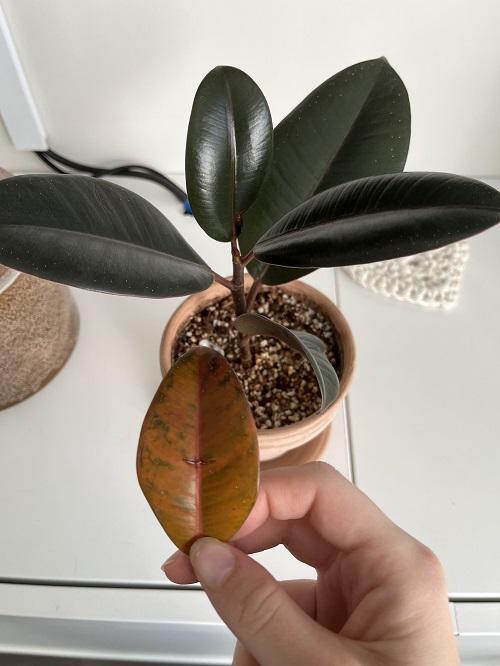
Most brown leaf problems are preventable.
Pay attention to the soil before watering. Give the plant bright, indirect light instead of harsh afternoon sun. Keep it away from heating vents and cold drafts. Feed lightly during the growing season, and inspect the leaves now and then for pests.
You do not need a complicated care routine. Small, consistent habits usually keep a black rubber plant looking healthy year after year.
Check the soil of your plants with this soil moisture meter.