
As an Amazon Associate, we earn a small commission from qualifying purchases — at no extra cost to you.
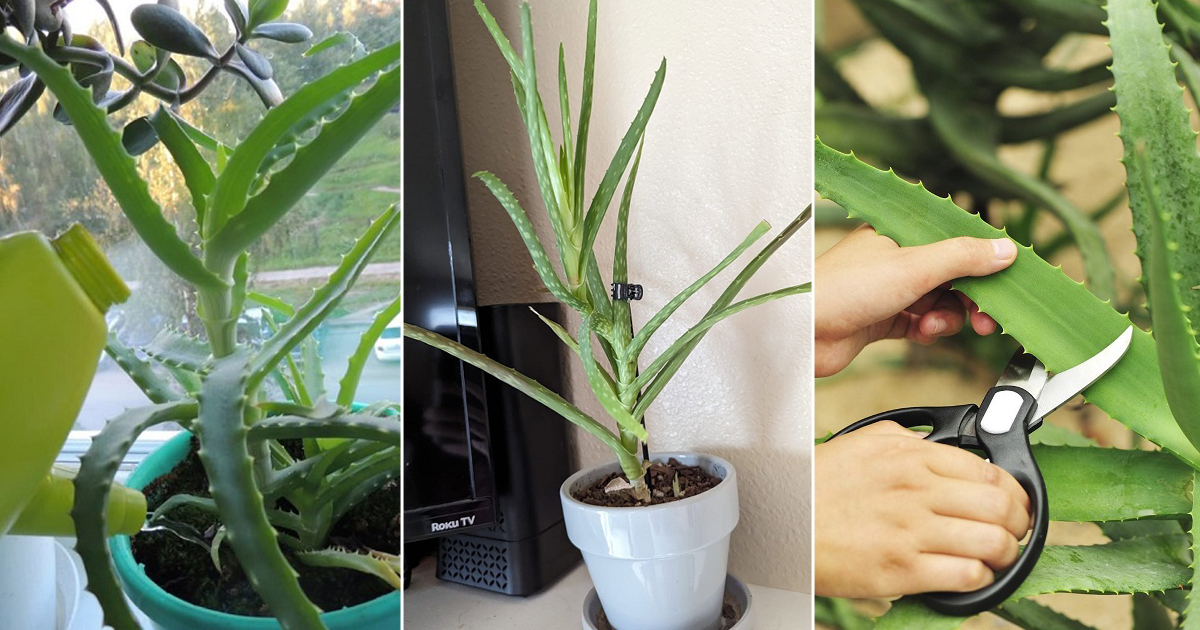
Why Is Your Aloe Vera Plant Growing Tall and Thin? Find out what’s causing the problem and how you can bring back thick, compact growth.
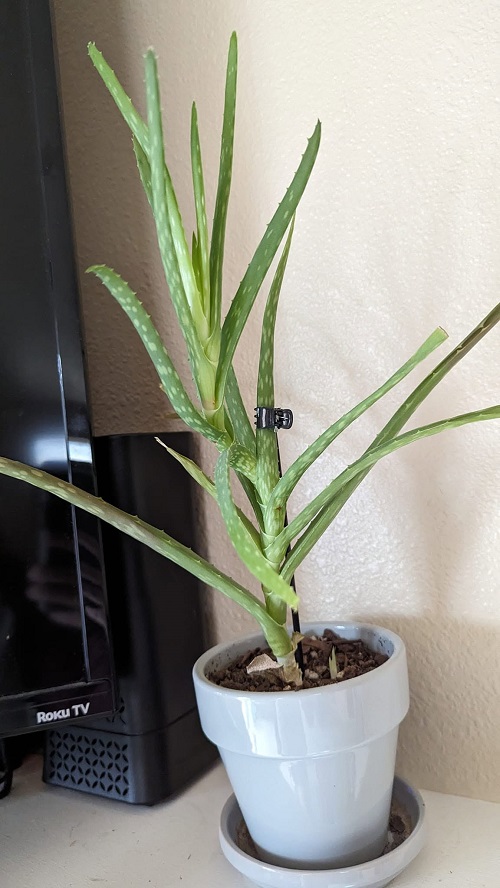
You expect an aloe vera plant to stay short and full. The leaves should be thick, firm, and packed closely together. So, when you notice a long stem with narrow leaves spaced far apart, it is easy to think something has gone seriously wrong.
The good news is that your plant is giving you a clear signal. In most cases, it is reacting to the way it is growing rather than suffering from a disease. If you can spot the cause early, you can help your aloe produce healthier new growth.
Why Is Your Aloe Vera Plant Growing Tall and Thin?
Love indoor greenery all year? Grow beautiful herbs and plants effortlessly with this best-selling indoor garden. For more such supplies, check out our Amazon storefront.
Your Plant Is Trying to Find Better Light
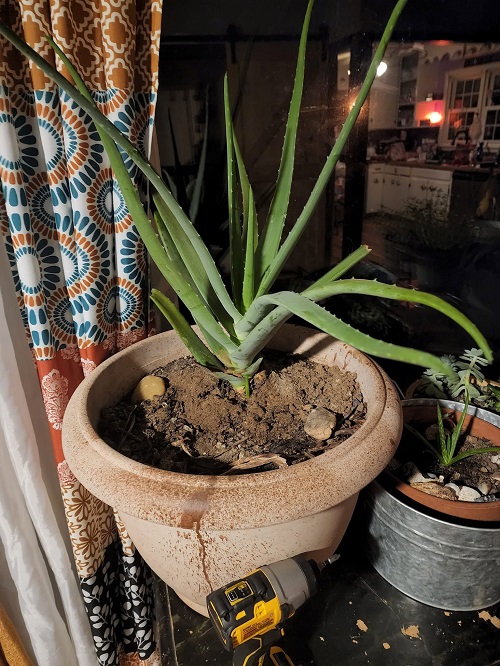
If your aloe has become tall instead of full, start by looking at its location. Aloe vera comes from places where sunshine is strong for most of the day. Inside your home, the light is usually much weaker than you think. Even a bright-looking room may not provide enough energy for a succulent.
When your plant cannot get enough light, it begins to stretch. Instead of making broad, fleshy leaves, it puts its energy into growing upward. It is simply trying to reach a brighter spot.
You may notice that the newest leaves are smaller than the older ones. The spaces between them also become wider. That stretched look is one of the earliest signs that your aloe wants more light.
Moving the pot closer to a sunny window often stops the problem. The old stem will stay stretched, but the new growth should become shorter and stronger.
Give your plants the proper lighting with this grow light.
A Bright Room Is Not Always Enough
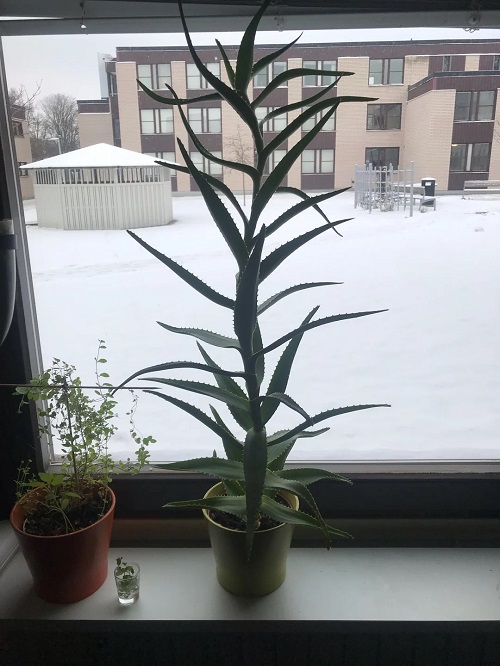
Many people place their aloe near a window and assume it has everything it needs.
That is not always true. You have seen aloe plants grow thin while sitting beside north-facing windows that never receive direct sunlight. Gardeners also seen large trees outside block enough light to affect growth without the owner realizing it.
Instead of guessing, watch where sunlight falls during the afternoon. If the leaves never receive direct sun, your aloe may still be struggling.
Sometimes moving the plant just a few feet makes a noticeable difference.
Here are some steel planters with wheels that will make it easier for you to move it.
You Forget to Turn the Pot
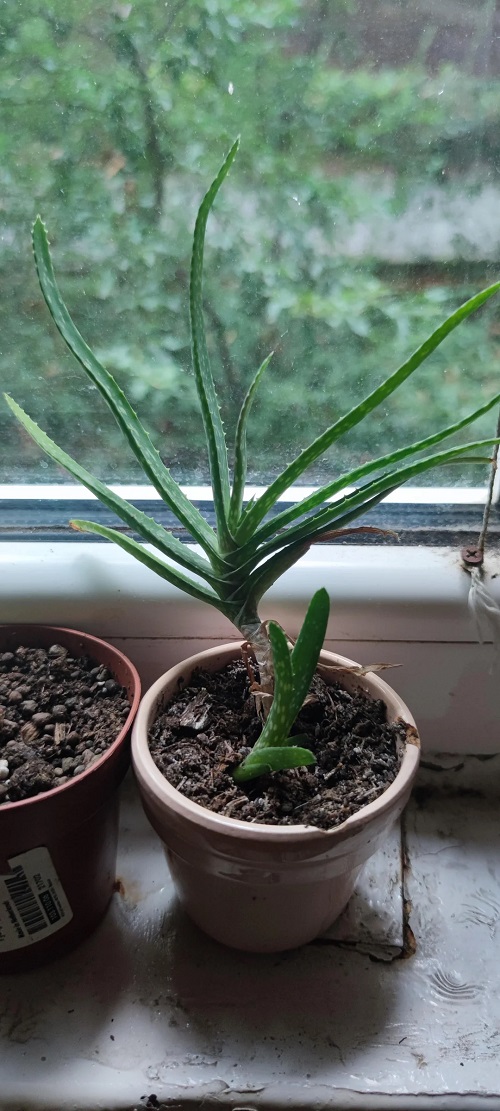
Have you ever noticed your aloe leaning toward the glass?
That happens because plants naturally grow toward light. If sunlight comes from one direction every day, the stem slowly bends and stretches.
This is easy to fix. Turn the pot every week or so. You do not have to measure anything. Just give it a small rotation whenever you water or dust the leaves. Over time, the new growth stays much more balanced.
It is a simple habit, but it works.
Warm Winters Can Fool Your Aloe
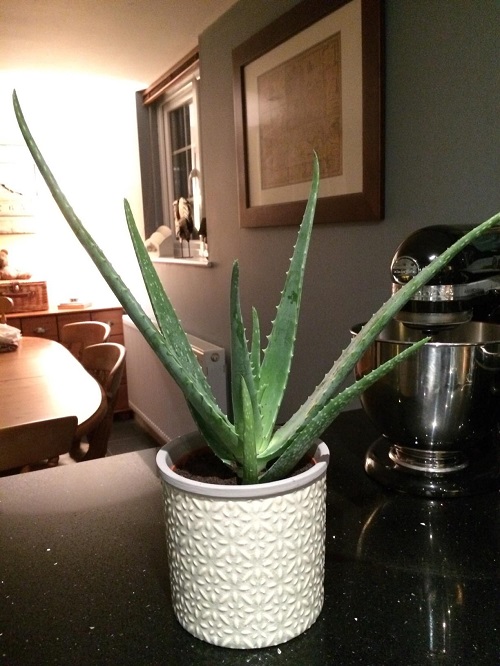
Winter brings an interesting problem indoors. Your heater keeps the room warm, so the plant thinks it is still growing season. The trouble is that daylight becomes much shorter. Aloe continues growing, but it cannot make enough food because there is less sunlight. The result is weak, stretched growth.
You do not need to increase watering during this time. Instead, move the plant to the brightest place in your home. If your rooms stay fairly dark throughout winter, a small LED grow light can make a big difference.
Get this warm grow light to facilitate your plant’s healthy growth.
Watering Too Often Makes the Plant Weaker
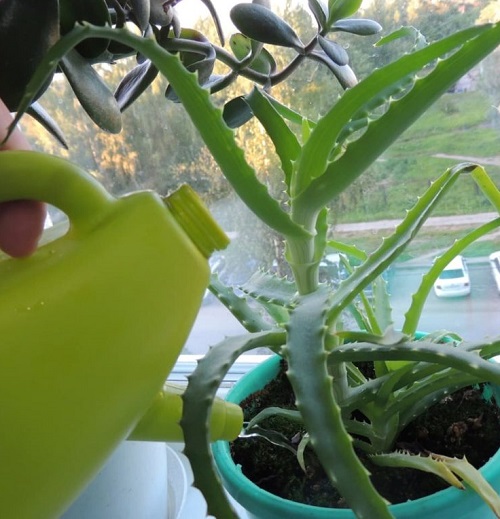
Many people try to help a struggling aloe by watering it more often. That usually makes things worse. Your aloe stores plenty of water inside its leaves. It does not like wet soil that stays damp for days. Constant moisture weakens the roots, and weak roots cannot support healthy growth. A stretched aloe often looks even thinner when the roots stay wet.
Before watering, push your finger a couple of inches into the soil. If it still feels damp, wait a few more days. Your plant would rather stay dry than sit in soggy soil.
Keep the soil in check with this moisture meter.
Rich Soil Can Encourage Soft Growth
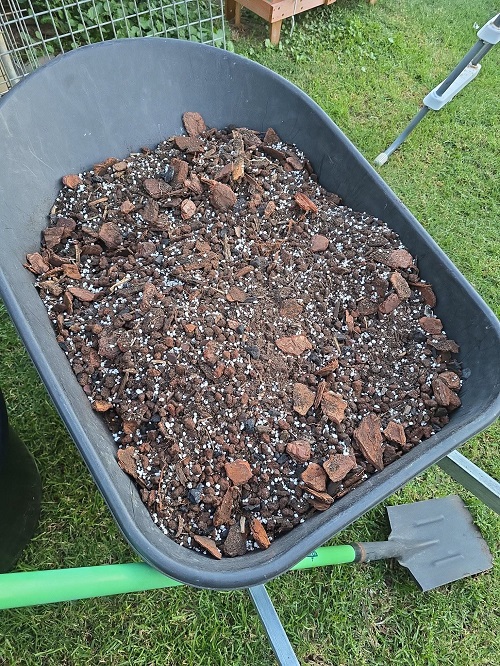
Not every plant enjoys rich, compost-filled soil.
Aloe is different. If the potting mix holds too much water or contains heavy organic matter, the roots struggle to breathe. You may also notice softer leaves that do not feel as firm as they once did. A fast-draining cactus or succulent mix suits aloe much better. Water flows through quickly, and the roots stay healthier.
Healthy roots produce healthier leaves.
Check out these pebbles for the soil to enrich it with nutrients.
Too Much Fertilizer Does More Harm Than Good
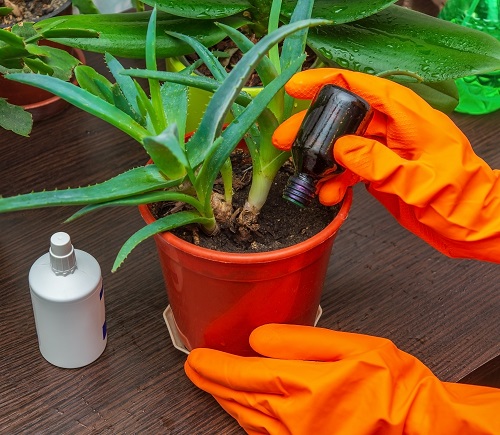
It is tempting to feed your plant when it does not look its best. Resist the urge.
Aloe vera is not a heavy feeder. Giving fertilizer every few weeks often pushes soft, weak growth instead of thick leaves. If you already use fresh potting mix, your plant probably has enough nutrients for quite some time.
During spring and summer, one light feeding with a succulent fertilizer is usually enough. Skip fertilizer completely once growth slows in cooler months.
Get your hands on these gloves for all your gardening activities.
Sometimes Age Changes the Plant
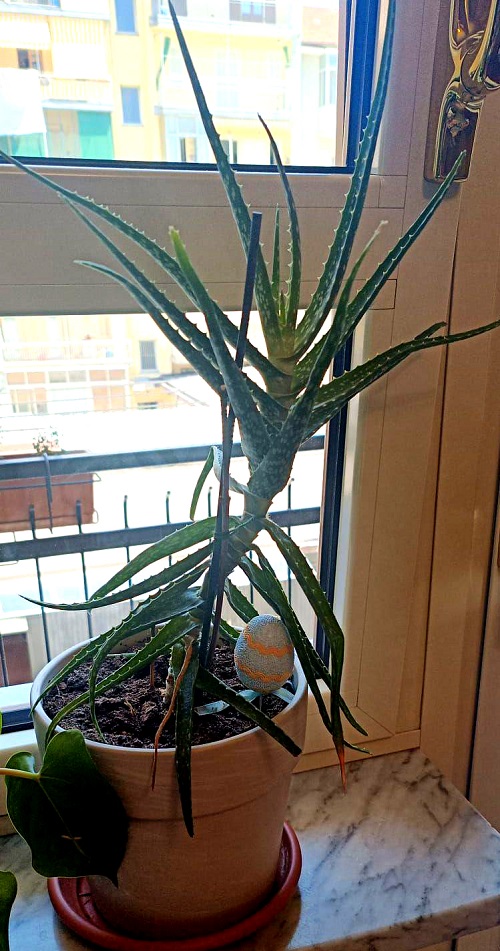
Not every tall aloe is unhealthy. As your plant gets older, the lowest leaves naturally dry up. Once they fall away, a stem becomes visible underneath.
People often mistake this for stretching. Look at the newest leaves in the center. If they are thick, green, and growing close together, your aloe is simply maturing.
Older plants rarely look exactly like young nursery plants.
Should You Repot It?
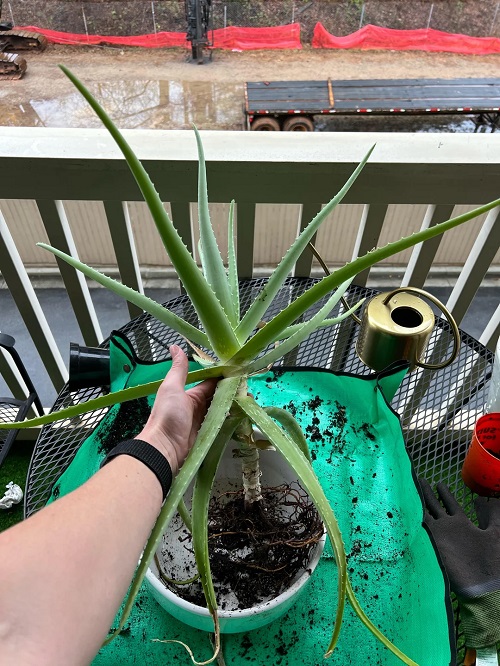
Take a quick look underneath the pot. If roots are growing through the drainage holes or circling tightly inside the container, it may be time to move your aloe.
Do not jump to a very large pot. Choose one that is only slightly bigger than the current one. Extra soil stays wet longer, and that creates new problems. Whenever you repot, use fresh succulent mix and make sure excess water can drain away easily.
Here is a soil mix that is rich in nutrients and perfect for the growth of your plant.
Can You Make It Short Again?
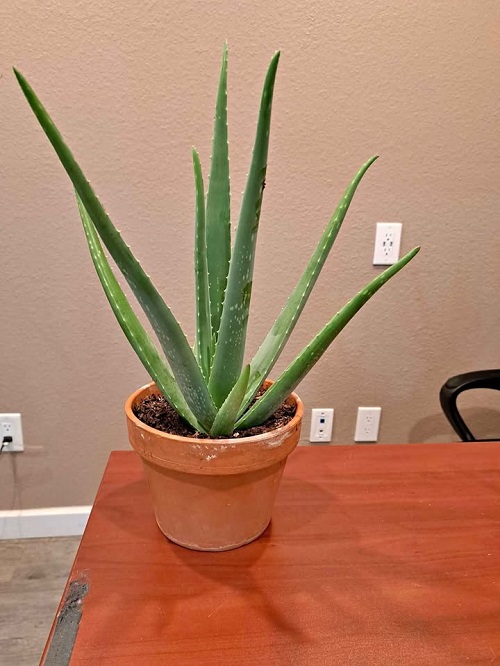
This is the question almost everyone asks. Unfortunately, the answer is no.
The stretched stem will not shrink, even after you improve the growing conditions. What changes is the new growth. Once your aloe receives enough light, the fresh leaves growing from the center become thicker and closer together. After several months, the top of the plant starts looking healthier even though the lower stem remains long.
Think of it as starting a new chapter instead of fixing the old one.
Is It Worth Cutting the Plant?
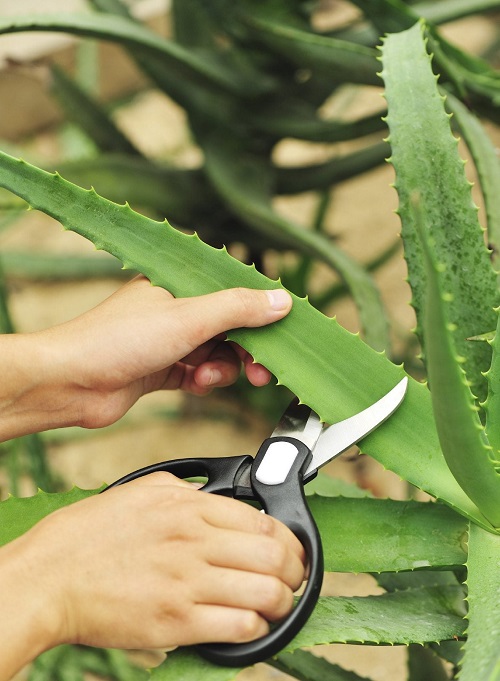
If your aloe has become very tall and unstable, you can cut the healthy top and root it again.
Let the cut end dry for several days before planting it in fresh soil. This helps prevent rot. Do not throw away the bottom part right away.
Healthy roots often send up small offsets after the main stem is removed. With a little patience, you may end up with more than one aloe plant.
Use these sharp pruning shears to keep your plants clean.