
As an Amazon Associate, we earn a small commission from qualifying purchases — at no extra cost to you.
Are your African violet leaves curling? Check the common causes and learn simple fixes to help your plant grow healthy, fresh leaves again.
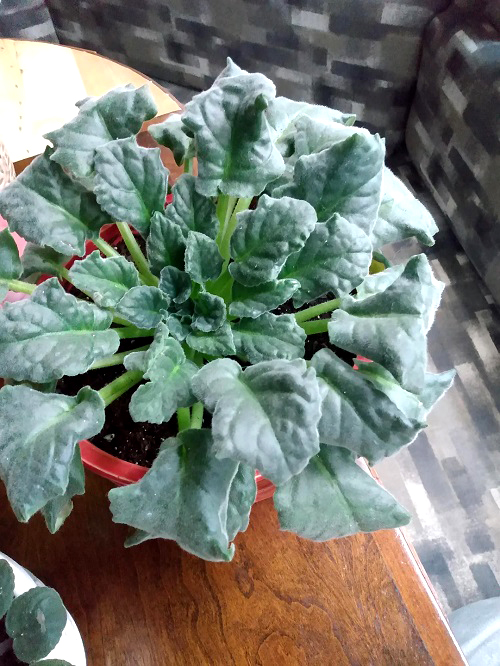
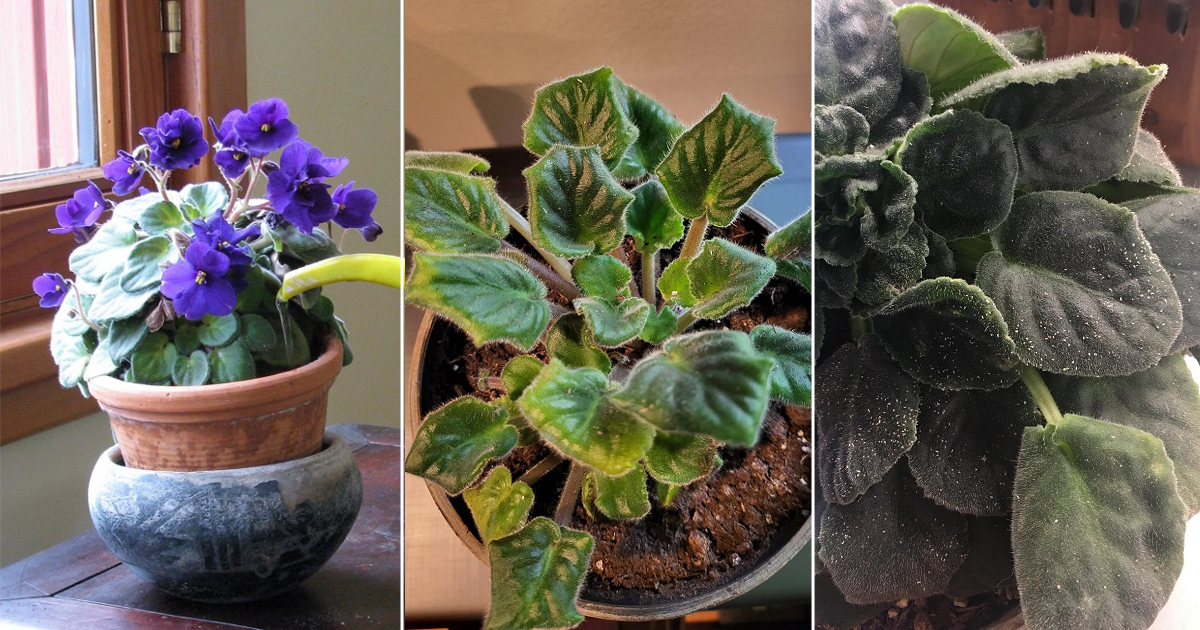
African violets are popular houseplants because they are easy to care for and produce beautiful flowers. Their soft, fuzzy leaves and small clusters of blooms look lovely in any room. However, these plants can sometimes develop problems. If your African violet leaves are curling, there could be several reasons. The good news is that most causes are easy to identify and fix.
African Violet Leaves Curling: Causes and How to Fix Them
Get this gardening tool set for lush growth with minimal effort. Also, check our Amazon storefront for more garden supplies.
African Violet Leaf Curl Caused by Cold
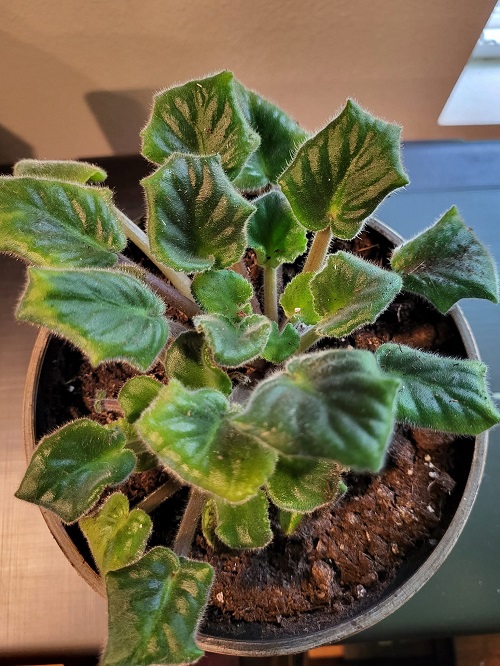
If your African violet leaves are curling downward, cold temperatures may be the reason. African violets grow best when daytime temperatures stay around 70°F (21°C) and do not drop too much at night. Using cold water can also stress the plant, so let the water reach room temperature before watering.
Keeping your African violet in the cold for too long can make the leaves brittle and cause them to curl under. You may also notice that the new leaves in the center are tightly packed, the plant grows slowly, or the leaves develop more fine hairs than usual. These are common signs of cold stress.
The good news is that this problem is easy to fix. Move your African violet to a warmer spot in your home. Cold drafts from windows can be a common problem, especially during winter. You can use plastic window insulation to help block the cold air. If your home stays cold, place a small heat lamp or grow light near the plant to provide some extra warmth.
Get a grow light for your plant if it does not receive adequate light.
Sunlight and African Violet Leaf Curl
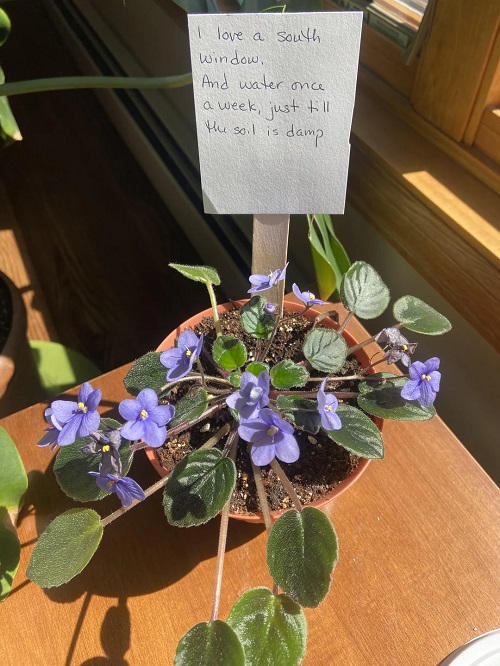
Too much sunlight can also cause African violet leaves to curl. If cold temperatures are not the problem and you don’t see any signs of mites, check how much light your plant is getting. African violets prefer bright, indirect light. Too much direct sunlight can make the leaves turn brown and curl under. Move the plant away from direct sunlight and see if the leaves start to improve.
Use these filter curtains let in natural light for your plants.
Mites Can Cause Leaf Curl in African Violets
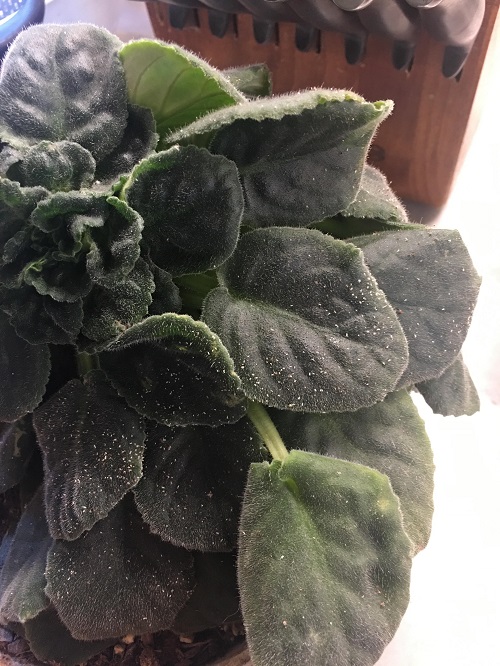
Mites can also cause African violet leaves to curl, although cold temperatures are a more common cause. These tiny mites are too small to see with the naked eye. They usually feed on the plant’s new growth in the center, so check those leaves for signs of damage or stunted growth. Curling leaves are usually a secondary sign of a mite problem. You may also notice smaller flowers or that your African violet stops blooming.
If your African violet has mites, it may be easier to throw the infected plant away. Clean and disinfect any tools you used on the plant. If you plan to reuse the pot, disinfect it as well.
If you want to save the plant, you can use a miticide made for houseplants or insecticidal soap. Always follow the product instructions. If a chemical is not labeled for indoor or houseplant use, take the plant outside before applying it.
This organic neem oil can be used to effectively kill the pests on your plants.
Watering Problems Can Cause Curling Leaves
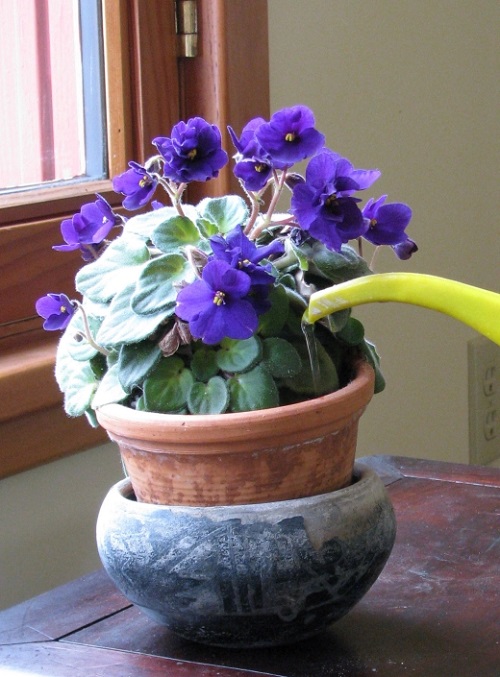
Improper watering is another common reason African violet leaves may curl. If the soil becomes too dry, the leaves can start to curl, droop, or feel soft. Watering too often can cause a different problem. Constantly wet soil can damage the roots and leave the plant stressed.
Check the soil before watering instead of following a strict schedule. If the soil feels dry, give the plant a thorough watering and let the extra water drain away. Never leave the pot sitting in water for long periods.
African violets also prefer to be watered carefully. Try to keep water off the fuzzy leaves because wet foliage can lead to leaf spots and other problems. Water the soil around the base of the plant instead.
Grab this moisture meter to keep the soil in check before watering.
Poor Drainage Can Lead to Leaf Curl
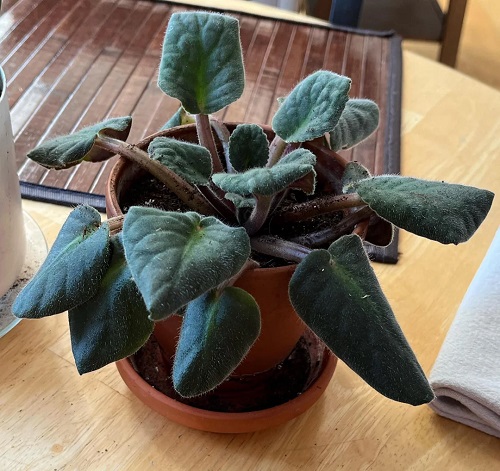
Even if you are watering correctly, poor drainage can keep the roots too wet. A pot without drainage holes or heavy soil that holds too much moisture can create problems for the roots.
If the soil stays wet for several days after watering, check the pot and growing mix. African violets do best in a loose, well-draining mix that allows air to reach the roots. Make sure your container has drainage holes so excess water can escape.
Root problems can also cause leaves to become soft, weak, or curled. If the plant continues to struggle even after you adjust your watering, check the roots for signs of damage.
Check out these clay pots that come with drainage holes in the bottom.
How to Prevent African Violet Leaves From Curling
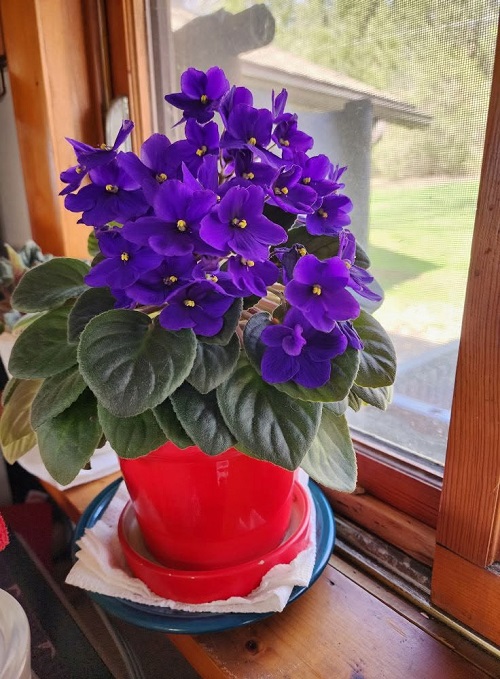
Give your African violet bright, indirect light and protect it from cold drafts and sudden temperature changes. Water when the soil needs it rather than sticking to a fixed schedule, and always use a pot with good drainage.
Keep the plant away from heaters and very dry areas, and avoid getting water on the fuzzy leaves. Check the new growth regularly for signs of pests or unusual changes. A little attention to these conditions can prevent many of the problems that lead to curling leaves.
Get a copy of How Not to Kill Your Houseplant to become the best plant parent.