
As an Amazon Associate, we earn a small commission from qualifying purchases — at no extra cost to you.
Explore the Best Flowering Oxalis Varieties You’ll Love to Grow in your garden for a beautiful show of colors in your home.
If you grow Oxalis, you’ll notice that it has some unusual and interesting features. One of the most amazing is the way it spreads its seeds. When the seed pods are ripe, they burst open and shoot the seeds away from the plant. This helps Oxalis spread naturally around your garden. Another fun feature is that the leaves move during the day. Like prayer plants, Oxalis leaves fold up at night or during cloudy weather and open again when the light returns. Most Oxalis species share a similar look. You can expect to see groups of three triangular leaflets, tuberous roots, and five-petaled flowers. However, the genus includes many different species, so you’ll find a wide variety of leaf colors, flower shapes, sizes, and growth habits. Here you will find Best Flowering Oxalis Varieties You’ll Love to Grow in your home.
Best Flowering Oxalis Varieties You’ll Love to Grow
1. Acetosella (O. acetosella)
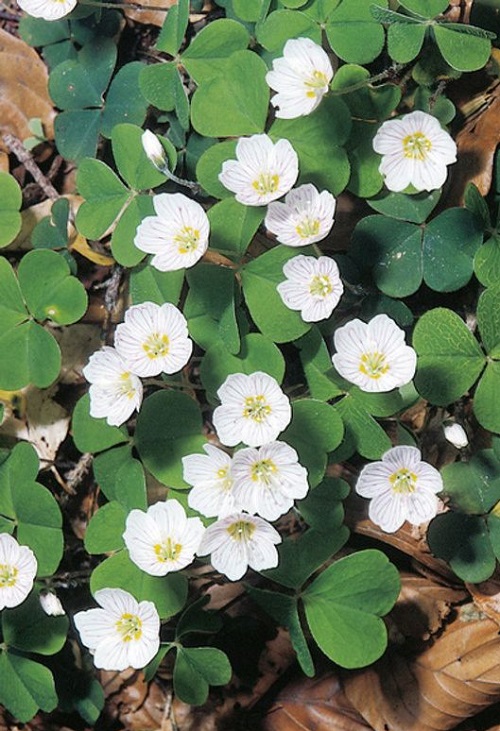
Common wood sorrel (O. acetosella) is a popular wild plant that grows across the Northern Hemisphere, including Russia, Europe, and North America. In the US, it grows best in USDA Zones 3 to 7 and can thrive in both full shade and full sun.
The plant has small, clover-like leaves made up of three heart-shaped leaflets. The leaves and flowers close up at night, which is a unique feature of this plant.
Common wood sorrel is often used as a shamrock during St. Patrick’s Day and is also eaten in many places where it grows naturally.
It grows to about 4 inches tall but spreads quickly, making it a great ground cover. It can even handle light foot traffic, so it’s a good choice for replacing a lawn or filling spaces between pavers.
In spring, it produces delicate white flowers with light pink veins, though some plants have completely pink blooms.
2. Corniculata (O. corniculata)
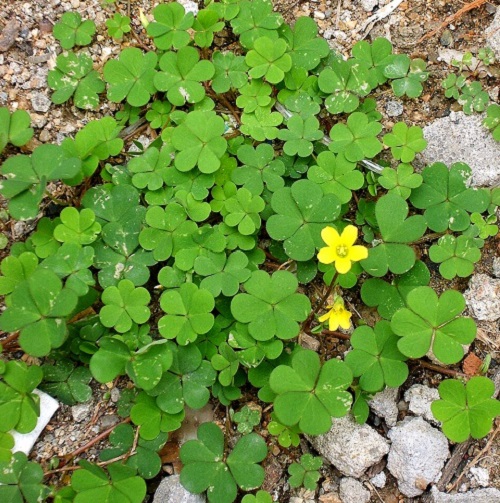
If you enjoy trying edible plants, creeping wood sorrel (O. corniculata) is worth growing. Its leaves have a tangy, citrus-like flavor that is stronger than many other wood sorrel varieties. In some parts of South India, you can use it to make a spicy and sour fish curry with a unique taste. In Italy, the leaves are boiled to make a refreshing drink, then sweetened with sugar and served over ice.
Since fresh wood sorrel can be hard to find in stores, growing your own is a great idea if you want a steady supply for cooking.
Even if you don’t plan to eat it, this plant adds beauty to your garden with its bright yellow flowers and heart-shaped leaves. The purple form (O. corniculata var. atropurpurea) is especially eye-catching. You can expect it to grow up to 8 inches tall, and it thrives in USDA Zones 4 to 8 with full to partial sun.
3. Purple wood sorrel (O. purpurea)
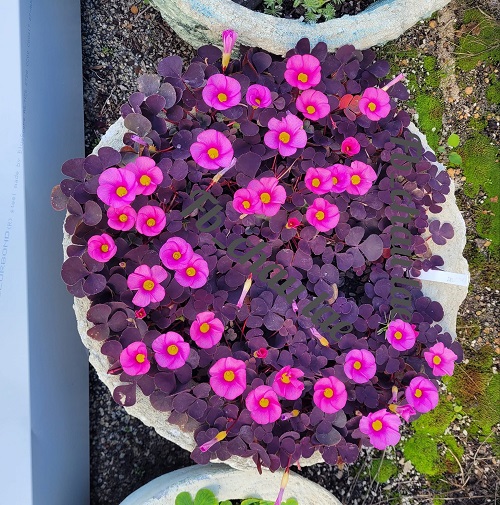
If you want a wood sorrel with eye-catching flowers, purple wood sorrel (O. purpurea) is a great choice. Its large, deep pink blooms are so beautiful that you might grow it just for the flowers. The small, heart-shaped leaves provide a lovely background and add to its charm.
This South African native grows to about 5 inches tall, making it a good option for replacing small patches of grass or filling garden spaces. It grows best in USDA Zones 9 and 10, but it can self-seed and return every year in areas as cold as Zone 6. Keep an eye on it, though, as it can spread quickly in the right conditions.
You can grow purple wood sorrel in partial sun or shade, or plant it in a container indoors where it gets gentle morning sunlight.
4. Montana (O. montana)
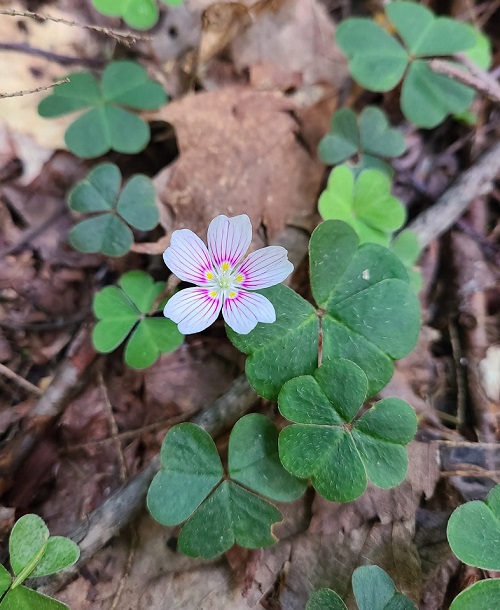
If you want a low-maintenance wood sorrel, mountain wood sorrel (O. montana) is a lovely choice. It produces delicate white flowers with soft lavender stripes that brighten up your garden. Its fresh green leaves also add color to shady spots, especially under conifer trees, and the plant blooms throughout the summer.
This woodland plant naturally grows in the cool forests of eastern North America and reaches about 6 inches tall. Its slow-growing habit makes it easy to manage.
If you’re looking for an Oxalis that won’t spread aggressively, mountain wood sorrel is one of the best options. You can grow it in USDA Zones 6 to 10, where it thrives without becoming invasive.
5. Corymbosa (O. corymbosa)
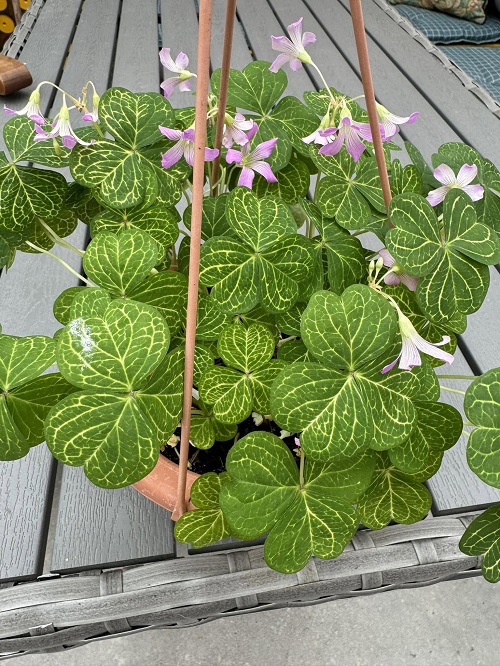
If you want a colorful and easy-to-grow wood sorrel, you might like Oxalis corymbosa. Although it is officially considered a variety of O. debilis, you will often find it sold as its own species.
This plant grows quickly and can spread fast in the right conditions. Its leaves are made up of three small triangular leaflets, giving it a classic shamrock look. The pretty pink or lavender flowers have earned it the common names “pink shamrock” and “pink wood sorrel.”
For an even more eye-catching choice, you can grow the ‘Aureo-Reticulata’ cultivar. Its leaves have bright golden-yellow veins, and the soft pink spring flowers add extra beauty to the plant.
You can grow this wood sorrel in USDA Zones 7 to 10, where it thrives in full or partial sun. It reaches about 9 inches tall and makes a lovely addition to beds, borders, or containers.
6. Grandis (O. grandis)
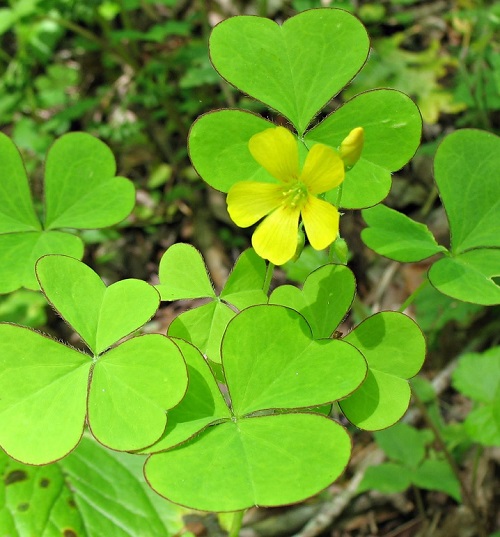
If you want a larger wood sorrel, great wood sorrel (O. grandis) is an excellent choice. It can grow up to 2 feet tall, making it one of the tallest Oxalis species. Its bright yellow flowers, each with a small red spot at the base of the petals, add bold color to your garden.
This plant is native to the eastern United States and stays attractive even when it’s not blooming. Its large, lime-green leaves, which can grow up to 2 inches wide, create a fresh and vibrant display.
You can grow great wood sorrel in USDA Zones 6 to 11, where it does well in full or partial sun. Its size and colorful flowers make it a standout plant for borders, garden beds, or natural landscapes.
7. Stricta (O. stricta)
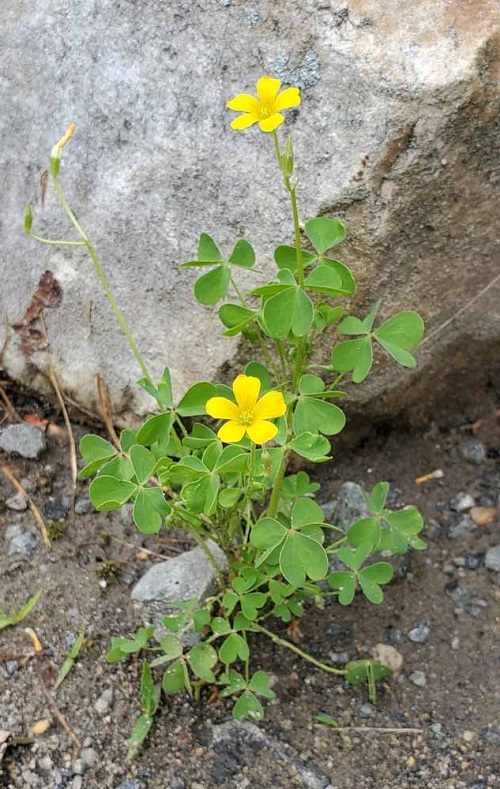
If you’re looking for an easy-care ground cover, common wood sorrel (O. stricta) is worth considering. Although many people treat it as a weed and try to remove it from their lawns and gardens, you can let it grow as a natural lawn replacement.
This North American native handles low-light conditions better than many other Oxalis species. It also attracts pollinators and has edible leaves, making it both useful and attractive.
The plant grows up to 1 foot tall and produces cheerful yellow flowers in spring. You can grow it in USDA Zones 4 to 11, where it thrives in anything from full sun to shady spots.
8. Triangularis ( O. triangularis)
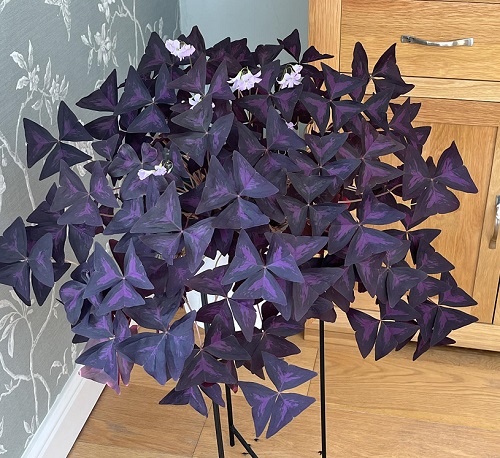
If you want a striking and easy-to-grow wood sorrel, O. triangularis is a great choice. Its large, triangular leaves can be green, variegated, or deep purple, making it a popular plant for gardens and containers.
You may know it as false shamrock, and you’ll often see it for sale around St. Patrick’s Day. It was once classified as O. regnellii and is commonly used as a decorative houseplant.
One of the most beautiful varieties is ‘Atropurpurea.’ It has almost black leaves with a bright purple center and produces delicate pale pink flowers in spring. The bold leaf color makes this plant attractive even when it is not blooming.
You can grow O. triangularis in USDA Zones 7 to 10, where it thrives and adds color to garden beds, containers, or indoor spaces.
9. Violacea ( (O. violacea))
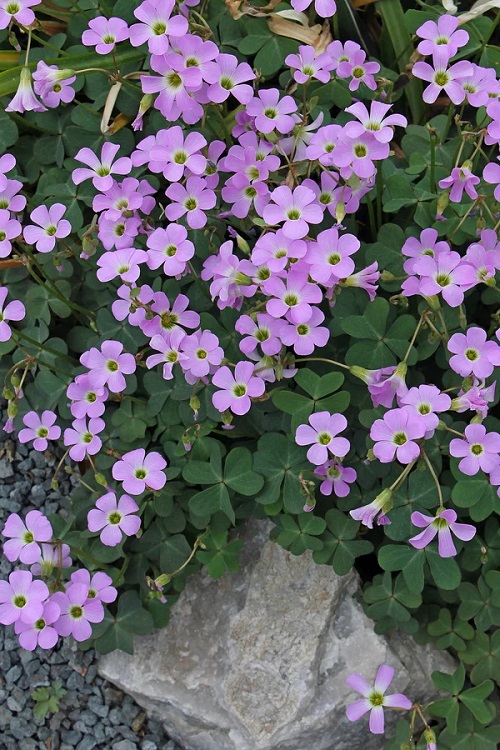
This North American plant is becoming rare in some areas, so growing it in your garden can help support its survival.
You can enjoy its bright pink and purple flowers with green centers from spring through summer. Although each flower is only about half an inch wide, they grow in clusters of up to 19 blooms, creating a colorful display on plants that reach about 16 inches tall.
In many parts of the United States, this is the only naturally occurring Oxalis with violet-colored flowers.
The mounds of bright chartreuse leaves and cheerful purple flowers look especially attractive when you plant them in groups or along garden borders.
10. Pink wood sorrel (O. articulata)
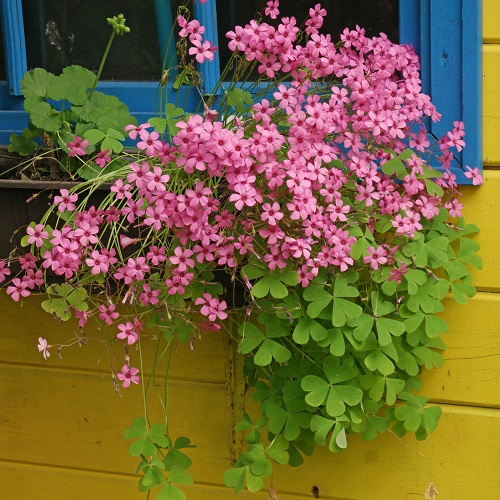
If you want a wood sorrel with plenty of colorful blooms, pink wood sorrel (O. articulata) is a great choice. Its bright pink flowers cover the plant for much of spring and summer. Each flower is about three-quarters of an inch wide, and the large number of blooms creates a beautiful display.
This plant grows to about 10 inches tall, making it an excellent ground cover for sunny or partly shaded areas. It spreads well but usually does not become invasive, although it has naturalized in some parts of California.
You can grow pink wood sorrel in USDA Zones 6 to 11, where it thrives with little care. If you prefer deeper flower colors, look for the rubra subspecies, which produces attractive reddish-pink blooms.
11. Candy Cane Sorrel (O. versicolor)
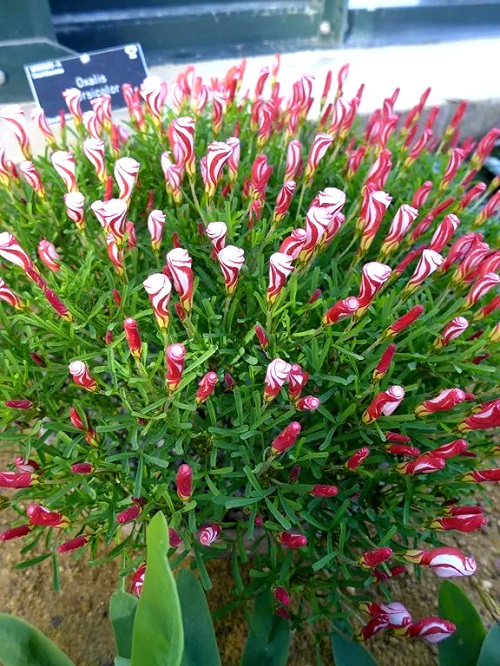
If you want a truly eye-catching wood sorrel, candy cane sorrel (O. versicolor) is a wonderful choice. Its white flowers with bright red stripes look like candy canes, giving the plant its popular name.
Unlike many other Oxalis species, this one has larger, fuller, and more colorful blooms that really stand out in the garden. The flowers appear from late summer and continue blooming until the first frost.
Native to South Africa, candy cane sorrel grows to about 6 inches tall. You can grow it in USDA Zones 7 to 9, where it will come back year after year with its unique and cheerful flowers.
12. Deppei (O. deppei (syn. O. tetraphylla)
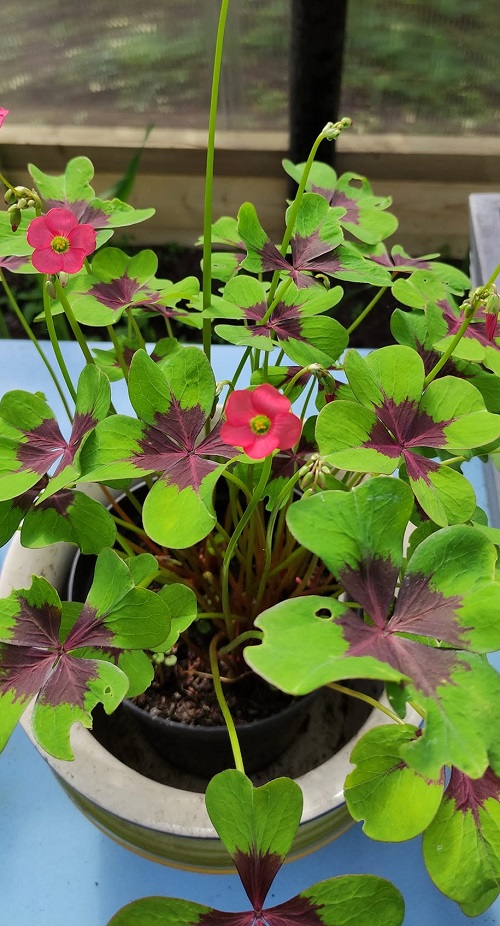
If you want a unique wood sorrel, four-leaf sorrel (O. deppei, also known as O. tetraphylla) is a great option. It is best known for the popular ‘Iron Cross’ cultivar,
This plant is reliable, easy to grow, and taller than many other Oxalis species. It can reach up to 1 foot tall under the right conditions. Since it grows quickly, you may need to keep an eye on it to prevent it from spreading into unwanted areas of your garden.
Grow it as a perennial in USDA Zones 7 to 10 or as an annual in Zones 3 to 7 for a cheerful display of unique foliage and pretty flowers.
13. Tuberosa (O. tuberosa )
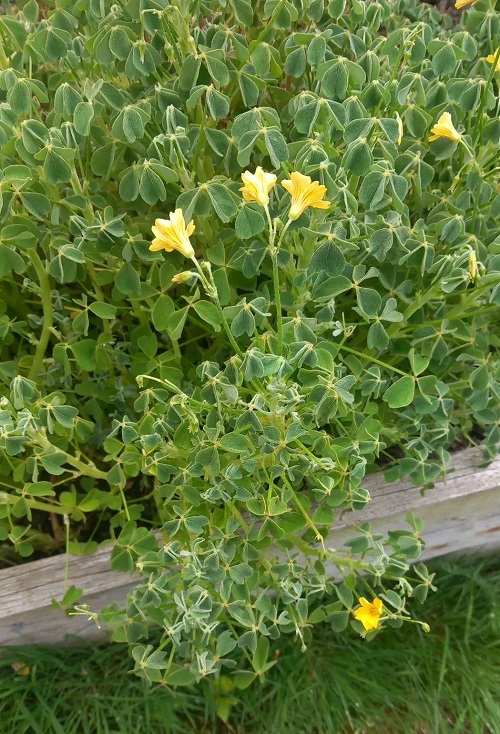
Instead of being grown mainly for its flowers, this species is valued for its tasty underground tubers.
You can find many varieties with yellow, orange, pink, peach, or red tubers. In South America, these tubers are a popular vegetable. If you shop at specialty markets in North America, you may see them sold as “oca.” In New Zealand, they are commonly called yams.
You can enjoy the tubers both raw and cooked. When cooked, they have a creamy, potato-like flavor with a slight tang. Raw tubers are crisp and have a fresh, citrusy taste.
You can grow O. tuberosa in USDA Zones 6 to 9, especially in areas with cool summers. Depending on the variety, the plants grow between 12 and 24 inches tall.