
As an Amazon Associate, we earn a small commission from qualifying purchases — at no extra cost to you.
Avoid the Common Mistakes That Make Pink Princess Philodendron Lose Pink color and fix this issue to keep its bright variegation.
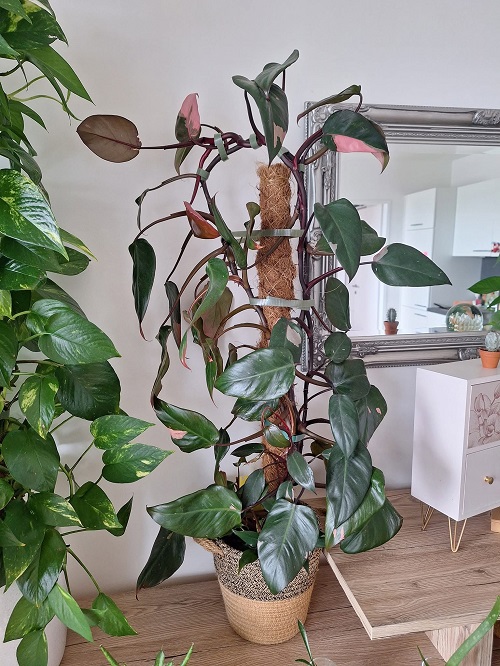
Is your Pink Princess Philodendron losing its beautiful pink color? Small care mistakes can cause new leaves to turn mostly green and reduce variegation. From poor lighting to incorrect watering, several factors can affect its appearance. Here are the most common mistakes that make Pink Princess Philodendron lose pink and how to avoid them.
Common Mistakes That Make Pink Princess Philodendron Lose Pink
1. Major Mistake: Keeping It in Low Light
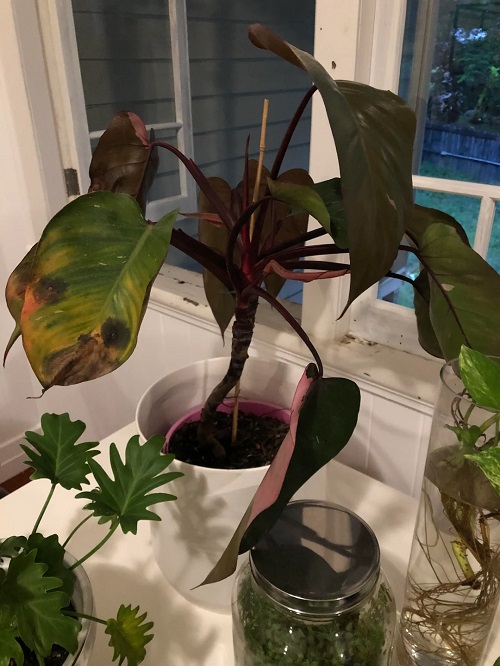
The biggest reason a Pink Princess Philodendron loses its pink color is poor lighting. This plant needs bright, indirect light to maintain healthy variegation. When it does not get enough light, it produces more green chlorophyll to make food, and the pink sections become smaller.
To get more pink on you pink princess philodendron, place your plant near an east-facing window or a few feet away from a south or west-facing window with a sheer curtain. It should receive about 8 to 10 hours of bright indirect light every day. Avoid direct afternoon sun because it can burn the pink areas. If natural light is limited, use a grow light for 10 to 12 hours daily.
2. Ignoring the Stem Color
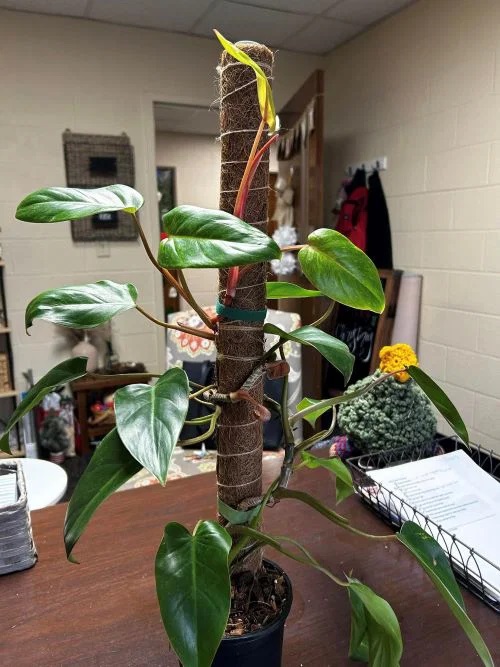
Many people only look at the leaves, but the stem can tell you what future growth will look like. A stem with green and pink stripes has a better chance of producing variegated leaves. A completely green stem often produces mostly green foliage.
Watch the stems as your plant grows. If one section becomes fully green, prune it back to a node with visible pink markings. This encourages healthier and more colorful growth over time.
3. Allowing Green Leaves to Take Over
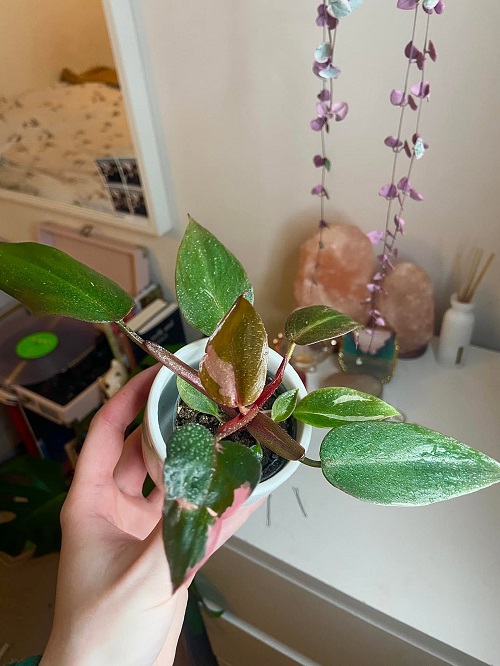
Green leaves contain more chlorophyll and make food faster than pink leaves. If all-green shoots are left on the plant, they often grow more quickly and dominate the entire vine.
Inspect your Pink Princess every few weeks. Trim back stems that produce several all-green leaves in a row. Do not remove healthy variegated growth. Regular pruning helps maintain a better balance between pink and green.
4. Giving Too Much Direct Sun
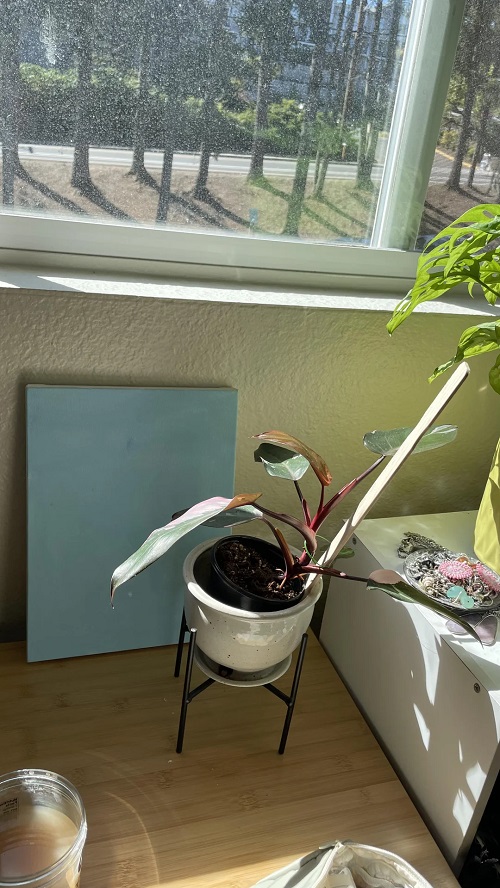
Bright light is important, but strong direct sunlight can damage the delicate pink sections. The pink tissue lacks chlorophyll and burns more easily than green parts.
Keep your plant in filtered sunlight. Morning sun for one or two hours is usually safe. Avoid strong afternoon sunlight, especially during summer. If the leaves develop dry brown spots, move the plant to a location with softer light.
5. Overwatering the Roots
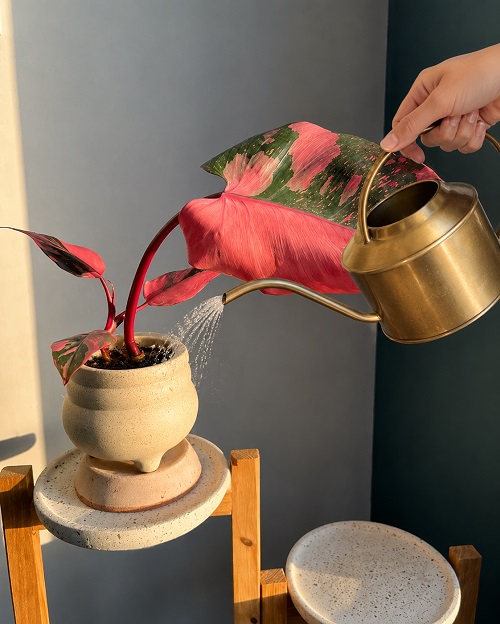
Wet soil can damage the roots and reduce healthy growth. A stressed plant often produces smaller and greener leaves instead of attractive variegation. Root rot can also become a serious problem.
Water when the top 2 inches of soil feel dry. Most indoor plants need water every 7 to 10 days during active growth. In cooler months, watering every 10 to 14 days is often enough. Always empty excess water from the saucer.
6. Feeding Too Much Fertilizer
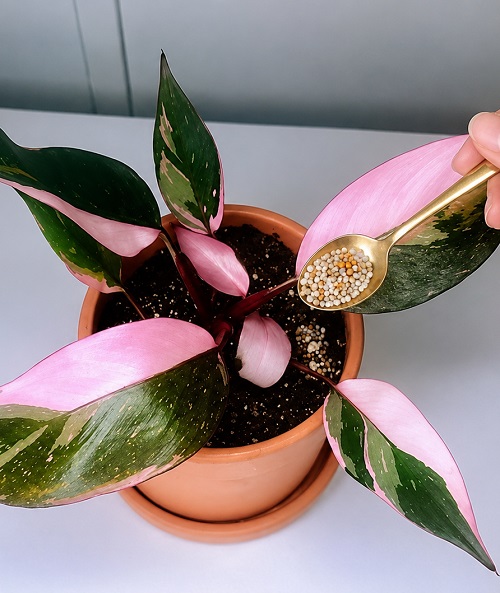
Many people believe extra fertilizer will increase pink variegation, but too much feeding can damage the roots. Excess nutrients create stress and may reduce the quality of new growth.
Use a balanced fertilizer with a 10-10-10 or 20-20-20 ratio. Apply it at half strength every 4 to 6 weeks during spring and summer. Stop fertilizing during winter when growth naturally slows down.
7. Unstable Temperature
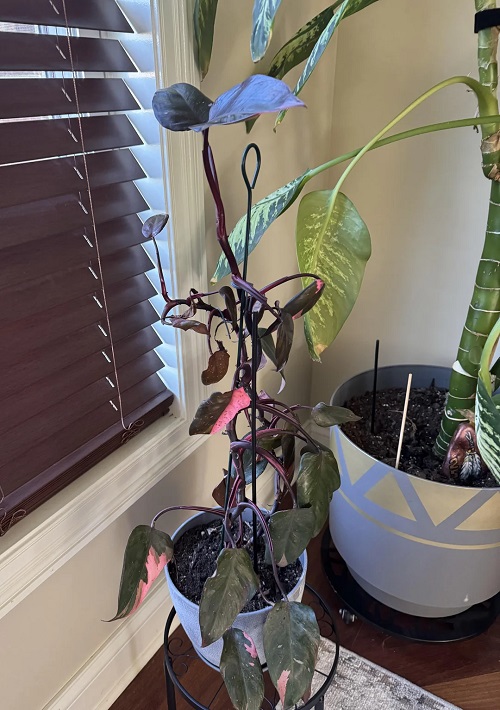
The beautiful pink color of a Pink Princess Philodendron comes from natural plant pigments called anthocyanins. These pigments give the leaves their pink and reddish shades. When the plant experiences sudden temperature changes, anthocyanin production may not develop properly, and new leaves can appear less vibrant or have more green than pink.
Keep your Pink Princess at a steady temperature between 65 and 85°F (18 to 29°C). Avoid placing it near drafty windows, air conditioners, heaters, or radiators where temperatures change quickly. Stable growing conditions help the plant produce healthy leaves with stronger pink coloration. A soil moisture meter with a temperature sensor can also help you monitor the plant’s environment and avoid unnecessary stress.
8. Expecting Every Leaf to Be Bright Pink
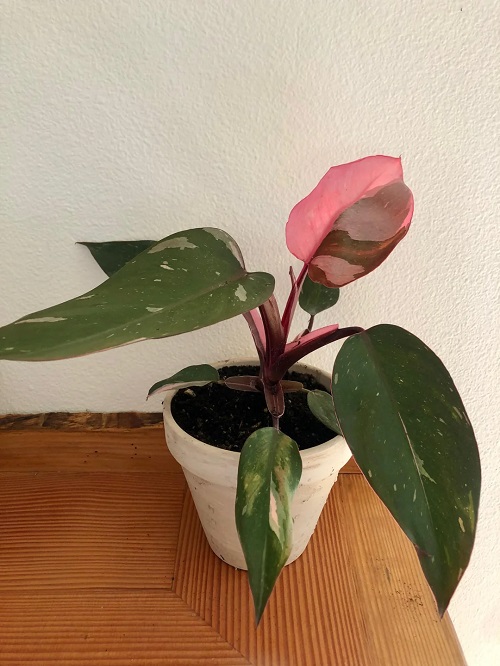
Variegation is partly controlled by genetics. Even a healthy Pink Princess will not produce identical leaves. Some leaves may have large pink patches, while others are mostly green.
Do not worry if one or two leaves have less color. Focus on providing stable care and healthy growing conditions. Good maintenance increases the chances of balanced variegation over time.
9. Repotting Too Often
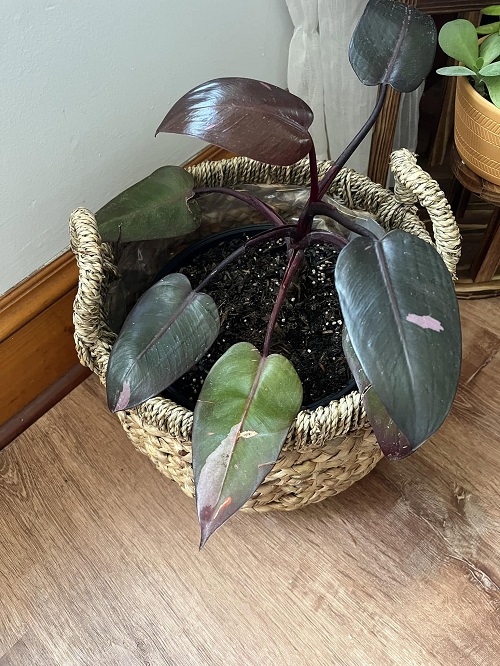
Frequent repotting disturbs the roots and forces the plant to recover from stress. During this period, growth may slow and leaf quality can decline.
Repot only when roots fill the container or grow through drainage holes. Choose a pot that is just 1 to 2 inches larger than the old one. Spring is the best season for repotting.
10. Letting the Plant Grow Bigger on a Moss Pole
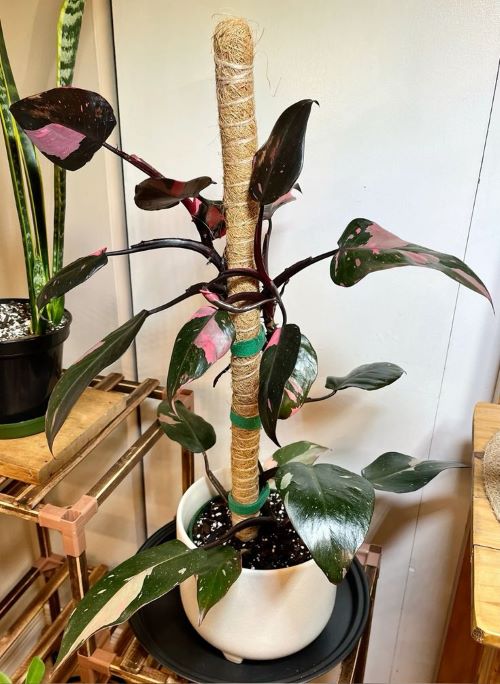
A moss pole helps a Pink Princess Philodendron climb and grow larger leaves. However, as the plant gets older and taller, it may produce bigger leaves with more green and less pink. The plant naturally focuses on growing faster.
If your Pink Princess has become tall and mostly green, trim the long vine and propagate the healthy top section. Many gardeners find that new growth from younger stems often has better pink variegation. A simple trick is to look for the more pink leaf your plant has grown recently and prune just above the node connected to that colorful section. This can help preserve and encourage better variegation.