
As an Amazon Associate, we earn a small commission from qualifying purchases — at no extra cost to you.
Are your orchid leaves turning yellow or limp? Find the cause, fix the problem, and help your plant grow healthy, vibrant leaves again.
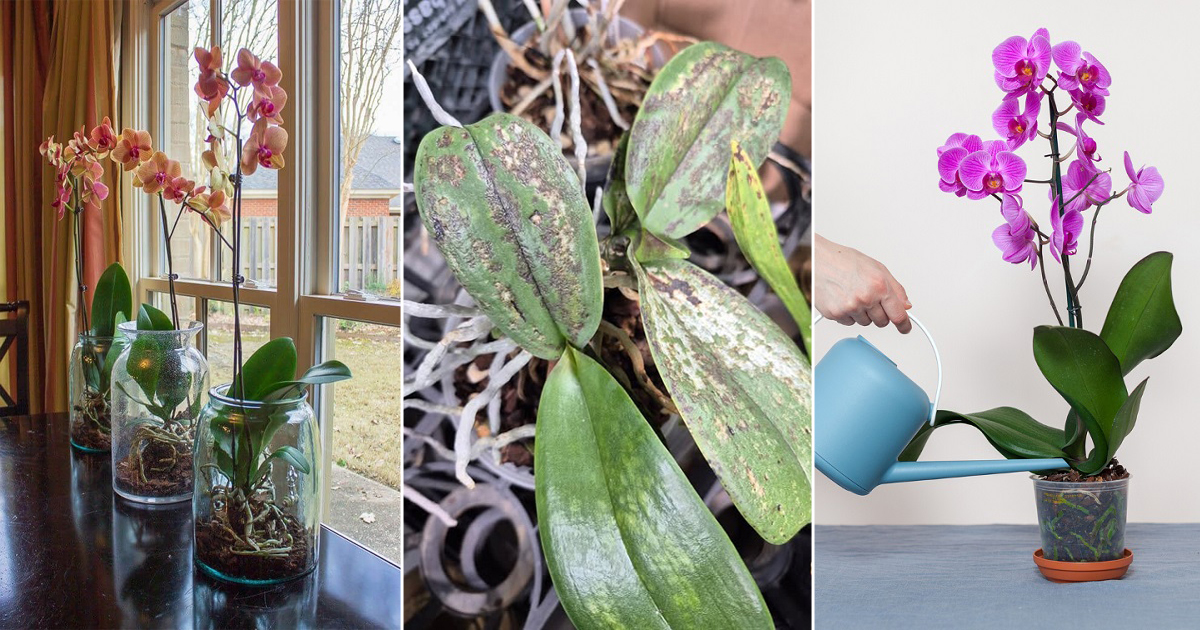
Orchid leaves are pretty good at telling you when something isn’t right. You might notice a yellow leaf one morning, brown patches a few days later, or leaves that suddenly look soft and wrinkled. It can be tempting to change the watering, move the plant, and add fertilizer all at once, but that usually makes things harder to figure out.
Instead, take a close look at the leaves first. The color, texture, and location of the damage can give you a useful clue about what your orchid needs.
Here are some of the most Common Orchid Leaf Problems and How to Fix Them.
Common Orchid Leaf Problems and How to Fix Them
Want to build the perfect indoor plant setup? Check out this indoor gardening system that serious plant lovers swear by. You can also check our Amazon Storefront for all such gardening needs.
1. Yellow Orchid Leaves
Not every yellow leaf means your orchid is in trouble.
If an older leaf near the bottom of the plant gradually turns yellow and drops, the orchid may simply be getting rid of an old leaf. You don’t need to panic over that.
It’s different when several leaves start turning yellow, especially newer ones. Too much direct sunlight, overwatering, poor drainage, or a problem with the roots can all cause yellowing.
Start by checking the potting mix. If it stays wet for days, the roots may not be getting enough air. Orchids generally do better when excess water can drain away freely.
If the plant sits in strong afternoon sun, move it somewhere with bright, indirect light. Don’t make several changes at once. Give the orchid some time and see whether new growth looks healthier.
Check out this potting mix filled with nutrients that all your plants need.
2. Brown Leaves and Tips
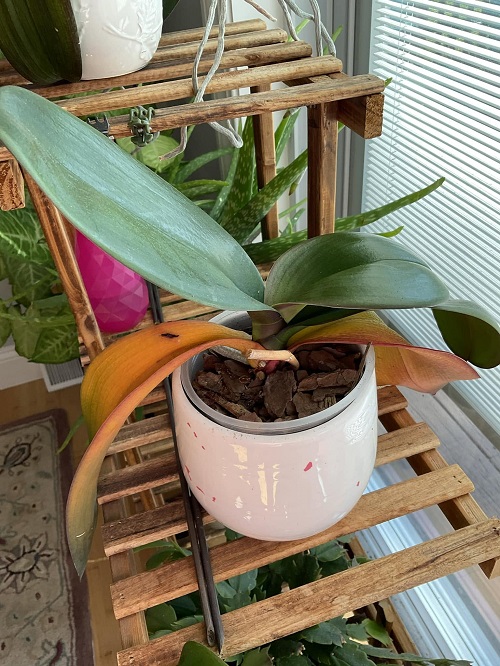
Brown leaf tips are another common complaint.
Dry air, inconsistent watering, too much fertilizer, and strong sunlight can all play a part. A leaf that has been exposed to intense direct sun may also develop a brown, dry-looking patch.
Look at where the browning is happening. If only the tips are dry while the rest of the leaf looks healthy, environmental stress may be involved. If you see larger brown patches, especially areas that look soft or damaged, take a closer look for disease or root problems.
Trim completely dead or damaged sections only if necessary, and use clean scissors. More importantly, correct the cause instead of simply cutting away the damaged tissue.
Use this sharp pair of scissors for all the trimming in your outdoor or indoor garden.
3. Spots on Orchid Leaves
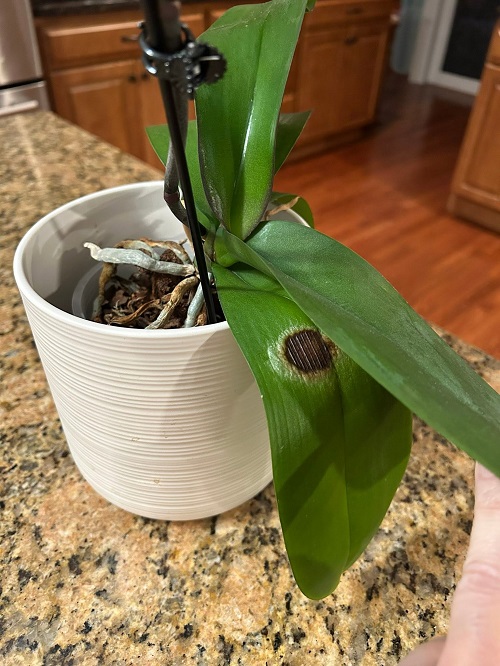
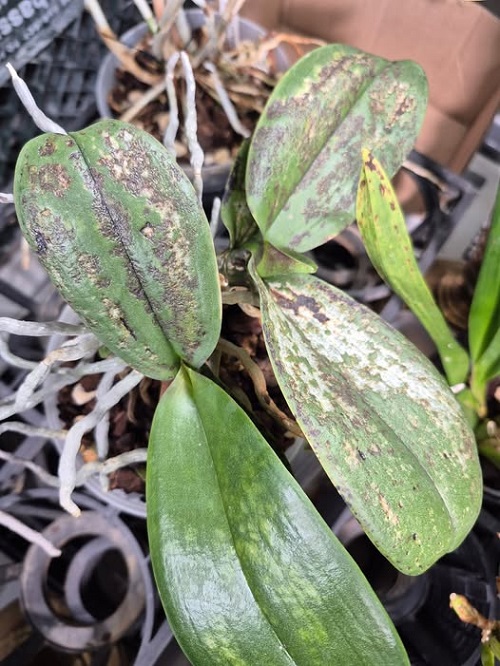
Spots deserve a closer look because their appearance can tell you quite a bit.
Small marks can sometimes come from pests, while spreading dark or discolored patches may be linked to fungal or bacterial problems. Sun damage can also leave pale, yellow, brown, or bleached areas on the leaf.
Don’t immediately treat every spot as a disease.
Check whether the spots are dry or soft, whether they’re spreading, and whether the surrounding leaf tissue is changing. Also look underneath the leaves and around the leaf joints for insects.
If you suspect a disease, keep the affected orchid away from your other plants until you know what’s causing the problem. Good airflow and avoiding water sitting on the leaves can also help reduce the conditions that encourage some diseases.
This organic neem oil can be used to effectively kill the pests on your plants.
4. Wrinkled Orchid Leaves
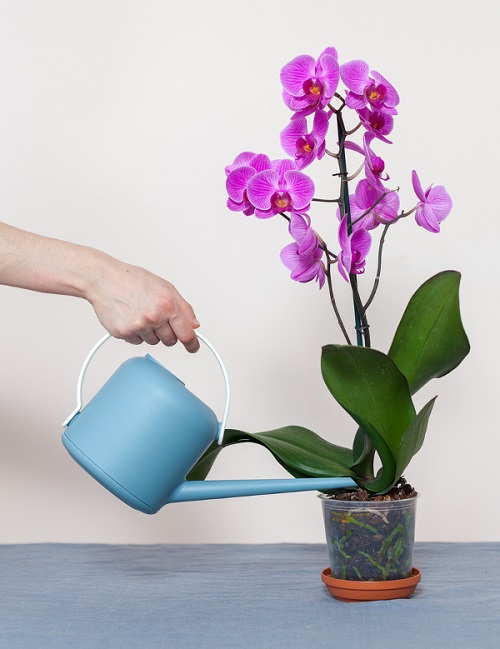
Healthy orchid leaves should feel fairly firm. When they start looking folded, puckered, or deeply wrinkled, the plant may not be getting enough moisture.
Underwatering is an obvious possibility, but don’t assume that’s always the answer.
Damaged roots can’t take up water properly either. An orchid can sit in wet potting material and still become dehydrated if too many roots have rotted.
Take the plant out of its decorative cover if necessary and check the potting mix and roots. Healthy roots are generally firm, while severely damaged roots may be mushy, hollow, or brown.
If the roots are healthy and the potting mix has become extremely dry, water the orchid thoroughly and allow the excess to drain away.
This watering can is perfect as it’s easy to handle and holds just the right amount of water.
5. Drooping Leaves
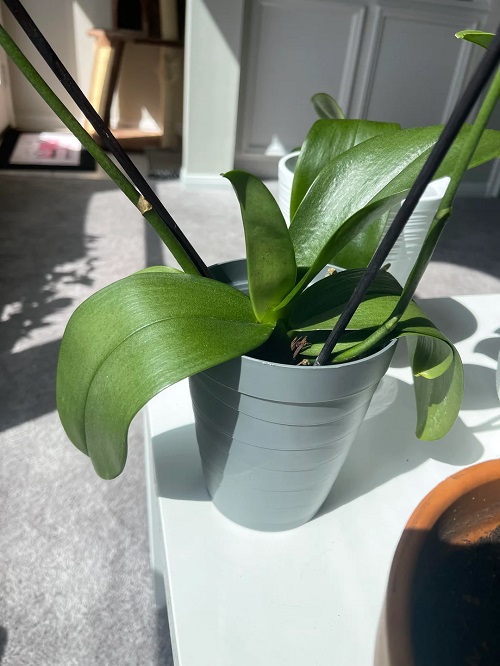
Drooping leaves can look alarming, but the reason isn’t always serious.
A thirsty orchid may have soft, limp leaves. Root damage can produce a similar appearance because the plant can’t take up enough water. Sudden temperature changes can also cause stress.
Check the roots and potting mix before watering again. If the mix is already wet, adding more water won’t solve the problem and could make root damage worse.
Also think about recent changes. Did you move the orchid? Did it sit near an air conditioner, heater, or drafty window? Even a healthy plant can react to a sudden change in its surroundings.
6. Curling Leaves
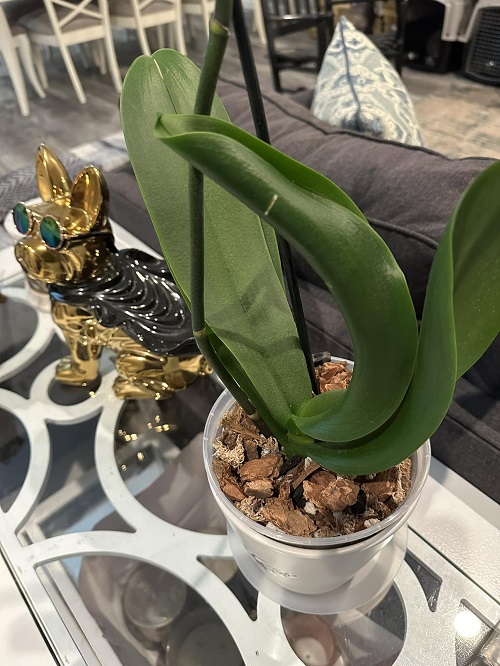
Leaves that curl inward or downward may be reacting to stress.
Heat, strong light, low humidity, underwatering, and pests are all possibilities. Sap-sucking insects can be particularly troublesome because they take moisture and nutrients directly from the plant.
Inspect both sides of the leaves. Look for tiny insects, webbing, sticky residue, or other unusual marks.
If the orchid is sitting in harsh sunlight, move it to brighter filtered light rather than putting it somewhere completely dark. If the air is very dry, improving the humidity around the plant may help, but avoid keeping the leaves constantly wet.
Do not forget to get a humidifier that gives your plants the correct environment required for growth.
7. Orchid Leaves Falling Off
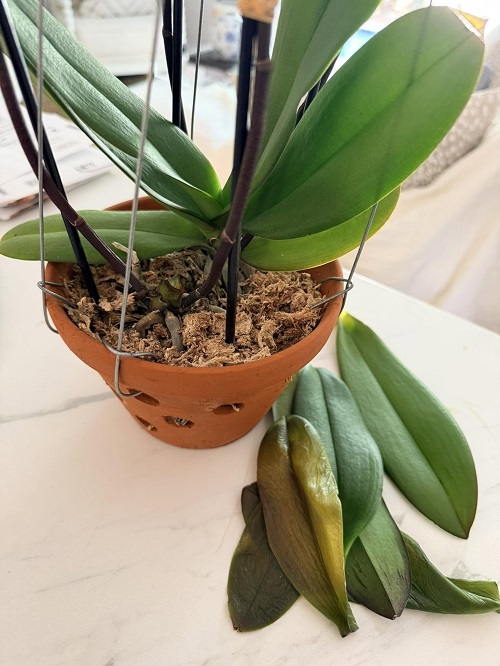
An orchid occasionally losing an old leaf isn’t necessarily a problem. Older leaves naturally have a limited lifespan.
Sudden leaf loss is another matter.
If several leaves drop within a short period, check the roots and growing conditions. Overwatering and root rot are common things to investigate. Cold temperatures, sudden environmental changes, pests, and disease can also cause serious stress.
Pay attention to the leaves that remain. If they are soft, yellowing, or showing dark areas, don’t focus only on the fallen leaves. The plant is giving you information about what’s happening overall.
8. Sunburned Orchid Leaves
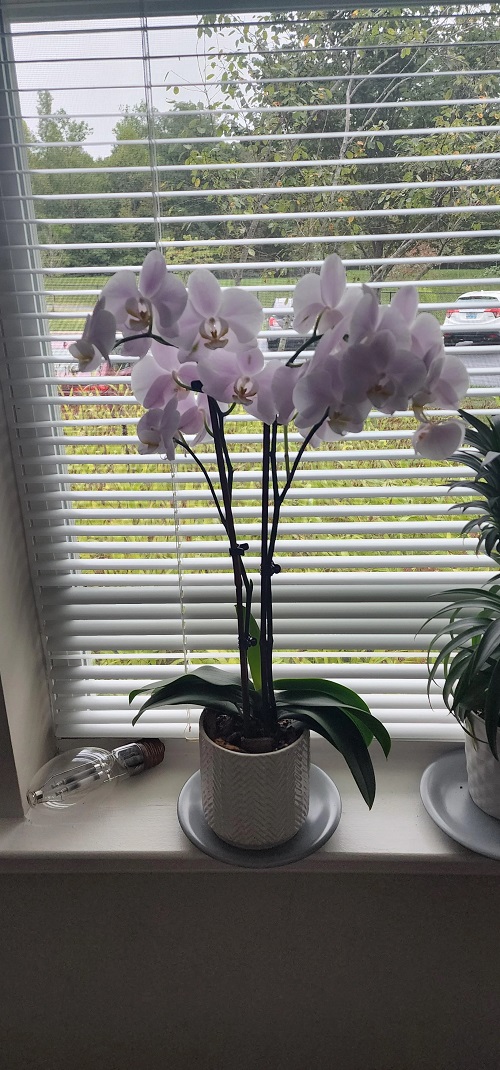
Orchids need light, but that doesn’t mean they want hours of strong, direct sun.
Sunburn usually appears as a pale, yellow, brown, or bleached patch on the part of the leaf that receives the most intense light. The damaged area won’t turn green again.
Move the orchid to a spot with bright, indirect light. A sheer curtain can soften sunlight coming through a bright window.
There’s no need to remove a mostly healthy leaf just because it has a sunburned patch. The undamaged portion can continue working for the plant.
These filter curtains let in natural light for your plants.
9. Sticky Orchid Leaves
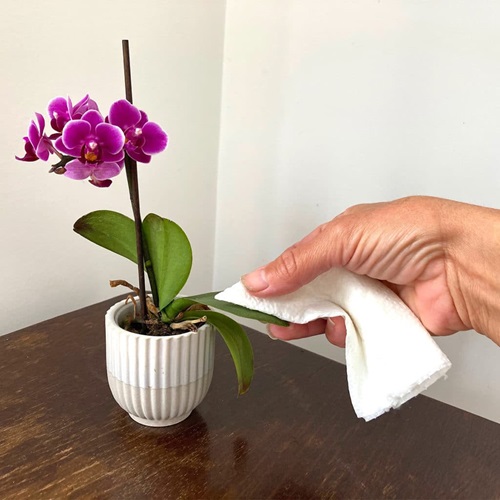
Sticky leaves can be a little confusing. Sometimes the sticky substance is simply nectar produced by the orchid, especially around flower stems.
But sticky residue can also be associated with pests such as aphids, scale, or mealybugs.
Check the leaves carefully, particularly underneath and around the joints. Look for small bumps, cottony material, insects, or other signs of infestation.
If you find pests, isolate the orchid from nearby plants and deal with the infestation promptly. Cleaning the leaves can remove some of the residue, but you’ll also need to address the insects themselves.
10. Don’t Forget to Check the Roots
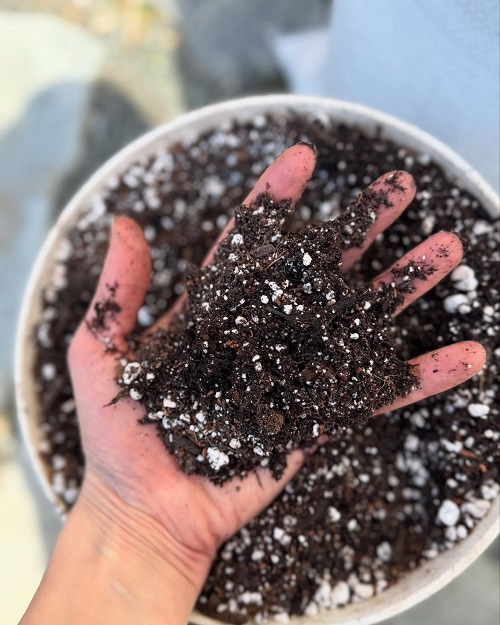
When orchid leaves look unhealthy, it’s easy to concentrate entirely on what you can see. Sometimes the real problem is underneath the pot.
Roots that stay wet for too long can deteriorate. On the other hand, roots that have become severely dry may struggle to take up enough water.
If the leaves are repeatedly wrinkled, yellowing, or drooping despite reasonable care, check the roots. Make sure the orchid is growing in a suitable, well-draining orchid mix and that the container has drainage holes.
It’s much easier to fix a care problem when you catch it early.
Check out these clay pots that come with drainage holes in the bottom.
How to Keep Orchid Leaves Healthy
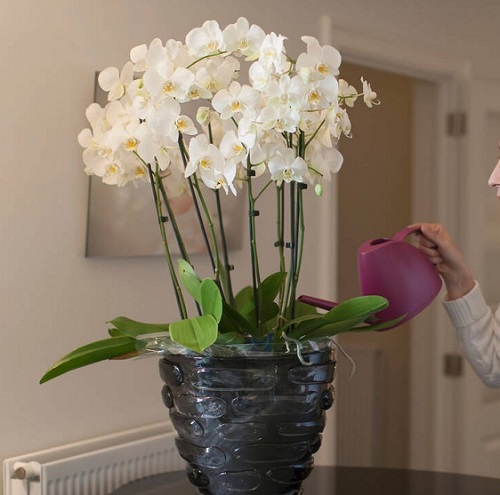
You don’t need a complicated routine to keep orchid leaves looking good. Start with the basics.
Give your orchid plenty of bright, indirect light. Water according to the condition of the potting mix and roots rather than following a strict calendar. Let excess water drain away, and don’t leave the pot sitting in water.
Keep an eye on humidity, temperature, and airflow too. Orchids generally appreciate stable conditions rather than sudden swings.
Most importantly, get into the habit of looking at your plant. Check the leaves when you water it. Turn them over occasionally and look at the roots when you repot. Small changes are much easier to deal with before they become a bigger problem.
Read this trusted guide that covers planting, pruning, feeding, pest control, and seasonal care with easy-to-follow advice for beginners and experienced gardeners alike.