
As an Amazon Associate, we earn a small commission from qualifying purchases — at no extra cost to you.
Want an easy fall garden? Try Fall Flowers That Thrive Beautifully With Little Effort for beautiful blooms without constant care.
We all like plants that are easy to care for, especially when they keep the garden looking good in fall. By this time, many summer flowers are fading, so a few fall-blooming perennials can bring fresh color back to the garden. With the right plants, you can enjoy flowers until the first hard freeze without spending hours on garden care. These Easy Fall Flowers That Thrive Beautifully With Little Effort they usually need less water, fertilizer, and trimming. If you want an easy fall garden, you can plant these perennials in spring or early fall. When planting in fall, give them about four to six weeks before the first hard frost. This gives the roots enough time to settle in before winter.
These flowers can also help pollinators late in the season. Monarch butterflies and hummingbirds need food and energy during migration, while bees are still looking for the last sources of nectar and pollen before winter.
Fall Flowers That Thrive Beautifully With Little Effort
Ready to create your own Fall Flower garden? Get the complete setup here and start styling your plants today. Also, give a glance at our Amazon storefront for more gardening supplies.
Tall Sedum
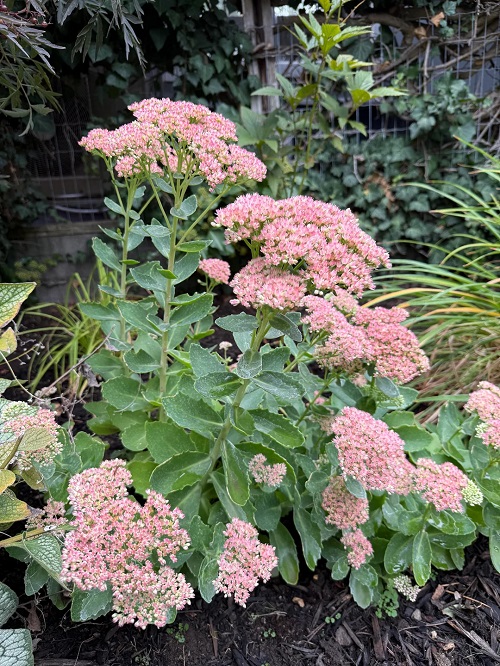
Succulent sedums, also called *Hylotelephium*, are very easy to grow. Popular varieties include ‘Autumn Joy’ and ‘Autumn Fire’. They can handle a little neglect as long as the soil drains well. These perennials prefer full sun and hot, dry conditions and grow well in USDA Zones 3–9.
Sedums are also useful for pollinators. Their clusters of small, star-shaped flowers can be pink, white, yellow, or red. They usually start blooming in late summer and continue through fall. You can leave the dried flowers on the plants after blooming. They add some interest to the garden during winter.
Depending on the variety, the foliage may be gray-green, maroon, bluish, or variegated. The plants usually grow about 12 to 24 inches tall. Sedums work well in perennial borders, rock gardens, pollinator gardens, and containers.
‘Autumn Joy’ is a popular choice and looks good when planted with ornamental grasses or other perennials.
Mexican Sage
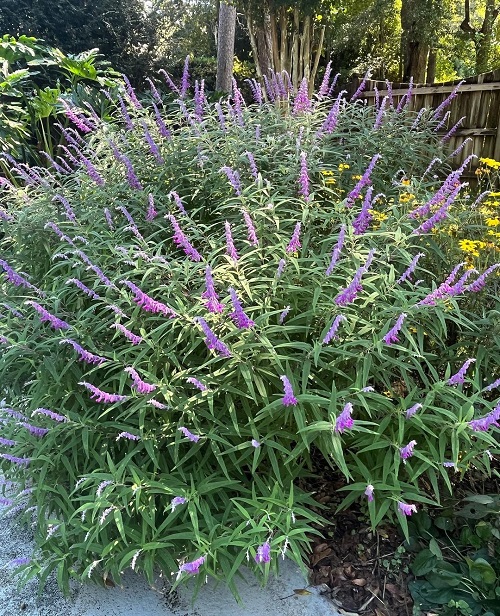
Mexican sage (*Salvia leucantha*) is a good choice if you want fall color and a late-season food source for pollinators. Its flowers are especially popular with butterflies and hummingbirds. It is hardy in USDA Zones 7–11.
The plant produces long flower spikes covered with soft purple blooms and small white parts. The foliage is soft and greenish-silver, which adds contrast to the flowers. If you live in a colder zone, you can grow Mexican sage as an annual in a container.
Mexican sage works well in pollinator gardens, butterfly gardens, cottage gardens, and flower borders. Plant it in full sun with rich, moist, well-drained soil. Once established, it can handle some dry conditions. The plant usually grows about 2 to 3 feet tall and wide.
‘All Purple’ has completely purple flowers, while ‘Danielle’s Dream’ produces pink and white flowers. ‘White Mischief’ has white flowers.
New plants need regular watering while they establish. A longer, durable garden hose can make watering fall beds much less of a chore. See popular options here.
Aromatic Aster
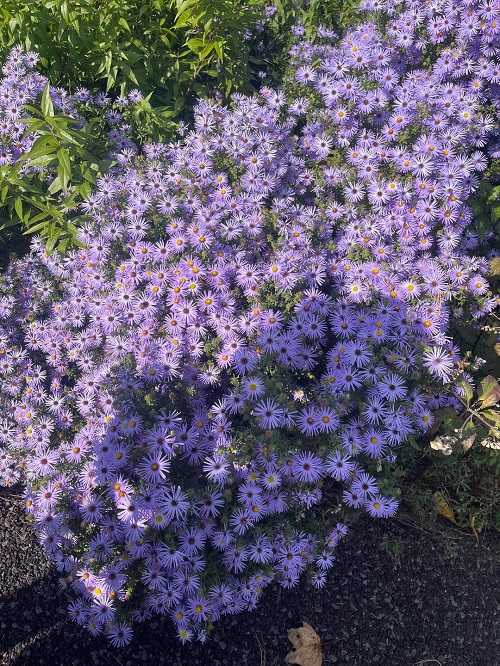
Aromatic aster (*Symphyotrichum oblongifolium*) is a North American native perennial that handles dry conditions well and attracts many pollinators. It produces daisy-like flowers in shades of blue and violet and can keep your garden colorful into late fall.
‘Raydon’s Favorite’ blooms later in the season and produces many violet-blue flowers. ‘October Skies’ starts blooming a little earlier and has light blue flowers. Growing both varieties can give you blooms throughout much of fall. ‘October Skies’ grows to about 2 feet tall, while ‘Raydon’s Favorite’ can reach about 3 feet.
Plant aromatic aster in full sun and well-drained soil. It grows well in USDA Zones 4–8. If local garden centers do not carry it, check online native plant or wildflower nurseries for these varieties.
New England Aster
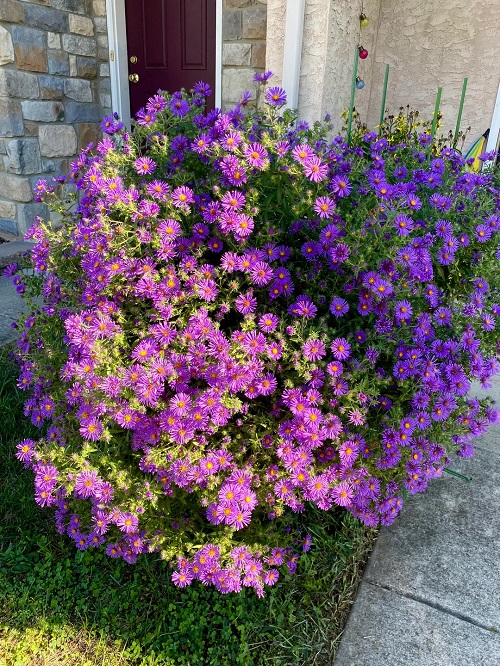
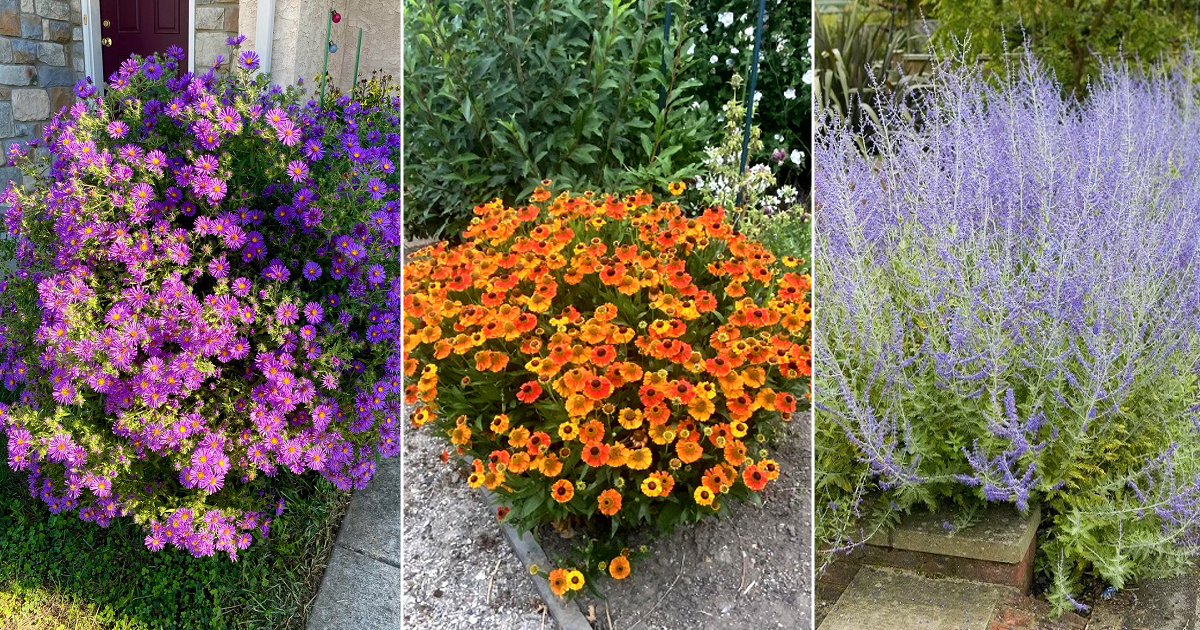
New England asters (*Aster novae-angliae*) bloom in fall and add color to the garden when many other flowers are finishing. Their blooms provide nectar for insects, while their seeds give food to songbirds. Asters are also host plants for pearly crescent butterfly caterpillars.
You can find many native asters and cultivated varieties. They work well in containers, flower borders, rain gardens, and pollinator gardens.
‘Purple Dome’ is a popular variety with purple flowers. It grows about 2 to 3 feet tall. ‘Grape Crush’ has dark purple flowers and a more compact shape. It grows up to about 30 inches tall and usually blooms a little earlier than ‘Purple Dome’.
Asters are easy to care for. Plant them in full sun to partial sun and moist, well-drained soil. They usually settle in better when planted in spring and are hardy in USDA Zones 4–8.
The asters sold in stores alongside potted mums are often treated as annuals. They can give you plenty of fall color, but many of these plants do not survive and return the following spring.
Doing fall planting and cleanup can mean a lot of kneeling. A garden kneeler that doubles as a seat gives you a little more comfort while you work through the beds.
Russian Sage
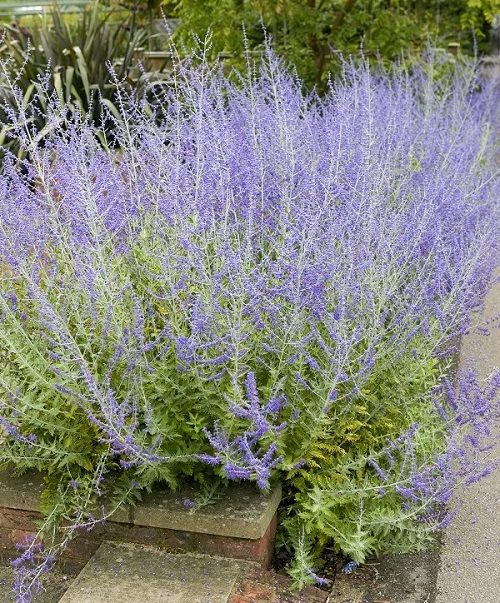
Russian sage (Salvia yangii) is an upright perennial with fragrant, silvery foliage and tall spikes of lavender-blue flowers. It usually grows 2 to 4 feet tall and starts blooming in summer, with flowers continuing into fall.
It works well in flower borders, cottage gardens, drought-tolerant gardens, and along walkways. Deer and rabbits usually stay away from it because the foliage has a strong scent and bitter taste. At the same time, the flowers attract bees, butterflies, and hummingbirds.
Russian sage is native to Asia. Plant it in full sun and well-drained soil. It grows well in USDA Zones 5–9. Leave the foliage in place through winter, then cut the plant back to about 12 inches in spring.
‘Blue Spire’ and ‘Denim ‘n Lace’ are popular varieties. If you want a smaller plant, ‘Little Spire’ is a shorter and more compact option.
Helen’s Flower
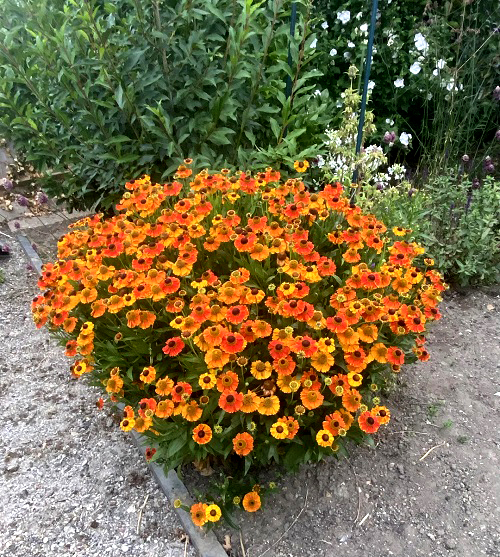
Helen’s flower (*Helenium autumnale*) is a North American native perennial that blooms in late summer and fall. It produces daisy-like flowers with rounded centers. The flowers are usually yellow, but hybrid varieties also come in shades of gold, orange, red, copper, and mixed colors. Bees, butterflies, and other pollinators often visit the flowers, making helen’s flower a useful late-season plant for wildlife.
It grows best in full sun and moist to average soil. It is hardy in USDA Zones 3–9. Depending on the variety, the plant can grow about 2 to 5 feet tall.
Remove faded flowers regularly to encourage more blooms. Helen’s flower works well in mixed flower beds, borders, rain gardens, cottage gardens, and meadows. Deer and rabbits usually avoid it because of its bitter foliage. The leaves can also irritate the skin in some people, so it is better to wear gloves when handling the plant.
‘El Dorado’ has yellow flowers with red streaks, while ‘Mardi Gras’ produces orange flowers with yellow and red coloring. ‘Hot Lava’ has bright orange-red flowers.
Planting several fall perennials means moving soil, pots, compost, and garden tools around the yard. A sturdy garden cart can save you repeated trips.
Bluebeard
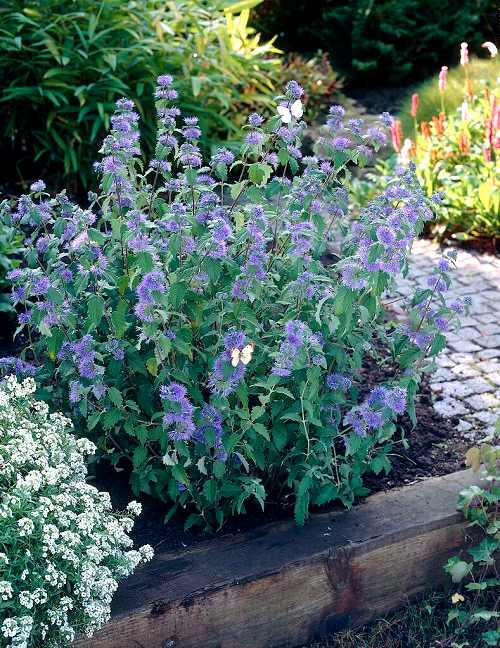
Bluebeard (Caryopteris) is a late-summer and fall bloomer that brings color to the garden when many summer flowers are fading. Its blue, purple, pink, or white flowers grow in clusters along the stems and attract butterflies, bees, and hummingbirds. Deer and rabbits usually leave it alone.
Bluebeard is also called blue mist. Depending on the variety, it can grow from about 3 to 13 feet tall. In colder parts of USDA Zones 5–9, it often dies back to the ground in winter and grows again the following spring. Most hybrid varieties stay much shorter.
The foliage can be silvery green, yellow, dark green, or variegated. Plant bluebeard in full sun and well-drained, sandy loam soil. Once established, it handles dry conditions well.
‘Blue Empire’ produces large violet-blue flowers and performs well in hot, humid weather. ‘Dark Knight’ is another fragrant variety with deep blue flowers. Bluebeard works well in borders, hedges, mass plantings, xeriscape gardens, and containers.
Want more ideas for building a garden that supports pollinators? Plant This, Not That covers native plant choices and swaps that can help you plan a more wildlife-friendly garden.