
As an Amazon Associate, we earn a small commission from qualifying purchases — at no extra cost to you.
Noticing yellow leaves on your houseplants this fall? Learn the common causes and fixes to stop the damage and help your plants recover.
If your houseplant leaves are turning yellow this fall, it may be a sign that something is wrong with its care. As the days get shorter and sunlight becomes weaker in fall, most houseplants grow more slowly and need less water. If you continue watering them as often as you did in summer, the soil may stay wet for too long. This can cause root rot and lead to more yellow leaves. Pay attention when you notice the first yellow leaf. A few simple changes to your plant care routine can help stop the problem and keep your houseplant healthy.
Not changing your watering routine with the seasons is one of the most common mistakes plant owners make. Unfortunately, too much water can cause root rot, which can be fatal if you don’t catch it in time. The soil may stay wet for weeks before you notice any signs of trouble. By then, the roots may already be damaged, and the leaves start turning yellow. This is why yellow leaves often appear in November. If you spot one, check your plant and make a few changes before the problem gets worse.
You’re in the right place to learn how to deal with this seasonal plant problem. Let’s look at what causes houseplant leaves to turn yellow and how you can fix it. With a few simple changes, you may be able to save your plant and help it grow healthy again.
Triage: Take a Closer Look at the Yellow Leaf
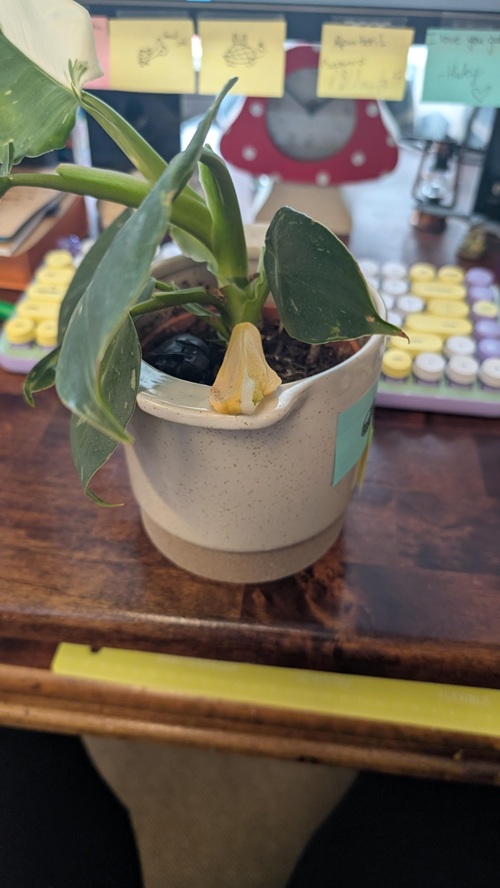
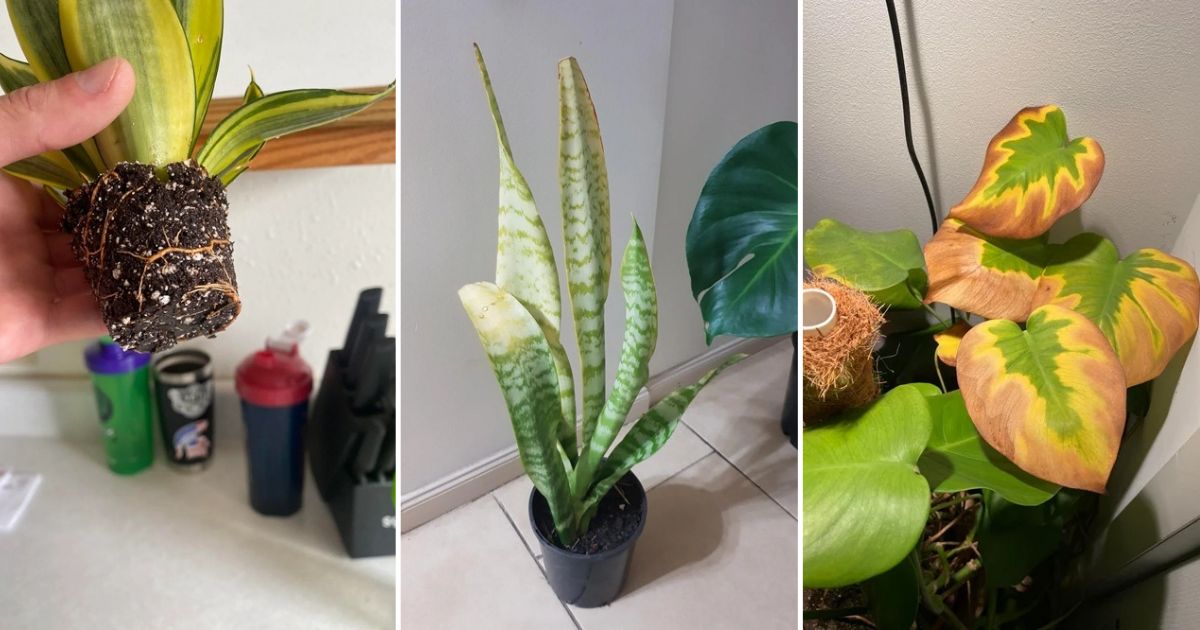
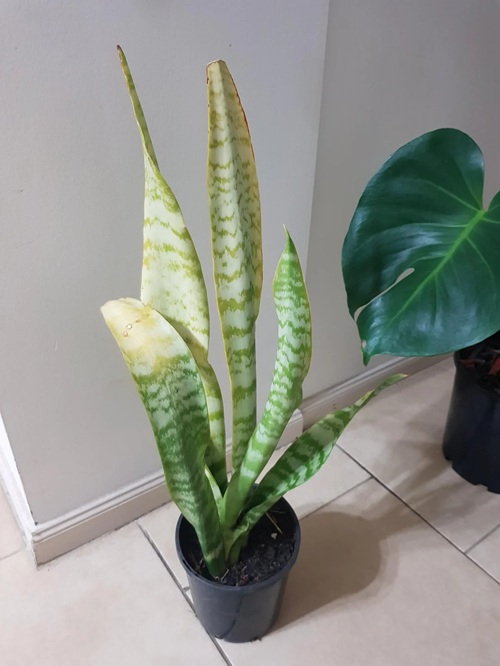
Look closely at the yellowing leaf. Check its color, shape, position, and how much of the leaf has changed. Different houseplants show early signs of root rot in different ways. A Monstera may develop a yellow ring around part of a large leaf, while a ZZ plant leaf may turn completely yellow from top to bottom. Peperomia leaves often fade to a pale yellow, while snake plant leaves may turn yellow and look slightly transparent near the base. Pay attention to these changes and consider which plant you have. This can help you work out whether overwatering is causing the yellow leaves.
Diagnosis: Signs That Overwatering Is the Problem
Compare your plant’s symptoms with the signs listed below. If they match, overwatering may be the cause of the yellow leaves.
Large-Leafed Tropical Plants Develop Yellow Rings on Leaves
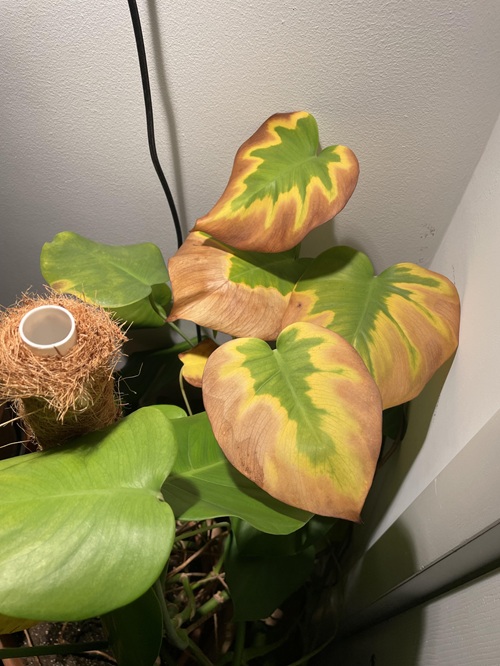
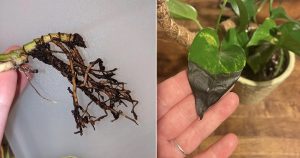
Large-leafed tropical plants like Monstera, Calathea, Anthurium, and Philodendron often develop a bright yellow ring around a dark spot when they get too much water. This can happen when the roots start to rot in wet soil. Fungi and bacteria in the potting mix can then spread into the plant and reach the leaves. The damaged leaf tissue turns brown or black, while the yellow area around it shows where the plant is trying to stop the damage from spreading.
Houseplants That Grow from Rhizomes Develop Bright Yellow Stems
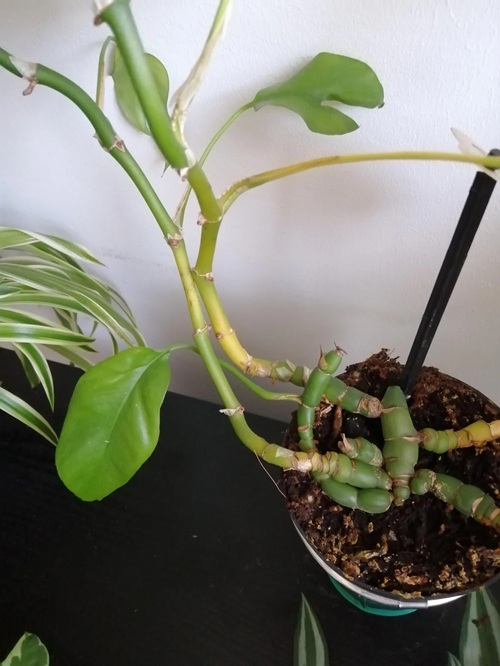
ZZ plants (Zamioculcas zamiifolia), caladiums, and elephant ears (Alocasia and Colocasia) grow from thick, potato-like roots called rhizomes or tubers. These parts store water, so the plants may take longer to show signs of overwatering. However, when root rot starts, the damage can happen quickly. Too much water damages the roots and stops them from sending enough nutrients to the stems and leaves. As a result, an entire stem may turn bright yellow, starting at the base and spreading to the top. The leaves on that stem may also lose their green color.
Grass-Like Houseplants Develop Brown Tips with Yellow Areas
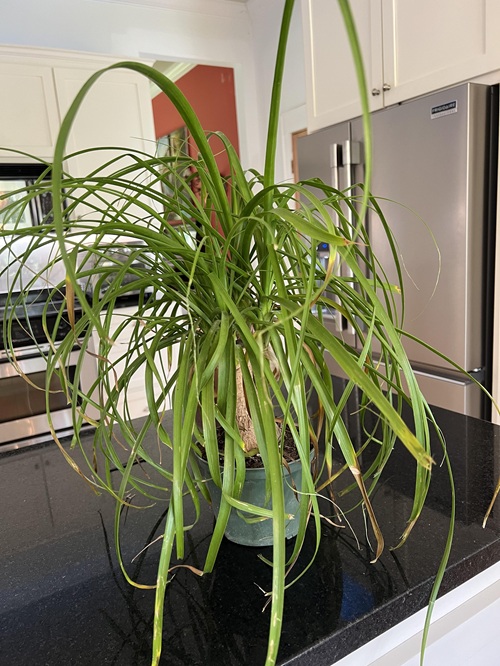
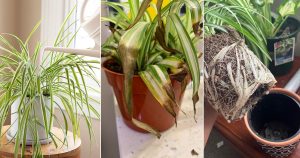
Houseplants with long, narrow leaves, such as spider plants (Chlorophytum comosum) and ponytail palms (Beaucarnea recurvata), often develop brown tips when they get too much water. You may also notice a yellow area between the brown tips and the healthy green parts of the leaves. This happens because damaged roots cannot take up enough water. The leaf tips are the first parts to suffer because they are farthest from the roots. The yellow area shows where the plant is losing its healthy tissue. The leaves may also lose their upright shape and start to droop.
Houseplants That Store Water in Their Leaves Turn Yellow at the Base
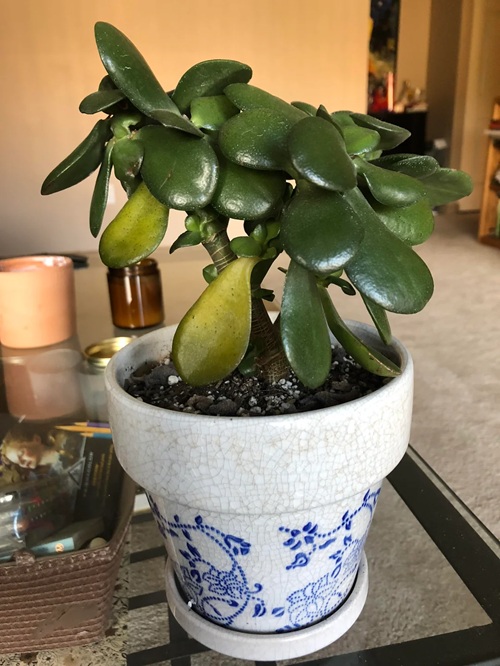
Jade plants (Crassula ovata), snake plants, Christmas and Thanksgiving cacti (Schlumbergera), Echeverias, and aloe vera store water in their leaves or stems. When they get too much water, the base of their leaves or stems may turn yellow and look slightly transparent. The affected area often feels soft and mushy. This can happen where the stem or leaves meet the soil. In some cases, the stems may become weak and fall over. You may also notice yellow, soft areas where leaves join the stems or cactus segments connect to each other.
Houseplants with Thin, Shallow Roots Develop Pale Yellow Leaves
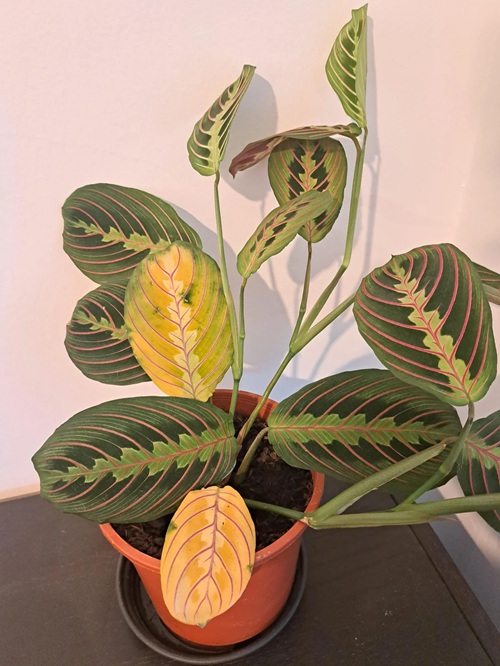
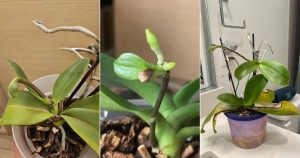
Prayer plants (Maranta), Peperomia, Chinese money plants (Pilea peperomioides), African violets (Saintpaulia), nerve plants (Fittonia), and Boston and maidenhair ferns have thin, delicate roots that grow close to the soil surface. These roots can quickly become damaged when the soil stays too wet. As the roots begin to rot, the leaves lose their healthy green color and slowly turn pale yellow. They may also become limp and dull.
You may expect the leaves to feel soft and wet, but that isn’t always the case. Damaged roots cannot take up enough water, so the leaves may become dry and brittle instead. They can break easily when touched or fall off the plant.
Vining Plants Show Yellow Leaves Near the Base First
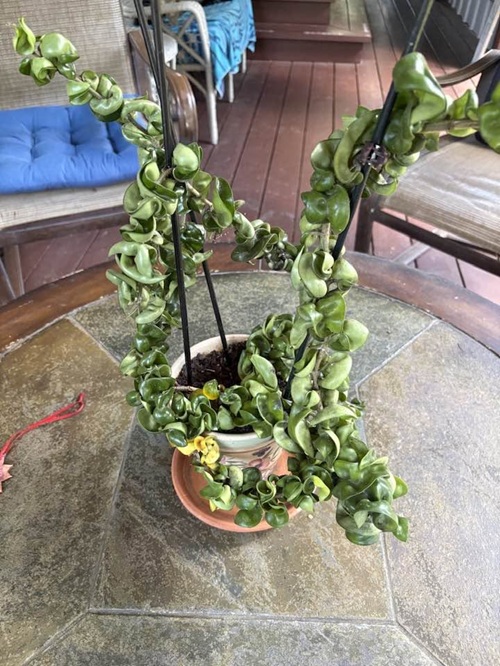
Vining plants like pothos (Epipremnum aureum), English ivy (Hedera helix), wax plants (Hoya), and heartleaf philodendron (Philodendron hederaceum) often develop yellow leaves near the base first when they get too much water. This happens because wet soil damages the roots and makes it harder for them to take up nutrients. The plant then moves nutrients from its older leaves to support new growth at the tips of the stems. As the older leaves lose their green color, they turn completely yellow, while the newer leaves usually stay green.
Treatment: Save Your Houseplant Roots Before It’s Too Late!
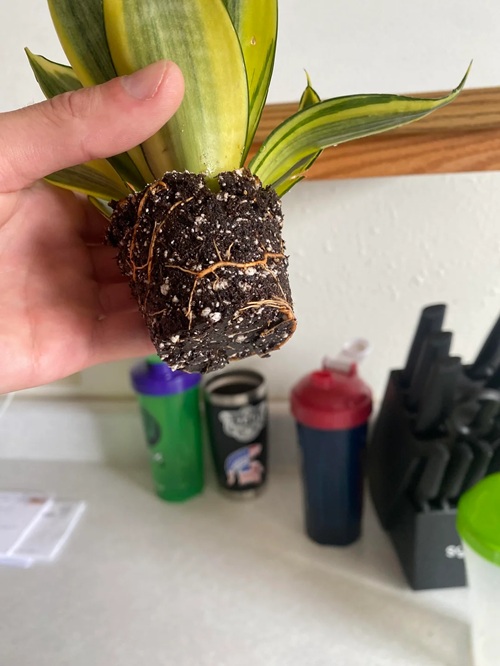
If you notice yellow leaves on your houseplant, stop watering it for now and let the soil dry out. Gently slide the plant out of its pot and check the roots. If they are still white and firm, you may have caught the problem early. Place the plant back in its pot and water it only when the top inch of soil feels dry. A moisture meter can also help you check how much water the soil holds and adjust your watering routine as the seasons change.
If you notice a bad smell from the soil and the roots look dark, soft, or mushy, your plant may have root rot. In this case, you need to act quickly. Remove as much old soil as possible from the roots. Use clean, sharp scissors or pruning shears to cut away any roots that look dark or feel soft and slimy. Rinse the remaining roots and clean the pot before repotting your plant.
Always use a pot with drainage holes so extra water can flow out. Place a saucer underneath to protect your surfaces. If you like decorative pots without drainage holes, use them as outer covers and keep your plant in a smaller plastic pot with drainage holes inside.
For succulents that store water in their leaves or stems, use a fast-draining potting mix. For most other houseplants, choose an indoor potting mix with coconut coir and perlite. These ingredients help balance moisture while allowing extra water to drain away.