
As an Amazon Associate, we earn a small commission from qualifying purchases — at no extra cost to you.
Notice brown leaves on your spider plant this fall? Learn the common causes and simple ways to keep your plant healthy.
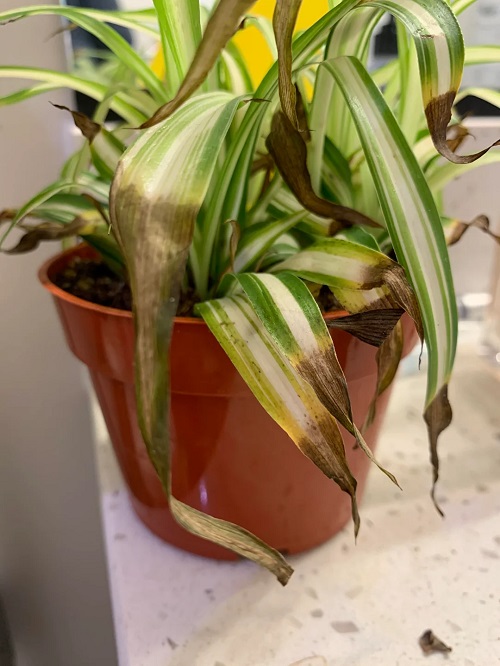
If your spider plant has brown leaf tips this fall, it’s time to check what’s wrong. Brown tips can be a sign that your plant needs some changes in its care. As temperatures drop and indoor conditions change, several problems can affect your Chlorophytum comosum. Finding the cause early will help you fix the problem and keep your plant healthy.
Don’t worry, you can often fix brown leaf tips on a spider plant by finding the cause and making a few changes to its care. The brown areas alone may not harm the plant, but they can be a sign of a bigger problem. Check your spider plant as soon as you notice the tips turning brown. Finding the cause early can help you fix the issue and keep your plant healthy through fall.
Check Your Spider Plant’s Brown Leaf Tips
Get this gardening tool set for lush growth with minimal effort. Also, check our Amazon storefront for more garden supplies.
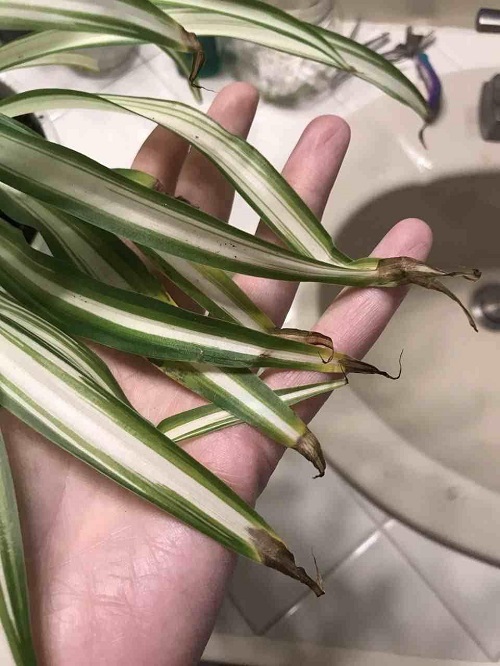
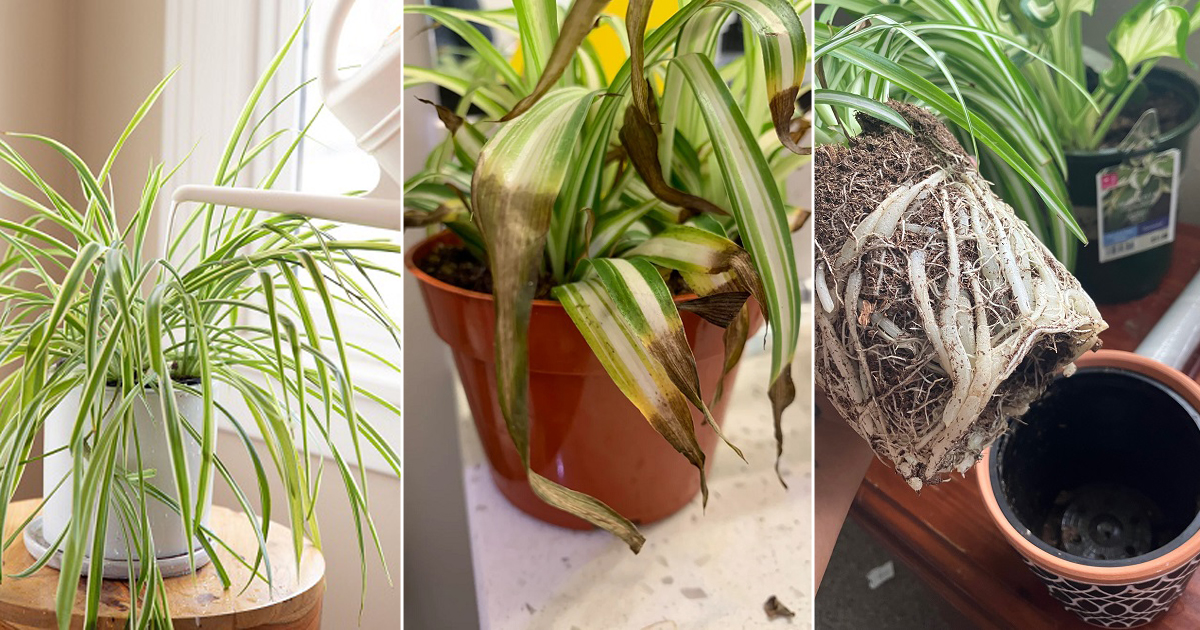
Start by looking closely at your spider plant’s brown leaf tips. Check where the brown areas meet the green parts of the leaves. Is there a clear line between the two colors, or is there a thin yellow strip in between? Also, look for dark spots near the middle or base of the leaves. Touch the brown areas to see if they feel dry or soft and mushy. Notice whether the color is greyish-brown, almost black, or reddish-brown. These signs can help you find the cause and decide how to treat your plant.
Diagnosis: What Is Causing the Brown Leaf Tips?
In fall, four common problems can cause brown leaf tips on your spider plant. Looking closely at the leaves can help you find the cause. Keep in mind that your plant may have more than one problem at a time, so you might notice different types of damage on its leaves.
Over-Watering
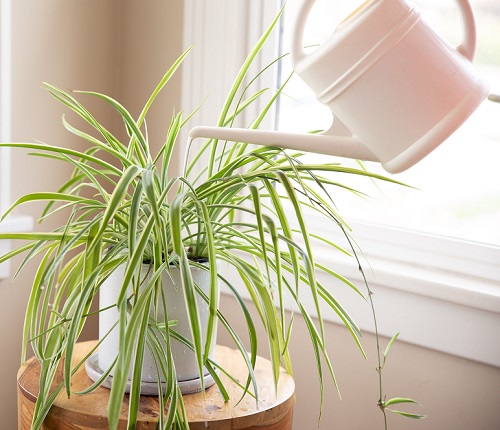
As the days get shorter in fall, spider plants grow more slowly and need less water. If you keep watering them as often as you did in summer, the soil may stay wet for too long. This can put stress on the roots and lead to root rot. You may notice yellow leaves with a soft yellow area between the green and brown parts. Brown patches can appear anywhere on the leaves. If these areas feel soft and mushy or spread toward the center or base of the leaves, root rot may already be affecting your plant.
This watering can is perfect as it’s easy to handle and holds just the right amount of water.
Chilled Leaves
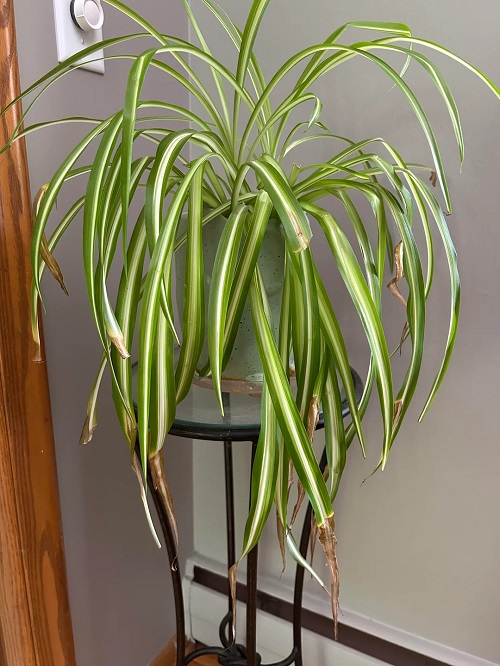
Spider plants come from warm, tropical regions, so they don’t do well in cold air. If your plant is near a window or outside door, cold drafts may damage its leaves as temperatures drop in fall. You may notice that the leaves become soft, pale, and droopy. Leaves touching a cold windowpane can turn brown or black, sometimes overnight. These damaged areas will also feel soft and limp.
Dry, Heated Air
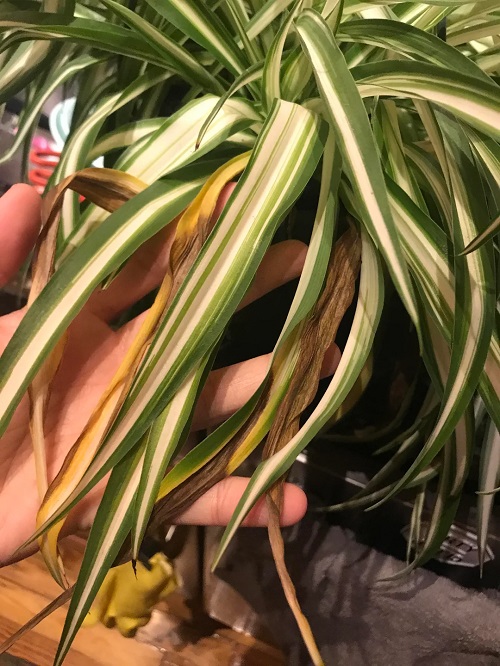
Turning on your home heating system in fall can cause your spider plant’s leaf tips to turn brown. This is likely the problem if the damaged tips feel dry and crispy. You may also notice a clear line between the green and brown parts of the leaves, sometimes with a thin yellow line in between. When you turn on the heating, the air inside your home becomes drier. This makes moisture evaporate from the leaves faster than the roots can replace it. Since spider plants lose much of their moisture through their leaf tips, these areas often show damage first.
Chemicals in Tap Water

Spider plants are easy to care for, but they can be sensitive to tap water with high levels of fluoride and chlorine. This problem can happen at any time of the year. However, fall conditions can add more stress to the plant and make the damage easier to notice.
When you water your spider plant, it takes in water along with any fluoride and chlorine in it. These chemicals move toward the leaf tips. As the water evaporates, the chemicals build up and cause the tips to turn brown. The browning usually starts at the very end of the leaves and slowly spreads along the edges. The damaged areas may also have a reddish-brown color.
Older leaves on the outside of the plant often show more damage than younger leaves in the center. The brown tips usually feel dry and crispy, and you may notice a thin yellow line between the green and brown parts. You might also see a white, crusty layer on the soil or around the inside rim of the pot.
Treatment: Nurse Your Spider Plant Back to Health
In Case of Over-Watering

Stop watering your spider plant for now and let the soil dry out. After that, water only when the top inch of soil feels dry. If you think your plant has root rot, gently remove it from the pot and check the roots. A bad, musty smell can be a sign of root rot. Remove as much old soil as you can. Use clean, sharp scissors or pruning shears to cut off any dark, soft, or slimy roots. Rinse the remaining roots and clean the pot before repotting your spider plant in a well-draining potting mix.
If Chilled Leaves are the Reason
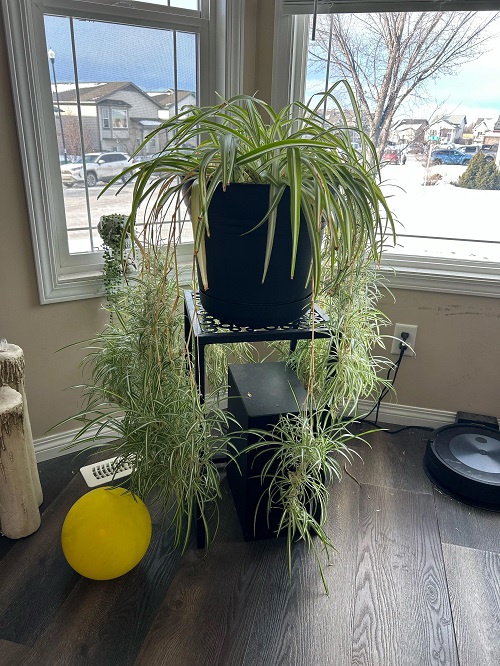
Move your spider plant to a bright spot with indirect sunlight. A room with an east- or west-facing window is a good choice.
A plant stand can help your spider plant get the right amount of sunlight when kept near the window.
If Dry, Heated Air is the Cause
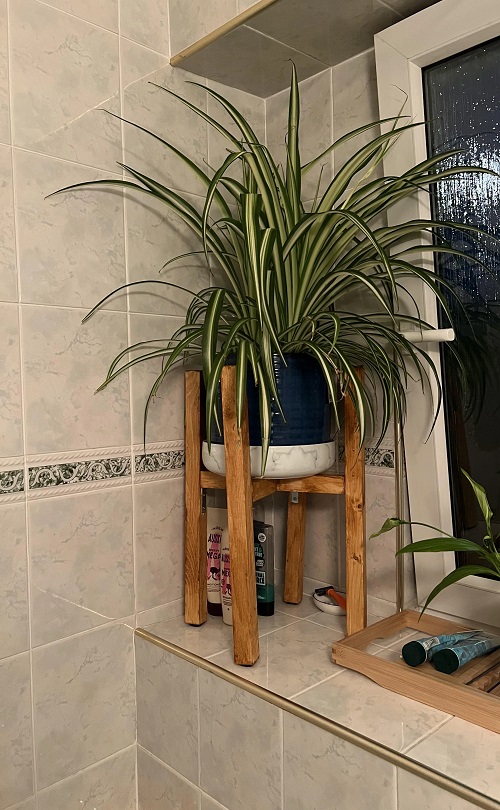
Keep your spider plant away from radiators, heat vents, and warm air. You can move it to a room with more humidity, such as a bathroom, to help it recover. Another option is to place the pot on a shallow tray filled with water and pebbles. You can use a humidity tray or make one with an old plant saucer and small stones. Make sure the bottom of the pot rests on the pebbles and does not touch the water. As the water evaporates, it adds moisture to the air around your plant.
Use a humidifier from Amazon.
If Tap Water Triggers the Issue
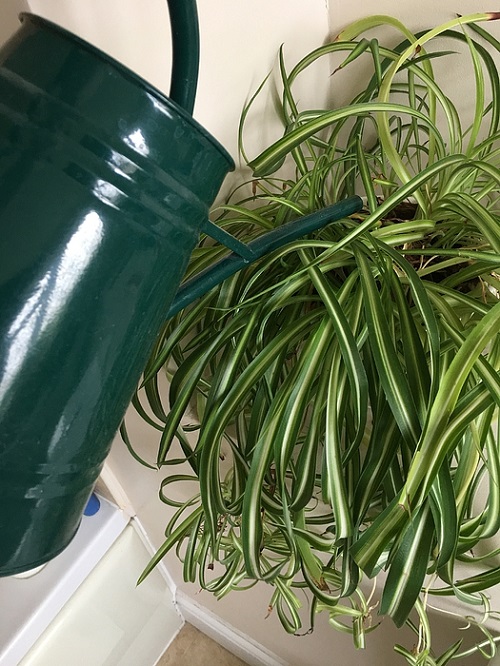
Start using rainwater or distilled water instead of regular tap water. Avoid using filtered water because most filters remove chlorine but may not remove fluoride. Distilled water is easy to find and can last for several weeks, depending on how often you water your plant. Collecting rainwater is another simple and low-cost option.
You can also repot your spider plant in fresh potting soil to remove any chemical build-up around the roots. If you don’t want to repot it, slowly pour rainwater or distilled water through the soil to wash away the built-up chemicals.
Plant Care Tip
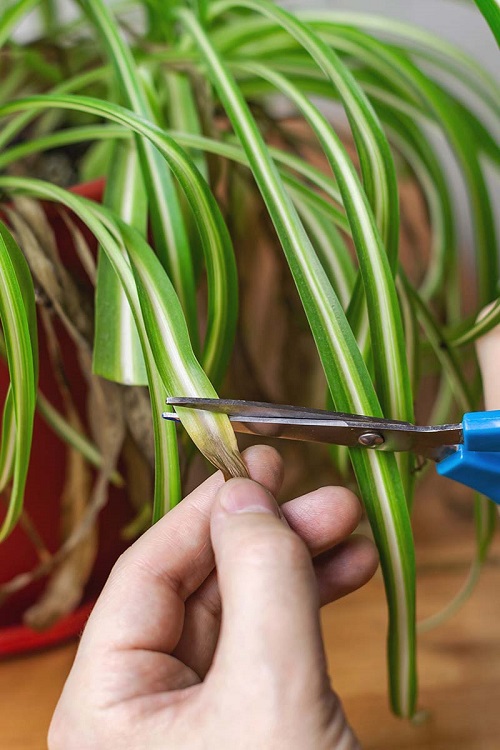
Use sharp scissors to trim the brown leaf tips. Cut at an angle to keep the natural pointed shape of the leaves.
Become the best at gardening with The New Plant Parent book to help you at every step.