
As an Amazon Associate, we earn a small commission from qualifying purchases — at no extra cost to you.
Is your plant growing leaves but less blooms? Find out How to Get More Flowers on African Violet with easy changes to its care routine.
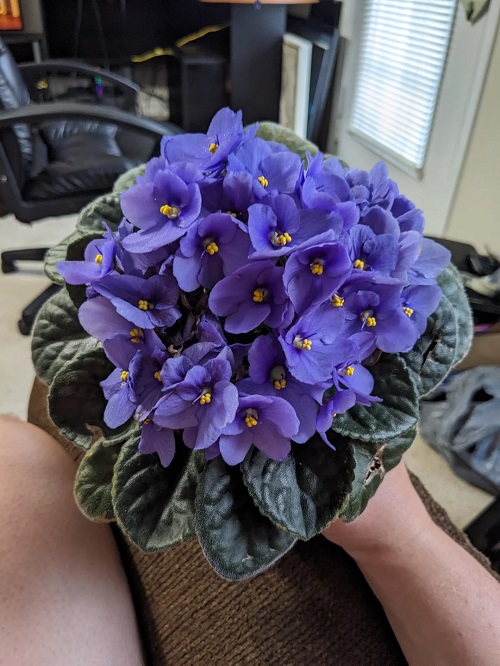
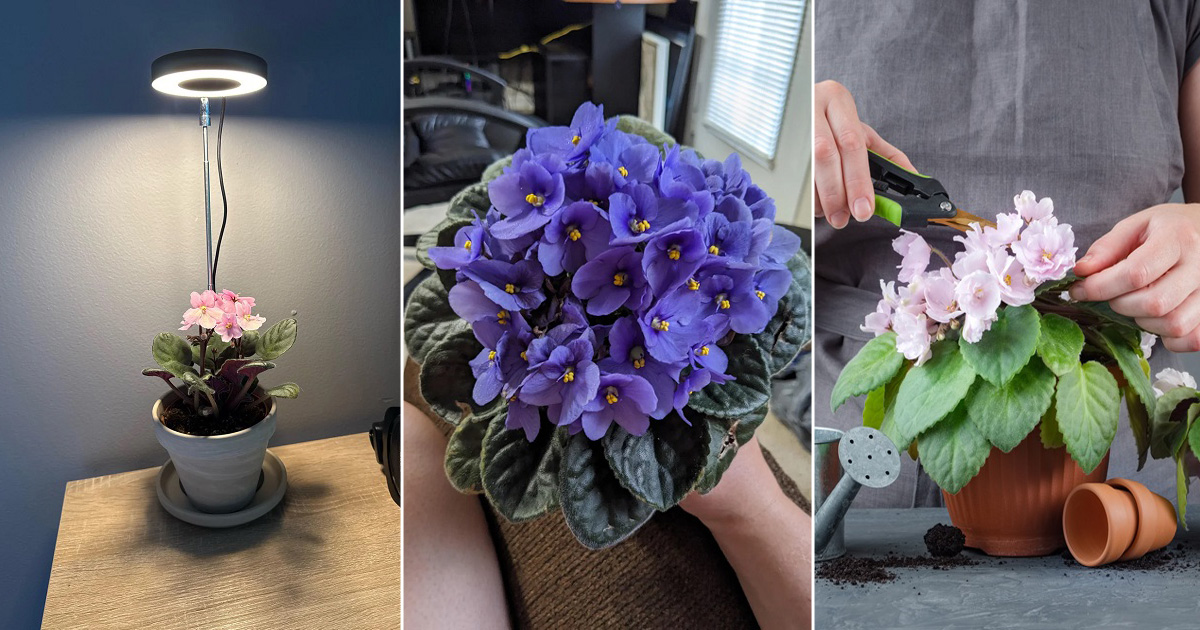
If your African violet grows plenty of leaves but produces very few or no flowers, a few changes to its care may help. Learning How to Get More Flowers on African Violet starts with checking the light, watering, temperature, and fertilizer. With the right conditions and a little patience, you can encourage more blooms.
How to Get More Flowers on African Violet
Ready to create your own African violet corner? Get the complete setup here and start styling your plants today. Also, give a glance at our Amazon storefront for more gardening supplies.
1. Check the Light Near Your Window
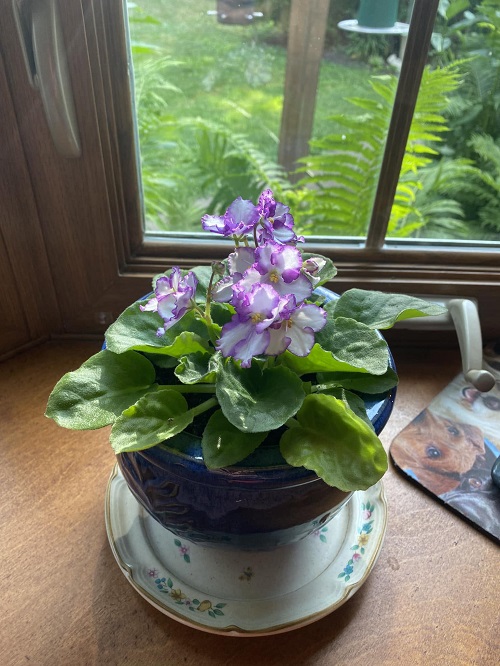
African violets need plenty of light to flower well, but direct sunlight can burn their leaves. Place your plant where it gets bright, indirect light for most of the day. In summer, a north-facing window can work well, while an east- or west-facing window may be better in winter. If your room doesn’t get enough natural light, use a grow light to help your plant grow and produce more flowers.
Use these filter curtains let in natural light for your plants.
2. Add a Grow Light if Your Room Is Too Dark Rooms
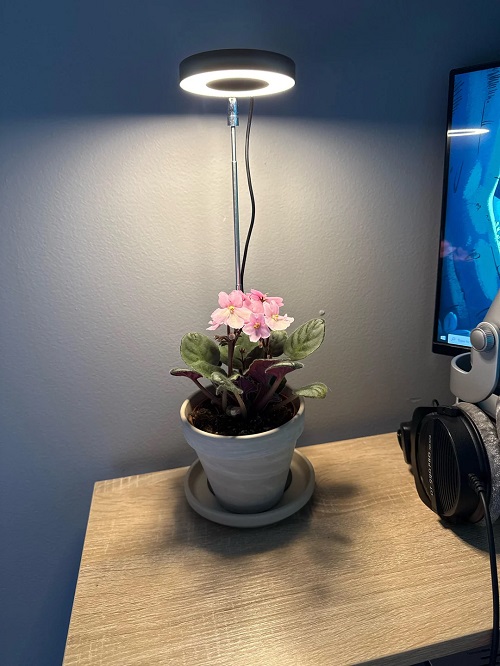
Not every room gets enough natural light to keep an African violet flowering, particularly during the darker months. If your plant sits in a dim room or far from a window, an LED grow light may help it produce new buds.
Choose a full-spectrum light and position it according to the manufacturer’s instructions. Depending on the lamp’s strength, a distance of about 6–12 inches may be suitable. Start with roughly 10–12 hours of light each day, followed by a period of darkness at night.
Watch how the plant responds over the next couple of weeks. If the leaves become unusually pale or start looking stressed, the light may be too close or switched on for too long. You don’t need a complicated setup to get started. A suitable grow light and a regular schedule can be enough to improve the growing conditions.
Not getting enough natural light? Bring the right glow to your violet corner with a standing grow light.
3. Keep the Temperature From Fluctuating Too Much
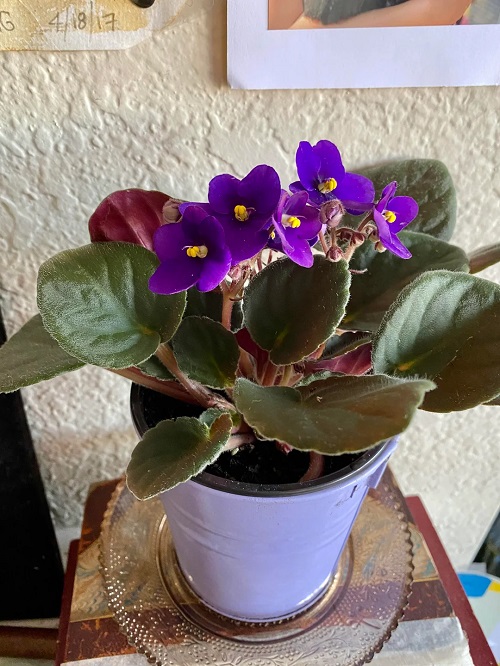
African violets grow and flower best at around 70°F (21°C). If the temperature gets too high, the plant may wilt, while cold conditions can stop it from flowering. Drafts from windows, air conditioners, and heating vents can also affect the temperature around your plant. Keep your African violet away from these areas to maintain a steady temperature and encourage more flowers.
4. Pay Attention to Indoor Humidity
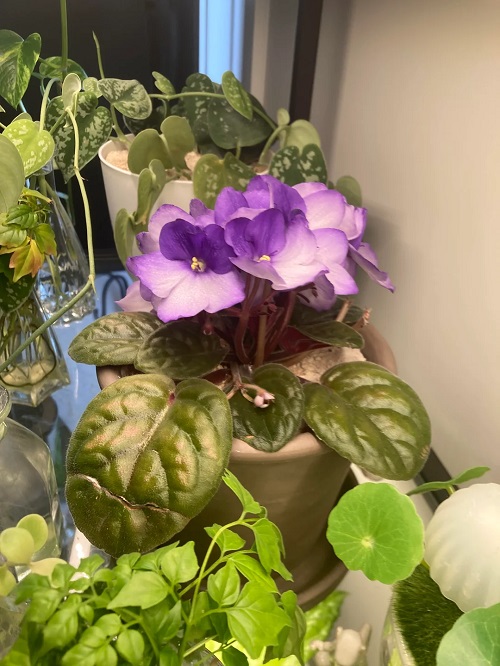
African violets grow well in humid conditions. If the air in your home is too dry, your plant may struggle to produce flowers. You can increase humidity by grouping your plants together, using a room humidifier, or placing the pot on a tray filled with pebbles and water. Keep the pot above the water level to prevent the roots from getting too wet. With better humidity, your African violet may start producing more flowers over the next few weeks.
Monitor humidity and temperature levels with this monitor so your African violets stay in their ideal growing environment year-round.
5. Check the Potting Mix Before Watering
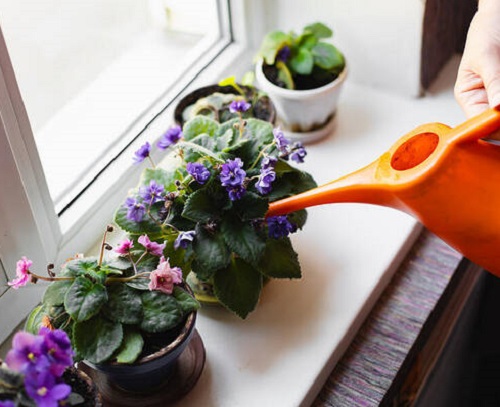
If you water your African violet on the same day every week it may not always work. The potting mix dries at different rates depending on the weather, pot size, room temperature, and amount of light the plant receives.
Instead of following a rigid schedule, check the mix every few days. During warm weather, you may need to check every two or three days, while cooler conditions can slow drying considerably. The goal is to keep the mix lightly moist without allowing the roots to sit in water.
You can water from the top, taking care to keep water out of the crown, or use the bottom-watering method. For the latter, place the pot in a shallow container of water for about 15–30 minutes, then remove it and allow the excess water to drain. Don’t leave the pot sitting in a full saucer.
One thing to watch for is wilting when the soil is already wet. Adding more water in this situation can make matters worse because the roots may be damaged and unable to absorb moisture properly. Check the mix before reaching for your watering can.
Grab this moisture meter to keep the soil in check before watering.
6. Use Fertilizer Carefully
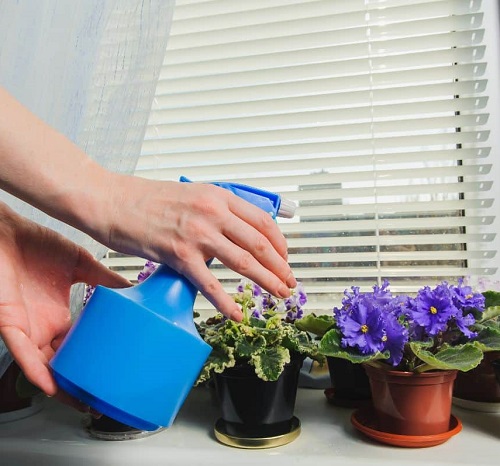
African violets need nutrients to grow and flower, but feeding them more often doesn’t guarantee more blooms. Excess fertilizer can accumulate in the potting mix and damage the roots, particularly when the plant is watered frequently.
A balanced fertilizer, such as a 20-20-20 or 15-15-15 formula, can work well when diluted according to the label. For example, if the recommended amount is one teaspoon per litre of water, one-quarter strength would be ¼ teaspoon per litre. Feeding every two to four weeks may suit a plant that is actively growing, but follow the product instructions and adjust according to how your plant responds.
Take a look at the leaves before deciding to increase the amount. Very large, dark green leaves with few flowers can sometimes indicate too much nitrogen, although insufficient light and other growing problems can cause a similar pattern.
If you’ve been fertilizing frequently, cut back rather than immediately switching to a high-phosphorus product. A fertilizer marketed for blooming won’t make much difference if the plant isn’t receiving enough light or its roots are unhealthy. Getting the basic growing conditions right should come first.
Here is a nutritious soil mix that can be useful for your African violets.
7. Choose a Pot That Fits the Plant
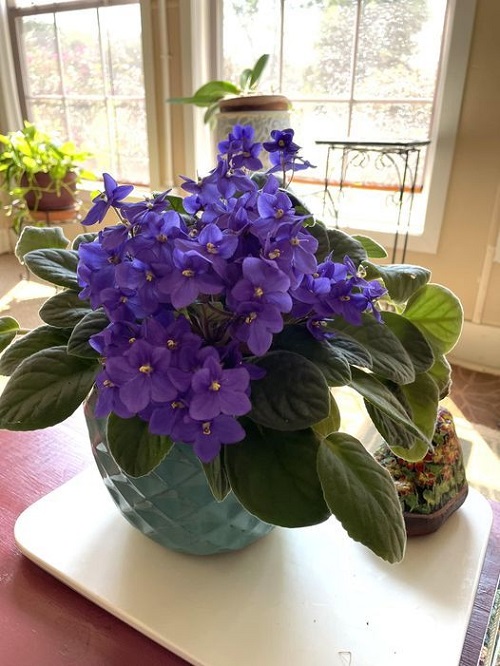
African violets generally flower well when their roots have enough room to grow without being surrounded by a large amount of unused potting mix. A pot roughly one-third the width of the plant’s leaf spread is a useful starting point, although the size of the root system also matters.
A pot that’s much too large can hold moisture for longer than the roots need. This increases the risk of waterlogged soil and root problems. Choose a pot with drainage holes and use a loose potting mix made for African violets. If you prefer to prepare your own, a peat- or coco-coir-based mix with added perlite can help improve drainage and airflow.
Don’t rush to repot a healthy African violet just because it isn’t flowering. Repotting makes sense when the mix has broken down, water struggles to drain, or the roots have filled the pot. A slightly snug pot is usually a better choice than one with far more space than the roots can use.
Properly sized planters help prevent excess moisture retention while encouraging healthier root development.
8. Remove Faded Flowers and Damaged Leaves
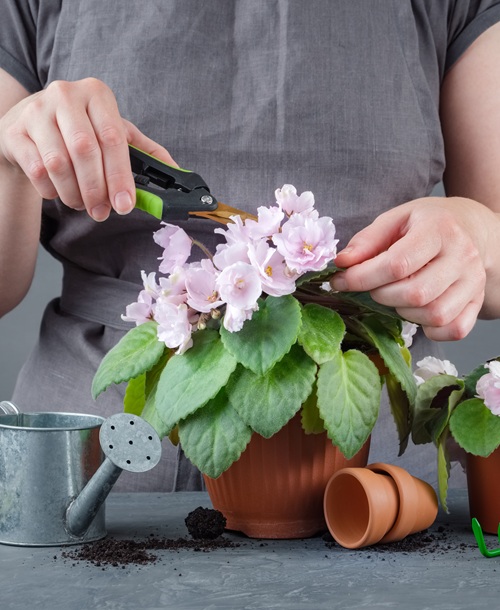
Once an African violet’s flowers fade, they won’t bloom again, so remove them to keep the plant tidy. Follow each flower stalk down to its base and snip it off with clean scissors. This also makes it easier to spot new buds as they begin to develop.
Yellowing and damaged leaves can be removed as well, but there’s no need to strip away healthy foliage. The leaves help the plant produce the energy it needs for new growth and flowers.
If you remove too many leaves at once, your African violet may need extra time to recover. Take away only the foliage that is clearly damaged or no longer healthy, and leave the rest of the plant alone.
9. Check for Crowded Side Shoots
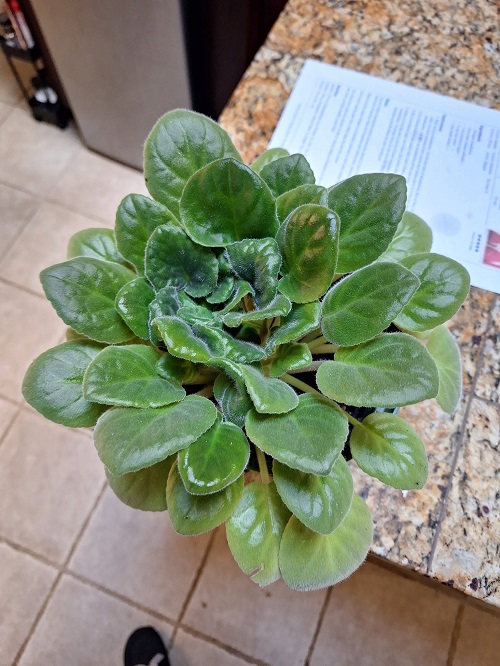
You may notice small shoots growing around the main crown of your African violet. These are called suckers, and they can develop as the plant grows.
A few side shoots aren’t necessarily a problem. However, several crowded crowns can make the plant look uneven and leave less room for flower stalks to develop neatly among the leaves.
If you prefer your African violet to grow with a single crown, carefully remove unwanted suckers using a clean tool. Work gently so you don’t damage the main growing point or pull off healthy leaves.
Keep in mind that removing suckers is mainly about controlling the plant’s shape. It won’t automatically make your African violet flower more often. If the plant looks healthy and you like its appearance, there’s no need to remove every side shoot.
10. Look for Pests and Root Problems
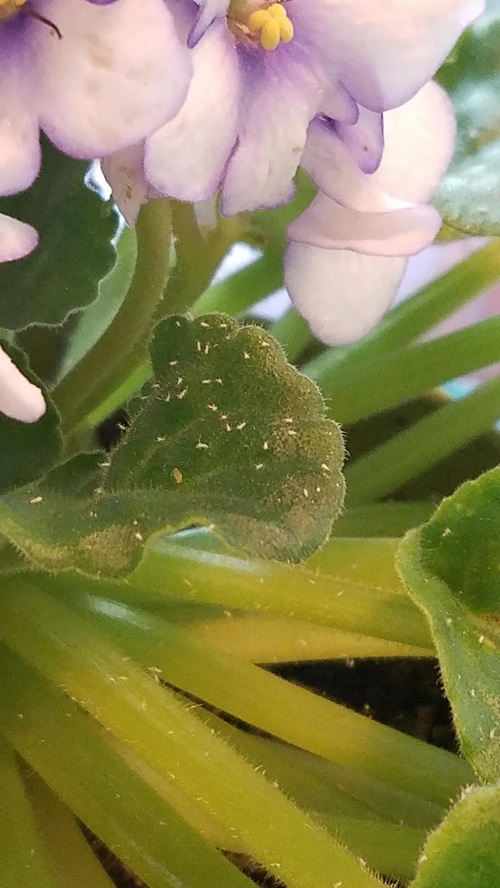
Sometimes, a lack of flowers is a sign that your African violet is dealing with another problem. Check the leaves, the centre of the plant, and the areas where the leaf stems meet the crown.
Mealybugs may appear as small, white, cotton-like patches. Spider mites and thrips can be more difficult to spot, but they may cause speckled leaves, distorted new growth, or damaged flower buds. If you notice these signs, inspect the plant closely rather than assuming it needs more fertilizer.
Keep an affected plant away from your other houseplants while you identify the pest. Choose a treatment suitable for African violets and follow the label directions carefully.
The roots are worth checking if the plant keeps wilting despite wet soil or its lower leaves continue to deteriorate. Healthy roots are generally firm and pale, while rotting roots may look dark, feel soft, or smell unpleasant.
If you find root rot, remove the damaged roots and repot the plant in fresh, airy potting mix. Let the plant recover before trying to encourage flowering. Until the root problem is under control, changing the light or adding fertilizer is unlikely to help much.
This organic neem oil can be used to effectively kill the pests on your plants.
11. Give Your African Violet Time to Bloom Again
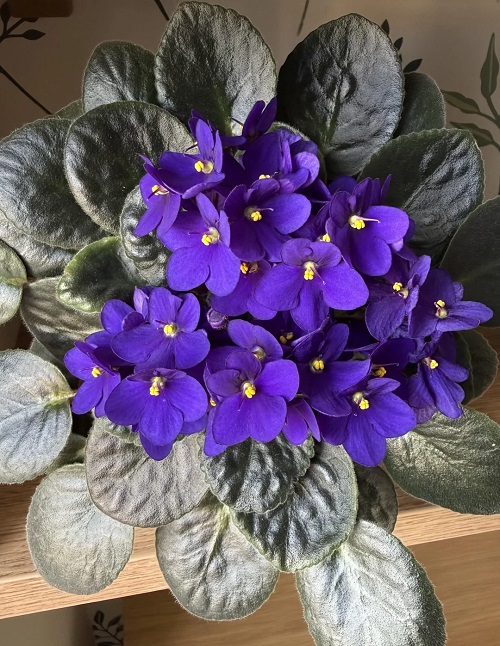
Even after you correct a problem, your African violet may not produce flowers straight away. It needs time to adjust to the new conditions, put out healthy growth, and develop fresh buds.
This is where patience helps. Avoid moving the plant repeatedly or changing its watering and feeding routine every few days. When you make several changes at once, it’s difficult to tell which one has actually helped.
Check your plant about once a week. Look at the centre for fresh leaves and examine the spaces between the existing leaves for small flower stalks. Keep watering and lighting consistent while you wait for signs of progress.
Want bigger blooms, healthier foliage, and fewer plant-care mistakes? This highly rated book will provide detailed guidance.