
As an Amazon Associate, we earn a small commission from qualifying purchases — at no extra cost to you.
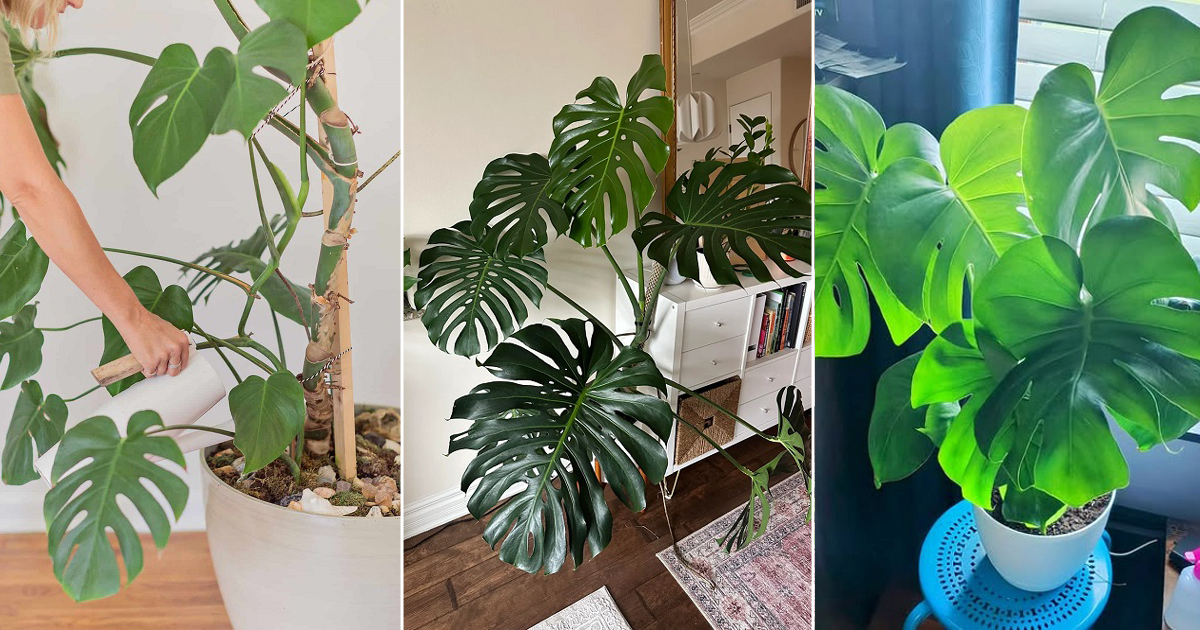
Learn How To Grow Bigger Monstera Leaves with simple changes that support mature growth, stronger stems, and impressive new foliage.
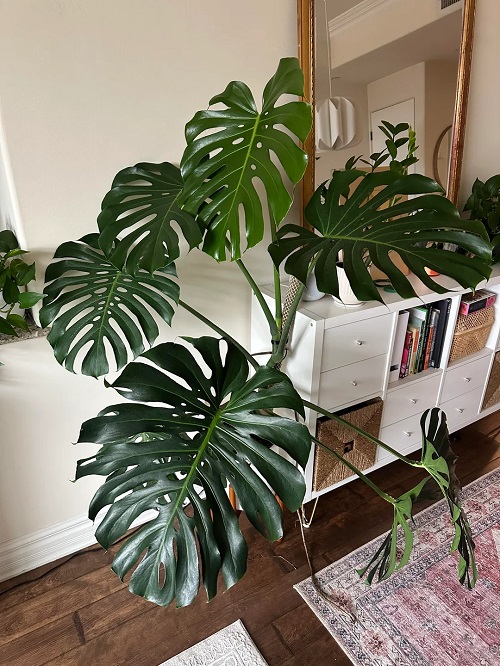
Thinking how to grow bigger Monstera leaves? The answer isn’t simply adding more fertilizer or giving your plant more water. If your Monstera is healthy but keeps producing small leaves, look at how it grows rather than focusing only on its care routine. A few changes to its structure and growing conditions can make a noticeable difference over time.
How To Grow Bigger Monstera Leaves
Get this gardening tool set for lush growth with minimal effort. Also, check our Amazon storefront for more garden supplies.
1. Train Your Monstera to Grow Upward
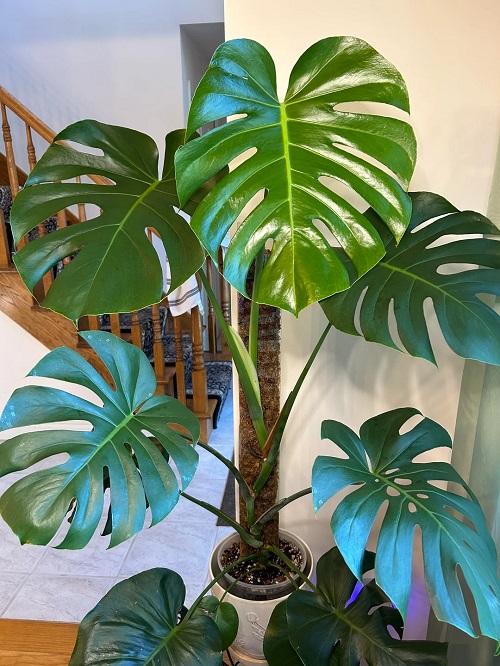
A Monstera is naturally a climber. It doesn’t stay as a compact plant forever. As it matures, it uses trees and other structures for support, allowing it to grow upward.
You can encourage the same habit indoors by giving it a sturdy support such as a moss pole, coir pole, or rough wooden stake.
Attach the main stem loosely to the support as it grows. Don’t tie the leaves or petioles. The stem is the part you want to guide.
Once your Monstera starts climbing, its growth can look quite different. New leaves may gradually become larger, and mature plants are more likely to develop the deep splits and holes that make Monstera foliage so attractive.
Shop a Monstera Support Pole on Amazon to train your plant upward while keeping the growing stem supported as it gets taller.
2. Don’t Judge the Plant by Its Oldest Leaves
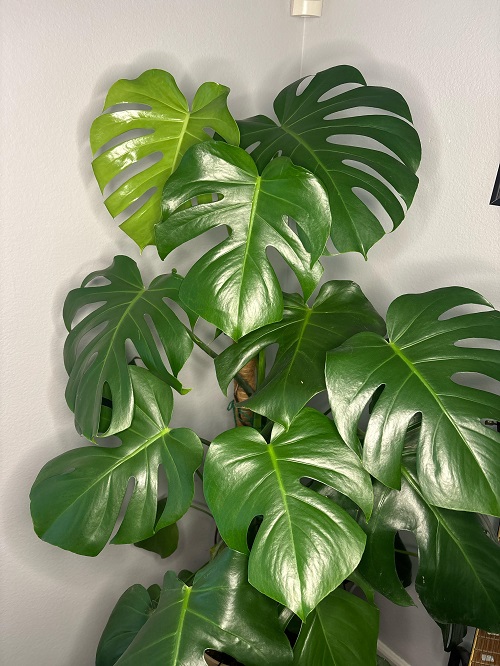
The oldest leaves aren’t a good measure of what your Monstera can produce now.
Young leaves often remain relatively small, especially when the plant has been grown from a cutting. As the plant matures, new leaves can become considerably larger than the older ones.
So, instead of looking at the bottom of the plant, pay attention to the newest leaf.
If every new leaf is a little larger than the previous one, that’s encouraging. Your Monstera is gradually moving toward mature growth.
3. Let the Main Stem Keep Growing
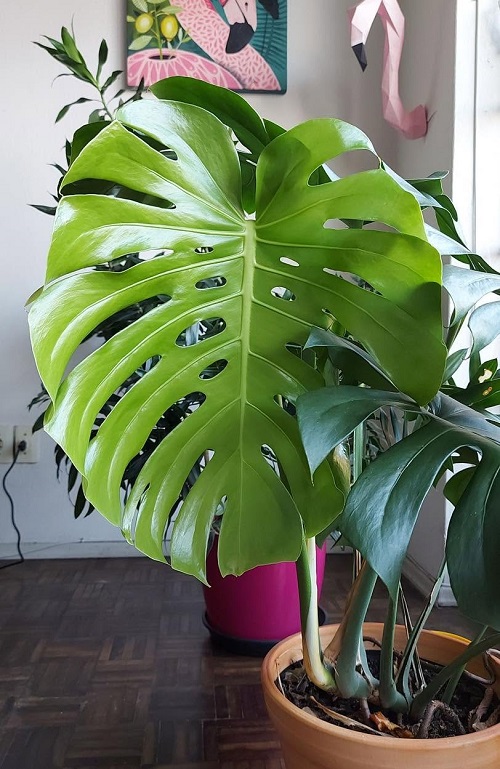
If your goal is bigger leaves, don’t constantly cut the top of the plant.
Pruning has its place, especially when you need to remove damaged growth or control an unruly plant. But repeatedly cutting the main growing tip can change where the plant puts its energy.
A climbing Monstera needs time to develop. Let the strongest stem continue upward and provide support as it gets taller.
This may mean accepting a slightly larger plant instead of trying to keep it short and bushy.
Add to cart a sharp pair of pruning scissors makes it easier to remove damaged leaves and trim unwanted growth of your Monestera plant.
4. Check What Is Happening Around the Roots
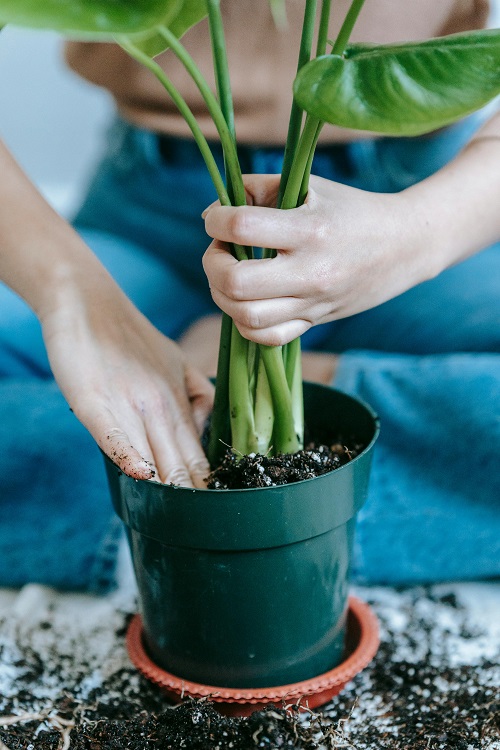
Leaf size can also tell you something about the root system.
When a Monstera has been in the same container for a long time, take a look at the roots when you next repot it. A mass of tightly circling roots can eventually make it harder for the plant to maintain strong growth.
That doesn’t mean you should move it into a much larger pot.
Choose a container only a little larger than the existing root ball. A pot that’s far too large can hold onto moisture around unused soil, which can create root problems.
Healthy roots give the plant a much better foundation for producing substantial new leaves.
The right pot with drainage hole helps prevent excess moisture while giving healthy roots room to develop.
5. Give It Enough Room to Develop
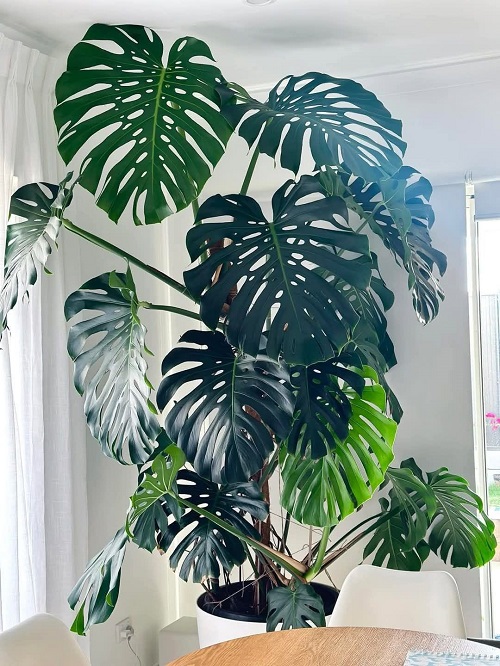
Monsteras need physical space as they mature.
This isn’t just about the pot. Look at the entire plant.
Are the leaves constantly pressed against a wall? Is the climbing stem bent awkwardly because there is no support? Does the plant have nowhere to grow upward?
A crowded position can make it difficult to train the plant properly.
Give the main stem a clear path upward. You don’t need a huge indoor greenhouse. Even a simple support positioned correctly can make the plant much easier to manage.
Choose flexible ties that can be adjusted as the stem grows from Amazon to your cart before it goes out of stock.
6. Don’t Try to Force Giant Leaves With Fertilizer
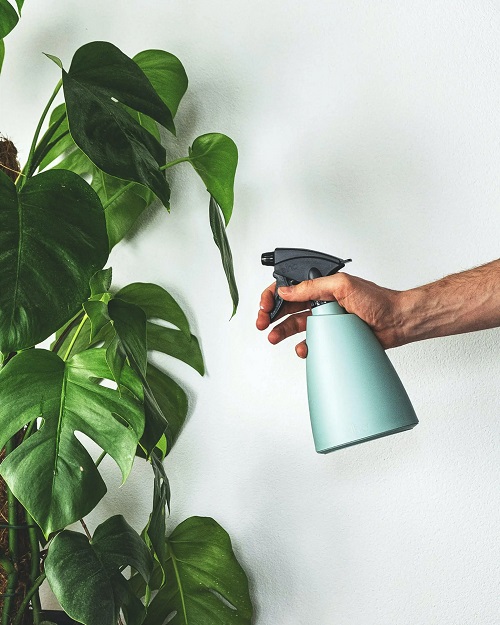
It’s tempting to think more fertilizer means bigger leaves.
It doesn’t work that way.
Fertilizer supplies nutrients, but it cannot turn a juvenile Monstera into a mature plant overnight. Excess fertilizer can actually damage the roots and leave mineral salts in the growing medium.
During active growth, use a balanced houseplant fertilizer according to the product instructions. Then let the plant do the rest.
If the roots, stem, and overall plant are developing well, the leaves will have a better chance of increasing in size naturally.
Choose a balanced houseplant fertilizer and follow the recommended dilution and feeding schedule.
7. Watch for a Change in Fenestrations
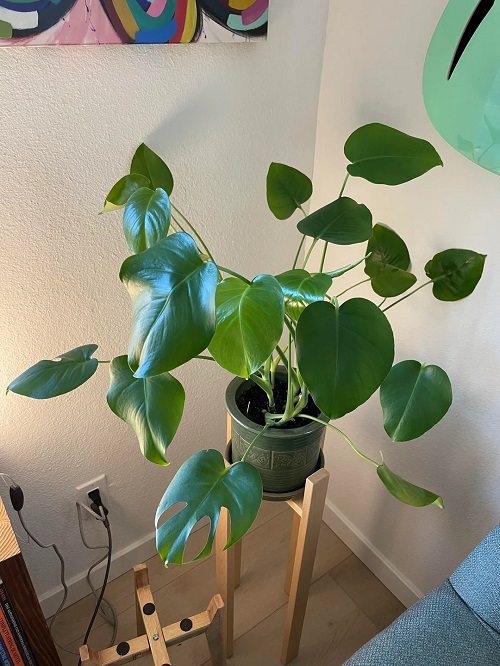
One of the clearest signs of Monstera maturity is the development of fenestrations.
These are the splits and holes that appear in mature Monstera leaves. Young plants often produce smaller, solid leaves, so don’t assume something is wrong simply because your plant doesn’t have dramatic fenestrations yet.
As the plant matures and climbs, newer leaves can become larger and develop more noticeable fenestrations.
In other words, the holes aren’t the thing you need to force. They are often part of the plant’s natural progression toward maturity.
8. Stop Moving the Plant Around
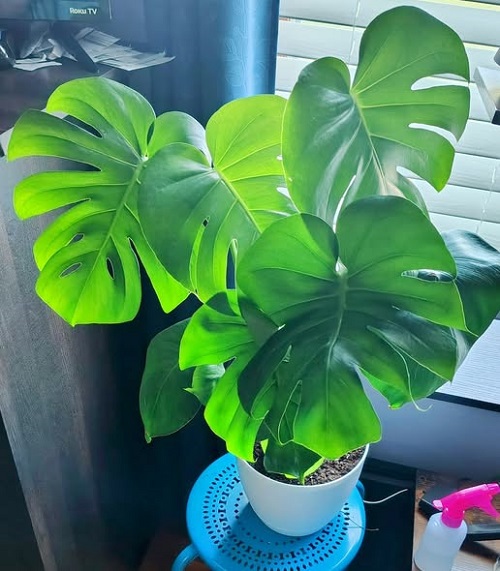
Once your Monstera is growing well, leave it alone.
It can be tempting to move a plant closer to a window, then farther away, then onto another shelf because one leaf looks different from the rest.
Constant changes make it harder to judge whether your care routine is actually working.
Instead, give your Monstera a stable growing spot and watch what happens over several months. New growth gives you much more useful information than a single older leaf.
Why Is My Monstera Growing Small Leaves?
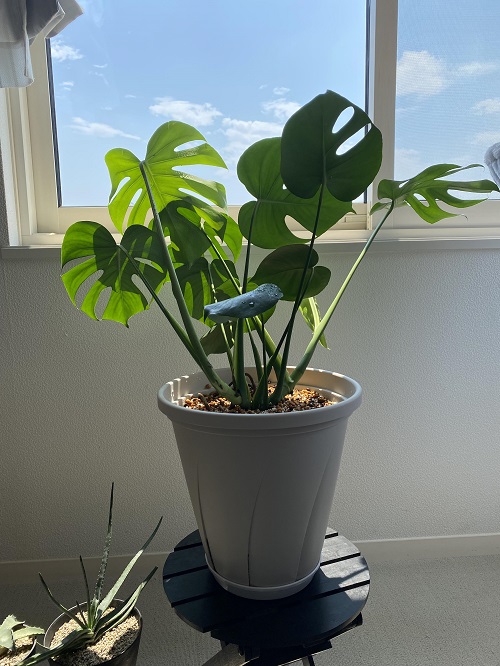
Small Monstera leaves don’t always mean there’s a serious problem.
The plant may simply be young. This is especially common with recently propagated plants and cuttings.
However, if a mature Monstera suddenly starts producing smaller leaves, look at the change in growth. Has the plant stopped climbing? Has its growth slowed considerably? Are the roots severely crowded? Has the plant been repeatedly pruned?
The pattern matters more than one small leaf.
A healthy Monstera should generally show some progression as it matures. If the new leaves are getting smaller and smaller, that’s when it’s worth investigating what has changed.
If your Monstera is growing slowly or producing smaller new leaves, supplemental lighting may help when natural light is limited.
Can You Make Monstera Leaves Bigger?
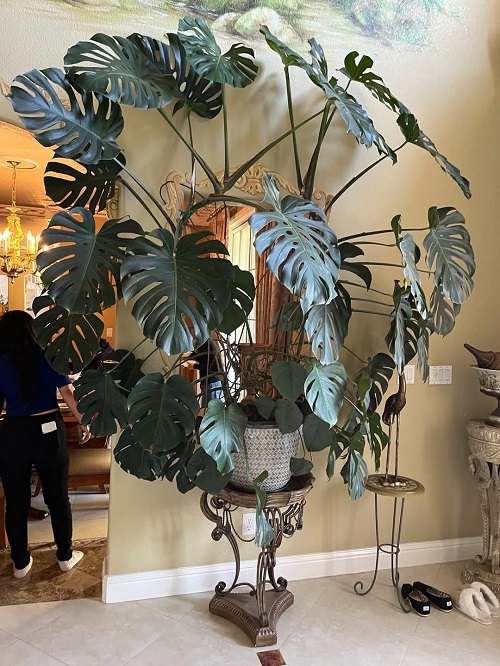
You can encourage larger leaves, but you can’t force a young Monstera to behave like a mature one.
Age plays a major role. So does the way the plant grows.
A Monstera that climbs, develops a substantial root system, and continues producing vigorous new growth has a much better chance of producing large foliage than one that’s kept small and repeatedly cut back.
That’s why some of the popular “giant Monstera” tricks don’t produce the results people expect. They focus on one part of the plant while ignoring its overall maturity.
How Long Does It Take for Monstera Leaves to Get Bigger?
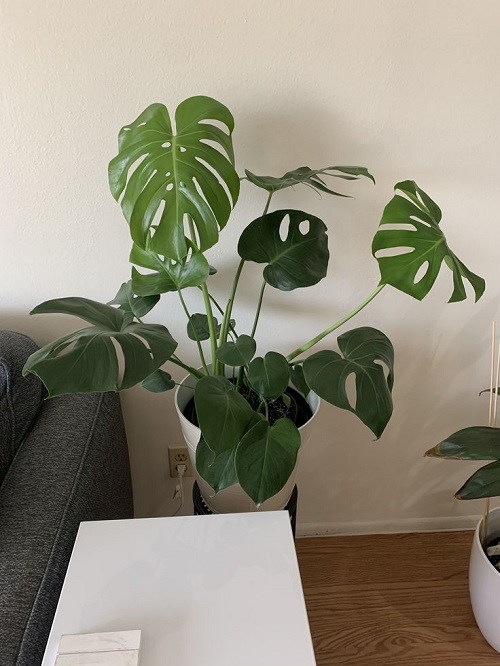
There isn’t a set number of weeks or months.
A young Monstera can take quite a while to move from small juvenile leaves to large, mature foliage. An established plant may show noticeable changes much sooner.
Instead of waiting for a particular size, compare each new leaf with the one before it.
If the newest leaf is larger, the plant is making progress. If it is also beginning to show more pronounced splits or holes, you’re seeing another sign that the plant is maturing.
Give your Monstera roots the right growing medium with a chunky, well-draining potting mix from Amazon.
The Best Way to Grow Bigger Monstera Leaves
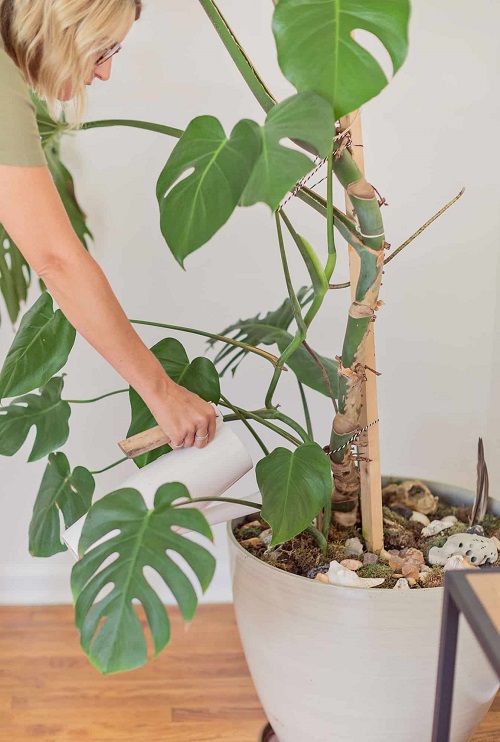
If you want larger Monstera leaves, think beyond basic plant care.
Let the plant climb. Give the main stem room to grow. Keep the roots healthy without putting the plant in an oversized pot, and avoid cutting the growing tip simply to keep the plant short.
Most importantly, give it time.
A Monstera doesn’t produce those enormous leaves because of one special fertilizer, watering trick, or homemade mixture. Large foliage comes as the plant matures.
Once you understand that, caring for your Monstera becomes much simpler. Rather than trying to force bigger leaves, you create the conditions that allow the plant to produce them on its own.
Get a copy of How Not to Kill Your Houseplant to become the best plant parent.