
As an Amazon Associate, we earn a small commission from qualifying purchases — at no extra cost to you.
Find out How to Make Orchids Bloom in July with easy care tips that encourage more flowers. Learn what to opt and avoid for healthy summer blooms.
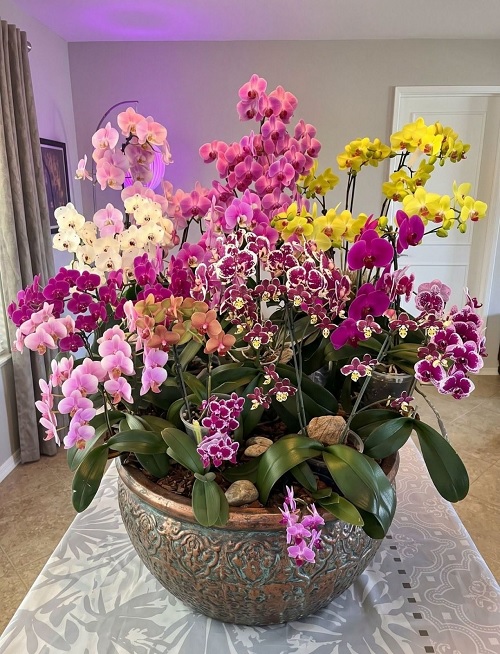
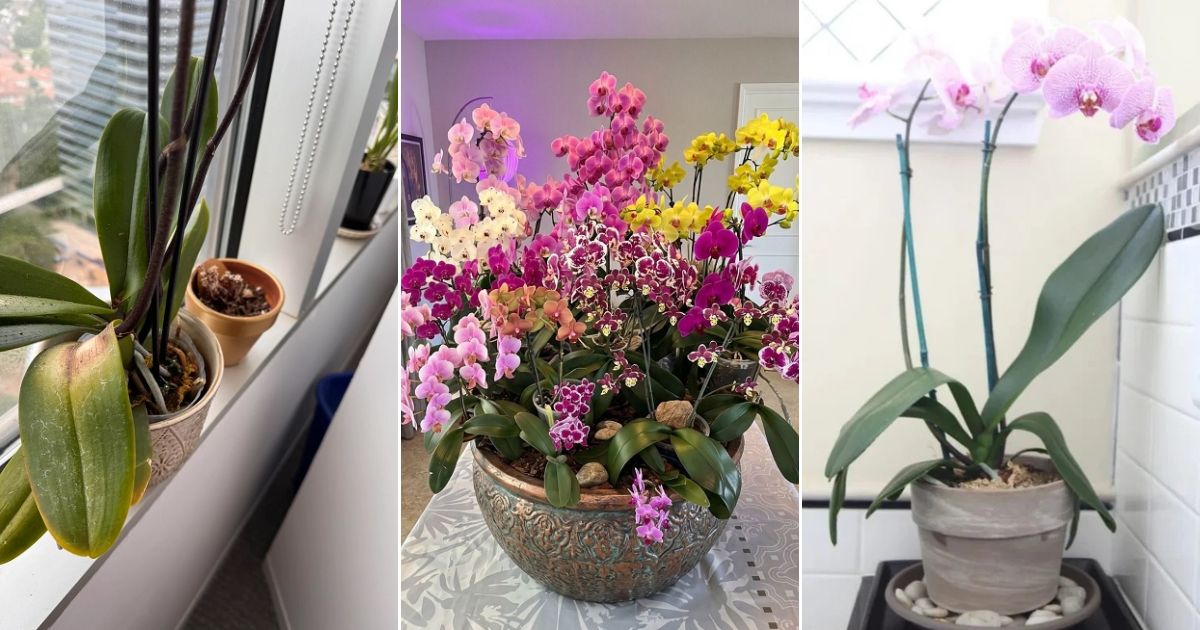
Orchids may seem difficult to grow, but their July care is actually quite simple. During summer, they focus on growing leaves and roots while storing energy for their next flowering season. If you take good care of them now, they are more likely to produce healthy flower spikes later. But one common mistake can stop them from blooming when the time comes.
Summer orchid care only involves a few easy tasks and avoiding that one major mistake. You don’t need to spend much time on them. Regular, gentle care works much better than giving them lots of attention only once in a while.
Most orchids grown as houseplants are Phalaenopsis, also known as moth orchids. The tips below are mainly for them, but they also work well for many other popular orchid varieties.
How to Make Orchids Bloom in July
1. Adjust Watering for Summer Heat
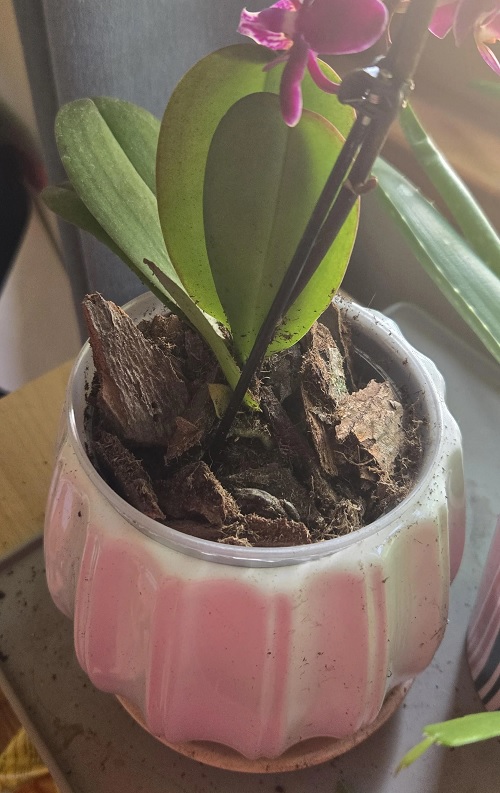
Orchids usually need more water in summer because warm weather and active growth make the potting bark dry out faster. Instead of watering on a fixed schedule, always check the plant first. Watering too often can cause the roots to rot.
If your orchid is in a clear pot, look at the roots. Silvery-gray roots mean it’s time to water, while green roots mean the plant still has enough moisture. If the pot isn’t clear, lift it. A light pot usually means the bark is dry, while a heavy pot means you should wait.
When you water, soak the potting mix well until water flows out of the drainage holes. Then let the pot drain completely. Never let your orchid sit in standing water.
Also, avoid leaving water in the center of the plant where the leaves meet. This area, called the crown, can rot if water stays there for too long, and crown rot can kill a Phalaenopsis orchid. If water collects there, gently dry it with a paper towel.
Watering in the morning is best because it gives the plant enough time to dry before evening.
This watering can is perfect as it’s easy to handle and holds just the right amount of water.
2. Increase Humidity Around Your Orchid
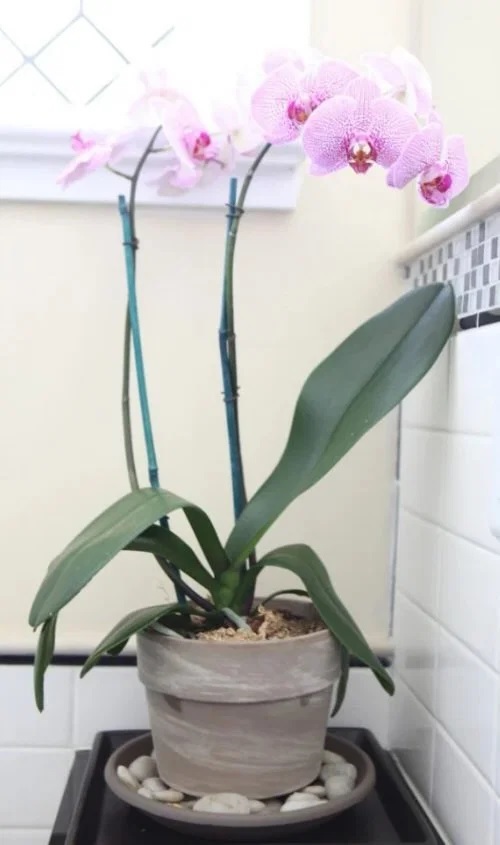
Most orchids grow naturally in warm, humid places and do best when the humidity is between 50% and 70%. In summer, indoor air can become too dry because air conditioners remove moisture from the room.
When the air is too dry, your orchid may show signs of stress. The leaves can become slightly wrinkled, and flower buds may dry up and fall off before they open. This is called bud blast, and it often happens after months of waiting for blooms.
A simple way to increase humidity is to use a humidity tray. Fill a shallow tray with pebbles and water, then place the pot on top of the pebbles. Make sure the bottom of the pot stays above the water so the roots do not sit in it. As the water evaporates, it adds moisture to the air around the plant.
You can also place several houseplants close together, as they naturally increase humidity around each other.
Although many people recommend misting orchids, it usually has only a short-lasting effect. Misting later in the day can also leave water sitting in the plant’s crown, which may lead to rot.
Grow your own plants at home with this humidity tray starter kit.
3. Get the Light Right and Avoid Leaf Burn
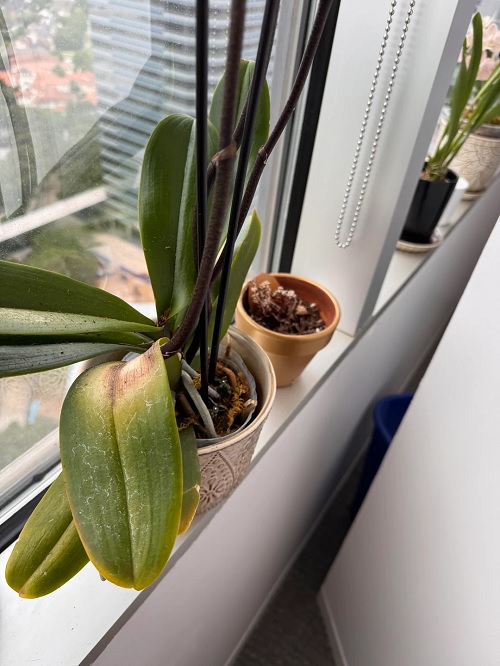
One of the biggest mistakes you can make in summer is placing your orchid in direct sunlight. Strong summer sun can burn the leaves, leaving white, yellow, or brown patches that never heal. Since the leaves make food and store energy for future blooms, damaged leaves can reduce the chances of your orchid flowering next season.
Keep in mind that sunlight is much stronger in summer than in winter. A spot that was perfect in January may become too hot in July, especially near a south- or west-facing window.
Your orchid will grow best in bright, indirect light. An east-facing window is usually the ideal spot. If your orchid is near a brighter window, use a sheer curtain to soften the sunlight and protect the leaves.
If you’re not sure whether your orchid is getting the right amount of light, look at its leaves. Healthy leaves should be a medium green color. If they are very dark green, the plant likely needs more light. If the leaves look pale, yellowish, or have a reddish tint, they are getting too much sun, so move the plant to a less sunny spot.
Keep my orchids about 2 feet (60 cm) away from a south-facing window with a thin sheer curtain. This gives them bright, indirect light, which is ideal during summer.
These filter curtains let in natural light for your plants.
4. Keep Air Flowing Around Your Orchid
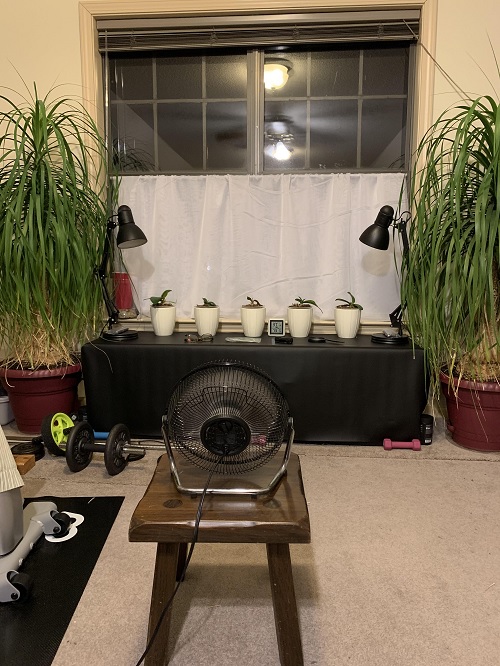
Good air circulation is important for healthy orchids, but it’s something many people overlook. In nature, orchids grow on trees where fresh air moves around their leaves and roots all the time. Indoors, warm and still air can stay damp, creating the perfect conditions for fungal diseases and rot.
Gentle air movement helps the leaves dry faster after watering and reduces the risk of disease.
A small fan on its lowest setting works well. Place it so it gently moves the air around your orchids instead of blowing directly on them. The leaves should move only slightly. If they are shaking or bending, the airflow is too strong.
Running the fan for a few hours each day is usually enough to keep the air fresh around your orchids.
Use this small USB desk fan to keep the area around your plants airy.
5. Feed Your Orchid During Active Growth
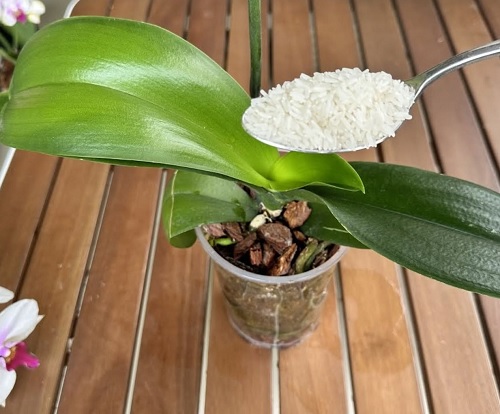
Summer is the best time to feed your orchid because it is actively growing and needs extra nutrients. Instead of using a strong fertilizer occasionally, give it a weak solution more often. Many orchid growers follow the rule “weakly, weekly,” which means feeding a diluted fertilizer once a week.
Choose a balanced, urea-free orchid fertilizer and mix it at one-quarter to one-half of the strength recommended on the label. Urea-based nitrogen is not very useful for orchids growing in bark.
Never apply fertilizer to a completely dry orchid. Dry roots can be damaged by fertilizer salts. Water the plant first, or fertilize right after your regular watering.
About once a month, flush the pot with plain water. This helps wash away any fertilizer salts that have built up in the potting mix and protects the roots from damage.
Check out this Urea-free orchid fertilizer for your houseplants.
6. Check for Pests Regularly
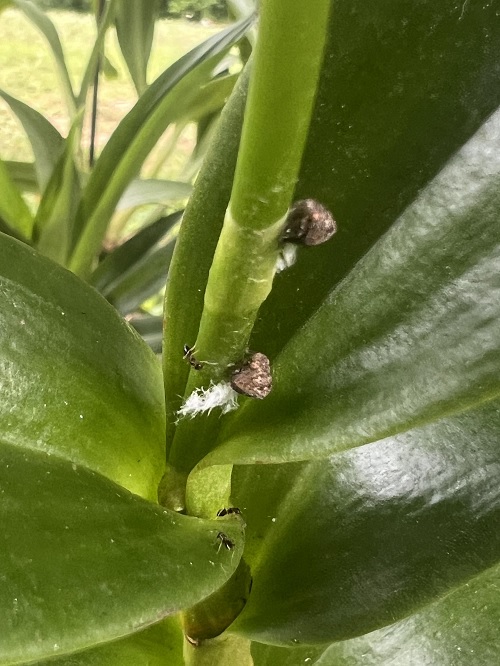
Warm summer weather also brings more orchid pests, so it’s important to inspect your plants often. Mealybugs are one of the most common problems. They look like small white, cotton-like spots hidden where the leaves join the stem. Scale insects appear as small brown bumps that you can gently scrape off with your fingernail. Spider mites leave fine webs and make the leaves look dull or covered with tiny pale spots.
The best way to prevent a serious pest problem is to catch it early. Check your orchid every week or two. Look under the leaves, around the crown, and in tight spaces where pests like to hide.
If you find only a few mealybugs or scale insects, remove them with a cotton swab dipped in rubbing alcohol. For larger infestations, use neem oil. It helps control soft-bodied pests and also provides some protection against fungal problems. Spray it in the evening or in a shaded area so it doesn’t burn the leaves in the sun.
Read this trusted guide that covers planting, pruning, feeding, pest control, and seasonal care with easy-to-follow advice for beginners and experienced gardeners alike.