
As an Amazon Associate, we earn a small commission from qualifying purchases — at no extra cost to you.
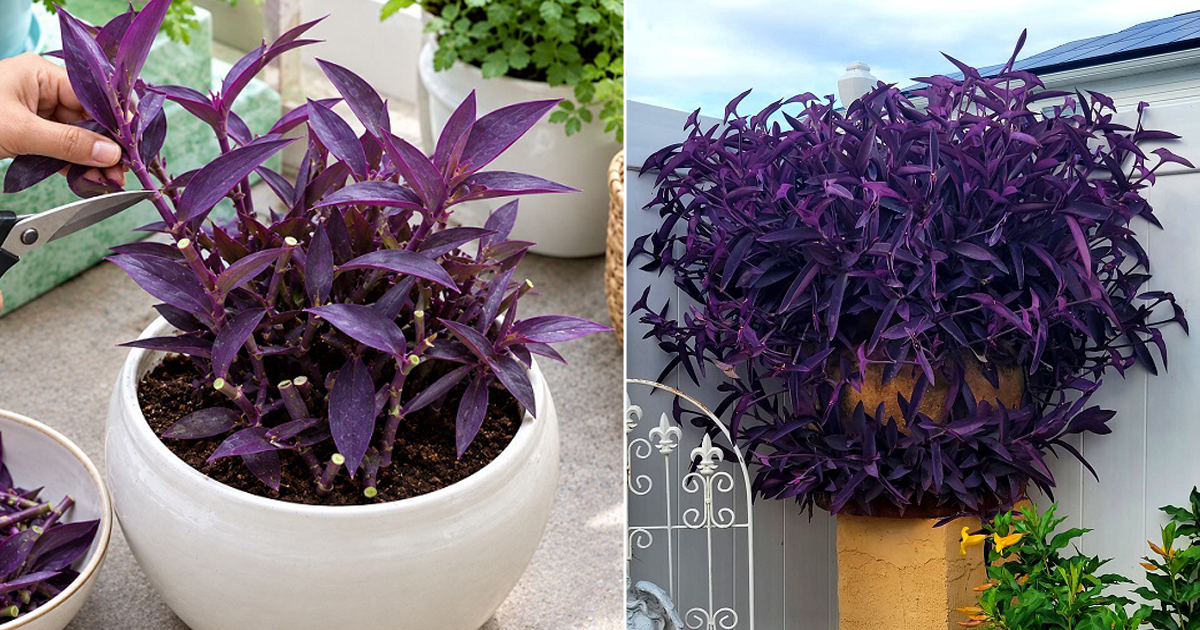
Is your Tradescantia getting long and sparse? Learn how to prune a Purple Heart plant for a bushier growth with simple, well-placed cuts.
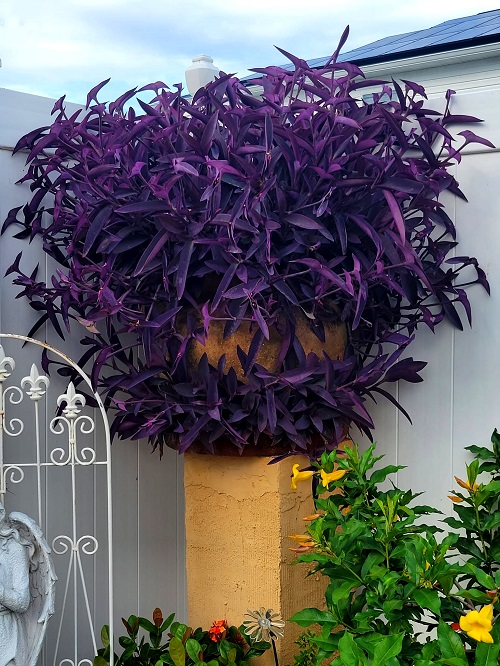
Purple Heart is one of those plants that can look great for months and then suddenly become long and thin. The stems stretch, the leaves become spaced out, and the plant loses that full look.
Pruning is the easiest way to correct this. You do not need to cut the whole plant back. A few well-placed cuts can encourage new shoots and give you a much fuller plant.
Why Pruning Helps Purple Heart Grow Bushier
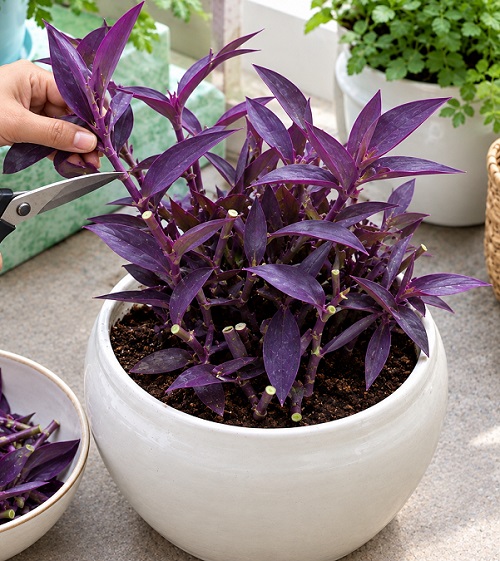
Purple Heart, or Tradescantia pallida, naturally tends to trail as it grows. If you leave the stems alone, they can become long and sparse rather than filling out near the base.
When you remove the growing tips, the plant no longer puts all its effort into extending those stems. New growth can develop from nodes farther down the stem.
This is why the location of your cut matters. Cutting randomly may shorten the plant, but cutting just above a healthy node gives it a better chance of producing new shoots.
Look at the whole plant before picking up the shears. If only a few stems are long, there is no reason to cut everything back.
When to Prune a Purple Heart Plant
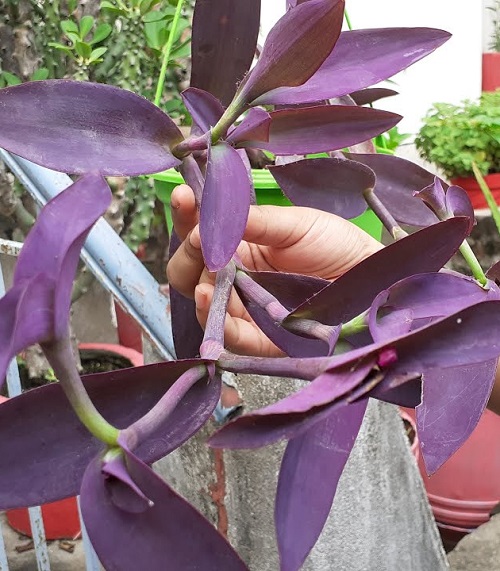
The best time to do major pruning is during active growth. In warm conditions, Purple Heart can recover quickly and produce new shoots after being cut.
Spring and summer are generally the easiest times to prune. If your plant grows actively for most of the year, you can also do light trimming when needed.
Avoid heavy pruning when the plant is barely growing. This is especially important if temperatures have dropped and the plant has slowed down.
A plant that is already struggling will not suddenly become bushier just because you cut it. It needs enough warmth, light, and growing activity to respond well.
How to Prune a Purple Heart Plant for a Bushier Growth
Get a complete indoor plant-care kit and keep the essential tools together for watering, pruning, potting and everyday plant care. Also, you can get all the necessary items for gardening at our Amazon Storefront.
1. Look at the Stems Before You Cut
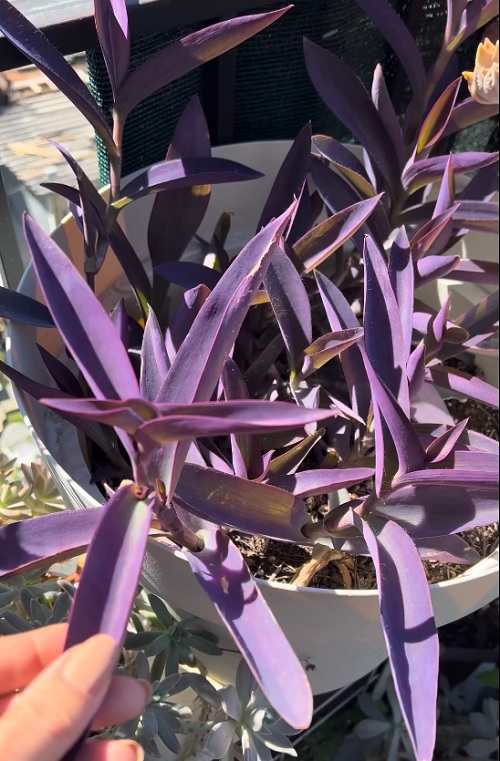
Before pruning, check which stems actually need attention.
You may notice some stems that are long and bare near the middle. Others may still have plenty of leaves and only need their tips removed.
Start with the longest and weakest-looking stems. If you cut every stem to the same length, the plant can end up looking unnaturally even.
Purple Heart usually looks better when the stems have slightly different lengths. This also gives new growth room to fill the spaces.
Add to cart a clean pair of precision pruning snips rather than grabbing household scissors.
2. Where to Make the Cut
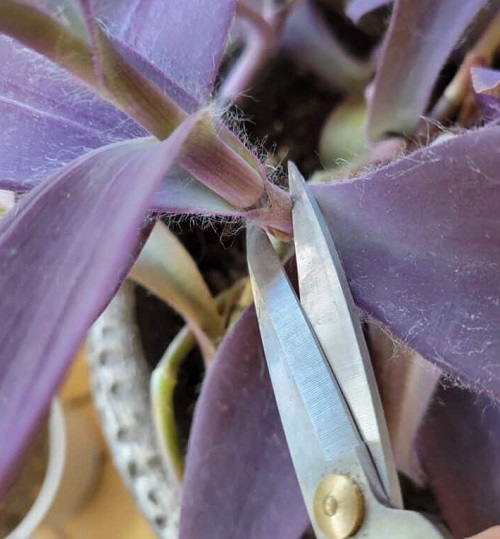
This is the part that makes the biggest difference.
Look closely at a healthy stem. You will see small points where leaves grow or have grown. These are nodes.
Make your cut just above a healthy node rather than cutting somewhere in the middle of a long section.
The node below the cut can produce new growth. If you leave a reasonable section of stem with several healthy nodes, you give the plant more places from which new shoots may develop.
Use clean, sharp scissors or pruning shears. A clean cut is better than crushing the stem with a blunt tool.
You do not need to leave a long piece of bare stem above the node. A short section is enough.
3. How Much Should You Cut Off?
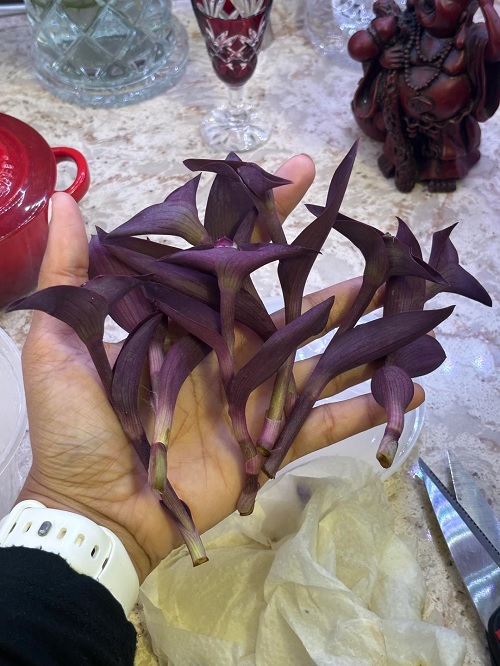
Do not remove a large amount of the plant simply because you want it to become bushier.
For a healthy Purple Heart, trimming the growing tips and reducing overly long stems is often enough. If the plant has become very leggy, you can cut the stems back more firmly.
A useful approach is to prune a little, step back, and look at the plant again. This helps you keep its natural shape.
If your Purple Heart has only a few long stems, remove the weak ends first. If the entire plant has become stretched, a harder cutback may be appropriate during active growth.
4. Pinching the Growing Tips
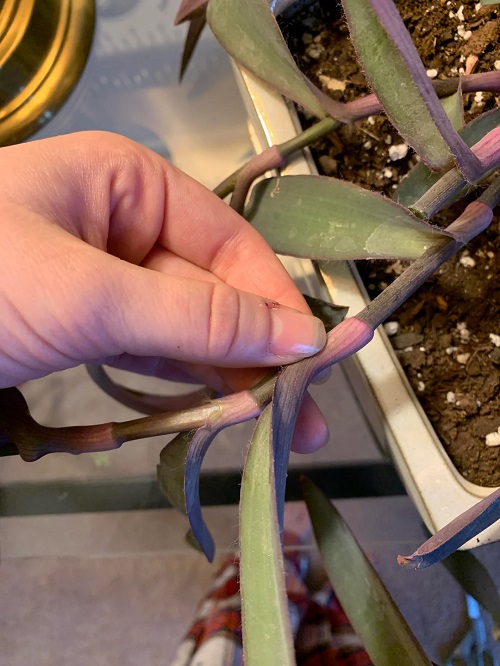
You do not always need scissors.
When the stems are young and soft, you can pinch off the growing tips with your fingers. This is useful when the plant is already fairly full and you simply want to stop a few stems from getting too long.
Pinching encourages the plant to branch lower down. I find this especially useful when Purple Heart is growing quickly during warm weather.
Do not keep pinching the same tiny tip every few days. Give the plant time to produce new growth before deciding where it needs another trim.
5. Prune Long, Bare Stems Differently
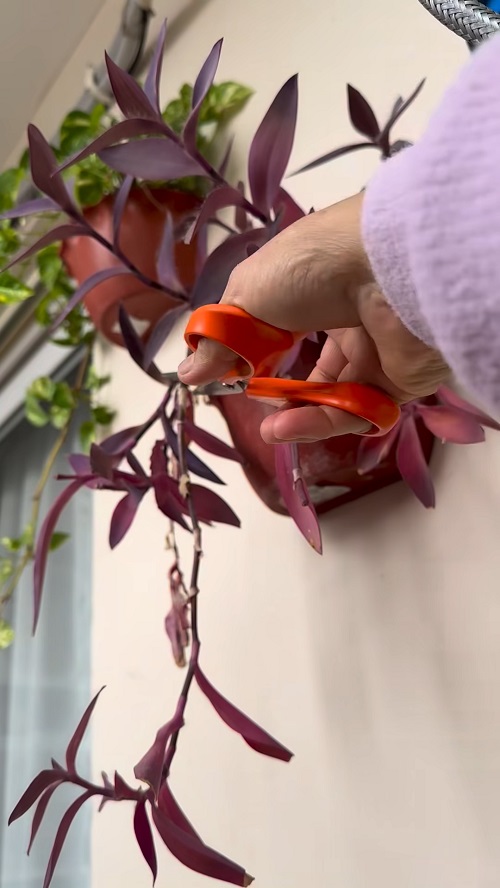
Long bare stems need more attention than healthy leafy ones.
If a stem has leaves only near the end, cutting off just the tip will not solve much. You will still have a long, bare section underneath.
Instead, find a healthy node lower on the stem and cut above it. You can shorten the stem considerably this way.
If several stems have the same problem, prune them at slightly different points. New growth will then appear at different heights instead of forming one straight line.
What to Do With the Cuttings
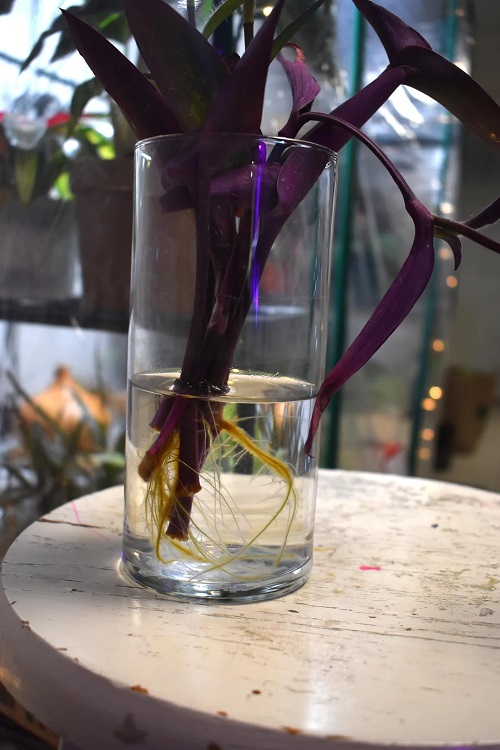
Do not throw away every healthy cutting.
Purple Heart is easy to propagate from stem cuttings. Take a healthy section with several nodes and remove the lower leaves if needed.
You can place the cutting in water or put it directly into a suitable potting mix. Keep it in a warm, bright location while it develops roots.
Another option is to place several cuttings back into the same pot. Once they root, they can help fill out the plant.
This is a simple way to turn pruning into new plants while also making the original container look fuller over time.
Want to turn those cuttings into new plants? Use a lightweight, well-draining potting mix to give the rooted stems a good start.
Give the Plant Enough Light After Pruning
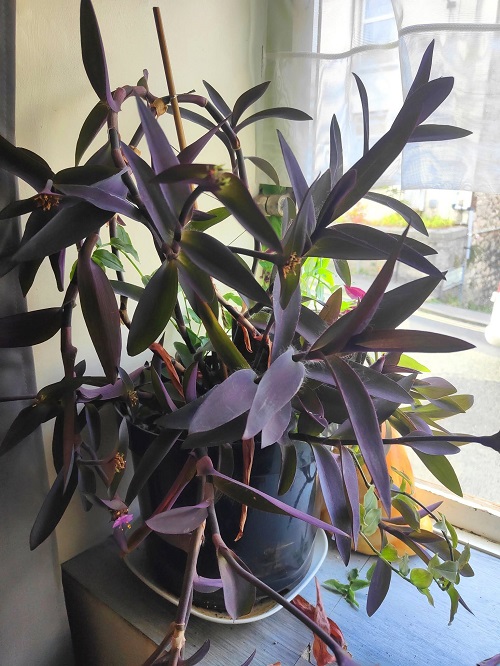
Pruning alone will not keep Purple Heart bushy.
Light plays an important role in how the plant grows. If it does not receive enough light, new stems may stretch again instead of staying compact.
Give your plant plenty of bright light. Purple Heart can tolerate direct sun, but introduce stronger sunlight gradually if the plant has been growing in a less sunny spot.
If you move it suddenly from shade to intense afternoon sun, the leaves can scorch.
A bright location with suitable sun exposure usually produces stronger, more compact growth than a dim corner.
Give your Purple Heart a more consistent light source. Check the SANSI grow-light options on Amazon.
Do Not Overwater After Pruning
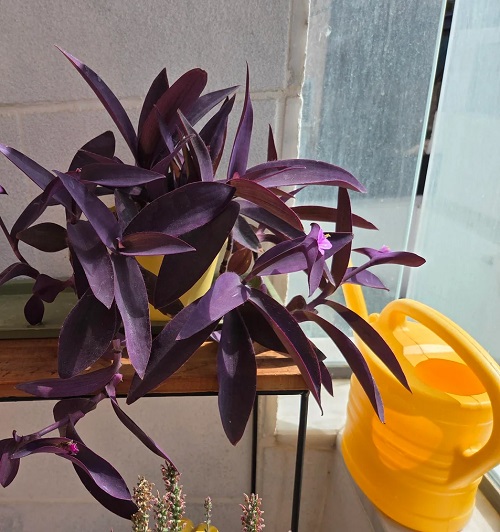
It is easy to think a freshly pruned plant needs extra water. It does not.
Water according to the condition of the soil rather than the fact that you have just cut the plant.
Purple Heart does not like sitting in constantly wet soil. Allow the growing medium to dry somewhat between watering, especially when the weather is cooler or the plant is growing slowly.
Good drainage is important too. A pot with drainage holes prevents excess water from remaining around the roots.
Choose a pot with drainage holes to help excess water escape and reduce the risk of soil staying soggy.
Should You Fertilize After Pruning?
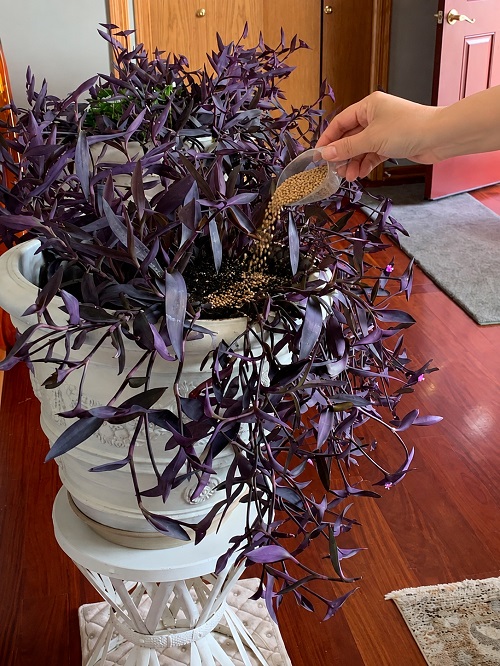
There is no need to immediately give a heavy dose of fertilizer after cutting.
If the plant is actively growing and the potting mix is due for feeding, you can continue with a normal, balanced feeding routine. More fertilizer is not a substitute for proper light and growing conditions.
Overfeeding can create soft, excessive growth without fixing the reason the plant became leggy in the first place.
I prefer to let the plant settle after a major pruning and then return to its normal care routine.
Give your Purple Heart plant the nutrients it needs for steady new growth.
What If Your Purple Heart Is Already Very Leggy?
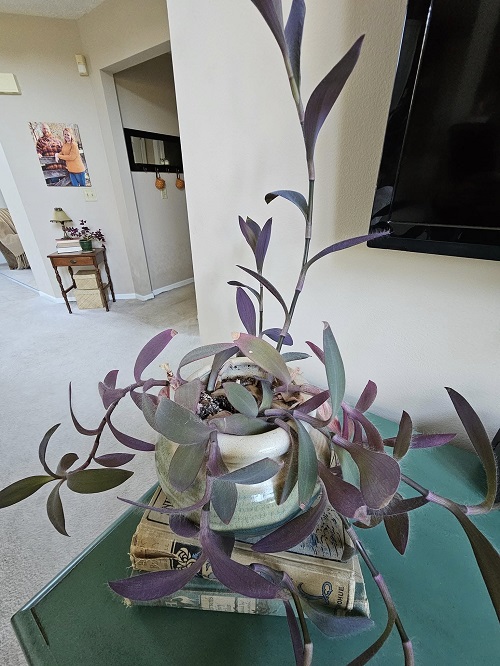
A badly stretched plant can still be brought back into shape.
Cut the longest stems back to healthy nodes. Remove weak or damaged growth. Keep the stronger sections rather than trying to save every thin stem.
You may be left with a much shorter plant than you expected. That is fine.
Give it good growing conditions and wait. New shoots will take some time to appear.
If the plant has become extremely sparse, rooting several healthy cuttings in the same pot can also help create a fuller appearance.
How Often Should You Prune Purple Heart?
There is no fixed pruning schedule.
Watch the plant instead.
If the stems are getting too long, trim them. If the plant is already full and compact, leave it alone.
During active growth, you may need to pinch or trim several times. During slower growth, you may barely need to prune at all.
Frequent heavy cutting is not necessary. The goal is to maintain a good shape while allowing the plant enough time to grow.
Common Pruning Mistakes to Avoid
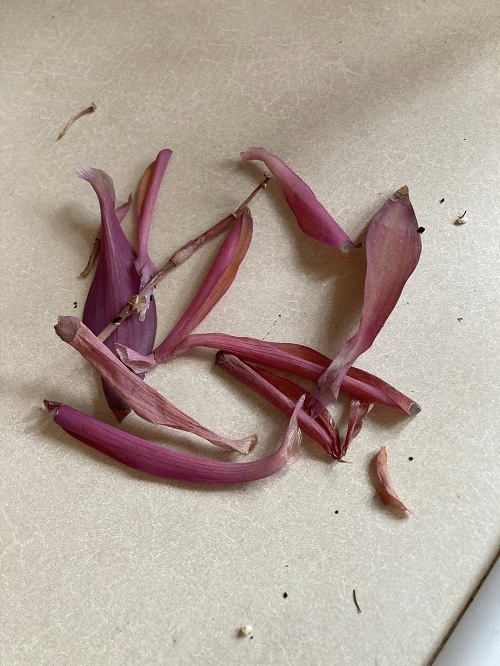
One common mistake is cutting every stem too short. This can remove too much healthy growth and leave the plant with very little foliage.
Another is making cuts without looking for nodes. The plant can still recover, but you lose the main advantage of making targeted cuts.
Using dirty or dull scissors is another problem. Clean your cutting tool before pruning, particularly if you have recently worked on another plant.
It is also easy to keep trimming because the plant does not look bushy immediately. Purple Heart needs time to respond. Give the new shoots a chance to develop before cutting again.
A Simple Pruning Routine for a Fuller Plant
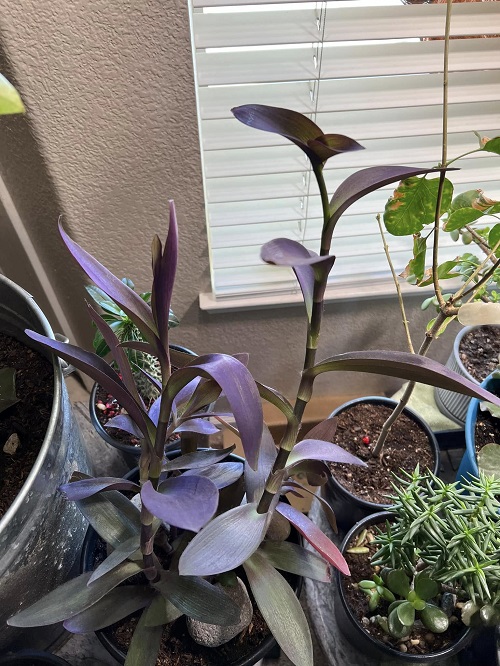
- Start by removing damaged or unhealthy stems. Then look for the longest stems and find healthy nodes closer to the base.
- Cut just above those nodes. Leave healthy stems that already have a good shape.
- Next, pinch a few growing tips if you want the plant to branch more evenly. You can use the healthy cuttings for propagation.
- After pruning, return the plant to a bright location and continue normal watering. Then leave it alone for a while.
- Over the next few weeks, watch for new shoots around the nodes. Once they start filling in, you can decide whether another light trim is needed.
.A good houseplant guide can help you troubleshoot light, watering, soil, feeding and other common problems across your indoor plant collection.