

As an Amazon Associate, we earn a small commission from qualifying purchases — at no extra cost to you.
Get your lemon tree ready for cooler days with these simple October care tips to protect ripening fruit and keep your tree healthy.
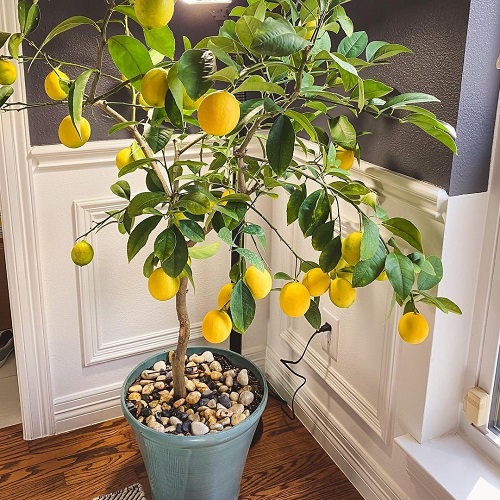
Your lemon tree may be full of fruit as the weather starts to cool, but October is an important time to give it some extra care. The basic needs stay the same in fall. Your tree still needs plenty of sun and well-draining soil, but a little extra attention now can help the fruit finish ripening and prepare the tree for winter.
Lemon trees are not very cold hardy, so the first cold nights can damage the leaves, fruit, and new growth. This is why it is important to start preparing your tree before temperatures drop too far. If you protect it from the cold, it has a better chance of getting through winter and growing well again next year.
If you plan to bring your lemon tree indoors for winter, October is also a good time to check it carefully for pests. You do not want to bring insects inside along with the plant.
Whether your lemon tree will stay outside or move indoors for winter, there are a few important jobs to take care of in October.
Lemon Tree Care in October to Protect Ripening Fruit
See this complete indoor garden setup and turn your plant corner into a year-round growing station. Give a quick view at our Amazon Storefront for more such essential needs.
Reduce Watering
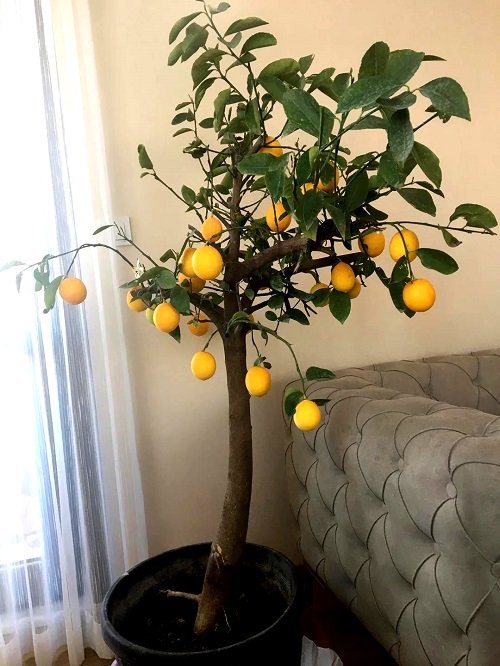
Water your lemon tree less often in October. The soil stays wet longer as the weather cools, so it does not need as much water as it did during summer. Since the fruit has already formed, the tree also uses less water now.
Before watering, check the soil first. Let the top few inches dry out, then water thoroughly rather than giving the tree a little water every day.
Keep an eye on the soil by a handy moisture meter.
Harvest Ripe Lemon Fruits
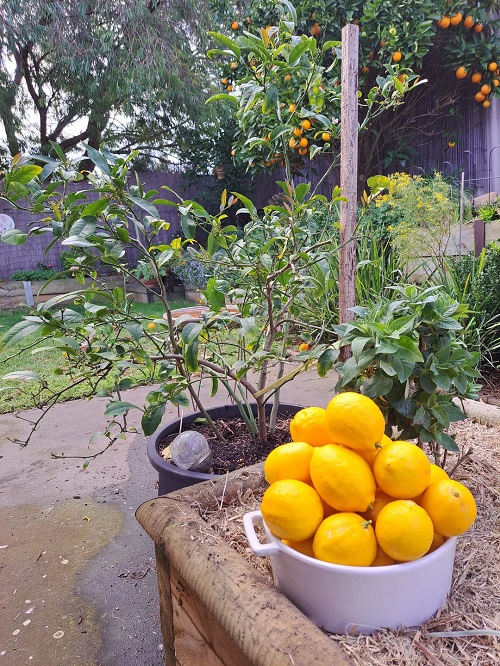
In October, your lemon tree may have fruit at different stages. Some lemons may still be small and green and need several more months to ripen, while others may be ready to pick.
Color alone does not tell you if a lemon is ripe. A lemon can turn fully yellow before it has enough juice, while a ripe lemon may still have some green on the skin.
The best way to know for sure is to pick one, cut it open, and taste it. You can also look for a few signs before picking. A ripe lemon usually feels heavy for its size because it is full of juice. It should feel firm but have a little give when you gently press it.
You can also lightly scratch the skin near the stem with your thumbnail. A ripe lemon should have a fresh, sweet citrus smell.
Use hand pruners to cut lemons from the tree instead of pulling them off. Pulling can tear the skin, and damaged lemons are more likely to rot.
Keep any lemons that are not ready on the tree. Lemons do not continue to ripen after they are picked, so an unripe or sour lemon will not become sweeter later.
Continue with your regular fall care, and your tree can keep producing healthy fruit as the remaining lemons ripen.
Keep an Eye on Pests
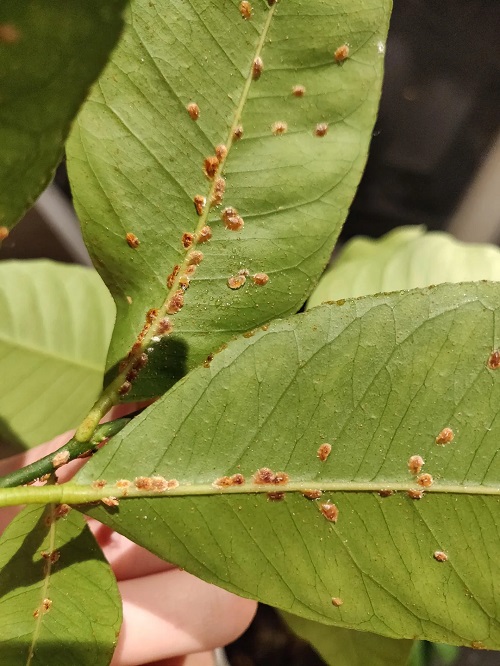
It is always a good idea to check your lemon tree for pests, especially before bringing it indoors. Pests that were controlled outside by rain, wind, and natural predators can spread quickly indoors.
Check the leaves for a sticky coating, which can be a sign of brown soft scale (Coccus hesperidum) or citrus mealybugs (Planococcus citri). Ants crawling up and down the trunk can also point to a pest problem. Scale insects look like small, flat bumps on the stems and leaf veins. To check for two-spotted spider mites (Tetranychus urticae), hold a sheet of white paper under a branch and gently tap it. Watch the paper for tiny specks that begin to move.
Keep the leaves clean with a cotton ball soaked in neem oil and protect them from pests.
Prune Suckers
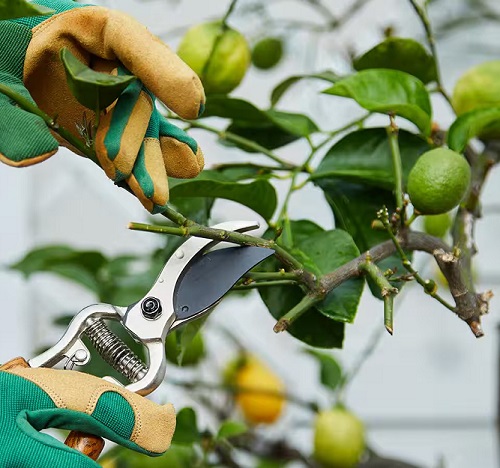
Avoid pruning your lemon tree in fall because it can encourage tender new growth that may be damaged by winter cold. However, you can remove suckers. These shoots grow from the rootstock below the graft union, which looks like a small bulge near the base of the trunk. They grow quickly, are often thorny, and take energy from the tree. Their fruit is usually sour and full of seeds. Cut suckers off close to the trunk with sharp hand pruners.
Locate Potted Lemons Indoors
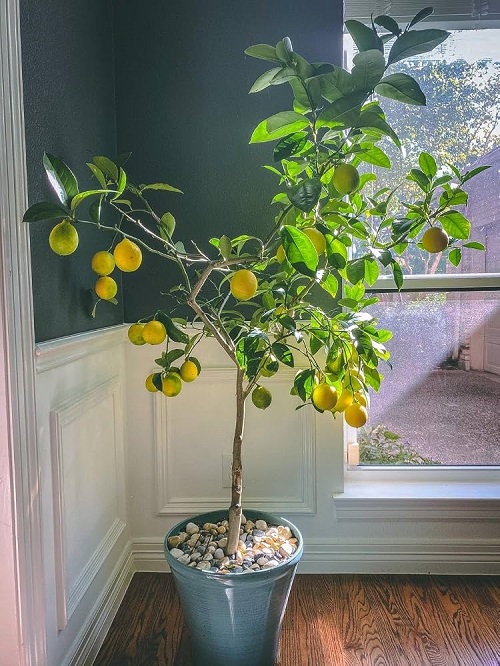
Roots in a pot are more exposed to cold than roots in the ground, so don’t wait for the first frost before bringing your lemon tree indoors. When nighttime temperatures start falling to around 40°F (4°C), it is time to move it inside. A waterproof thermometer with a temperature alert can help you keep track of the temperature.
Large pots can be heavy, so place your lemon tree on a sturdy plant caddy to make moving it easier. Put it near a south-facing window where it can get at least six hours of sunlight each day. Keep it away from heating vents, too. Don’t worry if the tree loses some leaves after moving indoors. This is a common response to the change. Water it less often than you did outdoors, and only water when the top 2 inches (5 cm) of soil feel dry.
Not sure where to keep your pots? Use these plant caddies on wheels so you can move them around easily!
Use Frost Covers for Outdoor Lemon Trees
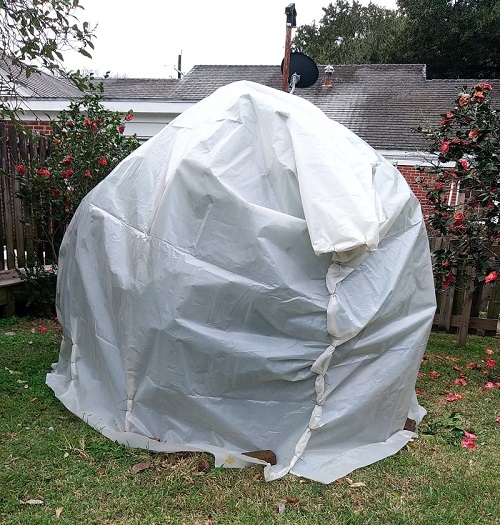
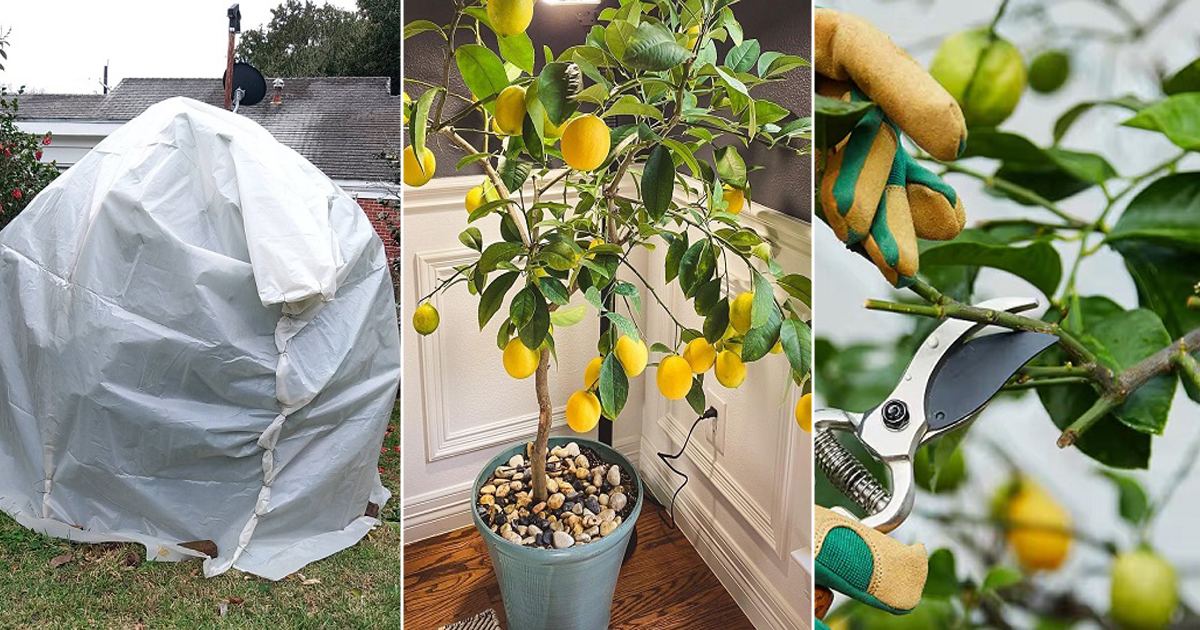
If you plan to keep your lemon tree outdoors during winter, have a frost cover ready before cold weather arrives. You can use a heavy-duty plant blanket and cut it to the right size. Place a few stakes around the tree so the cover does not touch the leaves. Let the cover reach the ground so it can trap some heat from the soil.
If your lemon tree is growing in a pot, you can wrap the pot with a frost blanket to protect the roots. When cold weather is expected, cover the tree with a breathable plant protection bag. Bags with zippers and drawstrings are easy to put on and remove when needed.
Avoid using plastic covers because leaves that touch plastic are more likely to freeze. You may also have seen people using Christmas lights to provide a little extra warmth. Keep in mind that only old-style incandescent bulbs produce noticeable heat. Modern LED lights do not provide enough warmth to protect the tree.
If your Garden is in Zone 8 or Colder
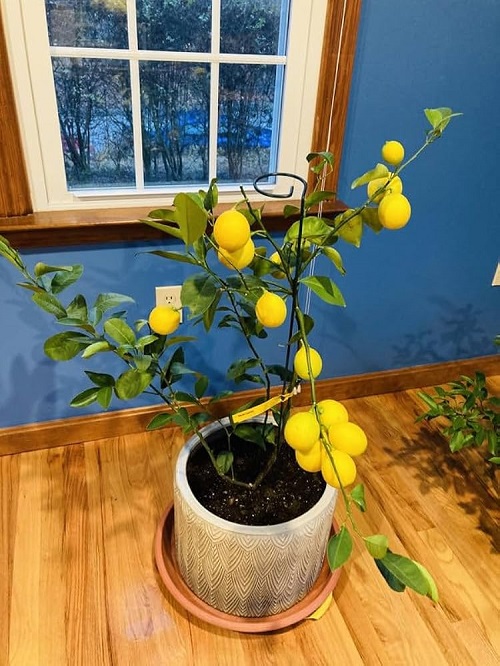
In zones 8 and below, freezing temperatures can kill a lemon tree. Bring your tree indoors before the first fall frost and wait until all spring frosts have passed before putting it back outside. An unheated greenhouse, conservatory, or bright porch can work well as long as the temperature stays above 40°F (4°C). A room with a steady temperature is better than a heated room with frequent temperature changes, which can cause the tree to drop its leaves.
If your Garden is in Zone 9
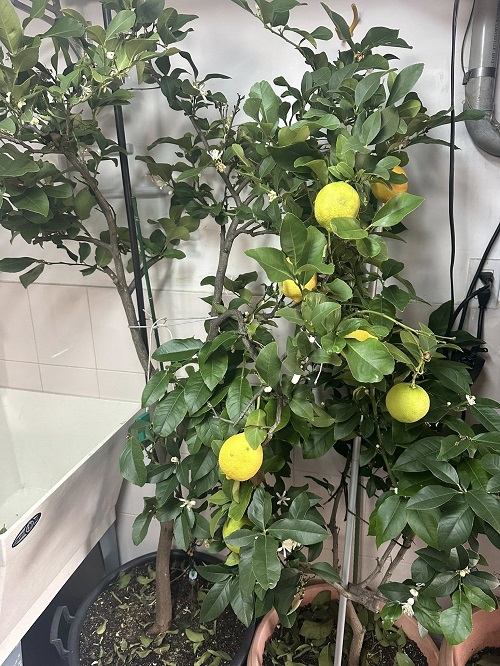
You can usually leave a lemon tree outdoors over winter, but keep an eye on the weather. If temperatures are expected to fall below 30°F (-1°C), cover the tree with a frost blanket for protection.
A lemon tree in a pot is more sensitive to cold than one planted in the ground. However, you can move a potted tree close to a warm, sheltered wall of your house when temperatures drop.
For Gardens in Zones 10 or 11
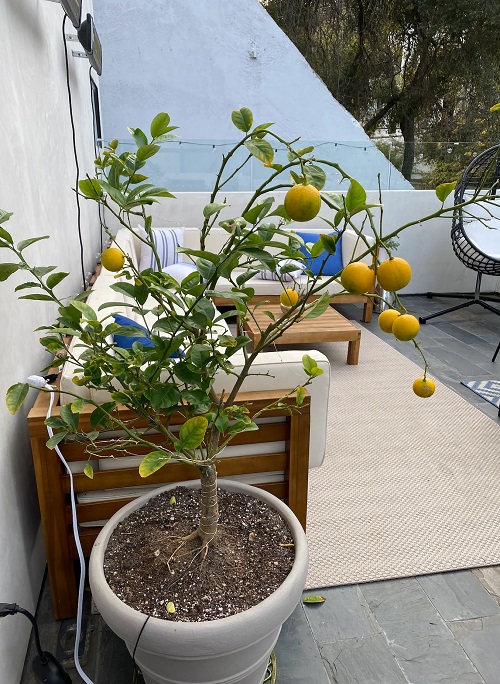
Lemon trees can usually stay outdoors all year in USDA zones 10–11, where winter temperatures stay above 30°F (-1°C). However, lemon trees in pots are more sensitive to cold than those planted in the ground. Move a potted tree to a sheltered spot when temperatures drop.
Learn more about houseplants as a beginner with Indoor Plant Care 101!