
As an Amazon Associate, we earn a small commission from qualifying purchases — at no extra cost to you.
Is your Oxalis losing leaves? Learn why it goes dormant, what to do while it rests, and how to help new growth return.
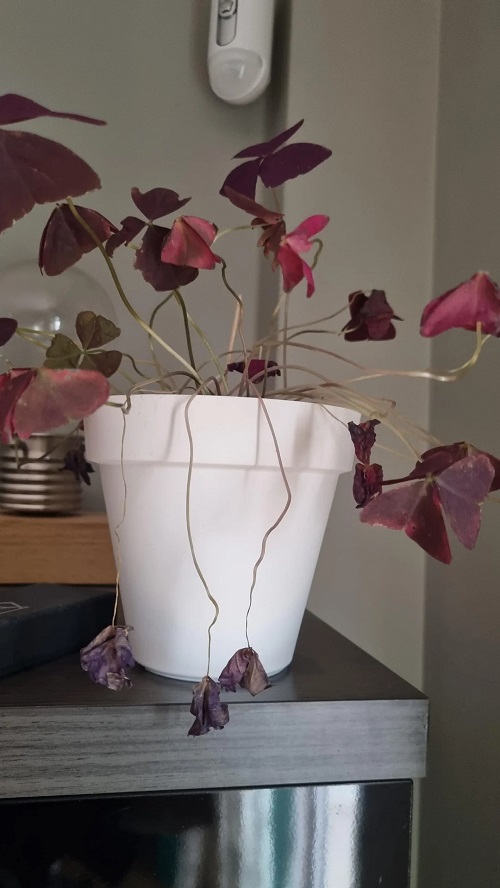
One day your Oxalis is looking full, colorful, and healthy. Then the leaves start drooping, the flowers disappear, and before long, you may be left staring at what looks like an empty pot.
If this has happened to you, don’t throw the plant away just yet.
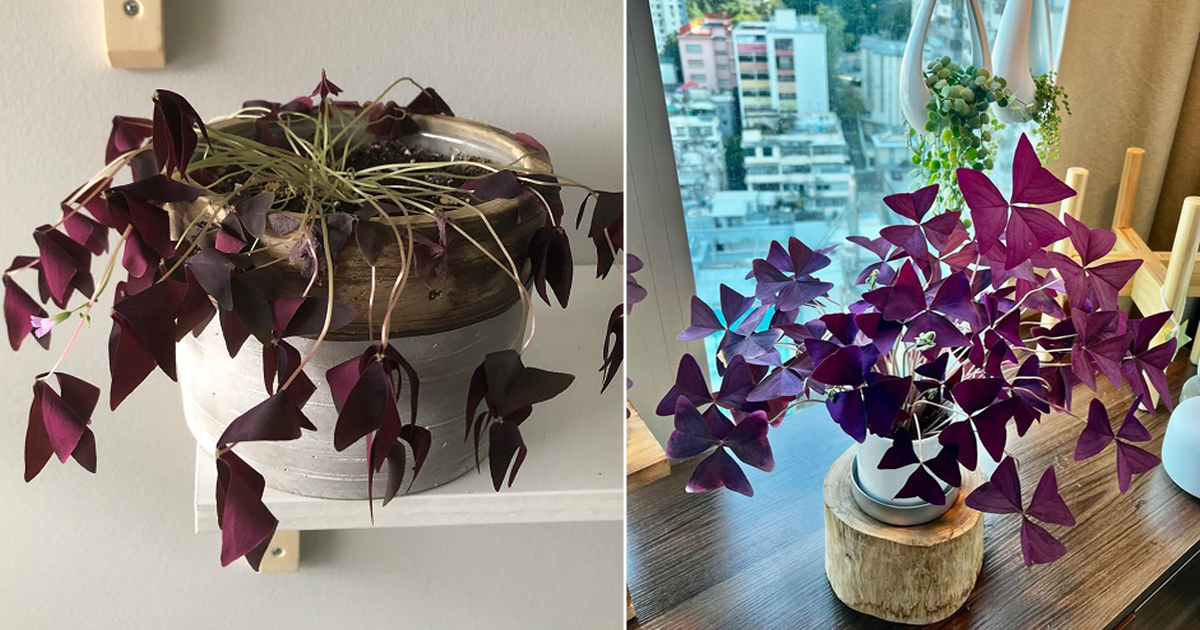
Oxalis can go dormant, and when it does, it can look surprisingly lifeless. Oxalis triangularis, one of the most popular types grown as a houseplant, naturally dies back in preparation for winter and grows again when the growing season returns.
The first time you see it, though, it can be hard to believe that the plant will come back.
Here’s what to look for and what you should do while your Oxalis is resting.
Oxalis Dormancy: What to Do When Your Plant Dies Back
Get this gardening tool set for lush growth with minimal effort. Also, check our Amazon storefront for more garden supplies.
When does Oxalis go dormant?
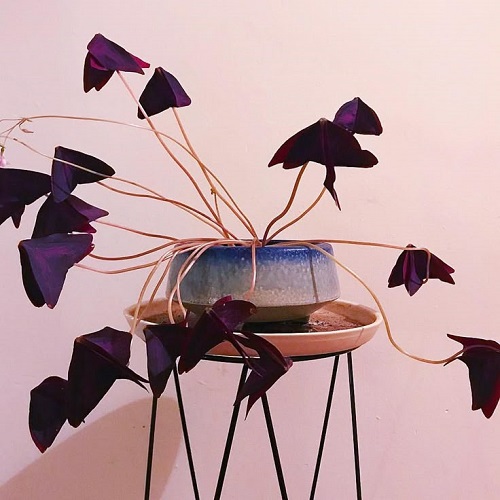
Oxalis does not usually decide to go dormant on one particular date. The timing depends on the species, temperature, light, and growing conditions.
For Oxalis triangularis, dormancy generally begins in autumn as the growing season comes to an end. The plant starts preparing for winter, and the leaves gradually fade and die back. In spring, new shoots emerge from the underground tubers and the plant starts growing again.
If you grow your Oxalis indoors, the timing may be less predictable. A plant kept in a warm room with steady light may stay active for longer, while cooler seasonal conditions can encourage it to rest.
You may also notice the change before the leaves actually disappear. The flowers become less frequent, the stems look tired, and the leaves may stop opening fully during the daytime. This change in the leaves can be one of the first clues that dormancy is approaching.
How do you know your Oxalis is going dormant?
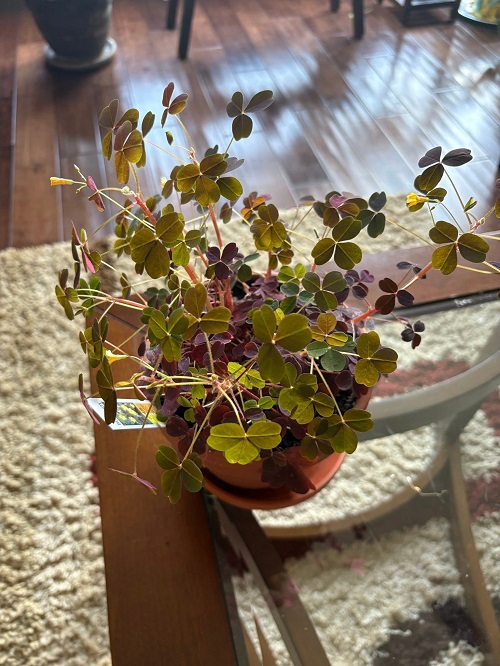
Don’t worry if your plant doesn’t suddenly collapse.
The change is usually gradual.
You might notice that your Oxalis isn’t producing as many new leaves as it did a few weeks earlier. The flowers begin to fade. The stems become floppy, and the leaves don’t look as fresh as they once did.
Then the foliage starts turning yellow or brown.
Eventually, most or all of the leaves may disappear.
This is the point where many people assume they have made a mistake with watering or light. Sometimes that is true, but if the decline happens toward the cooler part of the year after a healthy growing season, dormancy may simply be the reason.
A dormant Oxalis can look like a pot of soil with nothing happening above the surface. That doesn’t mean the plant is dead. The underground tubers are still there, waiting for the next growing period.
Keep a pair of sharp plant scissors nearby so you can easily remove completely dried Oxalis leaves and stems once the plant has finished dying back
What should you do when the leaves start dying back?
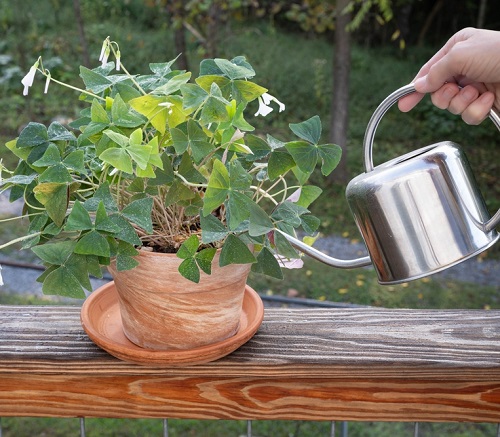
The biggest change you need to make is to your watering routine.
As the plant slows down, gradually reduce watering. Once the foliage has completely died back and the plant has entered dormancy, stop watering regularly.
This is especially important if your Oxalis is growing in a container.
A plant covered in healthy leaves uses water. A dormant plant doesn’t need the same supply. Keeping the pot wet when there is little or no active growth can leave the underground parts sitting in moisture for too long, which can lead to rot.
So when the last leaves disappear, resist the urge to water the empty pot every few days.
Sometimes doing less is exactly what the plant needs.
If your Oxalis pot doesn’t drain well, consider switching to a planter with drainage holes so excess water can escape more easily.
Can you cut back dormant Oxalis?
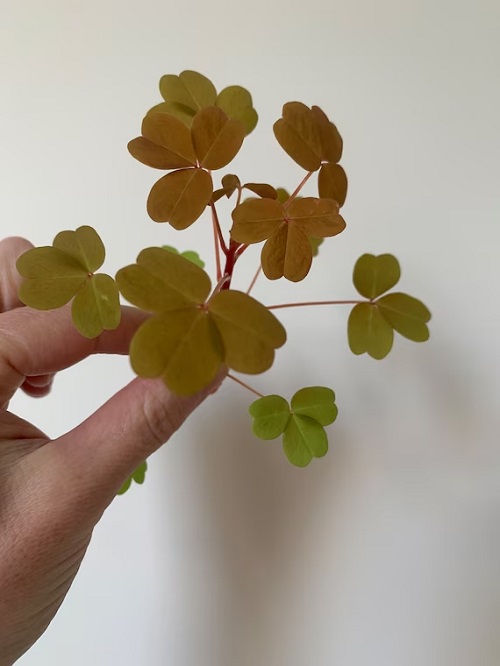
Yes.
You can leave the foliage to dry up naturally, but there is no reason to keep a collection of dead stems in the pot if you don’t like how they look.
Once the leaves and stems have completely died back, cut them away with clean scissors.
Don’t cut healthy green growth simply because you think the plant should be dormant. Let the plant show you that it is finished for the season.
If only a few leaves are fading while the rest of the plant is still growing normally, give it more time.
Where should you keep Oxalis during dormancy?
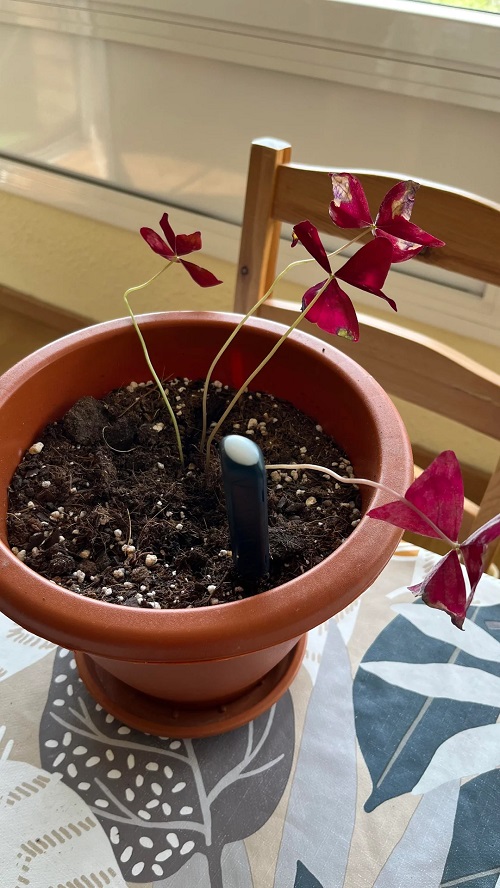
A dormant Oxalis needs a different setup from one that is actively growing.
If you keep it outdoors, place the pot somewhere sheltered from heavy rain. If frost or freezing temperatures are expected, move the container somewhere protected. The reference grower of Oxalis triangularis also recommends keeping dormant plants somewhere cool and dry if outdoor conditions become too harsh.
For indoor plants, a cool spot away from heating vents and other sources of strong heat is a better choice than a warm, dry windowsill.
You don’t need to fuss over the plant during this period.
The main thing is to keep the dormant pot from staying wet.
Should you keep watering a dormant Oxalis?
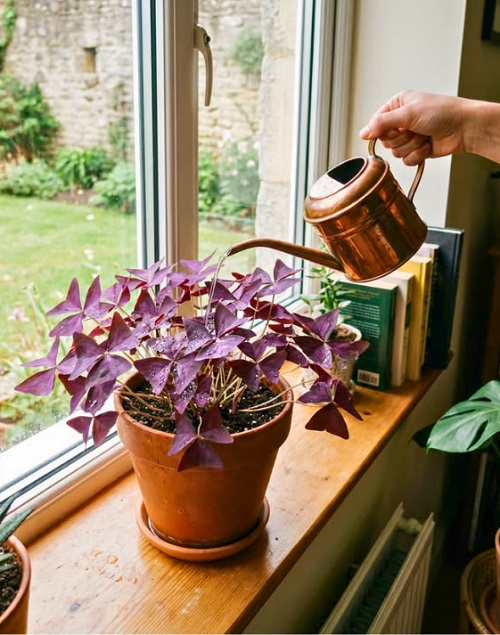
No, not in the way you would during active growth.
Once your Oxalis has fully died back, it doesn’t need regular watering. For Oxalis triangularis, established care guidance recommends reducing watering in autumn and eventually stopping it through winter, keeping the compost almost dry until growth begins again.
This can feel strange if you’re used to checking your plants every few days.
But don’t water simply because the soil looks dry. Dry soil is expected during dormancy.
Of course, there is a difference between a plant that is naturally dormant and one that is dying from another problem. If your Oxalis became limp very suddenly while sitting in constantly wet soil, don’t automatically assume dormancy is the cause.
Not sure when your Oxalis needs water? A moisture meter can help you check the soil before reaching for the watering can.
Do you need to dig up the Oxalis tubers?
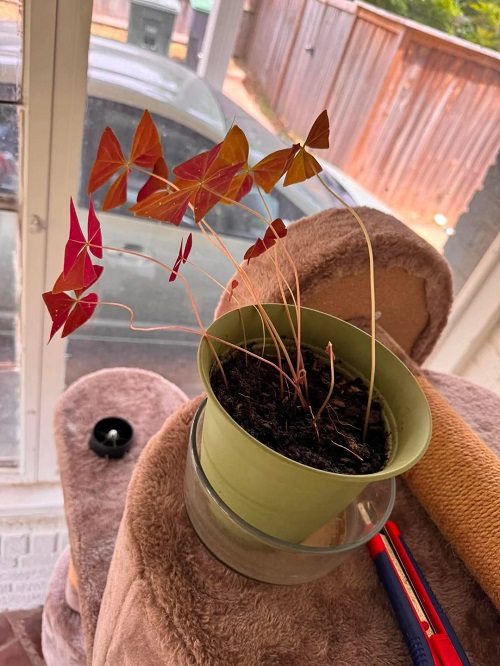
No. You can leave them in the pot.
Digging them up during dormancy is something you can do if you want to divide the plant, inspect the tubers, refresh the potting mix, or give an overcrowded container more room.
It isn’t something you have to do every year.
Some growers enjoy lifting the tubers during the dormant period because it gives them a chance to see what’s happening below the soil and divide an established plant. The reference article uses this approach in late winter, but also points out that it isn’t essential.
If your Oxalis is growing well in its existing pot, you can simply leave it alone until new growth begins.
If you are repotting your Oxalis, choose a well-draining indoor potting mix that won’t hold excessive moisture around the tubers.
When should you start watering Oxalis again?
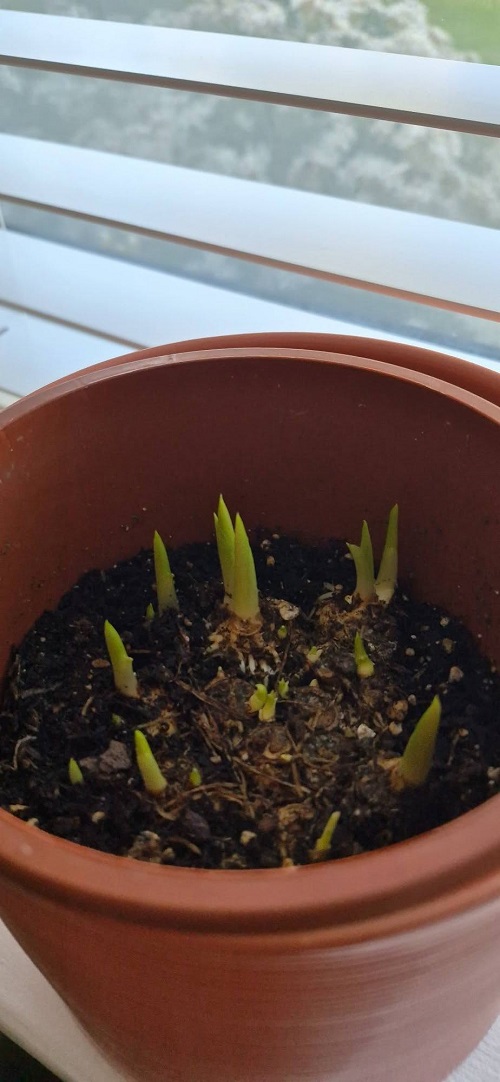
This is where patience helps.
Don’t choose a date on the calendar and start soaking the pot just because winter has passed.
Look for new growth.
When you notice tiny shoots emerging from the soil, your Oxalis is waking up. That’s your cue to start watering again.
Begin lightly rather than drenching a completely dormant pot. As more shoots appear and the plant starts producing leaves, you can gradually return to normal watering.
Fresh growth may look small at first. That’s normal. Oxalis can take a little time to get going after dormancy. Gardeners who grow Oxalis triangularis have reported that the first leaves after dormancy can be noticeably smaller before the plant settles back into stronger growth.
So don’t panic if the first few leaves don’t look like the lush plant you remember.
Give it some time.
Ready to water when new shoots appear? A small indoor watering can makes it easier to give your Oxalis a controlled amount of water as it wakes up.
How long does Oxalis stay dormant?
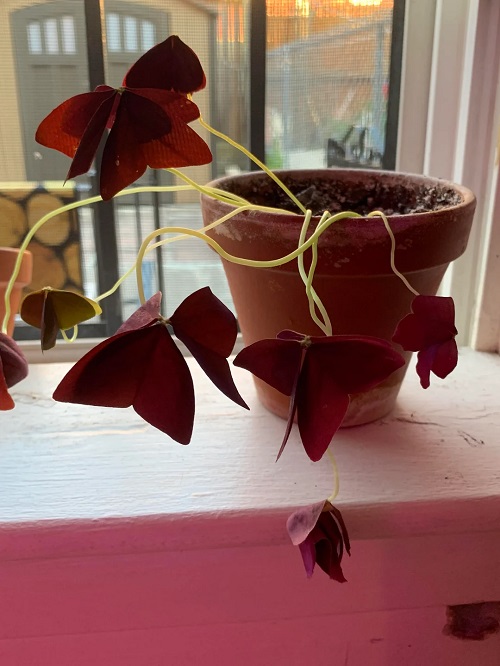
There isn’t one dormancy period that applies to every Oxalis.
For Oxalis triangularis, the plant generally rests through winter and begins growing again in spring.
The exact timing can change depending on where you grow it.
A plant outdoors in a cool climate may follow a more obvious seasonal cycle. An indoor plant may behave differently, especially if it receives plenty of warmth and light throughout the year.
Some growers even find that their Oxalis stays active instead of going completely dormant indoors. So don’t worry if yours doesn’t follow the exact same schedule as someone else’s plant.
Is your Oxalis dormant or actually dying?
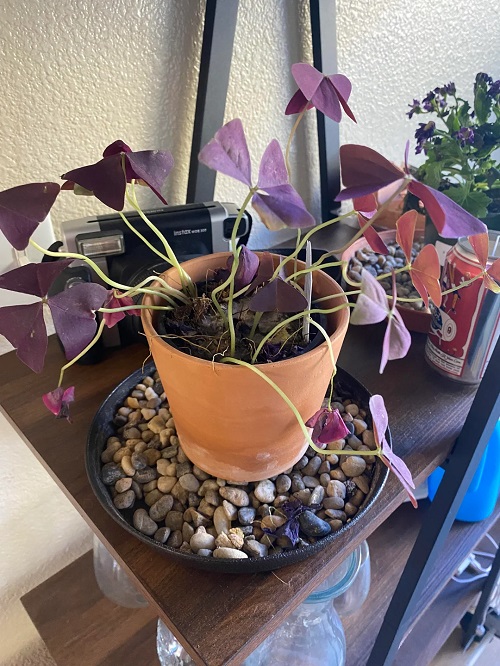
This is worth checking before you stop watering.
Natural dormancy usually happens gradually. The plant has already had a period of healthy growth, and the decline coincides with the changing season.
A sick Oxalis can look different.
If the soil has been staying wet for a long time, the stems are mushy, or the plant collapses unexpectedly, you could be dealing with overwatering or rot instead.
Look at the whole picture rather than judging the plant from its leaves alone.
A completely leafless Oxalis in winter isn’t necessarily a problem.
A collapsing Oxalis sitting in soggy soil is a different story.
How do you wake an Oxalis from dormancy?
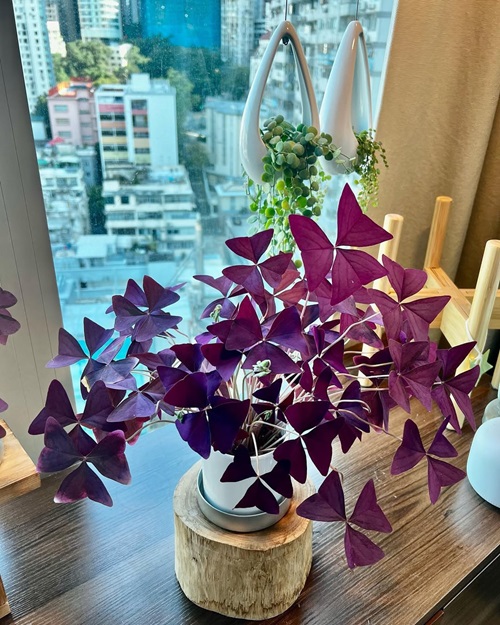
When new shoots begin to appear, move the plant back into a suitable bright location.
Start watering again, but don’t go from completely dry soil to constantly wet soil overnight. Let the plant gradually return to active growth.
Once the leaves begin developing properly, you can resume normal care and fertilize during the growing season if needed. Oxalis triangularis benefits from regular feeding while actively growing, but fertilizer isn’t necessary while the plant is dormant.
If you’ve divided or repotted the tubers, give them time to establish before expecting a full display of leaves.
The first little shoots may look unimpressive.
Then, seemingly out of nowhere, the pot starts filling again.
Once your Oxalis is actively producing new leaves, a balanced houseplant fertilizer can help provide nutrients during the growing season.
What if your Oxalis never goes dormant?
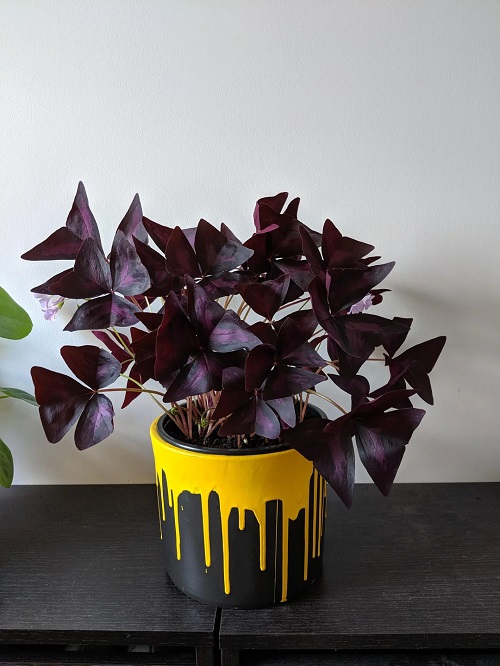
Don’t assume something is wrong.
Some Oxalis plants grown indoors can continue producing growth rather than having a dramatic period where every leaf disappears. Differences in temperature, light, and growing conditions can affect how strongly dormancy shows up. Growers have reported Oxalis triangularis remaining active throughout the year under suitable indoor conditions.
You don’t need to force dormancy just because another person’s plant goes dormant.
If your plant is healthy and growing, keep caring for it according to its current conditions.
Don’t throw away a leafless Oxalis
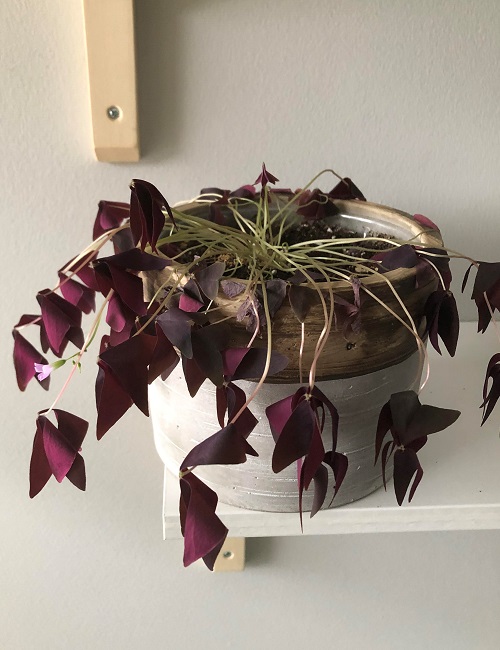
The first time your Oxalis goes dormant, it can be a little alarming.
One month you have a pot full of purple butterfly-shaped leaves. A few weeks later, there is almost nothing left to look at.
It can feel as though you’ve lost the plant.
But if the timing and symptoms fit natural dormancy, leave the tubers alone, keep the dormant pot on the dry side, and wait.
When spring arrives and those first small shoots push through the soil, you’ll understand why you shouldn’t have given up on it.
Your Oxalis wasn’t dying.
It was simply taking a break.
If you enjoy growing Oxalis and other houseplants, a good indoor gardening book can be useful for understanding watering, light, soil, repotting, and seasonal care. Check out this houseplant care book on Amazon for practical tips you can use beyond Oxalis