
As an Amazon Associate, we earn a small commission from qualifying purchases — at no extra cost to you.
Want a fuller houseplant? Learn the Secret to Grow New Branches on Rubber Plant with easy pruning and care tips that really work.
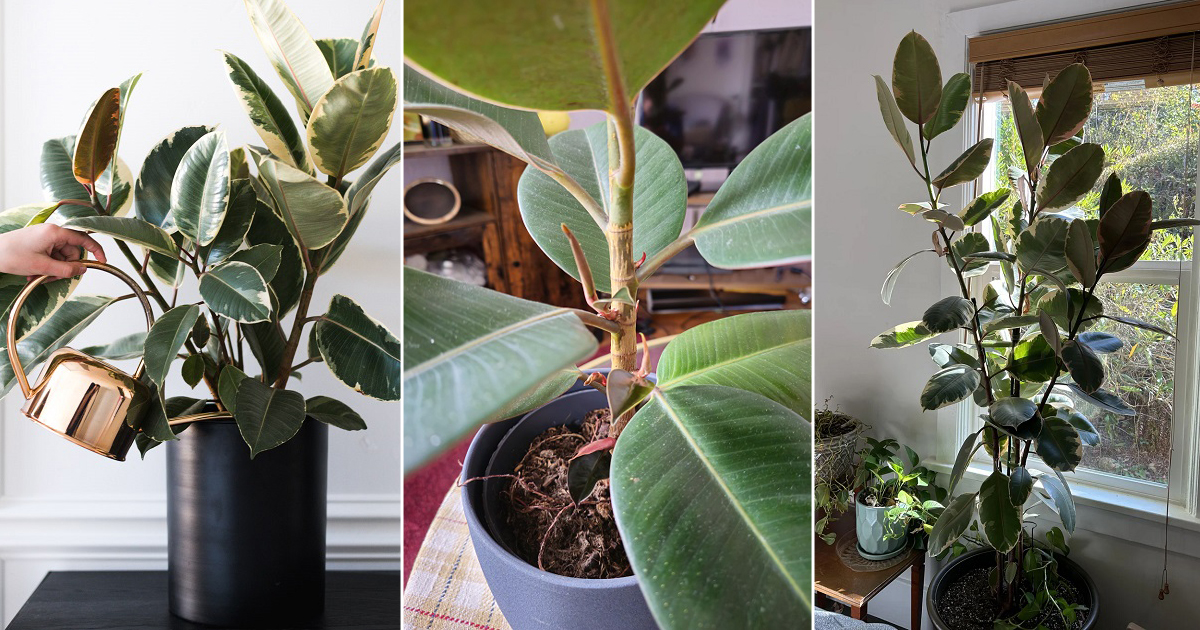
Want your rubber plant to look fuller instead of growing as a single tall stem? Learn the Secret to Grow New Branches on Rubber Plant is easier than you might think. Follow the one Secret to Grow New Branches on Rubber Plant and enjoy a bushier, more attractive plant.
Why Your Rubber Plant Keeps Growing Taller Instead of Bushier
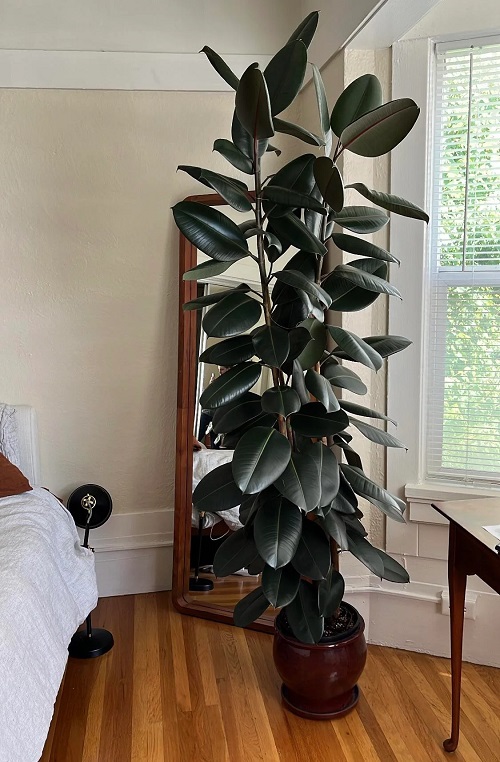
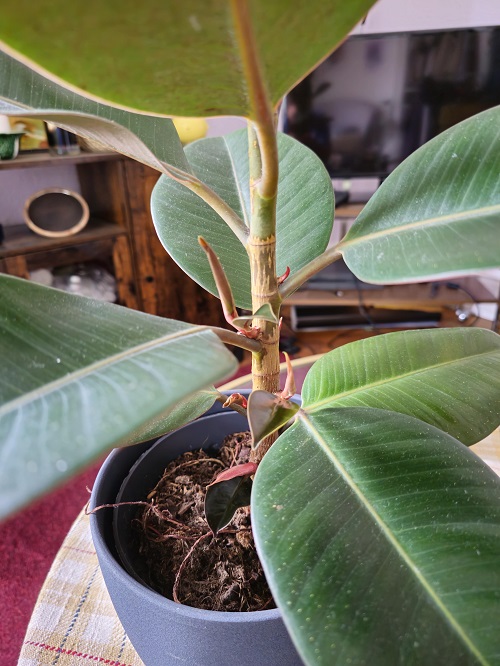
A rubber plant has one main goal when it is young. It wants to grow upward. That is why many indoor plants develop a long stem with leaves but very few side branches. People often think something is wrong, but this is actually normal growth.
The top growing tip controls the rest of the plant. As long as it stays active, the lower buds usually remain asleep. They have the ability to become branches, but they need the right signal before they start growing.
Many gardeners spend money on fertilizers, hoping that extra feeding will solve the problem. In most cases, it does not. A healthy rubber plant already has everything it needs to branch. The real challenge is convincing it to change the way it grows.
Once you understand this, encouraging a fuller plant becomes much easier.
Secret to Grow New Branches on Rubber Plant
Love indoor greenery all year? Grow beautiful herbs and plants effortlessly with this best-selling indoor garden. For more such supplies, check out our Amazon storefront.
The Simple Trick That Encourages New Branches
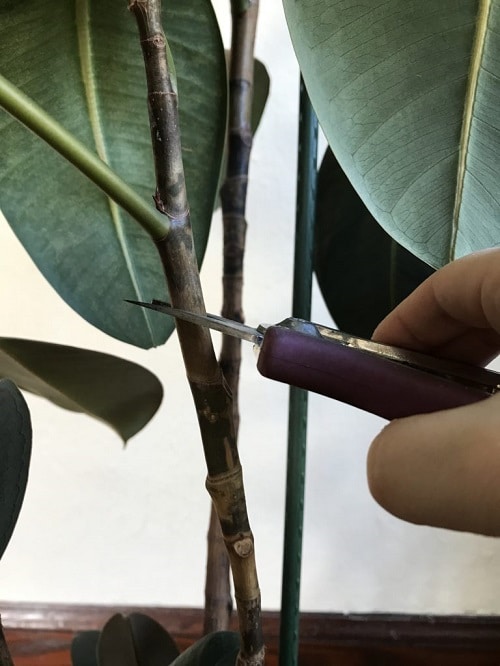
The easiest way to wake up those sleeping buds is by pruning.
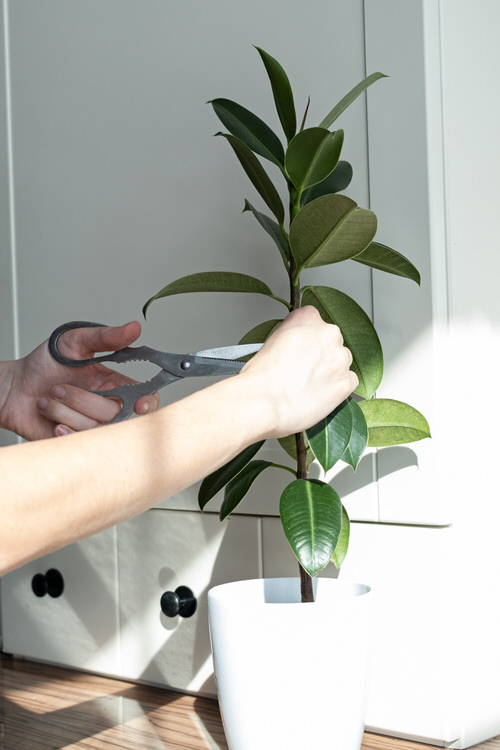
Choose a healthy stem and look for a leaf node. This is the point where a leaf joins the stem. Make a clean cut just above that node using sharp, clean pruning shears.
It feels strange the first time because you are removing healthy growth. Many people hesitate and cut only the tiny tip. That usually does very little. A proper cut gives the plant a reason to redirect its energy.
The first few days after pruning can be disappointing. Nothing seems to happen. The cut dries, and the plant looks exactly the same.
Leave it alone.
After a few weeks, you may notice a tiny green bump near one of the upper nodes. That little bump is often the beginning of a new branch. Some plants produce one branch, while others surprise you with two or even three.
Every rubber plant responds differently, so avoid comparing yours with pictures online.
Get these sharp pruning shears for all your gardening activities.
Timing Makes More Difference Than People Think
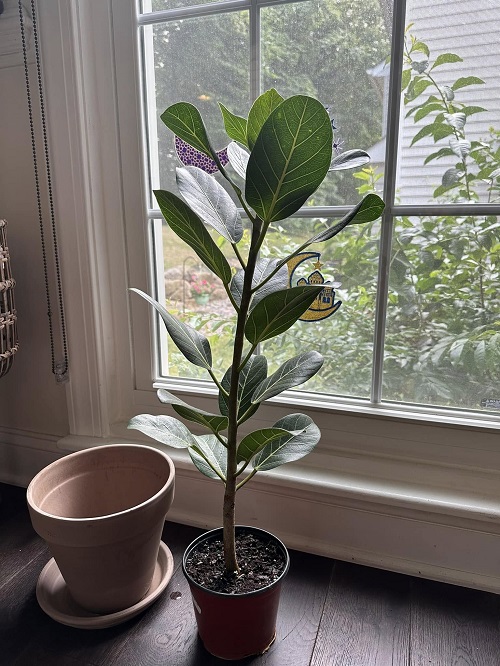
Many failed attempts happen because pruning is done at the wrong time.
Spring is the easiest season for shaping a rubber plant. Early summer also gives good results because the plant is naturally producing fresh leaves. If you prune during winter, the plant is not growing much. The cut heals, but new branches may not appear until temperatures rise again.
There is no need to rush. If your plant was recently repotted or has been recovering from leaf drop, wait until it starts growing again before pruning. A healthy plant always responds better than a stressed one.
Sometimes waiting another month gives much better results than cutting too early.
Thinking about repotting? Here is a pot with an easy drainage system that your plant will love!
Give the Plant a Reason to Grow
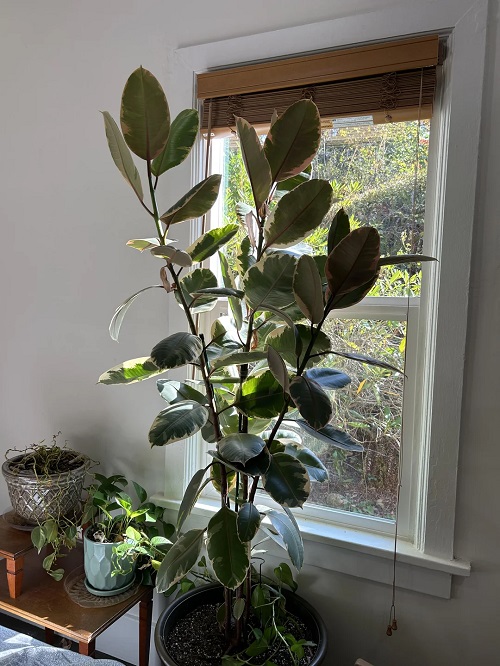
Pruning starts the process, but light keeps it going. A rubber plant sitting in a dark corner has very little energy to spare. Even if you prune correctly, new shoots may stay small or never appear.
Move the plant close to a bright window where it receives plenty of indirect light. Morning sunlight is usually gentle enough, while strong afternoon sun may burn the leaves during summer.
One thing experienced growers notice is that brighter plants always recover faster after pruning. If natural light is limited in your home, a quality grow light can make a noticeable difference during the growing season.
You do not need perfect conditions. You simply need enough light for the plant to produce new energy.
Install this grow light that adds to the decor of your place while helping your plant’s growth.
Water and Feed Without Overdoing Either One
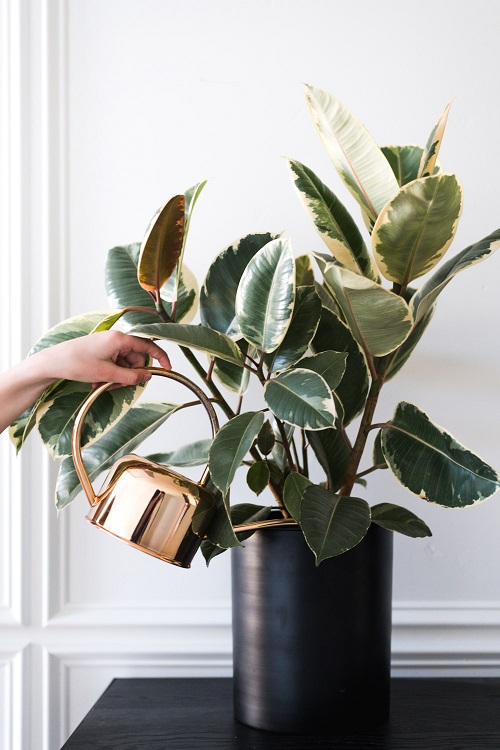
It is common to think a freshly pruned plant needs extra water.
Actually, the opposite can happen.
Since the plant has slightly less foliage, it often uses water more slowly for a short time. Check the soil instead of following a calendar. When the top couple of inches feel dry, water thoroughly until excess water drains from the bottom of the pot.
Then wait again.
Keeping the soil constantly wet is one of the quickest ways to slow new growth.
Fertilizer should also be used with restraint. A balanced liquid fertilizer every four to six weeks during spring and summer is usually enough.
More fertilizer does not create more branches. It often produces soft growth that bends easily and attracts pests. Healthy roots, bright light, and patience do much more than heavy feeding.
Here is a healthy mix of fertilizer to boost the growth of your plant.
Small Habits That Help Over Time
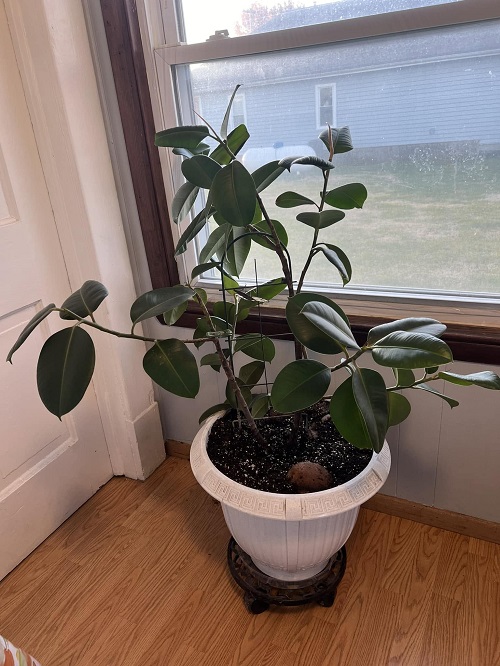
Little things often add up. Rotate the pot every couple of weeks so all sides receive similar light. Otherwise, the plant begins leaning toward the window, and new growth develops unevenly.
Keep the leaves clean by wiping away dust with a damp cloth. Clean leaves absorb more light than dusty ones. Avoid removing healthy leaves just because they look crowded. Those leaves are producing the energy needed for fresh branches.
If your rubber plant has become root-bound, move it into a container only one size larger. A huge pot holds extra moisture for longer periods, and that is rarely helpful.
Stable conditions usually give better results than constant changes.
Rubber plants appreciate consistency.
Use this organic neem oil to keep your plants clean.
Mistakes That Delay New Branches
The biggest mistake is expecting quick results.
- Many people prune the plant, wait ten days, see no change, and prune again. That usually weakens the plant instead of helping it.
- Another common mistake is placing the plant back in a dark room after pruning. Without enough light, dormant buds often remain inactive.
- Overwatering causes trouble as well. Roots sitting in soggy soil cannot support healthy new growth.
- Some gardeners also feed the plant every week, hoping to speed things up. The plant cannot use that much fertilizer, and the extra salts may even damage the roots.
- Cold drafts are another hidden problem. A rubber plant growing beside an air conditioner or an open winter window often grows much more slowly than one kept in a warm, stable room.
- Most problems come from trying to do too much instead of letting the plant recover naturally.
Be Patient and Let the Plant Respond
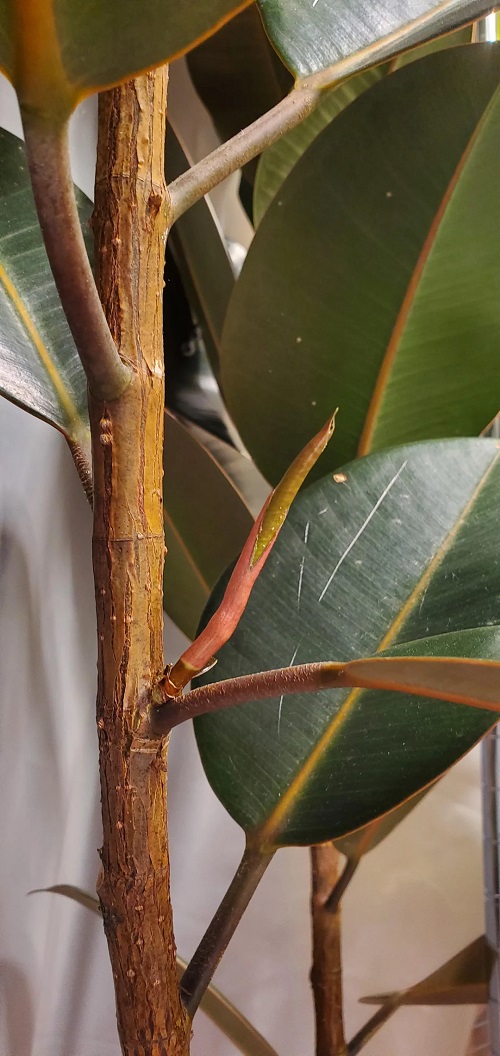
The hardest part of growing new branches is waiting. A rubber plant follows its own schedule. One plant may produce fresh shoots in three weeks, while another takes nearly two months. During that time, keep caring for it as you normally would.
Do not keep moving the pot. Don’t keep trimming the stem. Avoid changing fertilizers. Healthy rubber plants usually respond when conditions stay steady.
Many experienced gardeners say the biggest improvement came after they stopped interfering and simply let the plant grow.
Here is a moisture meter to keep a check on your plants.