
As an Amazon Associate, we earn a small commission from qualifying purchases — at no extra cost to you.
Learn the Secrets to Grow a Lush String of Pearls Plant with easy care tips for fuller vines, healthy pearls, and fast growth indoors.
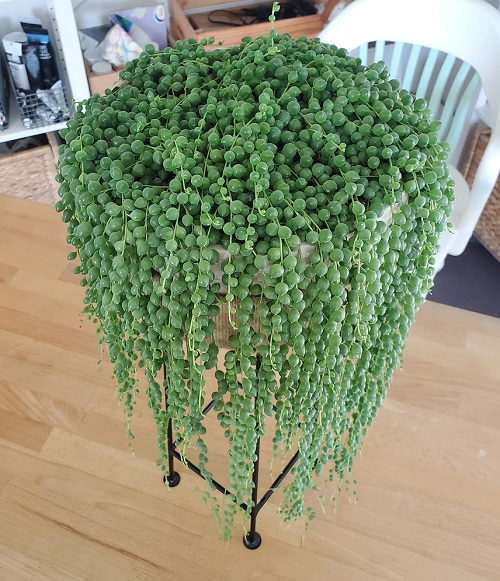
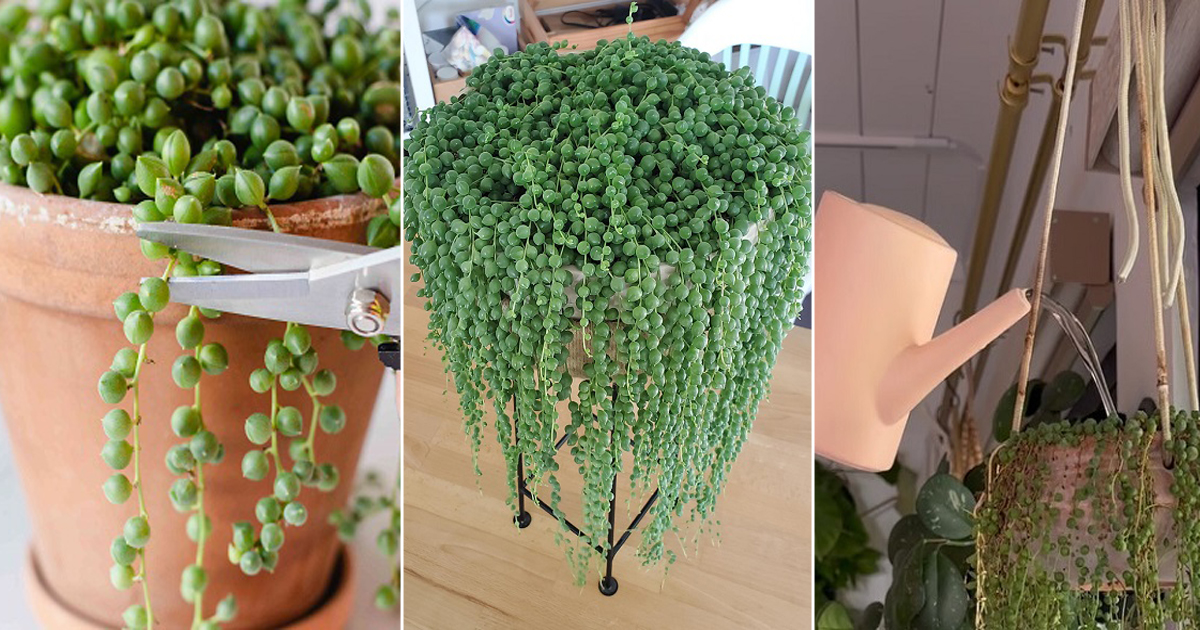
String of Pearls (Curio rowleyanus, formerly known as Senecio rowleyanus) is a unique trailing succulent that is easy to recognize because of its small round leaves that look like green peas. The leaves grow along long hanging stems that fall beautifully over the sides of pots and hanging baskets. This plant grows quickly and can grow about five to fifteen inches every year. However, it does not live very long unless you propagate it regularly from stem cuttings.
In its natural habitat in East Africa, String of Pearls grows along the ground in dry desert areas. People around the world usually grow it indoors as a hanging plant. You can plant it at any time of the year, but it grows best during warm months.
The plant can also produce small white flowers in spring that have a sweet cinnamon-like smell. However, indoor plants do not flower very often. String of Pearls is toxic to both humans and pets, so keep it out of reach of children and animals.
Secrets to Grow a Lush String of Pearls Plant
1. Give It Plenty of Bright Light
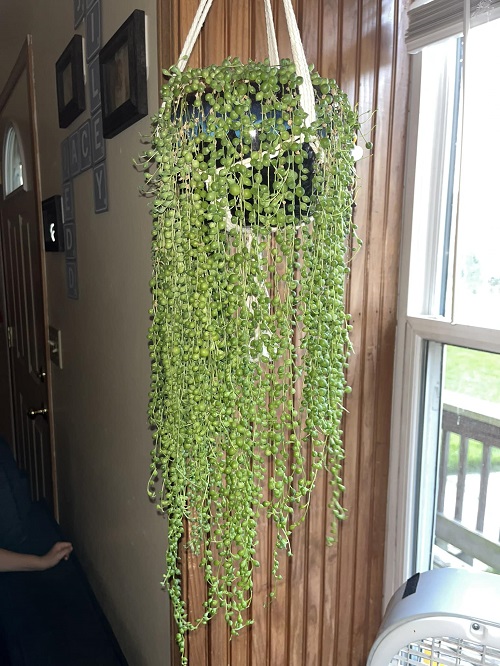
String of Pearls grows best in bright light but should be kept away from strong direct sun because it can burn the leaves. Place it near an east, south, or west-facing window. Keep the room temperature between 65 and 75°F. If growing outdoors in warm areas, place it in partial shade.
2. Choose a Pot with Drainage Holes
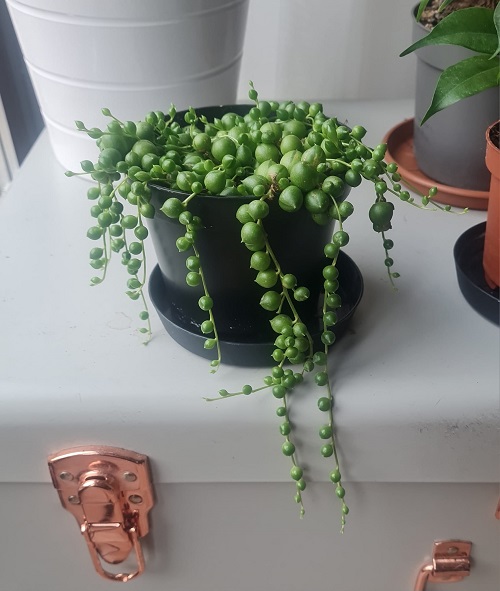
Choose a pot that drains water well and has plenty of drainage holes. Terracotta and unglazed ceramic pots are great choices for succulents because they help the soil dry faster.
3. Use Fast-Draining Soil
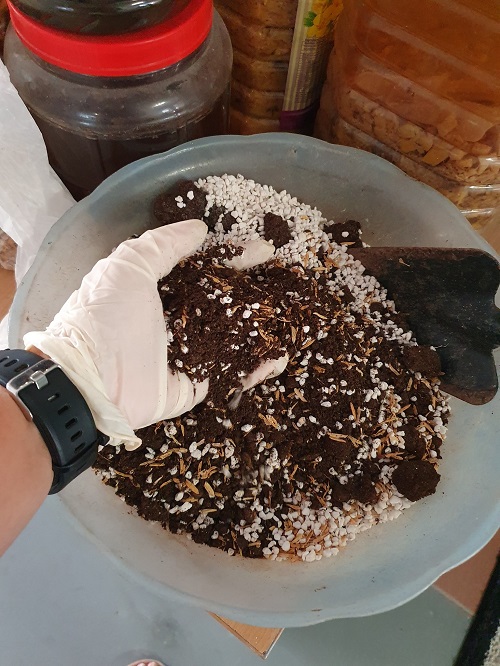
String of Pearls can grow well in almost any potting mix. Some people like using cactus soil because it contains sand or small gravel that helps with drainage. Since this plant has shallow roots, it only needs a small pot that is a few inches deep. Always use a container with drainage holes so extra water can flow out easily.
4. Water Only When the Soil Feels Dry
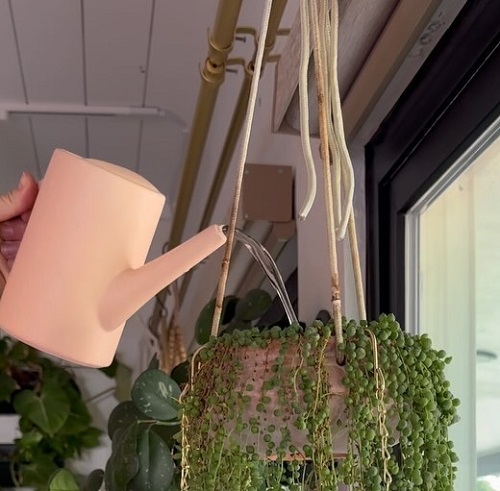
Water your String of Pearls only when the top few inches of soil feel dry. Check the soil with your finger before watering. Since this plant stores water in its leaves, it does not need frequent watering. Too much water can cause root rot and kill the plant. If the beads look wrinkled, water it right away. Always use a pot with drainage holes so extra water can drain out easily.
5. Keep It in Warm Temperatures
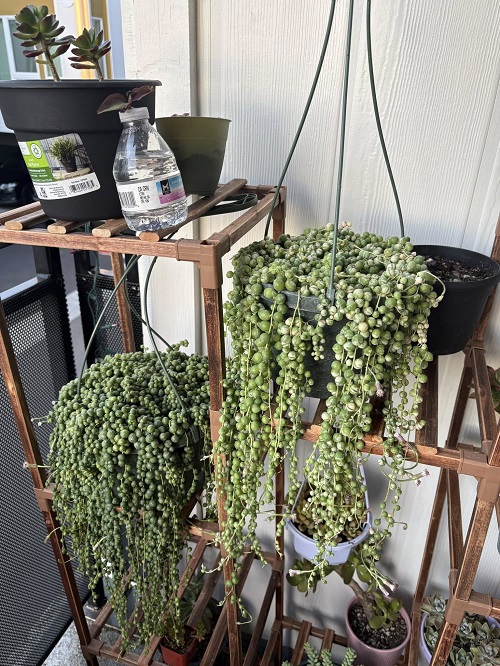
String of Pearls plants grow best in warm temperatures above 70°F during spring, summer, and fall. In winter, they prefer cooler temperatures between 50–60°F.
TIP: This plant likes dry air and does not grow well in humid places. Avoid keeping it in damp areas like the kitchen or bathroom.
6. Feed the Plant During Active Growth

Feed your string of pearls plant every two weeks during the growing season with a balanced liquid or water-soluble fertilizer mixed at half strength. In winter, when the plant is resting, feed it only once every six weeks.
7. Trim Long or Weak Stems
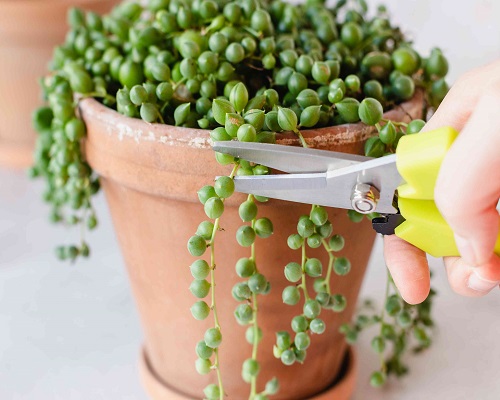
Use clean scissors or pruners to cut away dead stems and pearls, along with stems that have lost many leaves. If the plant becomes too long or thin, trim those stems and grow new plants from the cuttings. Regular pruning helps the plant grow fuller and bushier.
8. Propagate Cuttings to Fill the Pot
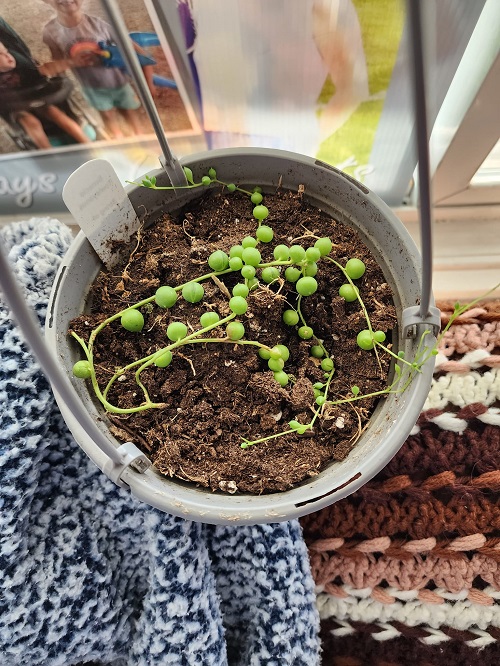
String of Pearls plants can start looking thin and unhealthy after a few years. To keep the plant looking full and fresh, take stem cuttings often and grow new plants from them right in the soil.
Cut a 3 to 5-inch stem piece and place it into moist potting mix. Keep the soil lightly damp until roots grow. You can plant the cuttings in a new pot or fill empty spaces in the same container. Adding cuttings around the edges helps the plant look fuller and bushier.
9. Watch for Pests Early
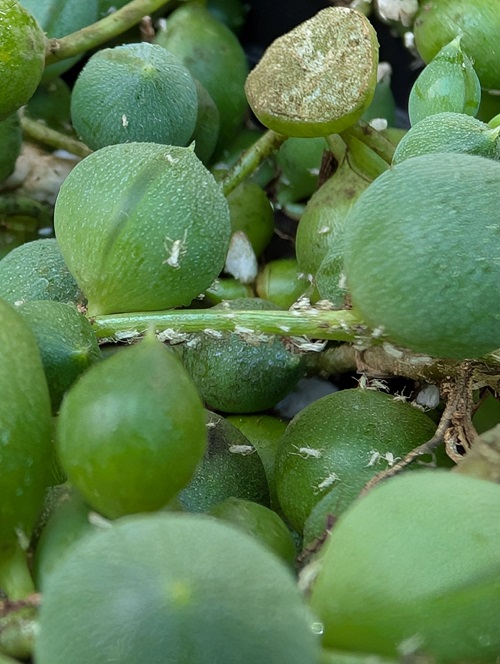
Aphids, mites, whiteflies, gnats, mealybugs, and ants are common pests that can attack string of pearls plants.
These insects usually appear when the plant is weak or unhealthy. Poor drainage, too much humidity, overcrowding, and low light can make the plant more likely to get pests.
To prevent bugs, avoid overwatering, spray the plant with a neem oil solution, keep it in a place with good airflow, and check it regularly for pests. Neem oil and insecticidal soap are safe and natural ways to control insects before using chemical pesticides.
10. Repot Only When Necessary
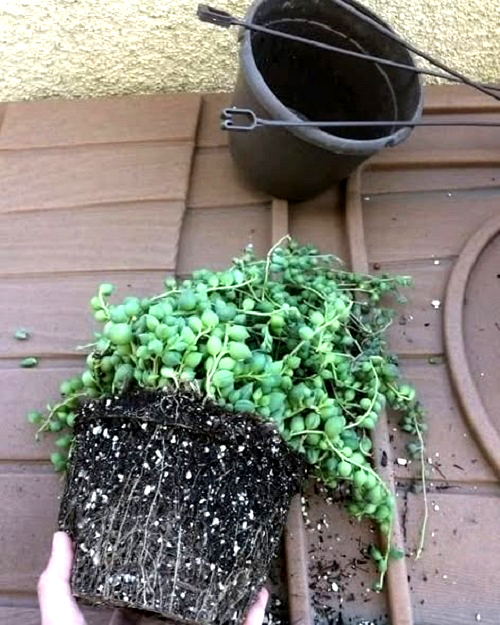
The best time to repot your string of pearls plant is in early spring. Choose a pot that is slightly bigger than the current one, usually about two to three inches wider and deeper.
Use a fast-draining cactus or succulent soil mix. Put some soil at the bottom of the new pot, carefully remove the plant from its old pot, and place the root ball in the center. Fill around the roots with soil, leaving about one inch of space below the top edge of the pot.
You can repot the plant once a year for a few years, but older plants may slowly decline over time. After a few years, it is better to grow new plants from cuttings instead of trying to keep the old plant alive.
11. Overwintering
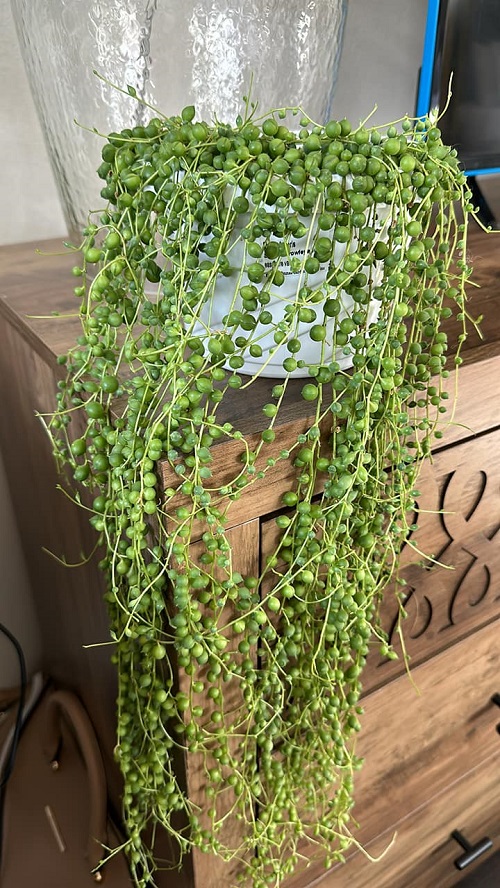
If you live in zone 8 or colder areas, move your string of pearls plant indoors during winter because it cannot survive freezing temperatures outside. If you want the plant to bloom, give it a cool resting period with temperatures between 35–44°F.
Keep the plant in a cool room without heating that gets at least six hours of light each day. During this resting period, water the plant very little, about once a month.