
As an Amazon Associate, we earn a small commission from qualifying purchases — at no extra cost to you.
Thinking of growing a Burro’s Tail indoors? Learn what makes this trailing succulent unique and why it’s a favorite among plant lovers.
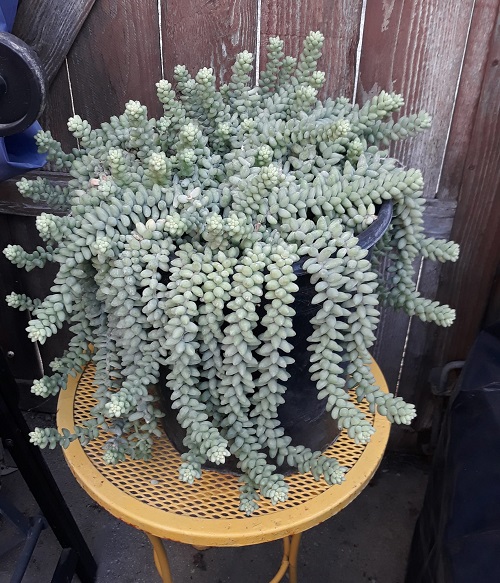
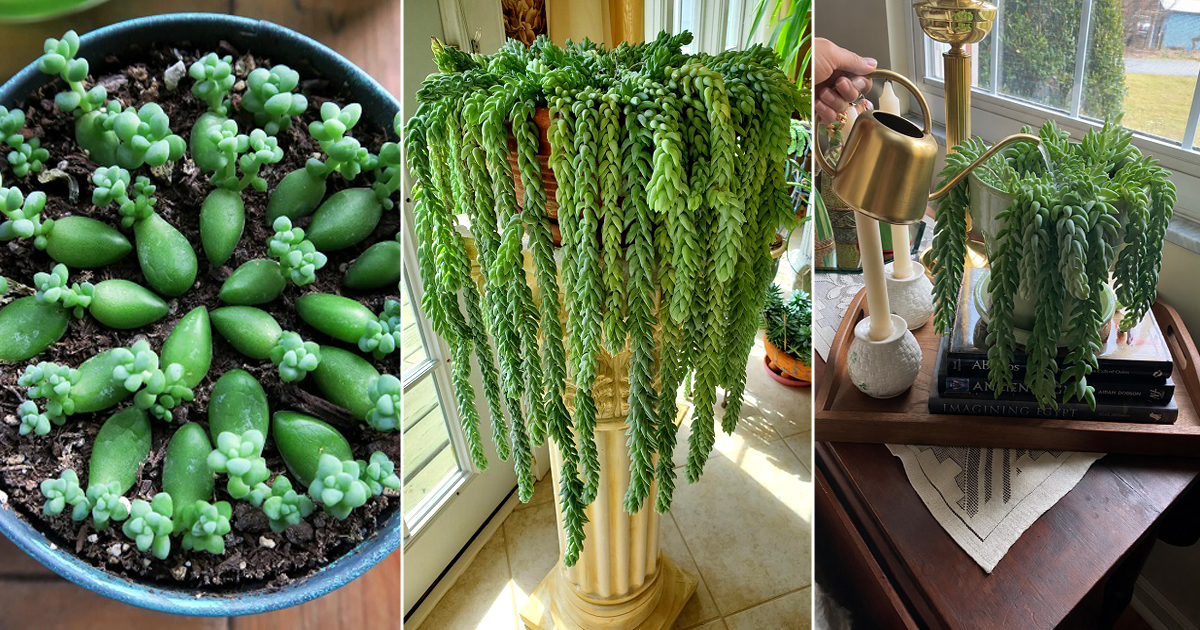
Succulents come in many different shapes, and Burro’s Tail is one of the most interesting ones. Also called the Donkey Tail Plant, Sedum morganianum is a trailing succulent that grows beautifully in hanging baskets. Its small, plump leaves cover long stems that hang down gracefully. The stems are delicate and can break easily, but you can use the broken pieces to grow new plants.
Burro’s Tail Plant Care Indoors
Give a glance at our Amazon Storefront, which has products listed for all your gardening needs.
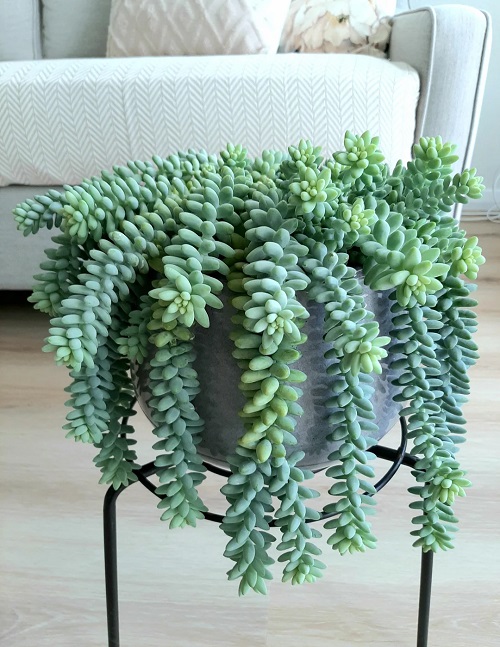
Burro’s Tail is a great choice for anyone who loves collecting succulents. It needs a little more care than many other succulents, but its beautiful trailing stems make the extra effort worthwhile. In its natural habitat, the stems spread and trail along the ground.
When grown at home, it looks best in a hanging basket where its long stems can hang freely. To keep your Donkey Tail healthy, give it plenty of bright light, water it only when the soil is dry, and use a well-draining succulent potting mix. The plant can grow trailing stems up to 24 inches (60 cm) long, covered with small, plump blue-green leaves. In late summer, it may also produce pretty pinkish-red flowers at the tips of the stems.
Everything you need to grow healthy Burro’s Tail plants in one complete kit.
Burro’s Tail Propagation
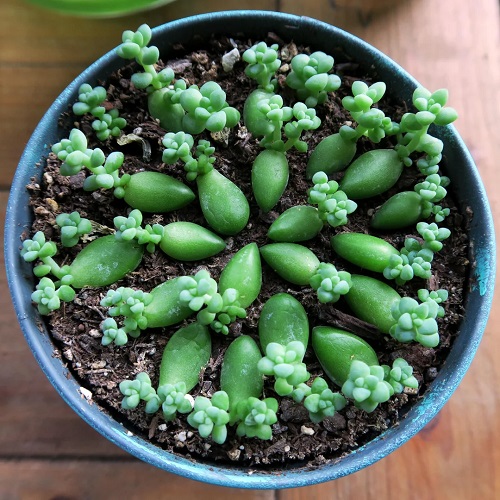
Burro’s Tail has small, plump leaves that can fall off very easily, even with a light touch. The good news is that these healthy stems are perfect for growing new plants. Remove a healthy stem, take off the leaves from the bottom, and let the cut end dry for a few days. Then plant it in a well-draining potting mix.
You can also grow a new Burro’s Tail from a single leaf. Let the leaf dry for a few days, then place it on top of the soil. It will start growing roots in a couple of weeks. However, stem cuttings usually grow into new plants much faster than leaf cuttings.
Want successful propagation? Try root stimulator with probiotics for healthier roots
Burro’s Tail Varieties
Sedum morganianum looks very similar to another succulent called Sedum burrito. The main difference is in their leaves. S. morganianum has curved, pointed leaves, while Sedum burrito has shorter, rounder leaves with no pointed tip.
Even though they look slightly different, both plants grow in the same trailing shape and need similar care.
Requirements for Growing Burro’s Tail Plant Indoors
Light
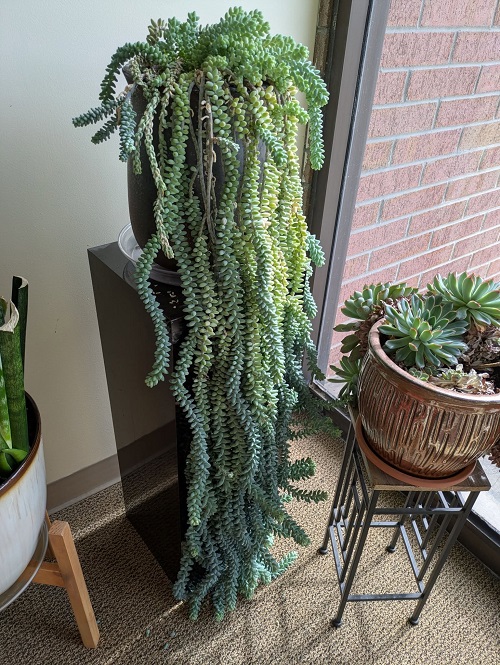
Burro’s Tail is native to southern Mexico, where it gets plenty of sunshine throughout the year. As a houseplant, it grows best in bright light and prefers a spot that gets plenty of direct sunlight. If you have just bought the plant, move it into full sun gradually so it has time to adjust to the new light conditions.
A south-facing or west-facing window is usually the best place for this succulent. If your home does not get enough natural light, you can use a grow light to keep it healthy. Burro’s Tail needs at least 8 hours of bright light each day to grow well.
During summer, you can move the plant outdoors. Handle it carefully because the stems break easily. Hang it under a covered patio or roof overhang where it gets bright light for most of the day while staying protected from heavy rain.
Not getting enough sunlight? This full-spectrum LED grow light helps Burro’s Tail stay compact, colorful, and healthy even in darker rooms.
Soil
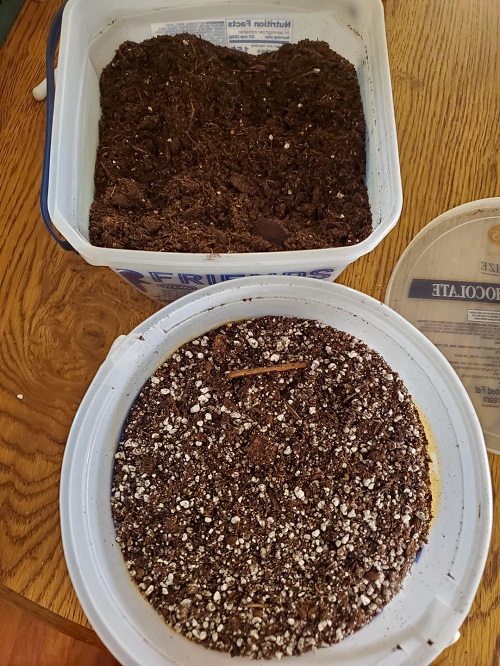
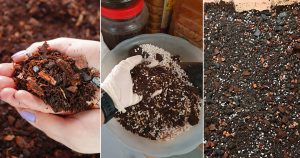
This plant grows best in well-draining soil. A ready-made cactus or succulent potting mix is a great choice. You can also make your own by mixing regular potting soil with perlite, pumice, or coarse sand. This helps the soil stay loose, airy, and drain water quickly. Fast-draining, porous soil keeps the roots healthy and helps prevent root rot.
Water
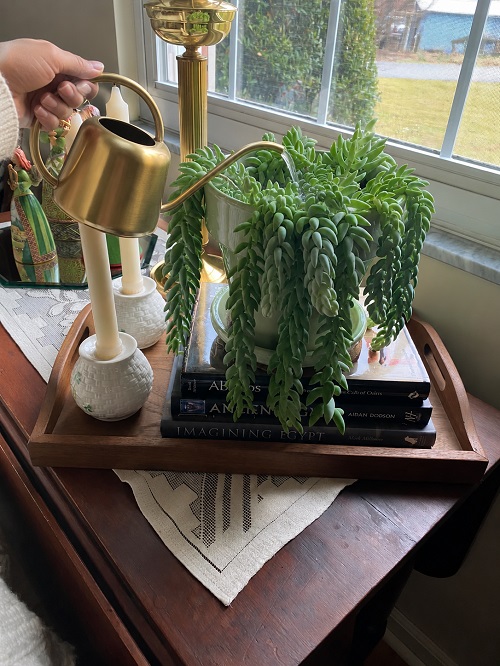
Like most succulents, Burro’s Tail can handle dry conditions and does not need frequent watering. However, it grows best when you water it deeply but only after the soil has dried out. Well-draining soil is important because it lets extra water flow away quickly and helps prevent root rot.
In winter, the plant grows more slowly, so it needs less water. Check the soil before watering, and only water when the top layer feels dry. This is usually about every 9 to 14 days, depending on the temperature and humidity. Use room-temperature water for the best results.
Stop guessing when to water. This simple moisture meter tells you when the soil is dry, helping prevent overwatering.
Temperature & Humidity
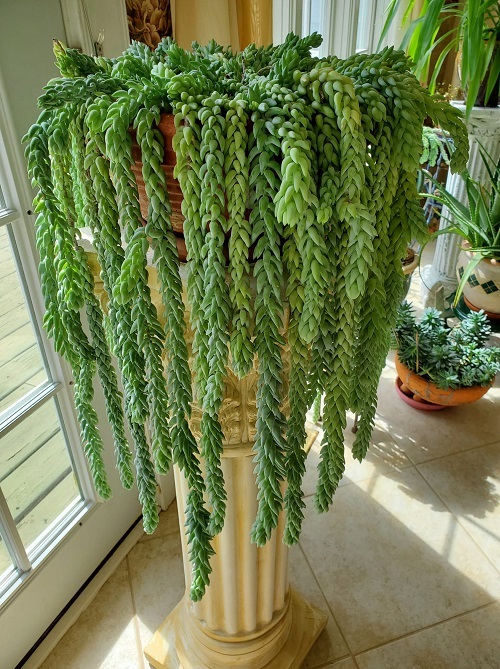
Burro’s Tail does not grow well in high humidity. Place it in a spot with good airflow, and avoid keeping it in humid areas like bathrooms. It grows best in normal indoor temperatures. During winter, keep the plant away from cold drafts near windows and doors.
This succulent cannot survive frost or freezing temperatures. If you keep it outdoors, bring it
Fertilizer
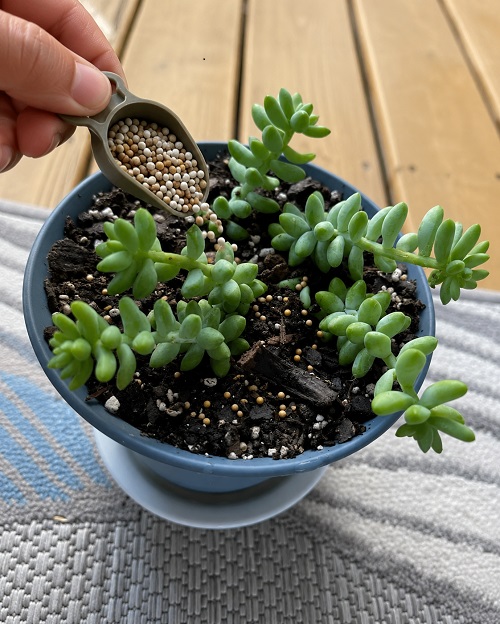
Feed your Burro’s Tail once or twice during the growing season with a balanced houseplant fertilizer mixed at half strength. Do not fertilize the plant during fall and winter, when it is resting. Start feeding it again in spring when new growth begins.
Feed your succulent the easy way with this succulent fertilizer that’s designed to encourage healthy leaves and steady growth.
Pests & Diseases
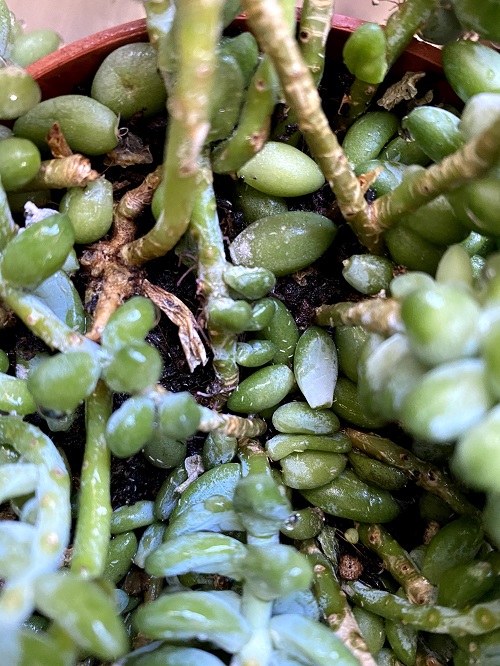
Burro’s Tail usually has very few problems when grown indoors. However, not getting enough light can make the leaves lose their color and stop the plant from flowering. Too much water can also cause fungal diseases and root rot.
If you grow it outdoors, watch for pests like mealybugs, aphids, scale insects, and vine weevils. At the first sign of pests, spray the affected areas with rubbing alcohol. Before bringing the plant indoors for winter, keep it away from your other houseplants for a while and check it carefully for any hidden pests.
Pruning
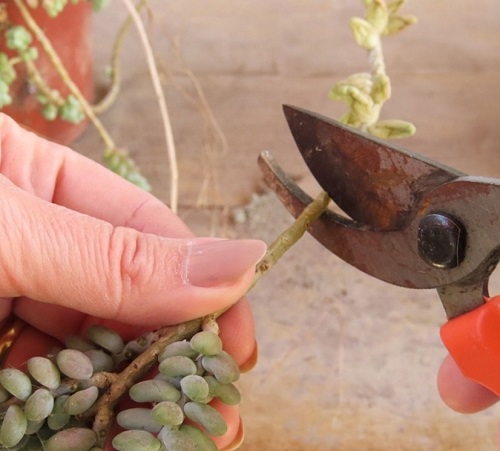
Burro’s Tail does not need regular pruning. However, if a stem breaks or you trim one on purpose, new branches can grow from that spot. This helps the plant become fuller and bushier over time. You can remove any dead, damaged, or diseased stems whenever you notice them to keep the plant healthy.
Repotting
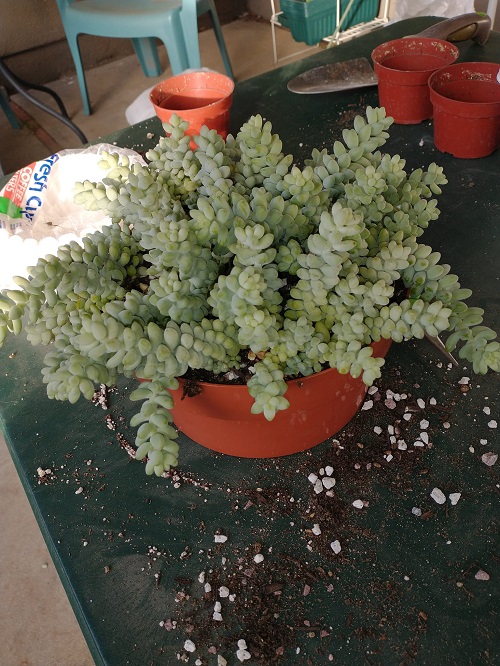
Burro’s Tail does not mind growing in a slightly crowded pot. Repot it every two to three years to give it fresh soil. Move it to a larger pot only when the stems and roots have filled the container and there is very little space left. You can also grow Burro’s Tail from seeds by planting them in early spring when the temperature is around 60°F (15°C).
Terracotta pots help excess moisture evaporate faster, making them one of the best choices for succulents like Burro’s Tail.
How to Make a Burro’s Tail Flower
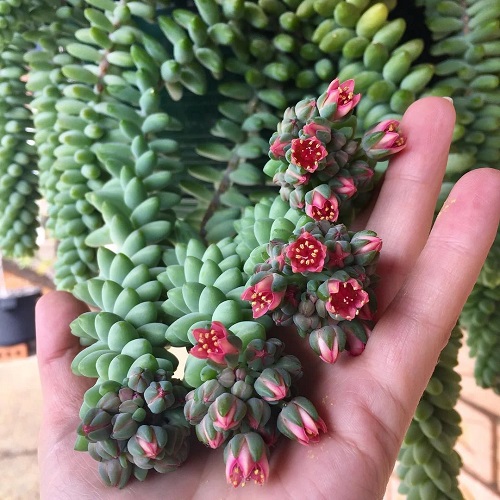
You can move your Burro’s Tail outdoors during summer, but bring it back inside before the temperature drops below 40°F (4°C). In winter, keep the plant in a cool room where the temperature stays around 50°F (10°C). Only mature, well-grown stems will produce flowers, usually at their tips.
Love succulents? This complete guide covers everything from choosing varieties to solving common growing problems.