
As an Amazon Associate, we earn a small commission from qualifying purchases — at no extra cost to you.
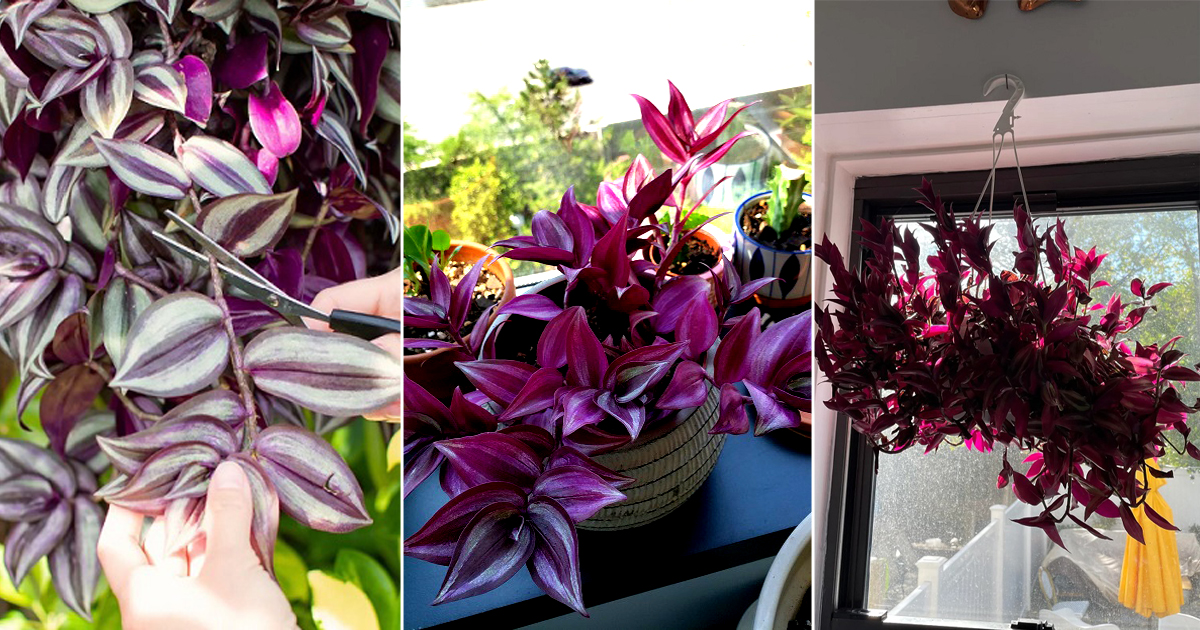
Read the easy Tips to Make Purple Wandering Jew Plant More Purple for a bold, colorful display in your indoor or outdoor garden.
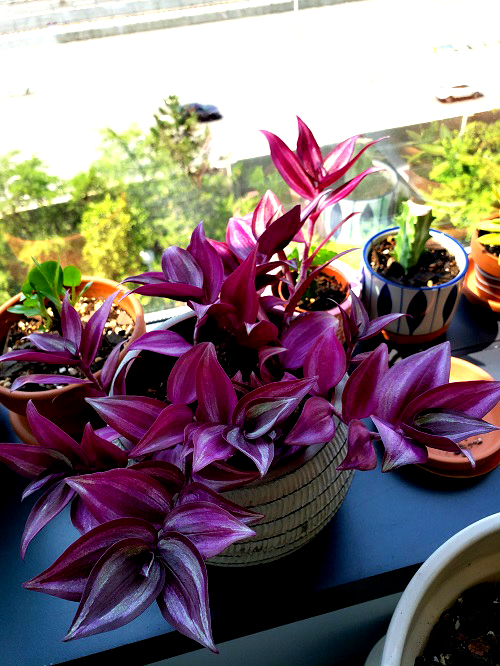
Have you ever bought a Purple Wandering Jew plant because of its rich purple leaves, only to watch the color fade after a few months? It happens more often than you might think.
The good news is that the plant usually isn’t sick. In most cases, it is reacting to the way it is being grown. Light, watering, temperature, and even the age of the leaves can all change the color.
If your plant has started looking more green than purple, don’t give up on it. A few small changes can help bring back the deeper color over time.
Tips to Make Purple Wandering Jew Plant More Purple
Want to build the perfect indoor plant setup? Check out this indoor gardening system that serious plant lovers swear by. You can also check our Amazon Storefront for all such gardening needs
1. Give It More Bright Light
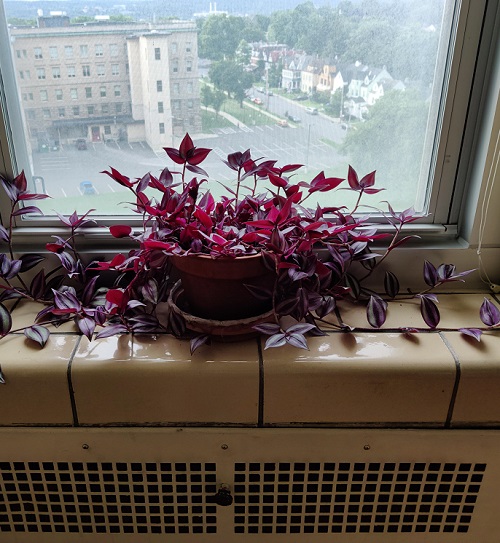
A Purple Wandering Jew stays purple because of anthocyanin pigments in its leaves. Bright light helps the plant produce and maintain these pigments.
The first thing to check is the amount of light your plant receives.
A Purple Wandering Jew can grow in medium light, but that doesn’t mean it will keep its best color there. When the light is too low, the leaves often turn greener because the plant starts making more chlorophyll.
Move your plant somewhere brighter. A spot near an east-facing window is usually a good choice. If you have a south or west-facing window, place the pot where it gets plenty of light but not hours of harsh afternoon sun.
You don’t need to keep moving the plant around to test different places. Pick a bright location and give it a few weeks. The newer leaves will tell you if the plant is happier.
Get this plant shelf with grow lights to give your plants a warm place.
2. Let It Get Some Gentle Morning Sun
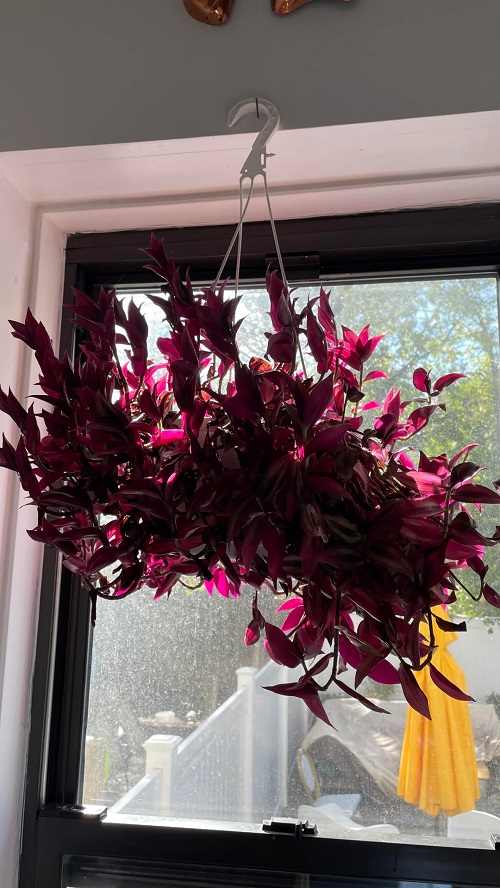
Morning sunlight can make a noticeable difference.
If your plant only gets indoor light all day, try giving it an hour or two of gentle morning sun. The light at that time of day is much softer than the afternoon sun. Don’t rush this change.
If the plant has been sitting in shade for a long time, introduce sunlight gradually. A sudden move into strong sun can leave the leaves looking scorched instead of colorful.
The goal is steady, gentle light rather than intense heat.
3. Don’t Keep the Soil Wet All the Time
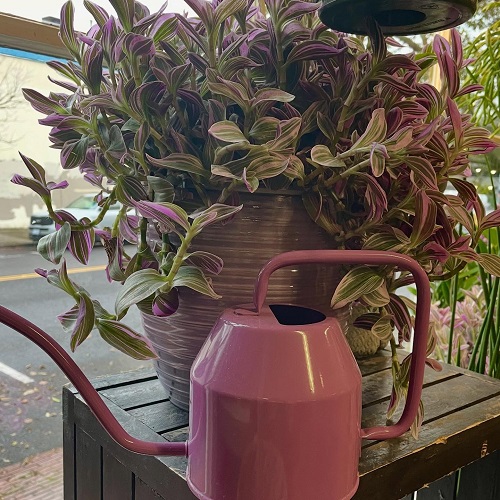
It is easy to think more water means healthier growth.
With this plant, that isn’t always true. Feel the top inch of soil before watering. If it still feels damp, wait another day or two. Once the surface dries, water thoroughly until it drains from the bottom.
Constantly wet soil can stress the roots. A stressed plant often loses some of its rich color. On the other hand, don’t leave it completely dry for long periods either. Try to find a balance instead of following a fixed watering schedule.
Get this watering can to make your gardening easier.
4. Feed It During the Growing Season
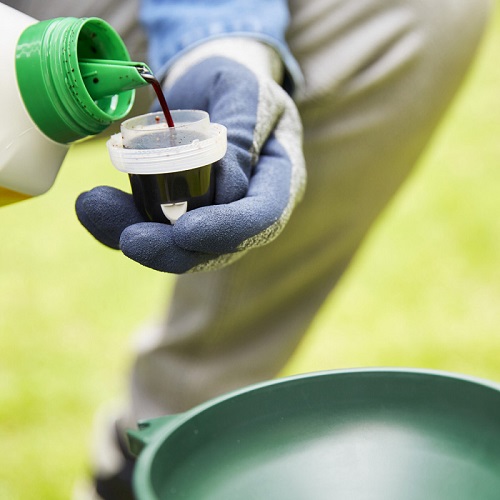
Your plant uses nutrients to produce fresh growth.
If it has been sitting in the same pot for a long time without fertilizer, the leaves may become smaller and less colorful.
Feed it with a balanced liquid fertilizer once a month during spring and summer. That is usually enough for a healthy plant. You don’t need a strong fertilizer or frequent feeding. Too much fertilizer can lead to fast, soft growth that is often greener than purple.
One scoop of this liquid fertilizer can quickly boost your plant’s growth.
5. Trim the Long, Leggy Stems
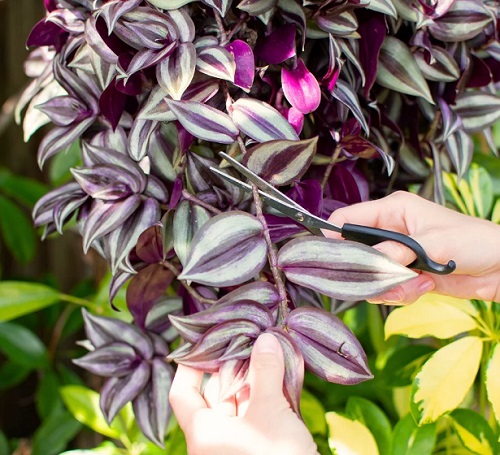
Sometimes the oldest stems become long and thin with fewer colorful leaves.
When that happens, don’t be afraid to trim them back. Cut just above a leaf node. Before long, you will usually see new side shoots growing from that point.
The fresh growth often has stronger color than the older leaves. As a bonus, regular trimming helps the plant stay fuller instead of trailing with bare stems.
For cutting and pruning, use this pair of sharp electronic pruners.
6. Keep It Warm
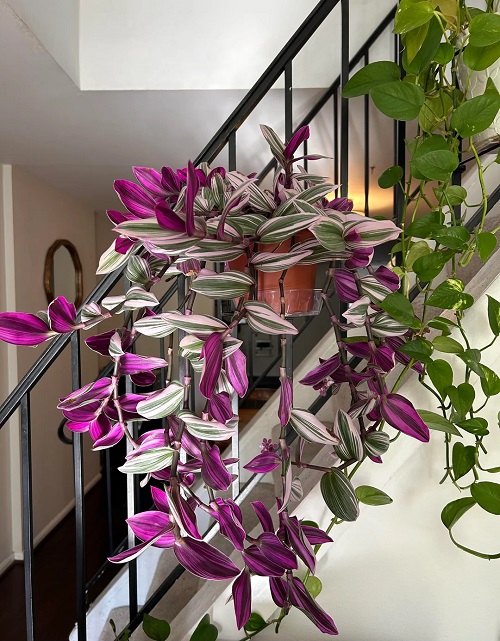
Purple Wandering Jew grows best when temperatures stay fairly steady.
If the plant spends time in a cold room or near a drafty window, it may slow down. Slow growth often means duller leaves. Most homes are warm enough during spring and summer, but winter can be different.
Keep the plant away from cold drafts, air conditioners, and chilly windows if you want it to stay at its best.
7. Refresh the Potting Mix Every Few Years
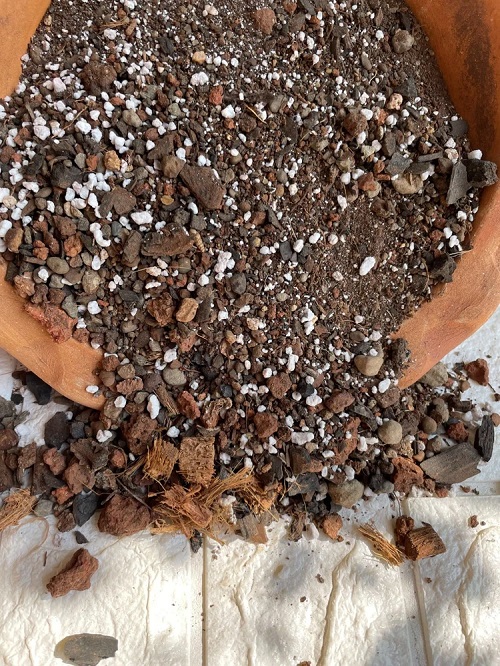
Think about how old the soil is.
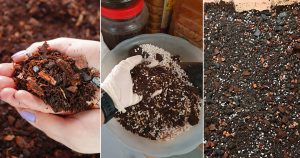
Potting mix doesn’t last forever. After a couple of years, it becomes compact and loses many of the nutrients your plant needs. If you notice slow growth along with fading color, fresh soil may help.
Use a well-draining indoor potting mix. The roots like air just as much as they like water. Healthy roots usually lead to healthier leaves.
Make the roots healthier with this potting mix and use this garden weasel scoop for it.
8. Remember That New Leaves Look Better
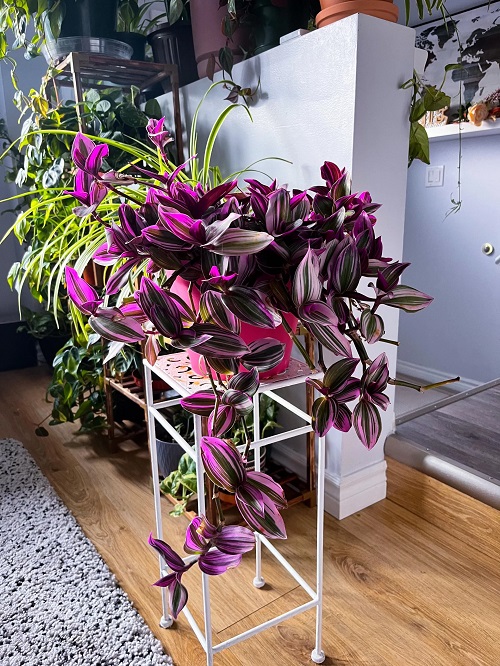
Not every leaf stays purple forever.
Older leaves naturally lose some of their brightness as they age. That is completely normal. Instead of focusing on the oldest growth, look at the newest leaves near the tips of the stems.
Those leaves show whether your growing conditions are working. If they are coming in deep purple, you’re moving in the right direction.
9. Don’t Expect Instant Results
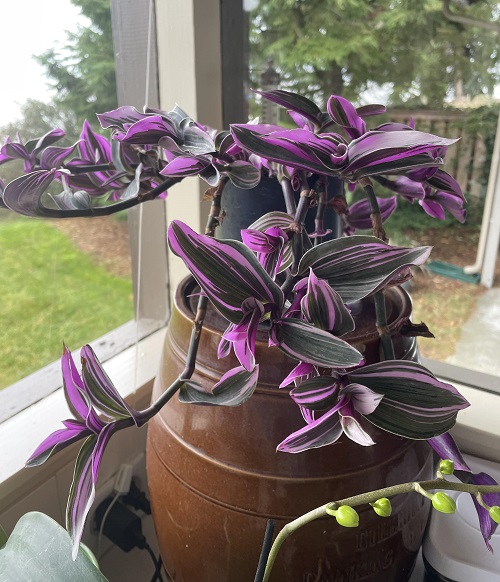
One mistake many people make is changing everything at once.
They move the plant, change the soil, add fertilizer, and water differently—all in the same week. Then they expect the color to return immediately. Do changes but expect results gradually. Plants don’t work that way.
Once you improve the growing conditions, give your Purple Wandering Jew time to respond. The older green leaves may never become fully purple again. What usually changes first is the new growth.
That is actually a good sign. It means the plant has started growing under better conditions.
New to gardening? Get your hands on this beginner’s guide to gardening that can help you in your journey.