
As an Amazon Associate, we earn a small commission from qualifying purchases — at no extra cost to you.
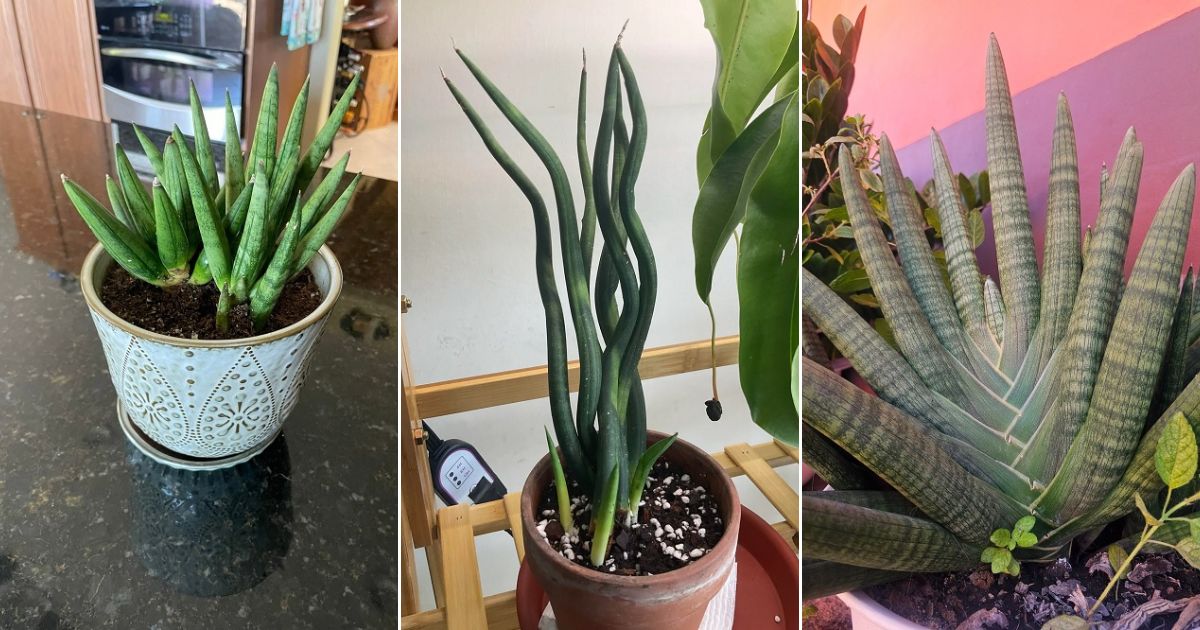
Love Sansevieria? Explore different types of cylindrical snake plants and find unique varieties with tall, rounded, spear-like leaves.
Cylindrical snake plants are known for their unique round, tube-shaped leaves that give them a bold and modern look. These easy-care plants come in many interesting forms, from tall spear-like varieties to compact dwarf types. Here are some of the most beautiful types of cylindrical snake plants you can grow indoors or outdoors.
Types of Cylindrical Snake Plants
1. Baseball Bat Snake Plant (Sansevieria hallii)
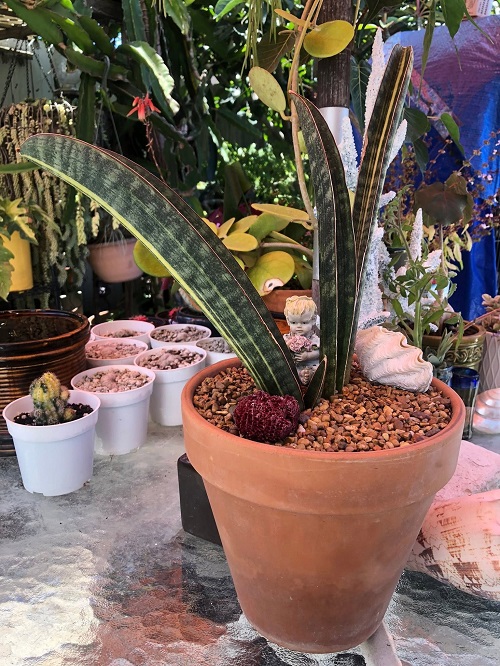
Sansevieria Hallii, often called the Baseball Bat Snake Plant, is a rare and slow-growing variety. It has a few thick blue-gray leaves that are almost cylindrical in shape, which is how it got its common name. The leaves also feature attractive horizontal variegated markings. When mature, the plant can produce cream-colored flowers from the base near the soil. The flower tubes have a soft pink or light violet tint.
2. African Spear Plant (formerly Sansevieria cylindrica)
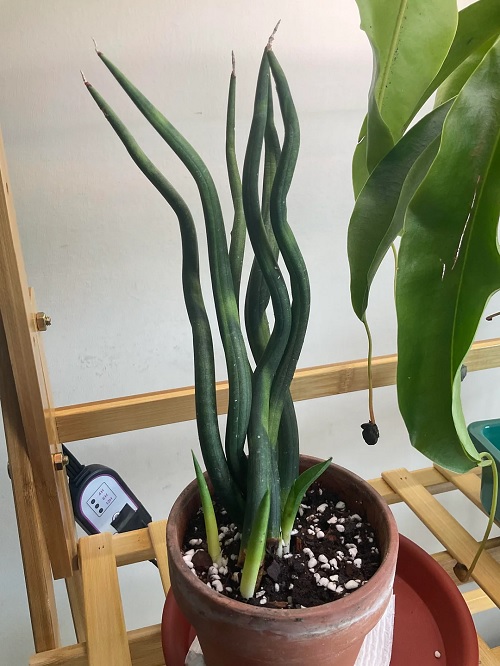
The African Spear Plant, also known as the Cylindrical Snake Plant, is a succulent with long, spear-shaped leaves that have pointed tips. The gray-green leaves often show faint stripes. This plant grows best in warm, dry conditions with sandy, well-draining soil. It prefers gentle morning sunlight rather than strong afternoon sun and does best when temperatures stay above 50°F (10°C). Keep in mind that this plant is toxic to pets if eaten.
3. Fernwood Mikado (Sansevieria ‘Fernwood’ Mikado)
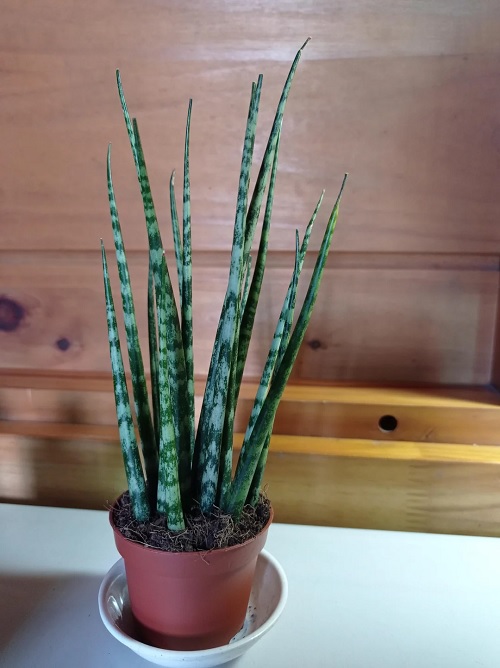
Sansevieria bacularis ‘Fernwood Mikado,’ also called the Mikado Snake Plant, is a beautiful succulent with tall, thin leaves that grow upright. The leaves have attractive green stripes and a slightly wavy surface, giving the plant a unique and eye-catching look.
4. Patula Snake Plant (Sansevieria cylindrica var. patula)
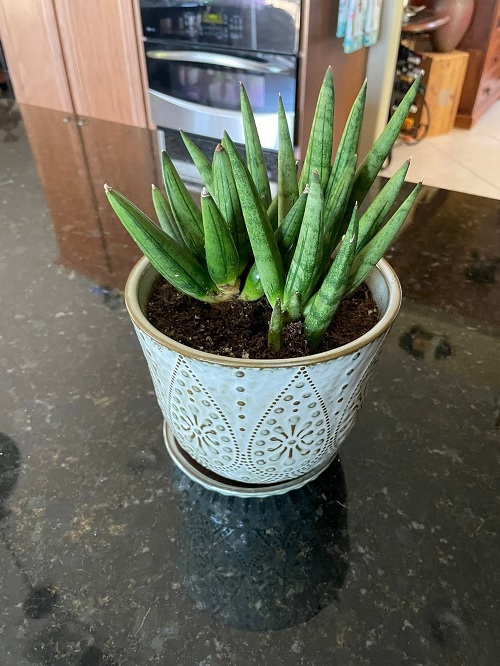
This lime-green succulent has thick, variegated cylindrical leaves that grow outward and gently curve downward instead of standing straight upright. Although it does not flower often, it can occasionally produce small white blooms.
5. Dracaena ballyi
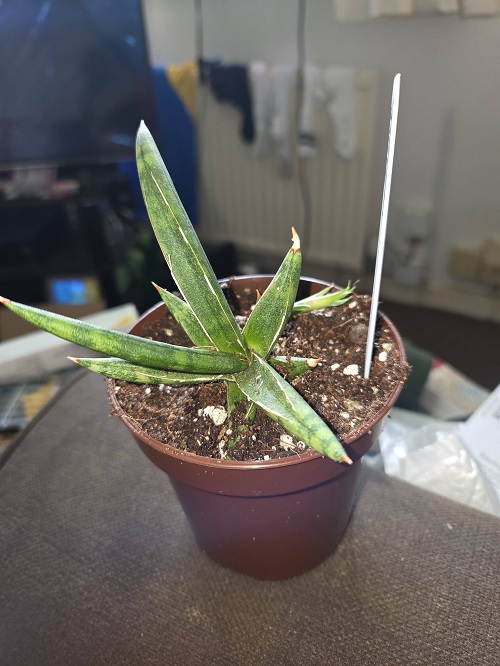
Sansevieria ballyi, also known as Dwarf Sansevieria or Bally’s Snake Plant, is a small and tough succulent. It is loved for its neat rosette shape and short cylindrical leaves that end in sharp points. This slow-growing plant stays compact, making it a great choice for small spaces, desktops, and container gardens.
6. Dracaena bacularis (Sansevieria bacularis)
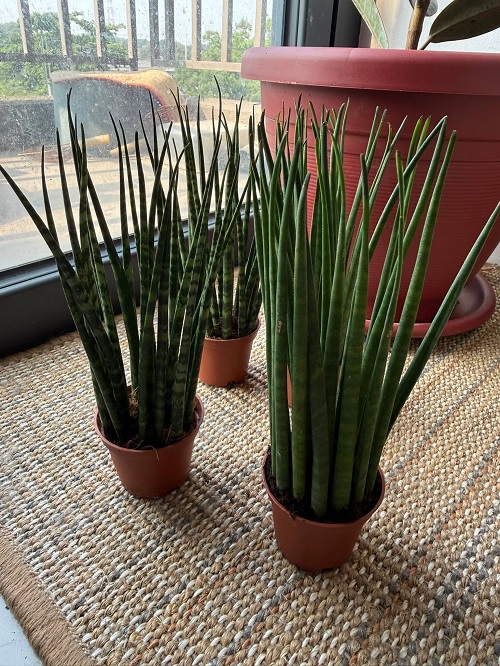
Dracaena bacularis is often mistaken for the more common Dracaena angolensis due to its tall, tube-shaped leaves,. However, its leaves are much thinner, that give the plant a more delicate and slender appearance.
7. Dracaena canaliculata (Sansevieria canaliculata)
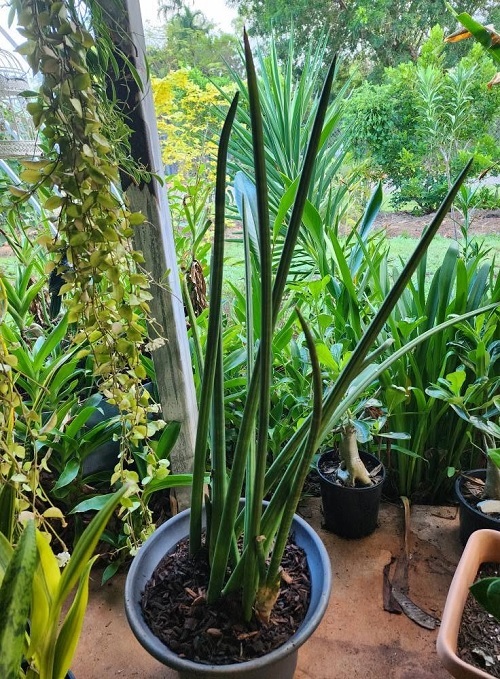
Dracaena canaliculata is another snake plant with cylindrical leaves, but it looks quite different from Dracaena cylindrica. The leaves grow separately instead of forming tight rosettes. They have noticeable grooves running along their surface. This is a rare houseplant, so it can be hard to find. If you come across one, you may also find attractive variegated and dwarf forms available.
8. Dracaena stuckyi (Sansevieria stuckyi)
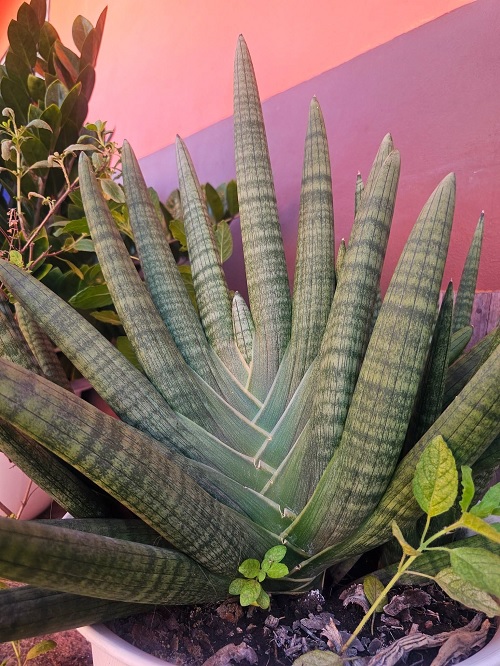
When it matures, Dracaena stuckyi becomes an excellent floor plant and a striking focal point in a room. It is also fun to watch as it changes over time. The plant grows slowly, and it can take up to six years to reach full maturity. As it ages, the leaves become longer, thinner, and more cylindrical, with pointed tips. The leaves also turn a lighter green, the stripes fade, and shallow vertical grooves appear along the surface.
9. Dracaena suffruticosa
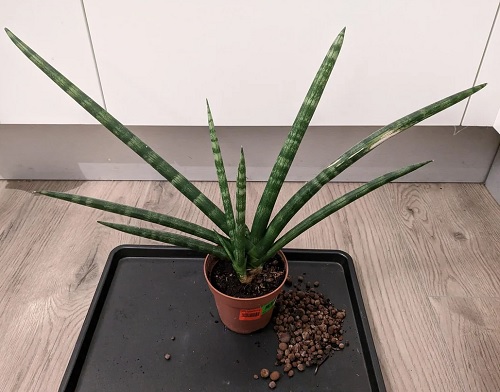
Often called bowstrap hemp, Dracaena suffruticosa has a groove running up the center of each leaf. About halfway up, the leaf becomes thinner and turns into a cylindrical shape. It continues growing into a long, narrow leaf with a sharp, pointed tip.