

As an Amazon Associate, we earn a small commission from qualifying purchases — at no extra cost to you.
Find out What Causes Snake Plant Leaves to Turn Yellow? Learn the common causes and simple fixes to keep your plant healthy and green again.
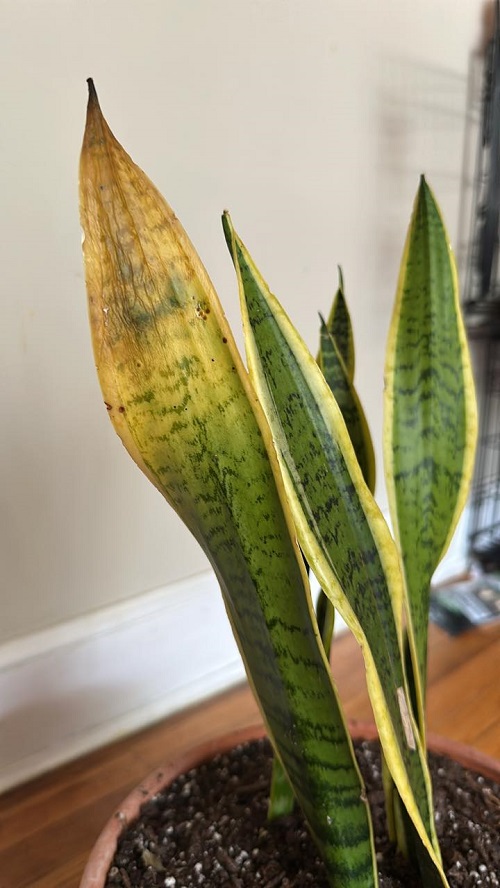
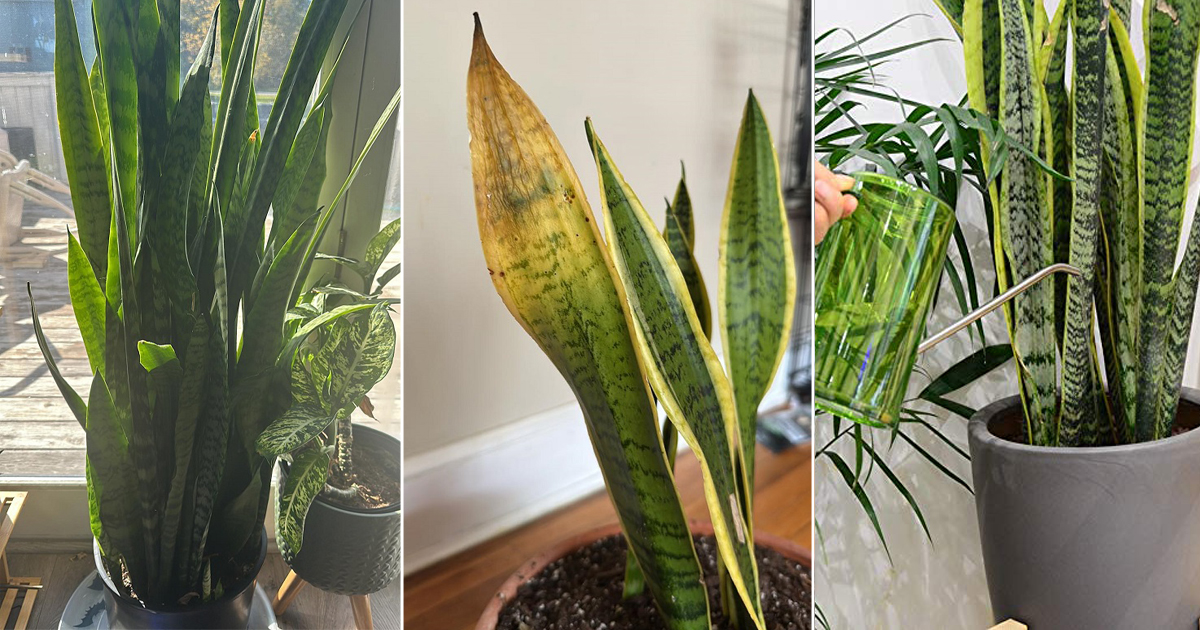
With its tall and elegant leaves, the snake plant (Dracaena trifasciata) is a popular choice for homes and offices because it is easy to care for. Sometimes, the leaves may start turning yellow. One yellow leaf is usually normal, but if many leaves are turning yellow, it could mean the plant is stressed or not getting the right care. Knowing What Causes Snake Plant Leaves to Turn Yellow help you fix the problem and keep your snake plant healthy.
Snake Plant Growth Pattern
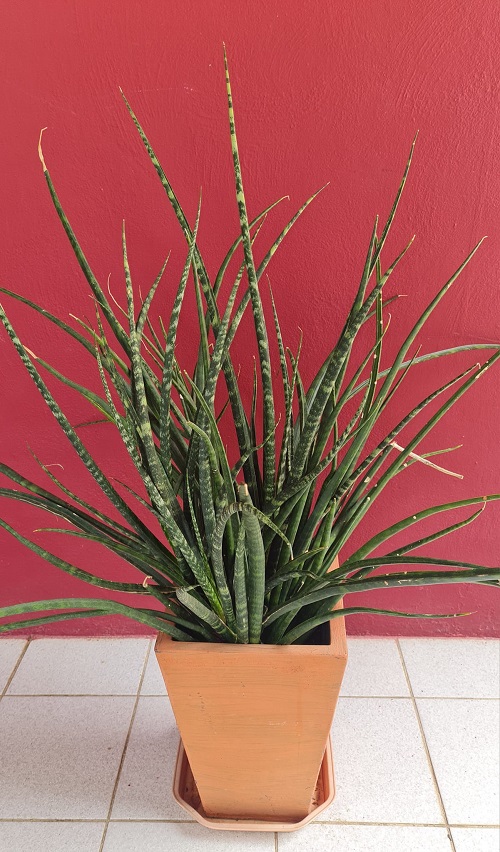
Snake plants grow at different speeds based on the variety. Some small types stay under 1 foot tall, while larger varieties can grow several feet high. Young snake plants grow quickly and can fully mature in about six months when given the right care. After that, they grow more slowly but are still faster than many indoor plants.
One of the tallest snake plant varieties is Sansevieria stuckyi, also called mother-in-law’s tongue. Its long leaves can grow up to 10 feet tall. On the other hand, Sansevieria trifasciata ‘Hahnii’ is a small dwarf variety that only grows about 6 inches tall.
What Causes Snake Plant Leaves to Turn Yellow?
Different plant problems can cause snake plant leaves to turn yellow. This yellowing is called chlorosis. It happens when the plant does not get the nutrients needed to make chlorophyll, the substance that keeps leaves green and helps plants turn sunlight into food. Here are some common reasons why snake plant leaves may turn yellow.
1. Too Much Light
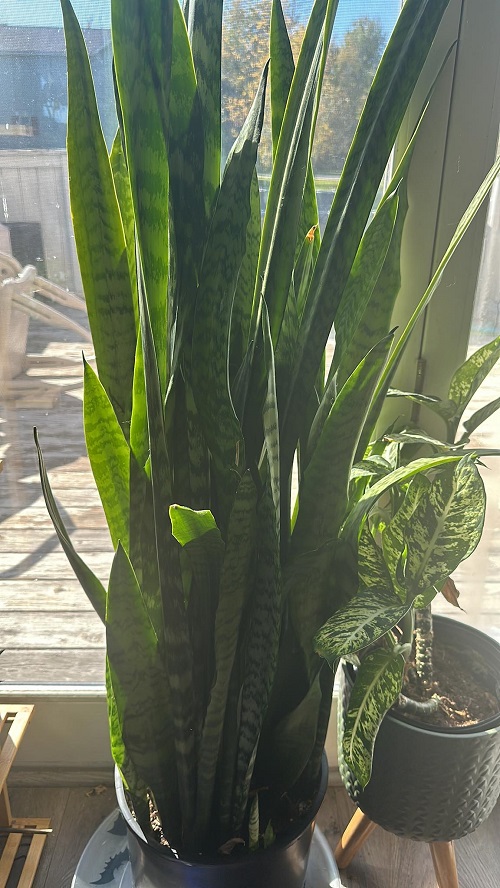
Snake plants can grow in both bright and low-light areas, but they do best in bright, indirect light. Yellow, pale, or brown spots on healthy green leaves may be a sign of sunburn caused by too much direct sunlight. You can move snake plants outdoors in warm weather, but keep them in a spot with filtered or indirect sunlight.
2. Variable Temperature
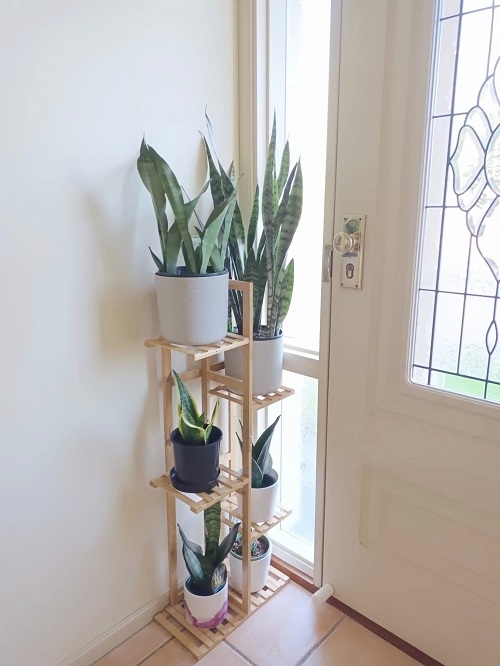
If your snake plant has gone through a sudden temperature change or is placed near a drafty door, window, or air vent, it can become stressed. This stress may cause the leaves to turn yellow.
3. Overwatering
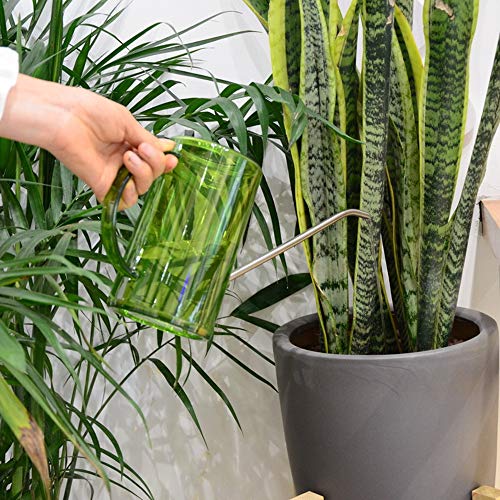
Snake plants can handle dry conditions because their thick leaves store water. They grow best in loose soil that drains well and dries out fully between watering. In winter, they may only need water once a month. Too much water can stop the roots from taking in nutrients and moisture properly, which can make the leaves turn yellow and even lead to root rot.
4. Pests
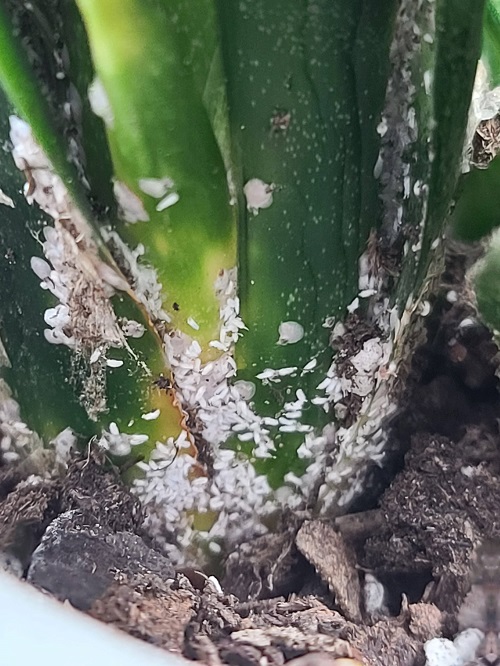
Several common houseplant pests can attack snake plants. Pests like scale, mealybugs, aphids, and spider mites feed on the plant’s sap. This can weaken the plant, causing the leaves to turn yellow and eventually die.
5. Temperature changes:
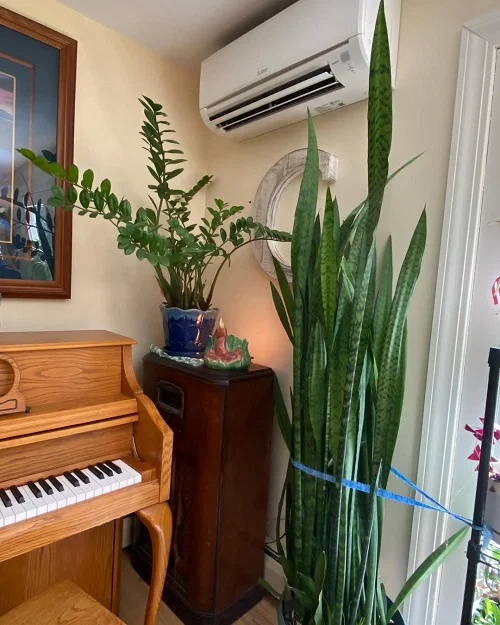
Keep your snake plant away from cold drafts, air conditioners, heaters, or other heat sources. Place it in a spot where the temperature stays steady and comfortable.
6. Root Bound
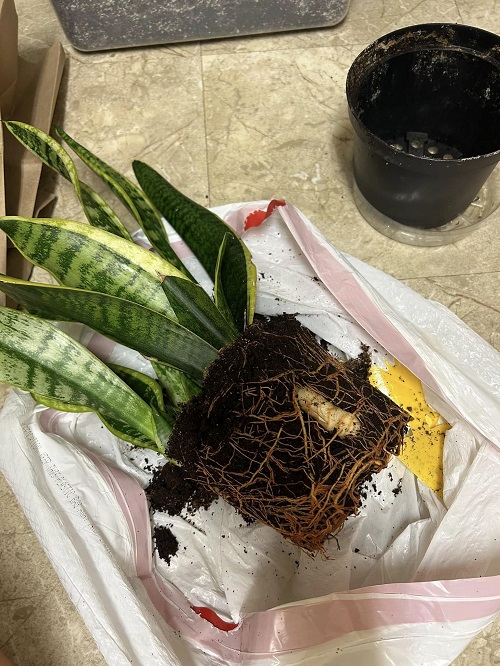
A root-bound snake plant cannot take in enough nutrients from the soil. If the plant has become too crowded or has outgrown its pot, the leaves may start turning yellow.
7. Over or Under Feeding
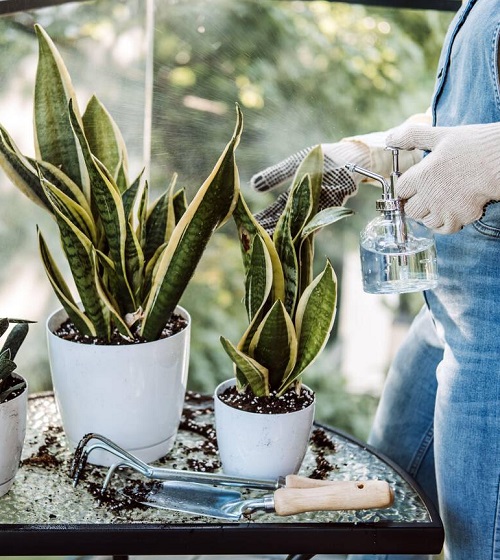
Snake plants do not need much fertilizer, but if you have not fed the plant or changed its soil for a long time, the leaves may turn yellow due to a lack of nutrients. Too much fertilizer can also harm the plant and cause dry, pale leaf edges and wilting.
8. Age
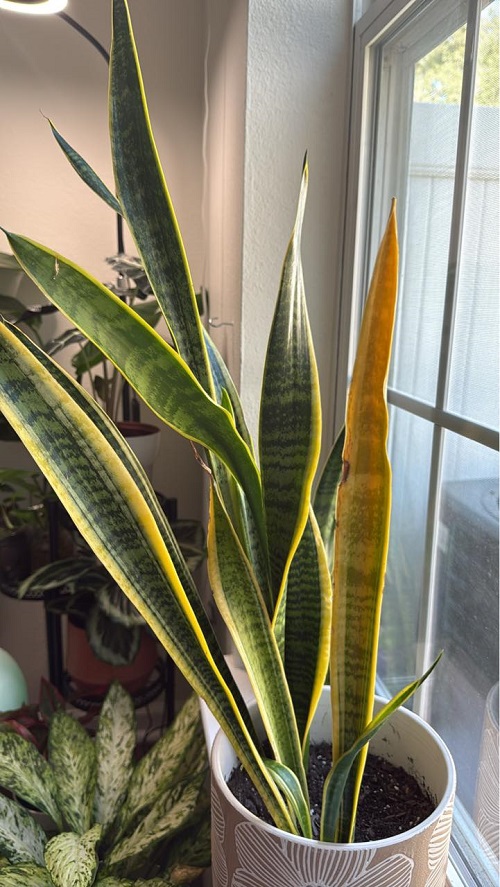
One yellow leaf on a snake plant is usually normal. As the plant gets older, some old leaves naturally turn yellow, dry up, and fall off while new leaves grow in their place.
How to Fix Yellowing Leaves on Snake Plant
Once you find out why your snake plant leaves are turning yellow, you can fix the problem quickly and help the plant stay healthy. Yellow leaves will not turn green again, even after the issue is solved. It is best to cut them off at the base using clean, sharp scissors or pruners. After that, follow the right steps to fix the problem.
Light exposure:
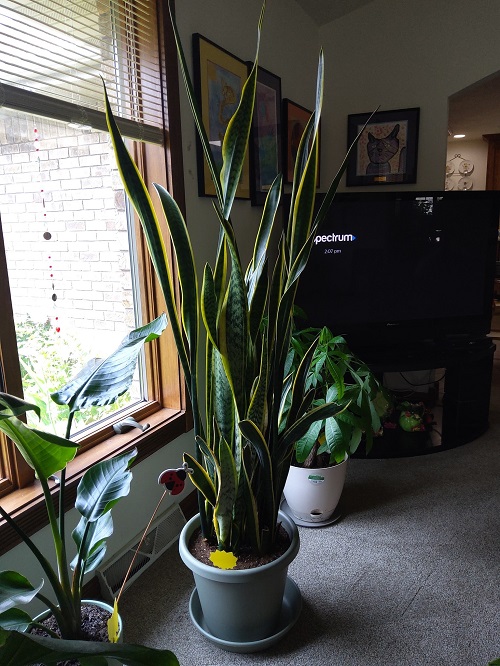
If your snake plant leaves look burned or damaged and the plant is sitting in direct sunlight, move it to a spot with less harsh light. You can also use a thin curtain to soften the sunlight.
Water:

Check the soil before watering your plant. If the soil feels very wet and you water often, your snake plant may be getting too much water. Let the soil dry out fully before watering again. If the problem is serious, repot the plant in fresh soil and check the roots for rot.
Insect activity:
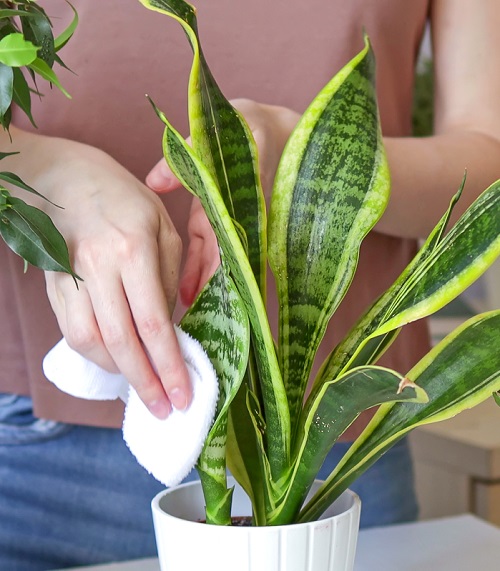
Check your snake plant often for pests. Remove insects by spraying the plant with water or wiping them off with a cotton swab dipped in rubbing alcohol. After that, use neem oil or horticultural soap to stop pests from coming back. Keeping your plant healthy can also help prevent future pest problems.
Temperature fluctuation:
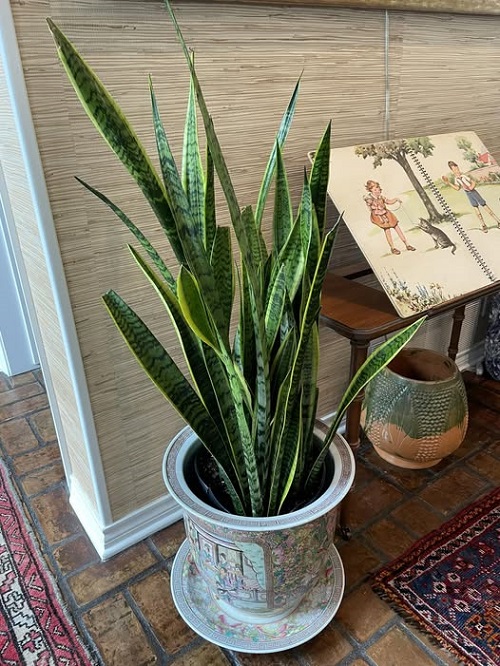
Keep your snake plant away from cold drafts, air conditioners, heaters, or other heat sources. Place it in a spot where the temperature stays steady and comfortable.
Container:
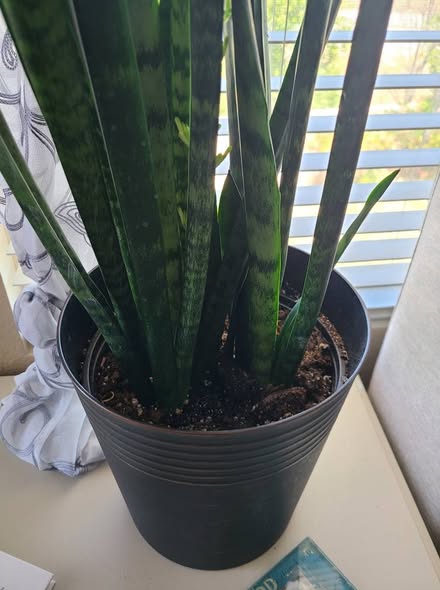
If your snake plant has outgrown its pot, move it to a bigger container. You can also divide the plant into smaller sections and repot them to grow new plants.
Nutrients:
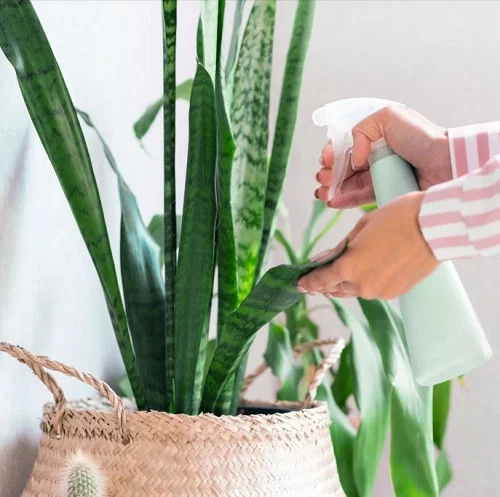
Nutrients: If you have not fertilized your snake plant or changed its soil for a few years, repot it in fresh soil. If you think you used too much fertilizer, pour water through the soil a few times to wash out the extra nutrients. In the future, feed your snake plant only twice a year during spring and summer.
Secrets for Snake Plant Prevention and Care
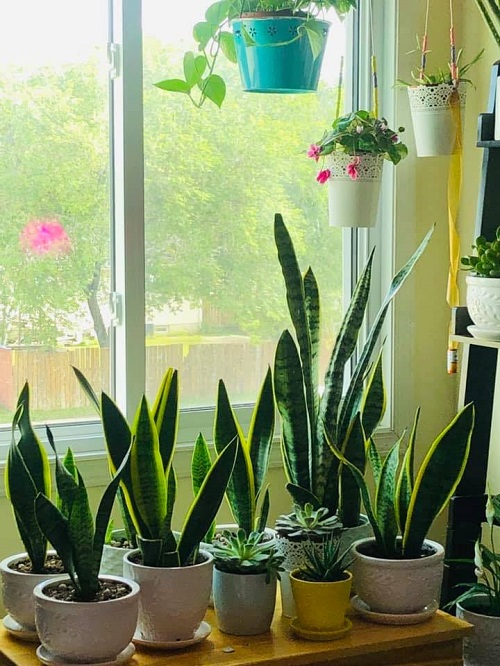
The best way to stop your snake plant leaves from turning yellow is to give the plant the right care and growing conditions.
- Place the plant where it gets 8 to 10 hours of bright, indirect sunlight each day.
- Use well-draining soil and a pot with enough drainage holes.
- Water only when the soil feels dry at least 2 inches below the surface. You can also use a moisture meter to check before watering.
- Keep the plant in a warm spot with temperatures between 70°F and 90°F.
- Keep it away from cold drafts and do not let the temperature drop to 50°F.
TIP: Always check the soil before watering, because dry soil is the best sign that your plant needs water. The soil may dry faster or slower depending on the season, weather, and temperature. In general, water your snake plant once a week during spring and summer, and once every two or three weeks during fall and winter.