
As an Amazon Associate, we earn a small commission from qualifying purchases — at no extra cost to you.
What to Do With Orchid Roots Growing on Top of the Pot
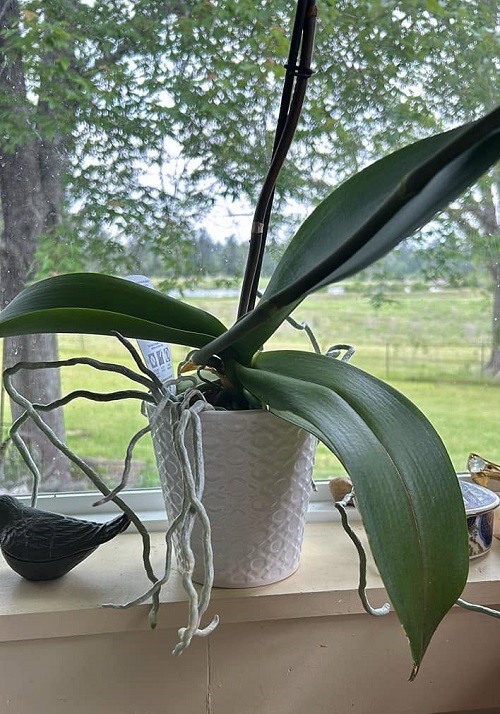
Exposed orchid roots are completely normal and are one of the unique features of these beautiful plants. Knowing how to care for them is an important part of keeping your orchid healthy.
These roots are most common on epiphytic orchids. In nature, these orchids grow on tree branches and trunks instead of in the ground. They use the tree only for support and do not take nutrients from it, so they do not harm the tree.
The roots absorb moisture and nutrients from the humid air, rain, and organic matter around them. In this article, you’ll learn why aerial orchid roots are beneficial and how to care for them properly.
What is the role of air roots?
Want a stunning indoor plant display with almost no guesswork? Give a glance at our Amazon Storefront for all your gardening essentials.
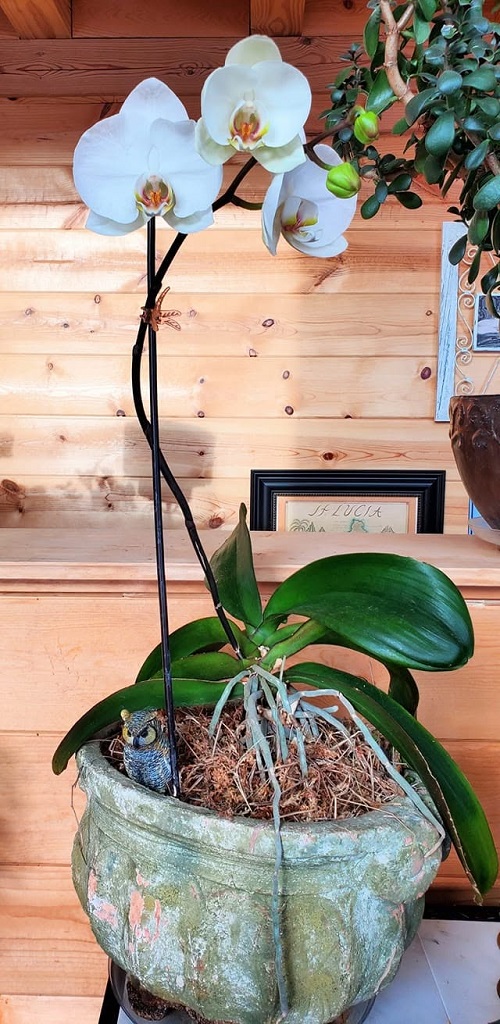
Orchid roots do more than hold the plant in place. They also absorb moisture, nutrients, and carbon dioxide from the air. This works best in warm, humid environments like tropical forests. Inside most homes, where the air is much drier, the roots cannot absorb as much moisture, so this benefit is limited.
Here’s an interesting fact: Orchids are epiphytes, which means they naturally grow on other plants, usually on the branches of trees. They do not take food from the tree or harm it. Instead, they use their roots to grip the bark while reaching toward the sunlight above the forest floor. That’s why many orchids you grow in pots are actually natural climbers.
Show off beautiful roots as they grow! This elegant glass propagation hanging terrarium turns simple cuttings into eye-catching décor.
What to Do With Orchid Roots Growing Top of the Pot
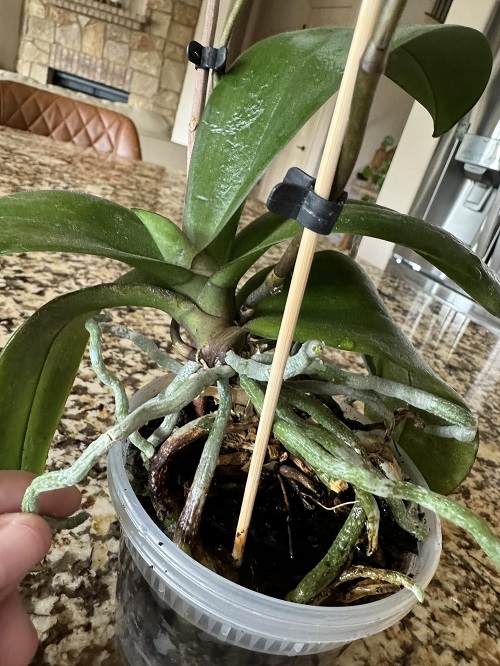
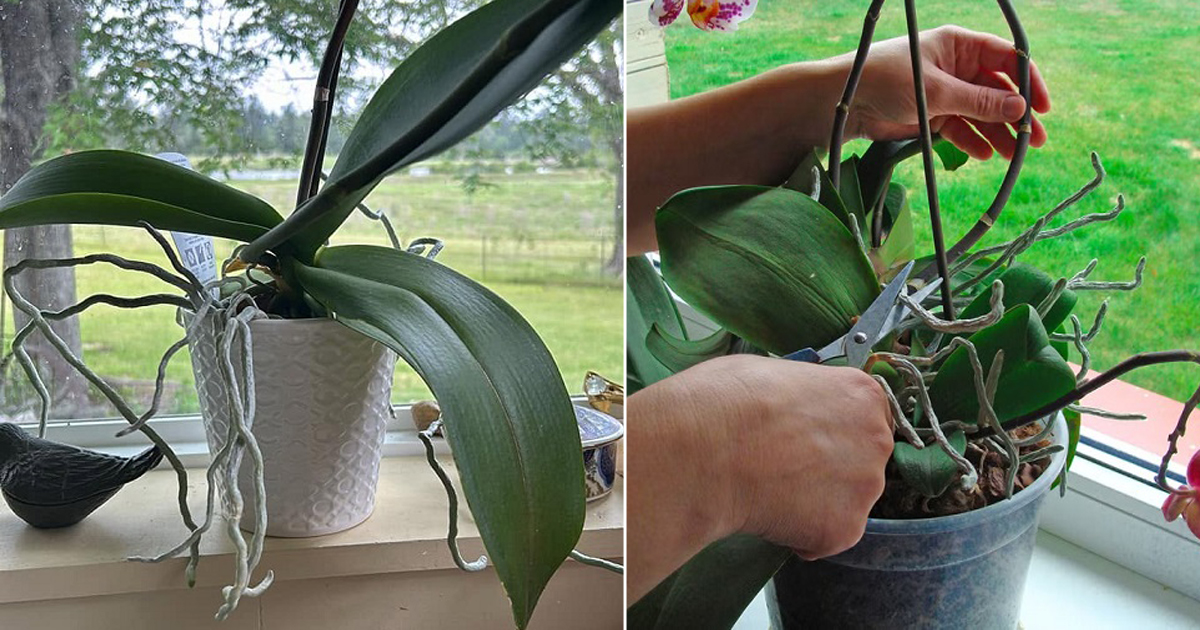
Healthy aerial orchid roots should be left alone. Since their job is to absorb moisture and air, they should never be buried in the potting mix or pushed into the pot.
Only remove roots that are dead, dry, mushy, or damaged. Cutting healthy roots can stress the orchid and weaken its growth.
Caring for aerial roots is simple. Keep your orchid healthy with proper watering, good air circulation, and regular misting if the air in your home is dry.
Keep the mist in the air around your plants in check with this misting fan.
Do You Ever Need to Remove Orchid Roots?
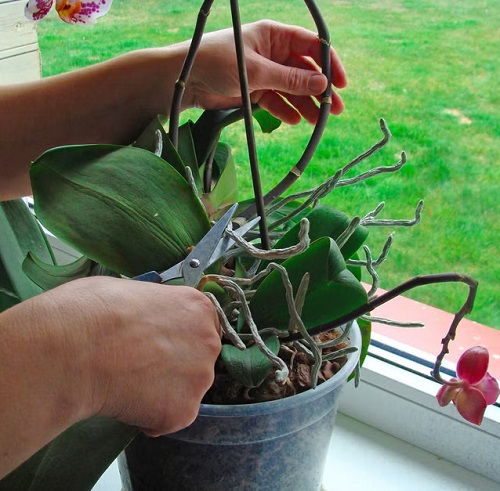
Yes, but only if the roots are unhealthy. Dead, rotten, or damaged roots can be safely trimmed to keep your orchid healthy. Root rot is a common problem, and any soft, black, or mushy roots should be removed.
Dead aerial roots usually look brown or gray, feel dry, and appear shriveled. This often happens when the air is too dry or the plant is not getting enough moisture.
The best time to trim damaged roots is after your orchid has finished blooming. Always use a clean, sharp pair of pruning shears or a garden knife. Before cutting, disinfect the blades with rubbing alcohol or a mixture of one part bleach and nine parts water to help prevent the spread of disease.
Check whether your orchid has outgrown its pot. If the roots are tightly packed, it’s time to move the plant into a slightly larger container. When the pot becomes too crowded, some roots naturally grow above the potting mix to find more space.
After repotting, leave the aerial roots above the surface instead of burying them. This allows them to continue growing naturally and absorb moisture from the air.
Here is a set of bigger pots for your orchids to grow!
How to Find Your Orchid Roots are Drying Out
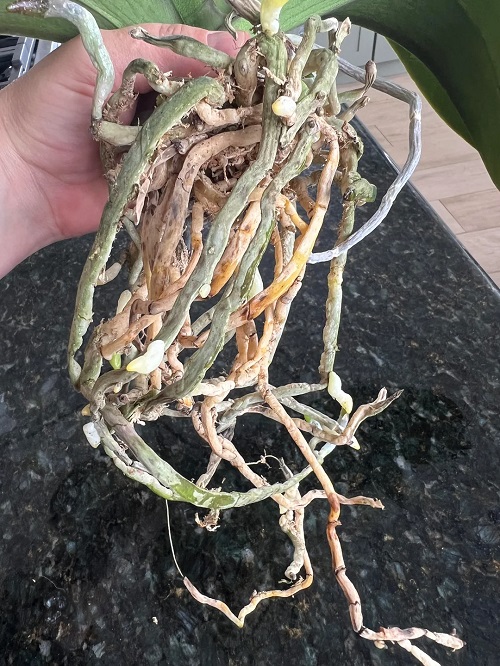
You can often tell when an orchid needs water by looking at its roots.
Healthy roots are firm, plump, and bright green after watering. If the roots look pale, dry, or shriveled, your orchid is likely dehydrated and needs more moisture.
A dry orchid can usually recover with a good soak or regular misting, especially if the air in your home is dry.
Here is a bigger, self-watering pot for your orchids to grow!