
As an Amazon Associate, we earn a small commission from qualifying purchases — at no extra cost to you.
Wondering Why Gardeners Put This Flowering Houseplant Next to Bananas? Find out how this trick trigger beautiful new blooms.
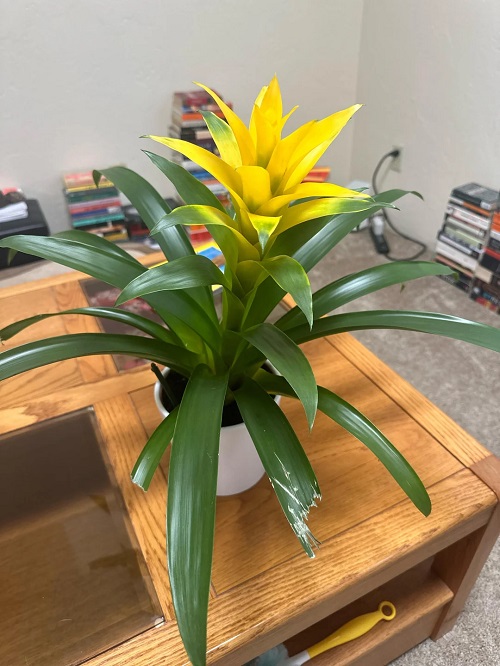
You may feel a little disappointed when your bromeliad stops flowering. After weeks or even months of showing off its bright, colorful bracts, it can seem like the plant is finished. But don’t worry. This is a normal part of its life cycle, and your bromeliad can still grow and thrive. If you want to encourage your bromeliad to bloom again, the solution may already be in your kitchen. A ripe banana can help because it releases a natural gas called ethylene.
Why Gardeners Put This Flowering Houseplant Next to Bananas
Ethylene is a natural plant hormone that is released by ripening fruits. Fruits like bananas produce plenty of this gas, which is why they are often used to help encourage bromeliads to bloom.
How Bananas Can Encourage Bromeliads to Bloom
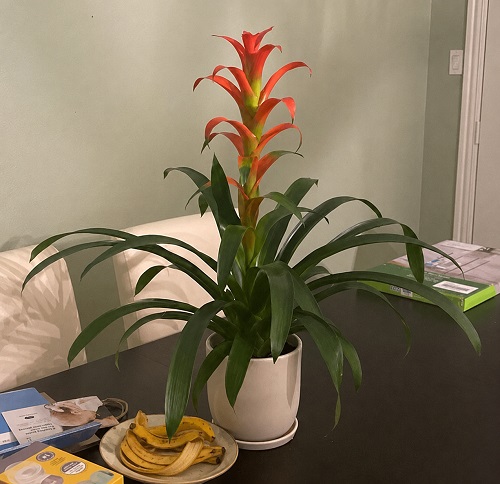
If you want to encourage your bromeliad to bloom again, the solution may already be in your kitchen. A ripe banana can help because it releases a natural gas called ethylene.
In nature, bromeliads are exposed to ethylene gas when fallen fruits ripen nearby. This gas acts as a signal that tells the plant it is time to flower. Ripe bananas also produce ethylene, which is why many gardeners use them to encourage blooming.
If your home doesn’t get enough bright indirect light, try a quality LED grow light can make a huge difference
What Is Ethylene Gas?
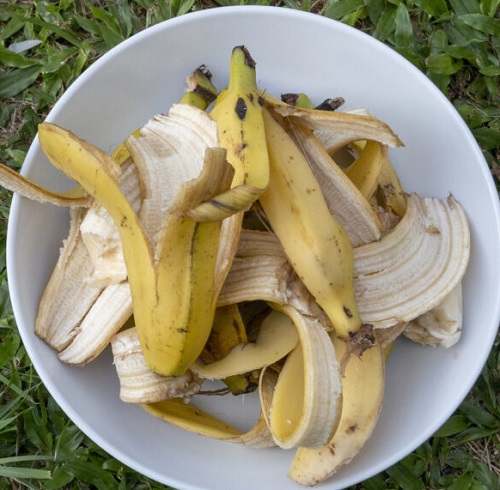
Ethylene is a natural plant hormone that is released by ripening fruits. Fruits like bananas produce plenty of this gas, which is why they are often used to help encourage bromeliads to bloom.
Try smart humidifier that keeps humidity at ideal levels for stronger leaves and better flowering.
How to Try the Banana Trick at Home
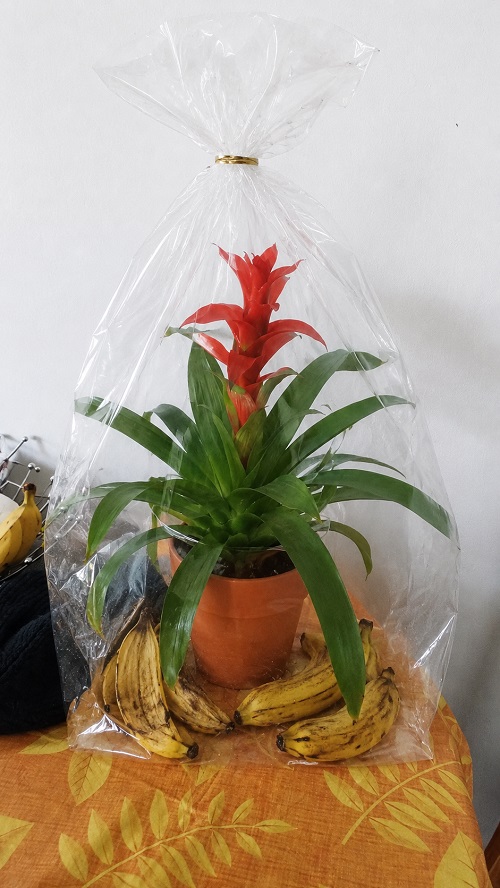
In nature, bromeliads are exposed to ethylene gas as fallen fruits like bananas ripen nearby. This natural gas tells the plant that it is time to flower.
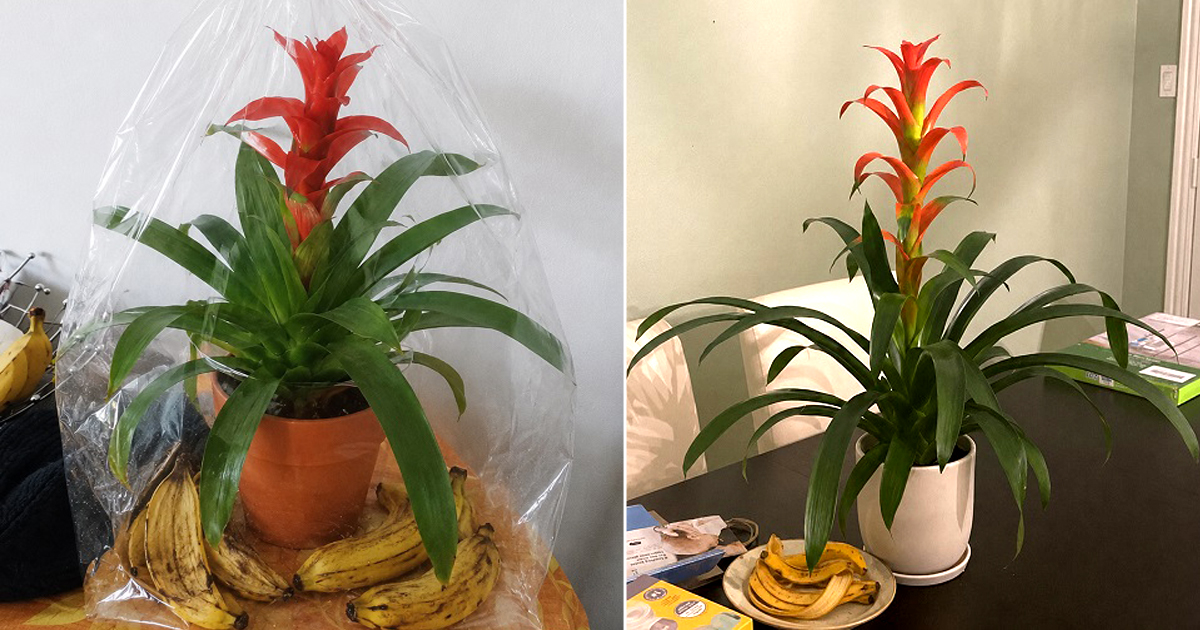
You can try the same method at home. Place a healthy, mature bromeliad inside a clear plastic bag with a ripe banana or apple for 7 to 10 days. As the fruit ripens, it releases ethylene gas, which may encourage your plant to produce a new flower spike over the next few weeks or months.
Be patient, though. Bromeliads do not bloom again quickly, and this method does not always work. The results depend on the type of bromeliad, its age, and how well you care for it. Keep your plant in bright, indirect light and continue regular watering and care to give it the best chance of blooming again.
This pH testing kit helps you give your bromeliad the right growing conditions as healthy roots start with balanced water
What Happens After a Bromeliad Flowers?
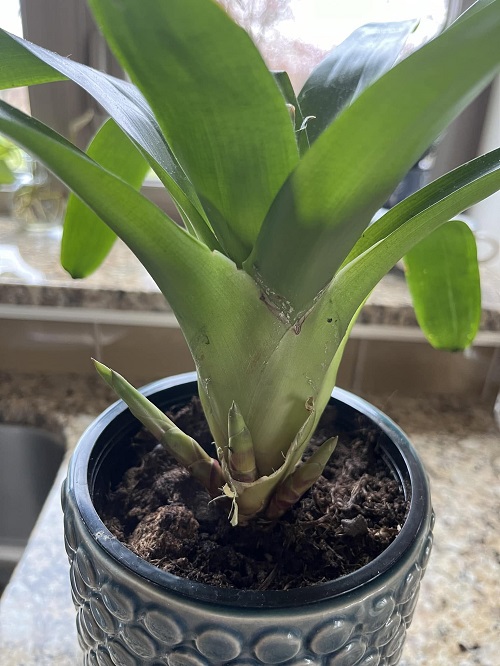
It is important to know that each bromeliad rosette blooms only once in its lifetime. After flowering, the main plant slowly starts to die. Before it does, it produces small offshoots called pups around its base. You can grow these pups into new plants, and they will bloom when they become mature.
Try a stylish grow light that provides the perfect lighting for tropical plants year-round.
Is the Banana Trick Worth Trying?
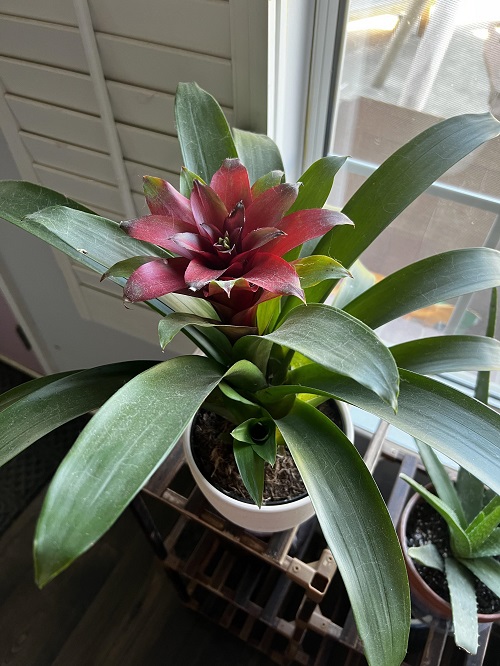
If you miss your bromeliad’s colorful flowers, trying the banana method may be worth it. Bromeliads are not the only plants that respond to ripe bananas. The ethylene gas released by ripening fruit is also used in commercial gardening to help control flowering and fruit ripening in many different crops.
This bestselling guide shares practical tips for growing bromeliads and dozens of other indoor plants with confidence.