
As an Amazon Associate, we earn a small commission from qualifying purchases — at no extra cost to you.
Why is your Pink Princess Philodendron turning green? Learn what causes fading pink hue and how to help new leaves keep their variegation.
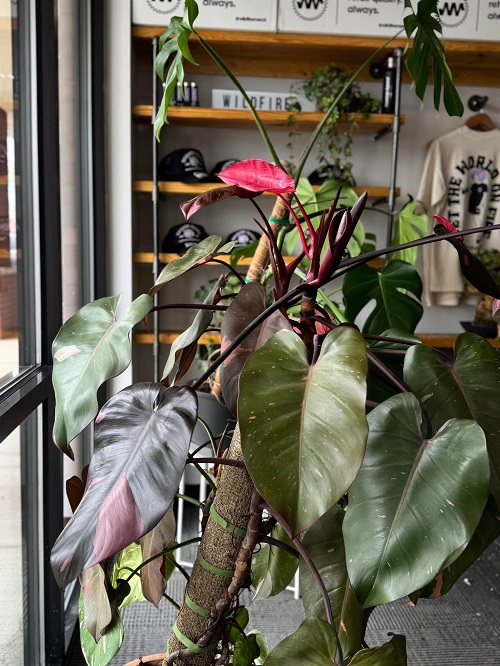
Are you constantly thinking Why Is My Pink Princess Philodendron Turning Green? You may be wondering what went wrong. You may have moved it to a brighter window, changed the fertilizer, or started watching every new leaf closely.
The good news is that a greener leaf does not always mean your plant is unhealthy.
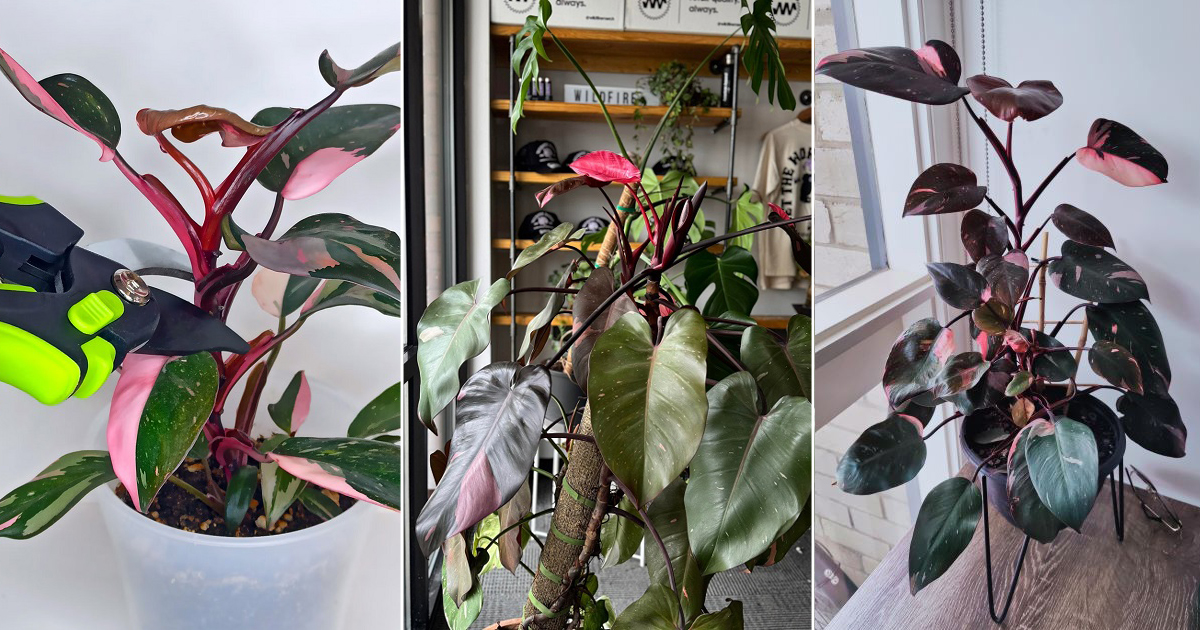
Pink Princess Philodendron is naturally variable. Each new leaf can have a different amount of pink, and some leaves may have very little variegation. The plant can also lose variegation over time, which is known as reversion.
So, before you start changing everything, look at the new growth and the stem. That can tell you much more than one green leaf.
Your Pink Princess May Be Naturally Producing Less Pink
Get this gardening tool set for lush growth with minimal effort. Also, check our Amazon storefront for more garden supplies.
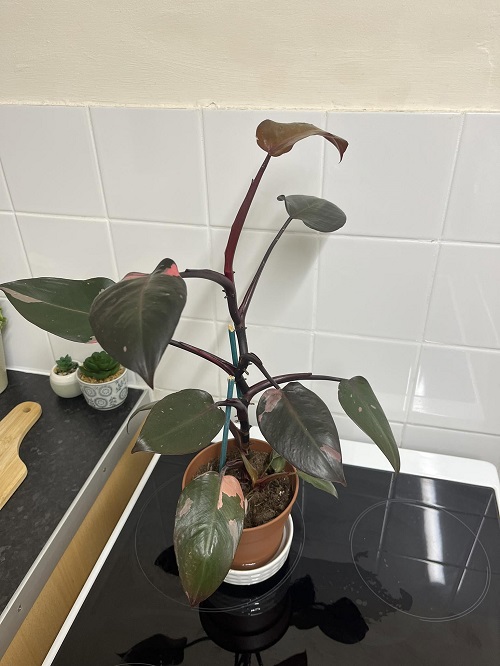
This is the first thing to understand.
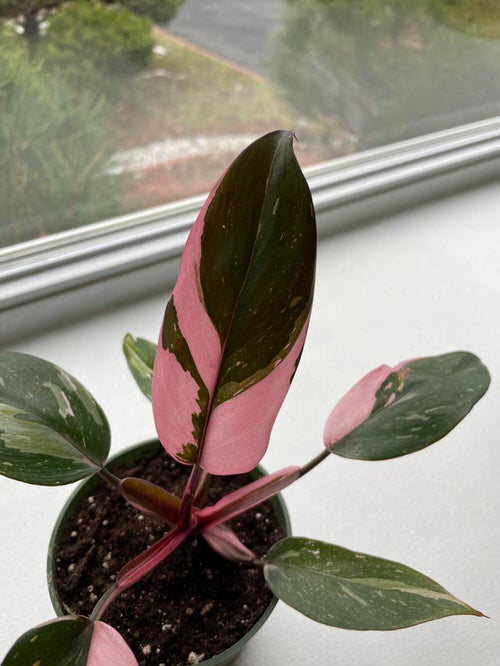
Pink Princess Philodendron does not produce identical leaves. One leaf can have large pink sections, while the next may have only a few small streaks. Keep in mind that every leaf can differ in both the amount and pattern of pink variegation.
This means one mostly green leaf does not automatically mean the plant is reverting.
Sometimes the next leaf has more pink again.
If your plant has always produced leaves with different patterns, I would not worry about one greener leaf. Watch what happens over the next few leaves instead.
Why Is My Pink Princess Philodendron Turning Green?
Low Light Can Make the Pink Less Noticeable
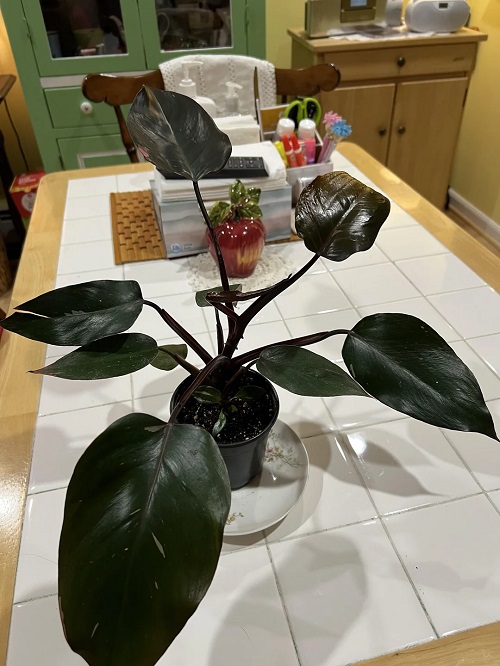
Light is one of the first things I would check.
Pink Princess grows best in bright, indirect light. When it gets too little light, the pink variegation may become less noticeable. It is specifically recommended that bright indirect light and notes that lower light can cause the pink to fade or appear less strongly.
This does not mean you should put the plant in harsh direct sun.
That can cause another problem.
The pink parts of the leaves contain less chlorophyll than the green parts. Because of this, the pink areas can be more sensitive to intense light and may develop sunburn.
A bright room near a window is usually a better starting point than a dark corner or a spot with strong afternoon sun.
Not getting enough natural light? Give your Pink Princess a boost with a full-spectrum grow light.
Check the Newest Leaves, Not Just the Old Ones
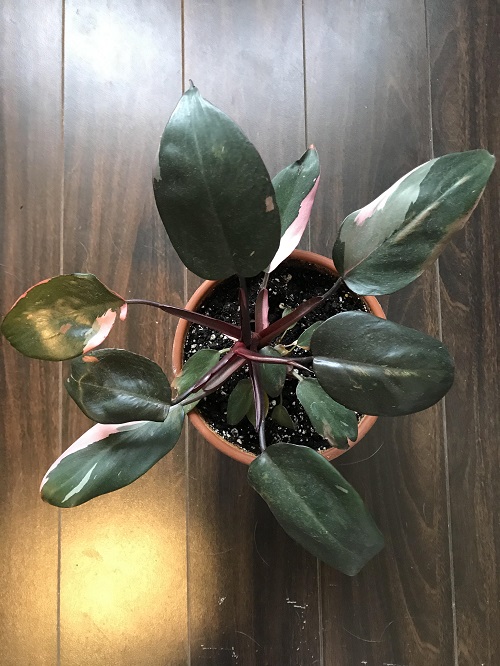
Older leaves tell you what your plant produced in the past.
New leaves tell you what it is doing now.
Look closely at the last three or four leaves. Are they gradually becoming greener? Or did you simply get one leaf with less pink?
That difference matters.
If the plant produced plenty of pink before and several new leaves are now coming out mostly green, I would pay more attention. If the pattern goes green, pink, green, pink, the plant may simply be showing its natural variation.
Give it some time before making major changes.
Pink Princess Can Revert to Green
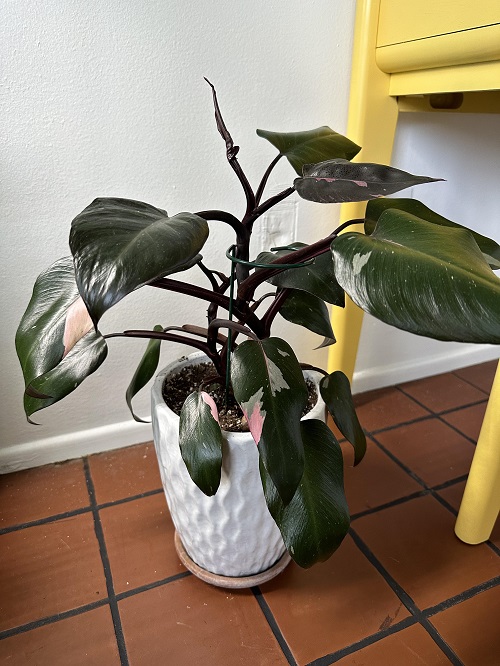
This is the bigger concern when the plant keeps producing green growth.
Reversion means the plant starts producing growth that has little or no variegation. Pink Princess is known to have a tendency to revert because its variegation is not completely stable. Reversion is a loss of variegation and this can happen with Pink Princess during production.
You may first notice a single green leaf.
Then another one appears.
If the newer leaves continue following the same green pattern, you may be dealing with reversion rather than a temporary change in color.
Look at the Stem Before You Prune
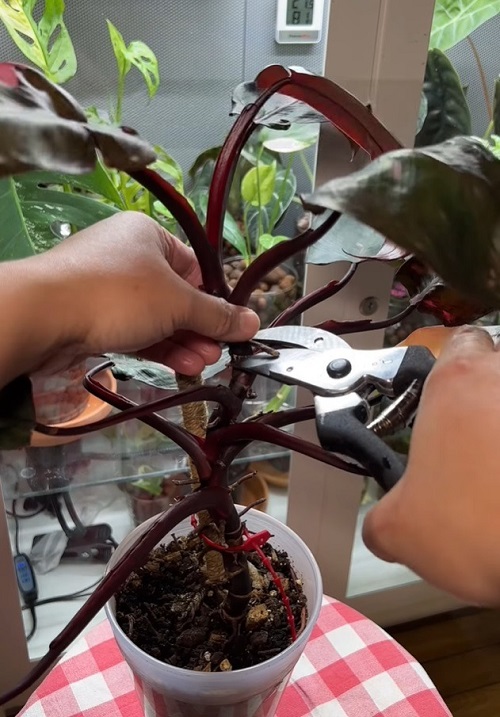
This is one step I would not skip.
Follow the stem back from the newest green leaf. Look at the nodes and the older growth. You want to see where the green growth begins.
If only the newest section is producing fully green leaves, that section may be reverting.
You do not want to start cutting randomly. Pruning a variegated plant is more useful when you can see exactly where the change in growth is happening.
The goal is to remove strongly reverted growth while keeping a section of stem that still shows the variegated pattern.
If your plant is showing repeated green growth, keep a sharp pair of pruning shears handy for precise cuts.
Can More Light Bring the Pink Back?
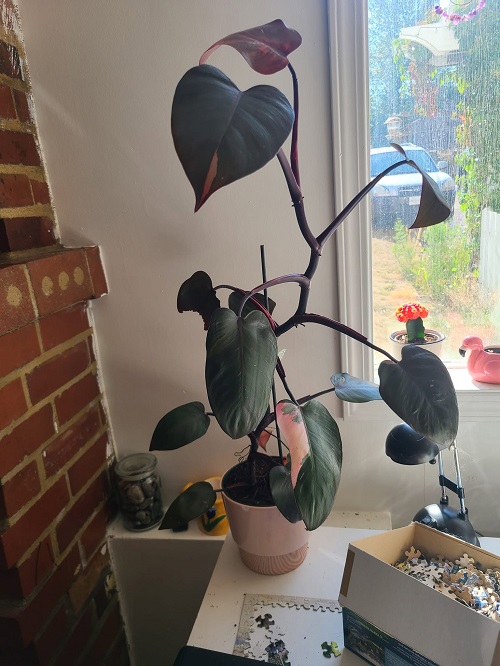
Sometimes better light can help the pink appear more strongly, especially if the plant has been growing in a dim location.
But light cannot create variegation that is no longer present in the plant.
That distinction is important.
If your Pink Princess is simply showing weak pink because it is growing in poor light, improving the light may make future foliage show its color more clearly. If a section of the plant has truly reverted to green, moving it closer to a window will not magically turn those green leaves pink.
it has been noted that some variegated plants are unstable and can revert to green.
So think of light as something that helps the plant show and maintain good growth conditions. It is not a switch that turns green tissue pink.
Give It Bright, Indirect Light
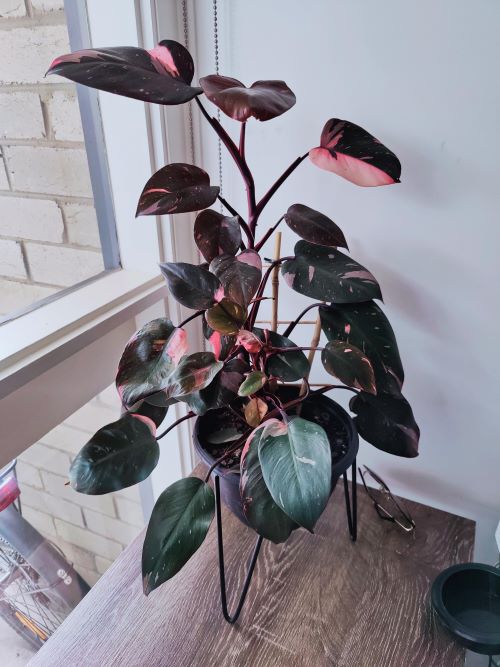
If your plant is sitting several feet away from a window or in a dark room, move it to a brighter spot.
A bright window with filtered light can work well. You can also use a grow light if your home does not have a suitable natural-light location.
Make changes gradually if the plant has been in low light for a long time. Sudden exposure to strong sunlight can scorch the foliage, especially the pink areas.
You are looking for bright light without harsh midday or afternoon sun hitting the leaves for hours.
Use these filter curtains let in natural light for your plants.
Do Not Try to Fix Green Leaves With Extra Fertilizer
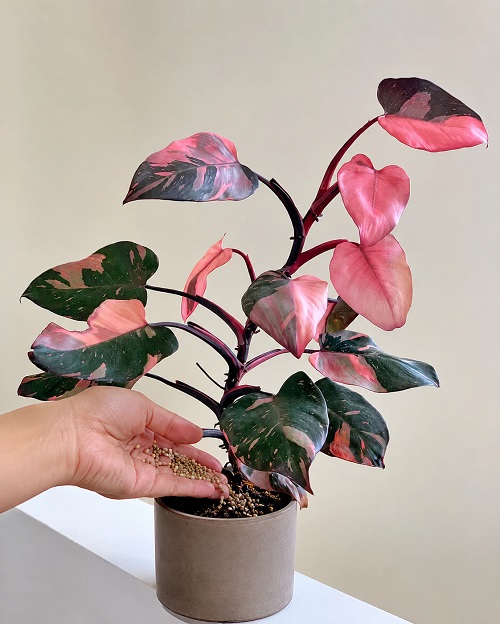
This is a common reaction, but I would not use fertilizer as a way to force more pink.
Pink Princess is already a relatively slow-growing plant, and it does not need heavy feeding. Use houseplant fertilizer according to the product directions and notes that Pink Princess can be fertilized as little as once or twice a year if desired.
Adding more fertilizer will not turn a green leaf pink.
Too much fertilizer can create other problems, including root damage.
If your plant is growing well, focus first on light and the pattern of the new growth. Do not keep adding products every time a leaf looks greener than expected.
Keep feeding simple with a balanced houseplant fertilizer for steady, healthy growth.
Avoid Overwatering While You Wait for New Growth
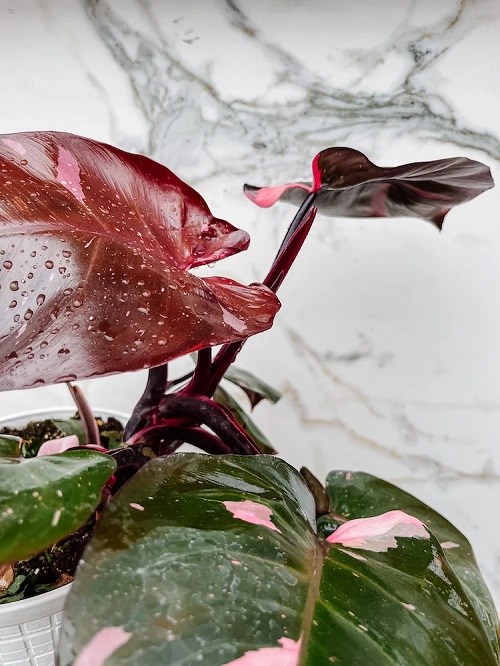
Watering will not control the pink color either, but healthy roots still matter.
Pink Princess prefers soil that is not kept constantly wet. it is warned that overwatering can cause root problems, and its general philodendron guidance recommends allowing part of the soil to dry before watering again.
This is especially important if you have recently moved the plant to a darker spot. Lower light usually means slower growth and slower drying.
Check the soil instead of watering on a fixed schedule.
Not sure when to water? Check the soil moisture first with a simple plant moisture meter.
What If Every New Leaf Is Green?
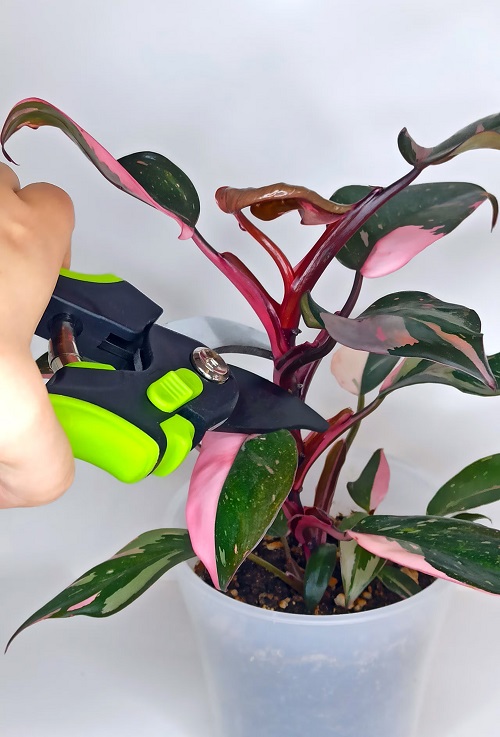
If several new leaves appear fully green, take a closer look at the stem.
If the plant has a section that still produces variegated leaves, you may be able to prune back to that growth and encourage the plant to continue from a more variegated section.
This is where pruning can help.
Do not cut just because one leaf is green. Look for a pattern of repeated green growth first.
If the entire plant is producing only green leaves and there is no remaining variegated growth, there may not be much you can do to bring the pink back. A true reversion is not simply a care problem.
What If One Leaf Is Completely Green?
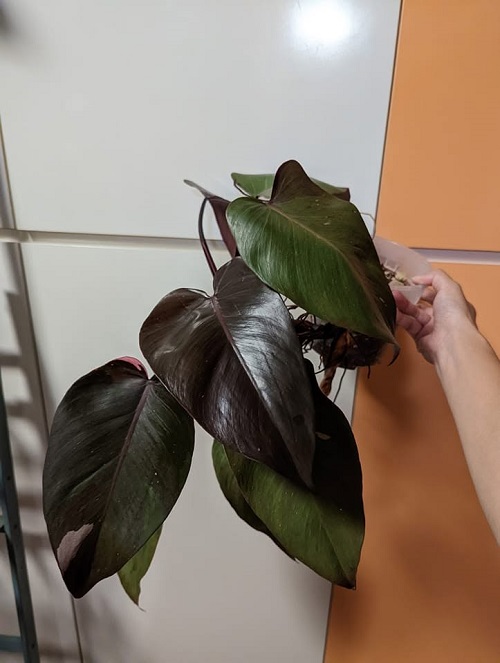
Do not panic.
One green leaf can happen.
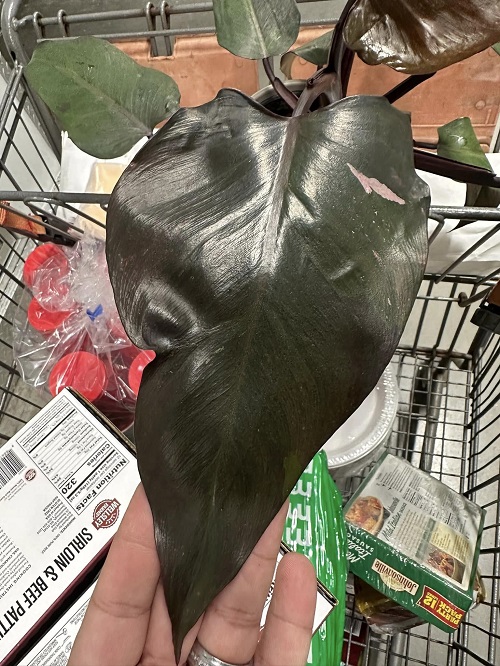
Pink Princess produces leaves with different amounts of variegation, so an individual leaf with little or no pink is not enough evidence that the whole plant has reverted.
leave it alone and watch the next few leaves.
If the next leaf has pink, you have your answer.
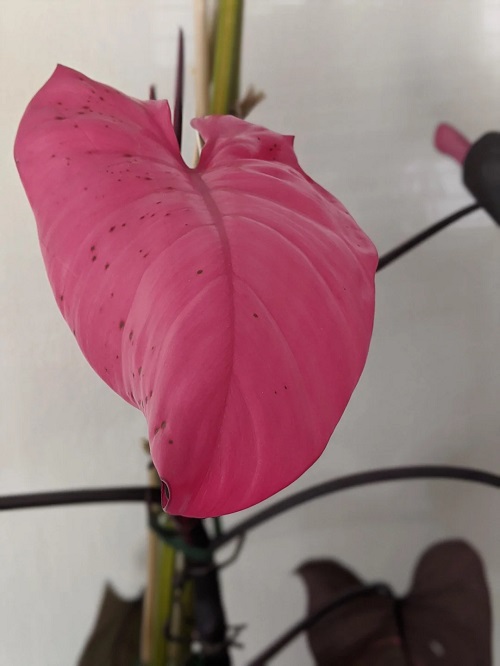
What If One Leaf Is Almost All Pink?
That can happen too.
Pink Princess leaves can range from lightly marked with pink to heavily variegated.
An almost-pink leaf looks exciting, but remember that highly variegated leaves contain less green tissue available for photosynthesis. I would not assume that more pink always means a healthier plant.
The plant needs enough green tissue to support its growth.
Keep the Plant Growing Steadily
Once you find a bright spot that suits the plant, try not to keep moving it around.
Give it consistent care. Let the soil partly dry between waterings. Avoid heavy feeding. Keep the plant warm and away from sudden temperature changes.
Then watch the new leaves.
This is much more useful than checking the plant every few days and changing something each time you see less pink.
When Should You Actually Worry?
pay closer attention when you see a clear pattern.
If one leaf is green, wait.
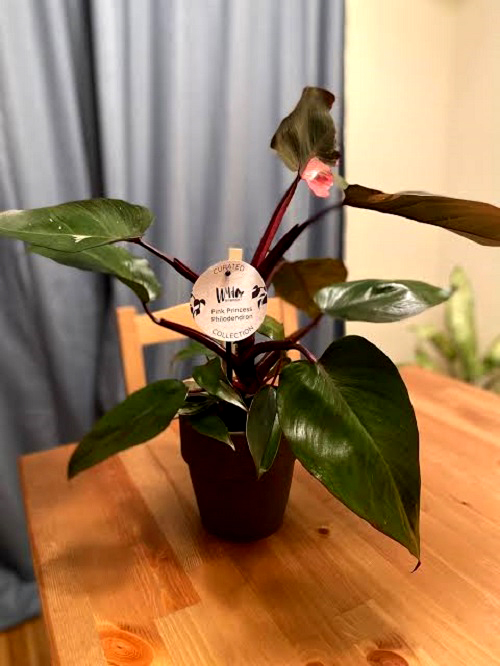
In case two or three new leaves are becoming progressively greener, inspect the stem.
If the plant continues producing completely green growth, consider whether that section has reverted.
Also look at the growing conditions. If the plant has recently moved into a much darker spot, correct the light before assuming the variegation has permanently disappeared.
The Main Reason Your Pink Princess Is Turning Green
There are two different things that can look similar.
Your plant may simply be producing a leaf with less pink. Pink Princess naturally varies from leaf to leaf.
Or, the plant may be starting to revert and produce increasingly green growth.
Light also matters. Too little light can make the pink less noticeable, while bright indirect light helps the plant maintain stronger color and healthy growth. But light cannot reverse a true genetic reversion.
So, don’t judge the plant from one leaf.
Watch the new growth. Check the light. Look at the stem. If the green pattern continues, then it is time to consider pruning back to a section that still carries variegation.
That approach gives you a much better idea of what is actually happening instead of treating every green leaf as a problem.
Get a copy of How Not to Kill Your Houseplant to become the best plant parent.