
As an Amazon Associate, we earn a small commission from qualifying purchases — at no extra cost to you.
Noticed mushy snake plant leaves? Find out what causes root rot, how to save your plant, and how to prevent the problem from returning.
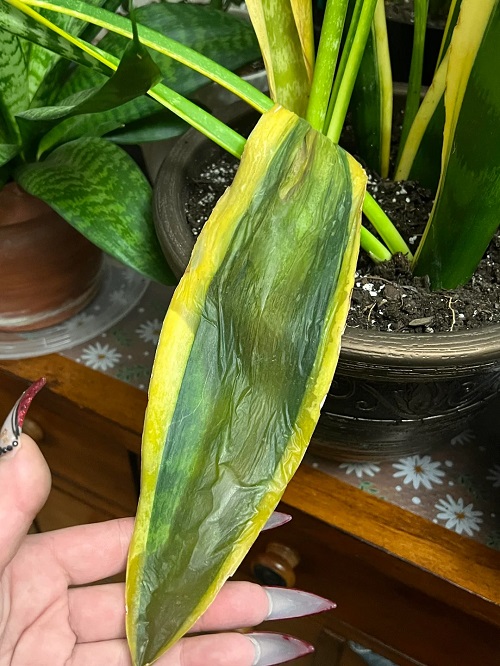
Snake plants are popular houseplants because they are hardy and have beautiful, upright leaves. Although they are easy to care for, they can still develop problems like root rot. Too much water is a common cause of this issue. What causes root rot in snake plants, and how can you prevent it? Keep reading to learn how to identify, treat, and prevent root rot in your snake plant.
What Is Root Rot?
Check this complete indoor garden setup and transform your plant corner into a year-round growing station. Give a quick glance at our Amazon Storefront for more such essential needs.
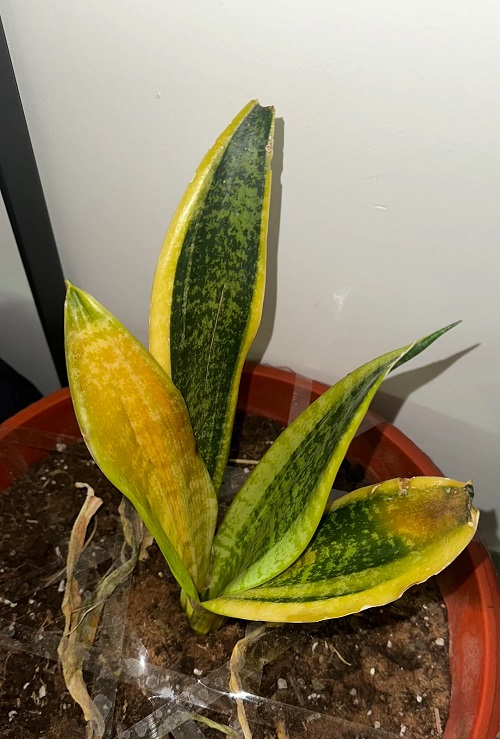
Many plants can develop root rot, but what does it mean? Root rot occurs when a plant’s roots start to decay. It is often caused by fungal infections, usually when the soil stays too wet for too long.
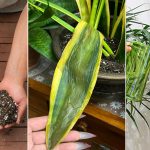
You may notice yellow, pale, or wilted leaves when a plant has root rot. The soil may also have a musty or rotten smell, and you might see fungal growth on its surface. To check for root rot, gently remove the plant from its pot and examine the roots. Healthy roots are usually firm, while rotten roots often look brown or black, feel soft and slimy, and have an unpleasant smell.
Why Are Snake Plants Susceptible To Root Rot?
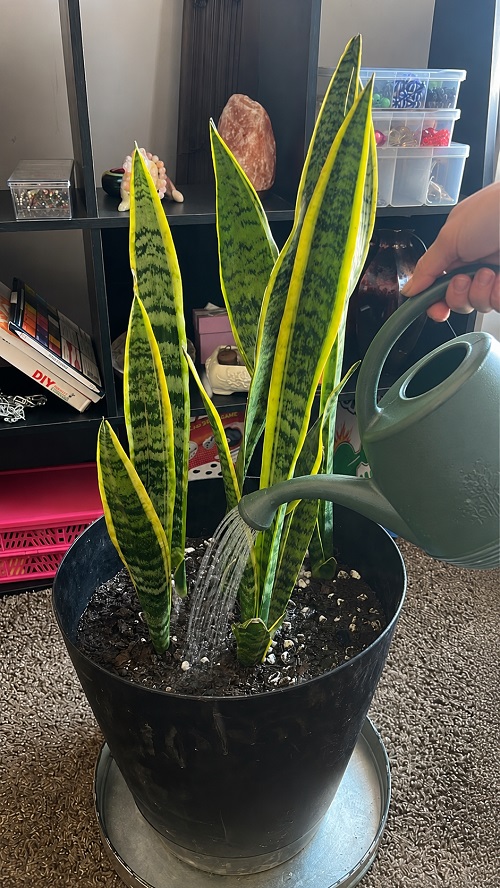
Overwatering is the main cause of root rot in snake plants. These plants can store water in their leaves and do not need frequent watering. When the soil stays wet for too long, the roots do not get enough oxygen and begin to weaken. Wet conditions also allow harmful fungi, such as Fusarium, Phytophthora, Pythium, and Rhizoctonia, to grow and damage the roots.
Poor soil drainage can make the problem worse. If your snake plant grows in compacted soil or a potting mix that holds too much water, excess moisture cannot drain away easily. This leaves the roots sitting in wet soil and increases the risk of root rot.
Here is a watering can you need to add to your gardening kit.
How To Prevent Root Rot
Since overwatering is the main cause of root rot in snake plants, avoid watering them too often. Let the soil dry out between waterings. Choosing a pot with drainage holes and using well-draining soil will also help prevent excess moisture from damaging the roots.
Soil Type
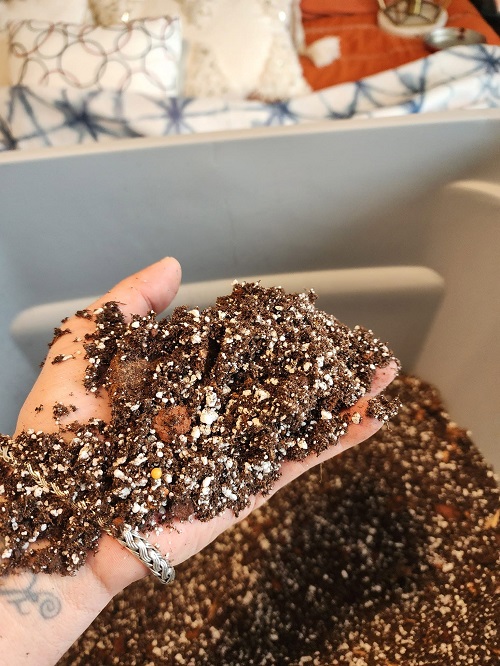
The soil you use for your snake plant plays an important role in preventing root rot. Choose a well-draining potting mix that allows excess water to flow out easily. You can improve drainage by adding materials such as sand, perlite, biochar, or pumice to the soil.
Here is a well draining soil mix that will be helpful for your Snake plant and prevent root rot.
Container

Snake plants are hardy and can survive with little water. However, proper watering is not the only thing that helps prevent root rot. Choosing the right pot is also important.
Use a pot with enough drainage holes so excess water can flow out easily. Most pots need at least two holes, but larger pots may need more. For example, a 36-inch pot may need three to four holes, while a 46-inch pot may need four to six holes.
Avoid pots with attached saucers that hold water around the base. If water collects under the pot and cannot drain away, the soil may stay wet for too long, increasing the risk of root rot.
Looking for a bigger pot? Get these self-watering pots here.
Frequency of Watering
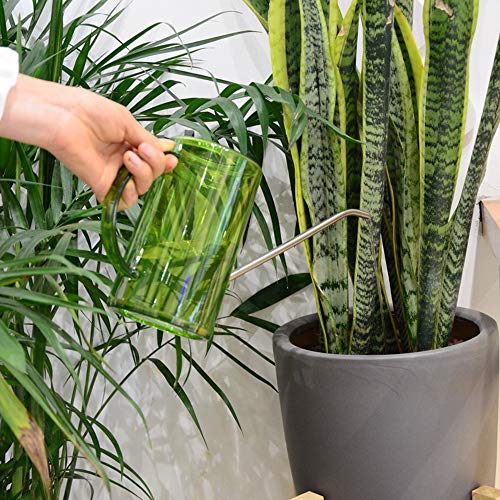
Snake plants can tolerate dry conditions, so overwatering is a common problem. You may need to water your snake plant every two weeks, but the timing depends on the temperature, light, and growing conditions.
Before watering, check the soil with your finger. If the top 2 inches (5 cm) feel dry, it is time to water. During warmer months, you may need to water more often, especially if you keep your plant outdoors. In winter, the plant grows more slowly and needs less water, so reduce watering.
When watering, pour the water directly onto the soil around the base of the plant. Water thoroughly until the excess drains through the holes at the bottom of the pot. You can do this in a sink or tub to let the water drain away easily.
Before you pick up the watering can again, check the soil using a moisture meter to avoid overwatering.
Can You Resurrect After Root Rot?
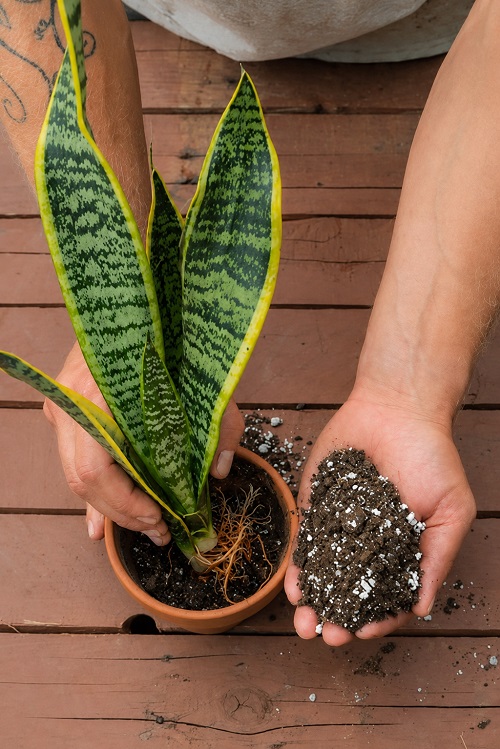
Can you save a snake plant with root rot? Yes, but it depends on how badly the roots have been damaged.
If you catch the problem early, you may be able to save your plant by repotting it. Carefully remove the plant from its pot and shake off the old soil. Use clean, sterilized pruning shears to cut away any brown, mushy, or rotten roots. Remove any leaves that have started to rot as well.
Apply a suitable fungicide if needed, following the product instructions. Before reusing the same pot, clean and disinfect it properly.
Repot the snake plant in fresh, well-draining soil. A succulent or cactus potting mix works well because it allows excess water to drain away. You can also make your own mix by adding materials such as perlite or pumice. After repotting, water lightly and let the excess water drain out completely.
A good houseplant guide can help you troubleshoot light, watering, soil, feeding and other common problems across your indoor plant collection.