
As an Amazon Associate, we earn a small commission from qualifying purchases — at no extra cost to you.
Bring bold beauty indoors with these black houseplants that grow in water. Enjoy easy care, simple propagation, and striking dark foliage.
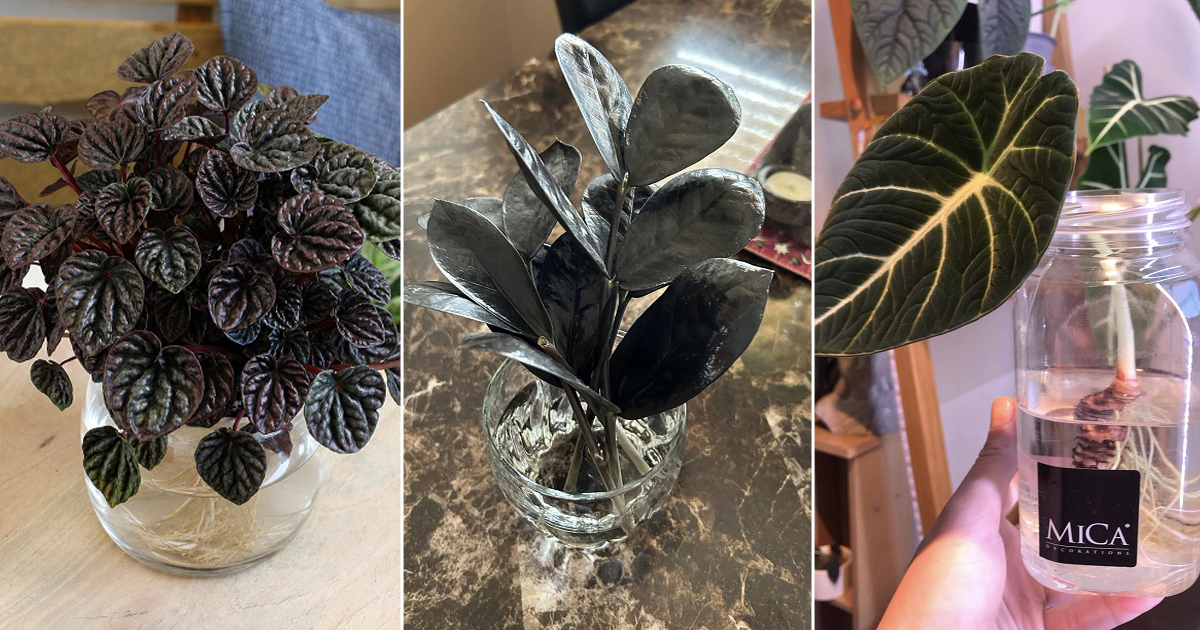
If your indoor plant collection is looking a little too green, add some contrast with black houseplants. Their deep, dramatic foliage looks even more striking in clear glass jars, where you can enjoy both the beautiful leaves and the growing roots. Here are some of the best black houseplants that grow in water.
Note: These plants aren’t true black, but their deep purple, burgundy, or nearly black foliage often appears black indoors, making them a perfect choice for creating a bold and eye-catching water display.
Black Houseplants That Grow in Water
Want a stunning indoor plant display with almost no guesswork? This complete hydroponic growing system makes it easy to grow healthy plants. Give a glance at our Amazon Storefront for all your gardening essentials.
1. Rubber Plant (Ficus elastica ‘Black Prince’)
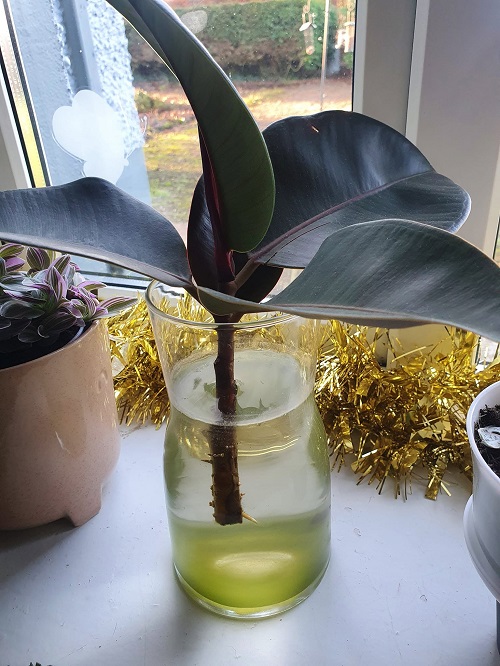
One of the best things about this rubber plant is watching a new leaf open. Before it unfolds, the leaf stays covered by a reddish sheath called a stipule. As the leaf grows, the stipule dries up and falls off on its own.
If you take a cutting, rinse off the milky sap and let the cut end dry for 15–20 minutes before placing it in water.
Show off beautiful roots as they grow! This elegant glass propagation hanging terrarium turns simple cuttings into eye-catching décor.
2. Raven ZZ Plant ( Zamioculcas zamiifolia ‘Raven’)
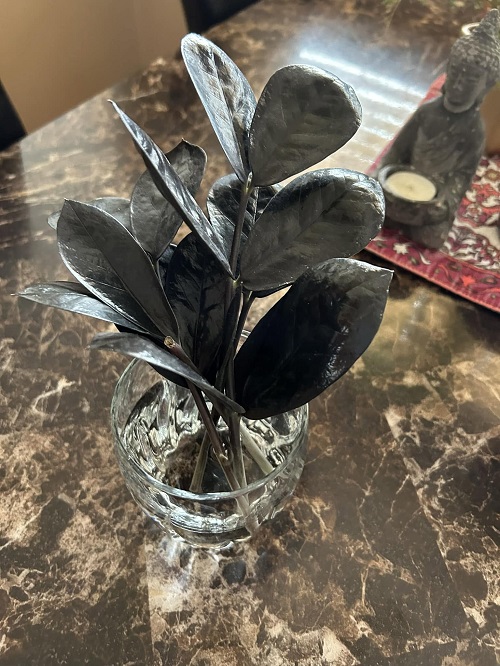
It’s not a concern, if new Raven ZZ leaves are bright green at first. This is completely normal. In the next few weeks, they will slowly turn into the deep, glossy black color the plant is known for.
Growing a Raven ZZ in water takes time. The cutting first forms underground rhizomes before it starts growing roots. So, if you don’t see roots after 3–4 weeks, there’s no need to worry.
Pro Tip: Change the water once a week. Fresh water helps keep the cutting healthy and supports strong root growth.
Keep your black foliage rich and vibrant all year—even in darker rooms—with this top-rated full-spectrum grow light.
3. Black Velvet Alocasia (Alocasia reginula)
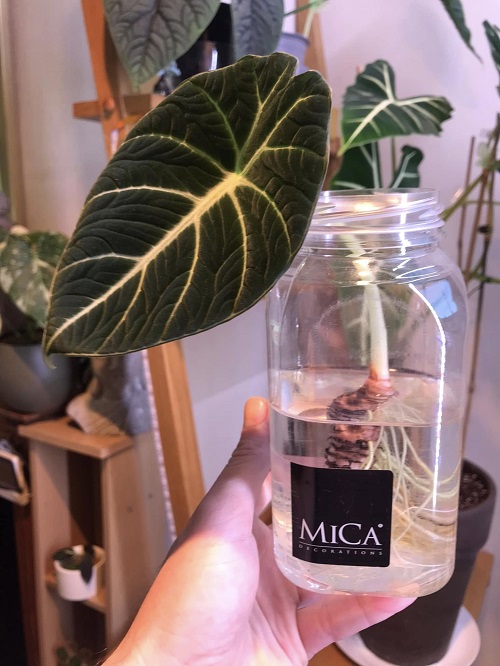
The soft, velvety leaves are the main attraction of this beautiful Alocasia. Growing it in water or semi-hydro culture also lets you enjoy its unique root system through a clear glass container. It’s one of the popular jewel Alocasias, loved for its compact size and richly textured leaves.
Once you find a spot with bright, indirect light, try not to move the plant often. It prefers staying in the same place and grows best when left undisturbed.
Black Velvet Alocasia loves humidity. This smart humidifier helps create the perfect indoor environment with minimal effort.
4. Black Pearl Peperomia (Peperomia ‘Black Pearl’)
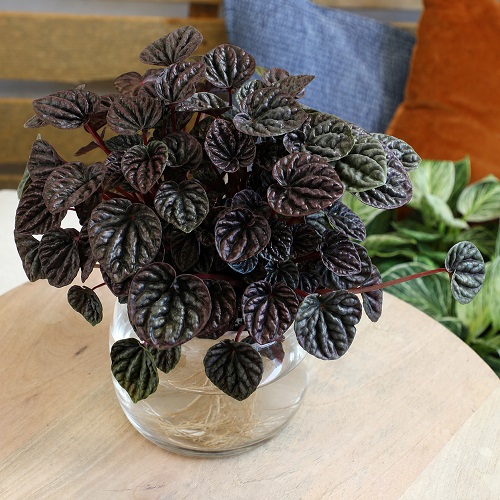
If you like small houseplants, the Black Pearl Peperomia is a great choice. The dark, glossy leaves give it a bold look, and because the leaves store water, the plant can handle an occasional missed watering.
When rooting it in water, make sure only the stem sits below the water line. Keep the leaves above the water to prevent them from rotting. A small glass or jar also works better than a large one because it helps support the cutting and keeps it looking neat.
Turn every cutting into living décor with these stylish glass propagation tubes that look beautiful on your desks.
5. Coleus Black Dragon (Coleus scutellarioides ‘Black Dragon’)
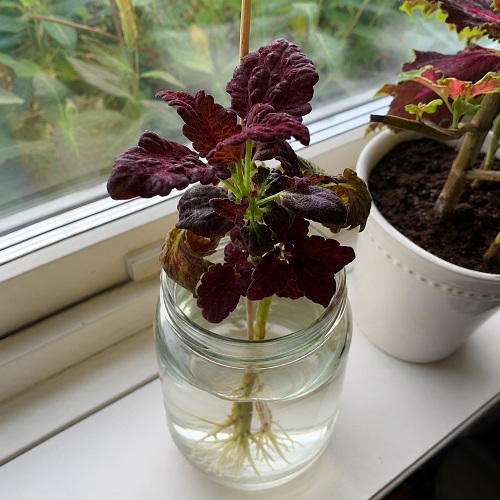
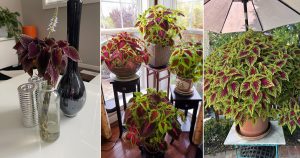
Coleus is one of the easiest plants you can grow from cuttings. If you place a healthy cutting in water, it usually starts growing roots in a short time. To keep the plant full and colorful, remove the flower spikes as soon as they appear. This helps the plant put its energy into growing more leaves instead of making seeds.
You can use a small pair of garden snips to trim off the flower spikes without hurting the stems.
Tip: Give your coleus plenty of bright light during the day and cooler temperatures at night. This helps the leaves develop richer burgundy and dark purple shades.
6. Philodendron Black Cardinal ( Philodendron ‘Black Cardinal’)
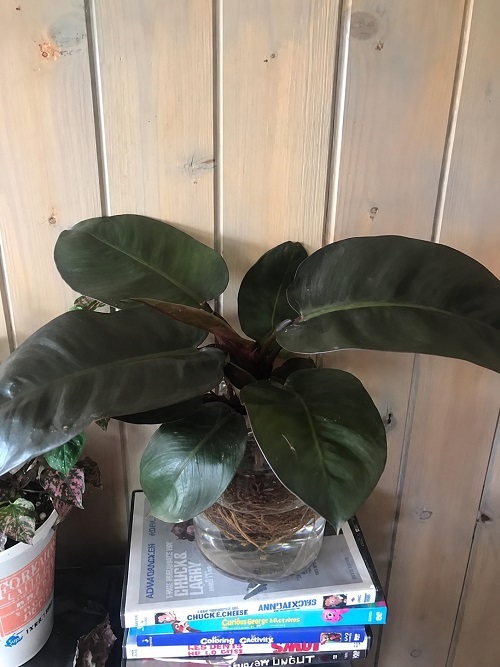
One of the first things you’ll notice about the Black Cardinal is how its leaves change color. New leaves usually appear in bronze or burgundy shades, then slowly darken as they mature until they reach the deep, almost black color that makes this plant stand out.
You’ll also find that the Black Cardinal grows differently from many other philodendrons. Instead of producing long, trailing vines, it grows upright and stays full and compact, making it easy to fit into almost any indoor space.
7. Wandering Jew ‘Deep Purple’ (Tradescantia zebrina “Deep Purple)
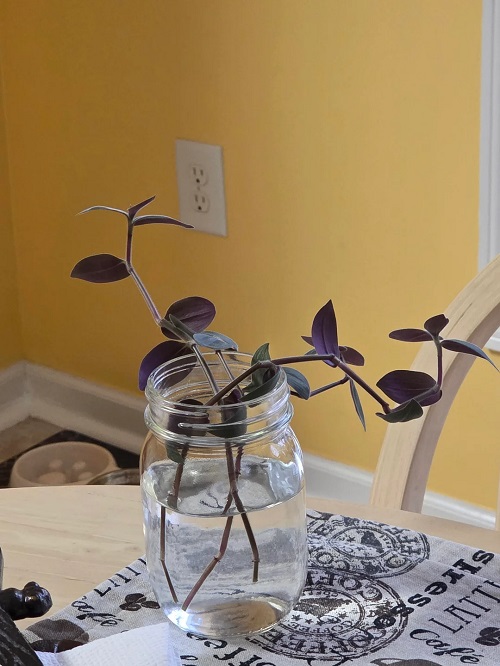
Tradescantia zebrina is a fast-growing trailing plant that is also known as an inch plant. Its leaves are dark purple with deep, almost black tones and eye-catching purple stripes. It looks beautiful in hanging baskets, and you can also grow it in a glass jar of water, where its colorful foliage and roots create an attractive display.
This bestselling guide is packed with simple tips that make indoor plant care much easier. Grab it soon!